avatarFaisal Khan

Free AI web copilot to create summaries, insights and extended knowledge, download it at here

4138

Abstract

nt, with a leftover amount of 540 billion which has no promise to be spent.</p><figure id="71a6"><img src="https://cdn-images-1.readmedium.com/v2/resize:fit:800/1*TWs85Uj4AHA_bQzBox_eyA.png"><figcaption>Figure 2</figcaption></figure><h1 id="7d23">Global Growth Remittance Growth</h1><p id="0246">According to <i>Blockdata</i> (Figure 3), global remittance has grown steadily for the past decade, reaching 689 billion in 2018. The fintech boom and other blockchain remittance projects have caused this segment at a faster pace in the past few years.</p><figure id="7fab"><img src="https://cdn-images-1.readmedium.com/v2/resize:fit:800/1*_M8CQbbUy1k2w7BXBSWykA.png"><figcaption>Figure 3</figcaption></figure><h1 id="21a6">America taxing the Rich</h1><p id="932f">The <i>New York Times</i> has reported that President Biden is seeking to <a href="https://www.statista.com/topics/2229/billionaires-around-the-world/">increase taxes on the rich</a> in order to fund spending on childcare and education. Dubbed The American Family Plan, it is expected to involve investments aimed at reducing poverty, lowering childcare costs, putting a national paid leave program into place and making both prekindergarten and community college free. It would be offset by nearly doubling the capital gains tax for people earning more than 1 million annually while the top marginal tax rate would be increased from 37% to 39.6% (Figure 4).</p><figure id="9e79"><img src="https://cdn-images-1.readmedium.com/v2/resize:fit:800/1*2Yz6hlI7DQafUP_0ygR_oQ.png"><figcaption>Figure 4</figcaption></figure><h1 id="1504">Massive Growth in DEX Volume</h1><p id="b42d">DEX volumes went parabolic in Q1 2021 reaching over 217 billion, up 236% from Q4 2020 (Figure 5). The biggest winner this quarter, and one of the more controversial DEXs, was PancakeSwap, a Uniswap fork on Binance Smart Chain (BSC). SushiSwap has reinvented itself as a serious competitor offering a more grassroots, fast-moving alternative to Uniswap. Meanwhile, Bancor’s fortunes are finally beginning to turn since the launch of V2.1.</p><figure id="1531"><img src="https://cdn-images-1.readmedium.com/v2/resize:fit:800/1*jOFvdNFuk0b2oYFWHWnjTg.png"><figcaption>Figure 5</figcaption></figure><h1 id="8cca">Top 10 Unicorn Investors</h1><p id="e7a3">Every investor wants to back a unicorn. The <a href="https://readmedium.com/whos-backing-the-most-billion-dollar-companies-5c7ee661d13f"><i>CB Insights</i> data</a> looks at the most unicorns in their portfolios and the investors best at placing early-stage bets on companies now worth $1B+ (Figure 6). Over the years, some 1,300 investors have backed these unicorns. While 56% of unicorn investors have only invested in one unicorn company, there are some investors who have pulled away from the group, backing 10, 20, and even 100+ unicorn companies.</p><figure id="9829"><img src="https://cdn-images-1.readmedium.com/v2/resize:fit:800/1*JgWRmfxIM4ndR6lEab18zA.png"><figcaption>Figure 6</figcaption></figure><h1 id="84f6">People want to Work from Home</h1><p id="4dfe"><a href="https://www.flexjobs.com/blog/post/flexjobs-survey-finds-employees-want-remote-work-post-pandemic/">In a survey by job listings site Flexjobs, </a>an astonishing 65% of pandemic remote workers said they wanted to keep working from home and 58% even said they would look for a new job if they would have to return to the office. Only 2% said they would prefer to return, while 11% said that remote work was not essential for them. At a third of respondents naming it as their preferred mode of working, the hybrid model that combines office and remote work were also popular (Figure 7).</p><figure id="7a46"><img src="https://cdn-images-1.readmedium.com/v2/resize:fit:800/1*scNjSsLqwkLxY7C4FBGQOA.png"><figcaption>Figure 7</figcaption></figure><h1 id="2208">Top 5 Smartphone Companies: Q1 2021</h1><p id="5592">The chip supply shortage comes at a time when consumers are eager to spend on new products, including cars and electronics. New car sales have soared in the past six months, as have smartphone sales. <i>IDC</i> reported recently that smartphone shipments g

Options

rew more than 25% in the first quarter compared to a year ago. Smartphone vendors shipped nearly 346 million devices during the quarter, with the strongest demand coming from China and Asia/Pacific, where shipments grew 30% and 28%, respectively (Figure 8).</p><figure id="0818"><img src="https://cdn-images-1.readmedium.com/v2/resize:fit:800/1*8A6wxwTKVwUHA69SRDtviA.png"><figcaption>Figure 8</figcaption></figure><h1 id="f11d">Global Rise in Poverty</h1><p id="55a4">The pandemic’s impact on the world’s poor has been especially harsh. COVID-19 may have pushed about 100 million people into extreme poverty in 2020 alone, while the <a href="https://www.wider.unu.edu/publication/estimates-impact-covid-19-global-poverty">UN warns </a>that in some regions poverty could rise to levels not seen in 30 years (Figure 9). The current crisis has derailed progress toward basic development goals, as low-income developing countries must now balance urgent spending to protect lives and livelihoods with longer-term investments in health, education, physical infrastructure, and other essential needs.</p><figure id="cca3"><img src="https://cdn-images-1.readmedium.com/v2/resize:fit:800/1*kyJUWdEXbPJEbvRdvrZnEg.png"><figcaption>Figure 9</figcaption></figure><h1 id="06c1">Big Techs Profits Soar</h1><p id="c112">The e-commerce behemoth Amazon, saw net sales surge 44% to 109 billion in the three months ended March 31 (Figure 10), fueled by particularly strong growth of its core e-commerce and advertising businesses. As the following infographic shows, the entire GAFAM group, saw profits surge at the beginning of 2021, as Big Tech continues to profit from the pandemic’s stimulating effect on online advertising, e-commerce &amp; consumer spending. With Apple, Alphabet &amp; Amazon, three of the five even reported triple-digit profit growth, which is astonishing considering the level of profits these companies raked in last year already.</p><figure id="6ee8"><img src="https://cdn-images-1.readmedium.com/v2/resize:fit:800/0*d3ALo51fOYzaNGil.jpeg"><figcaption>Figure 10</figcaption></figure><p id="a4a4">The infographic below (Figure 11) is based on the data from the <a href="https://www.unwto.org/international-tourism-and-covid-19"><i>UN’s World Tourism Organization (UNWTO)</i></a><i> </i>&amp; plots the financial figures for tourism loss broken out by country. Spain had the single biggest drop in tourism spending due to COVID-19 from 2019 to 2020 when measured as a percentage of the total, decreasing from 79.7B to 16.2B or -80%. The U.S. witnessed the single biggest overall decrease, going from 193.3B to $63B, or about -67%. Every country in the visual experienced massive losses in tourism spending, with most countries suffering through drops of over 50%.</p><figure id="6109"><img src="https://cdn-images-1.readmedium.com/v2/resize:fit:800/0*NaKPikqon8pJX6TC.jpg"><figcaption>Figure 11</figcaption></figure><h1 id="8d6d">Market Humor: Biden’s New Tax Proposals</h1><figure id="7492"><img src="https://cdn-images-1.readmedium.com/v2/resize:fit:800/0*cL2LJLREoBkJtJLl.jpg"><figcaption></figcaption></figure><h1 id="4007">Previous Edition of GBW</h1><div id="92a1" class="link-block"> <a href="https://readmedium.com/global-business-week-visualizing-the-economic-benefits-of-a-green-recovery-69e49dc39e8e"> <div> <div> <h2>Global Business Week: Visualizing the Economic Benefits of a Green Recovery</h2> <div><h3>The state of Financial markets & Economies, Weekly Charts, Business Trends & Statistics</h3></div> <div><p>medium.com</p></div> </div> <div> <div style="background-image: url(https://miro.readmedium.com/v2/resize:fit:320/1*_an3Yvc0CMPPV--kq-SN9A.png)"></div> </div> </div> </a> </div><figure id="a67b"><img src="https://cdn-images-1.readmedium.com/v2/resize:fit:800/0*Xo1X8SkhL2GX0shW.png"><figcaption></figcaption></figure><h2 id="c3e2">Stay informed with the content that matters — Join my mailing list</h2></article></body>

WEEKLY BUSINESS ROUNDUP

Global Business Week: Global GDP Forecasts for 2021 & 2022

The state of Financial markets & Economies, Weekly Charts, Business Trends & Statistics

Stocks fell broadly on the U.S market on Friday as investors took profits following a flurry of earnings reports, also coinciding with a growing drumbeat for higher taxes, coming out of the White House. The equity markets limped into the final trading day of the month, ending another week of choppiness as investors tried to navigate all-time highs amid fears of bubbles. Also not surprising, considering it comes after an 80% run from the market lows of late March 2020, some investors are eager to book their well-earned profits.

The money flows inside the markets speak to a growing cautiousness that has started to fester lately. In the past week alone, $57.3 billion went into cash — the largest inflows since March of 2020. $13.7 billion went into bonds, $10.5 billion went to equities, and $500 million went into gold. For the week, the S&P eked out a slim gain while the Dow and Nasdaq fell slightly, but all three benchmarks posted sharp gains for April, with the S&P and Nasdaq both up more than 5% and the Dow lagging with a 2.7% gain.

The US Dollar (via the DXY Index) was able to turn higher at the end of the week perhaps due to end-of-month rebalancing flows. It was much-needed relief for the DXY Index, which otherwise closed the month of April down by -2.08%, surpassing average seasonal trends over the past 5- and 10-years. The drop in the US Dollar has occurred even as US Treasury yields have stabilized, suggesting that rising inflation expectations, not real US yields, are behind the move, which has historically been bad for the greenback.

Ethereum has been on fire lately as Bitcoin takes a back seat — with the latter struggling under the recent all-time highs. The booming Defi market has lifted the spirits of the premier smart contracts platform in the Cryptoverse. At the time of writing, ETH is trading just shy $3,000 — yet another all-time high. The crypto market has recently been entirely driven by Ethereum. And while the demand for Bitcoin remains strong among investors, Alt. coin season might just have kicked into high gear.

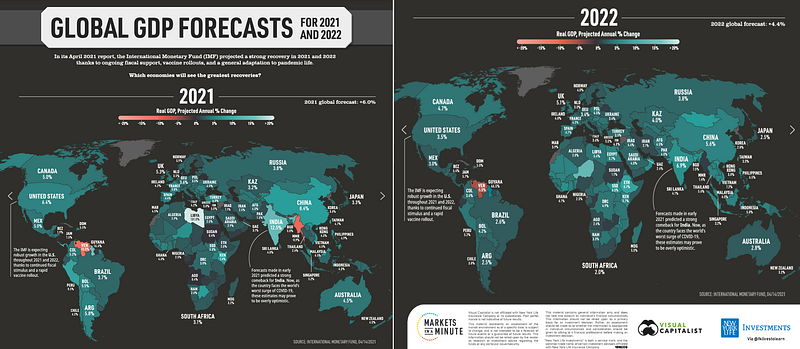
Today’s featured infographic from New York Life Investments shows the projections for global growth in 2021 and 2022. In the April 2021 version of its Global Economic Outlook, the International Monetary Fund (IMF) reiterated its expectations of a strong economic recovery over the next few years. Economists acknowledged that, while the path of the pandemic remains uncertain, global vaccine rollouts represent the light at the end of the tunnel. As a result, global GDP growth forecasts for 2021 and 2022 sit at +6.0% and +4.4% respectively.

And finally, before moving on to some other statistics, here are the weekly & YTD numbers from various markets and different assets (Figure 1).
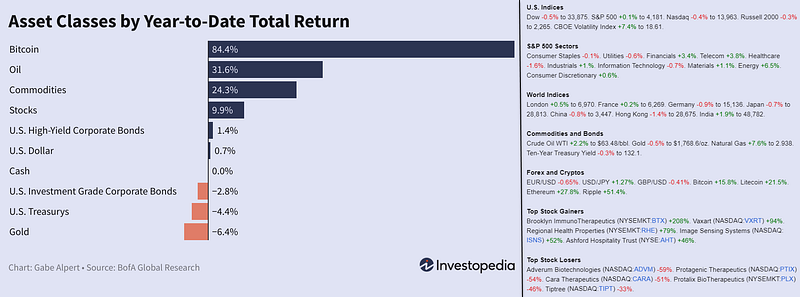
Figure 1

Cost of COVID-19 to the U.S

The infographic below represents total outlays of COVID-19 supplemental appropriations as reported by the U.S federal agencies to the official open data source of federal spending information. As of February 28, 2021, $2.07 trillion of the $2.96 trillion in total budgetary resources have been paid out (Figure 2). Of the $2.96 trillion budget available to be spent, only $2.42 trillion have a promise to be spent, with a leftover amount of $540 billion which has no promise to be spent.
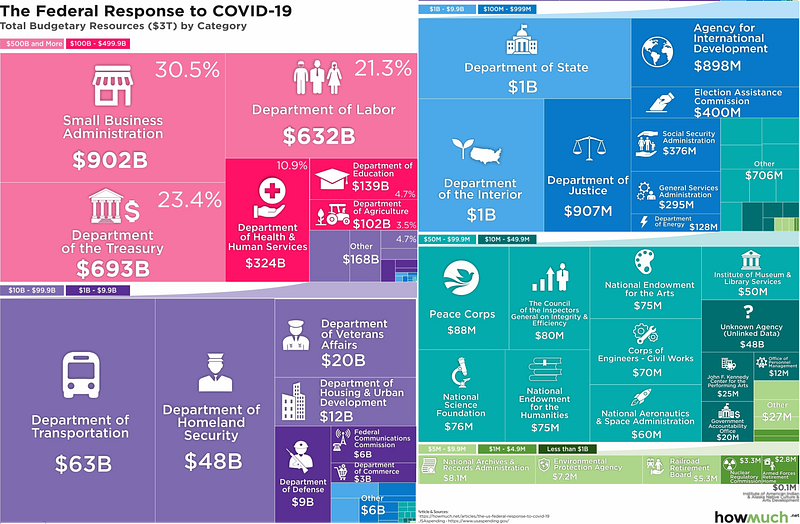
Figure 2

Global Growth Remittance Growth

According to Blockdata (Figure 3), global remittance has grown steadily for the past decade, reaching $689 billion in 2018. The fintech boom and other blockchain remittance projects have caused this segment at a faster pace in the past few years.
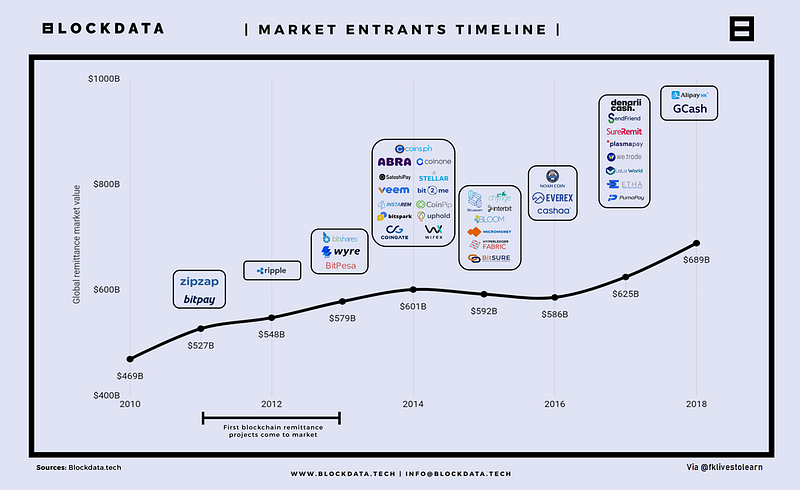
Figure 3

America taxing the Rich

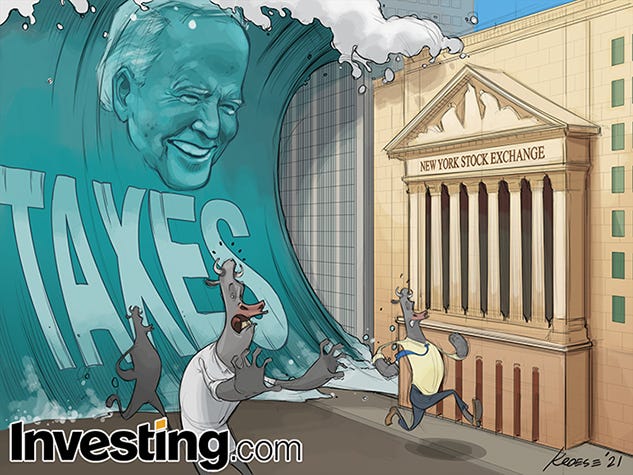
The New York Times has reported that President Biden is seeking to increase taxes on the rich in order to fund spending on childcare and education. Dubbed The American Family Plan, it is expected to involve investments aimed at reducing poverty, lowering childcare costs, putting a national paid leave program into place and making both prekindergarten and community college free. It would be offset by nearly doubling the capital gains tax for people earning more than $1 million annually while the top marginal tax rate would be increased from 37% to 39.6% (Figure 4).
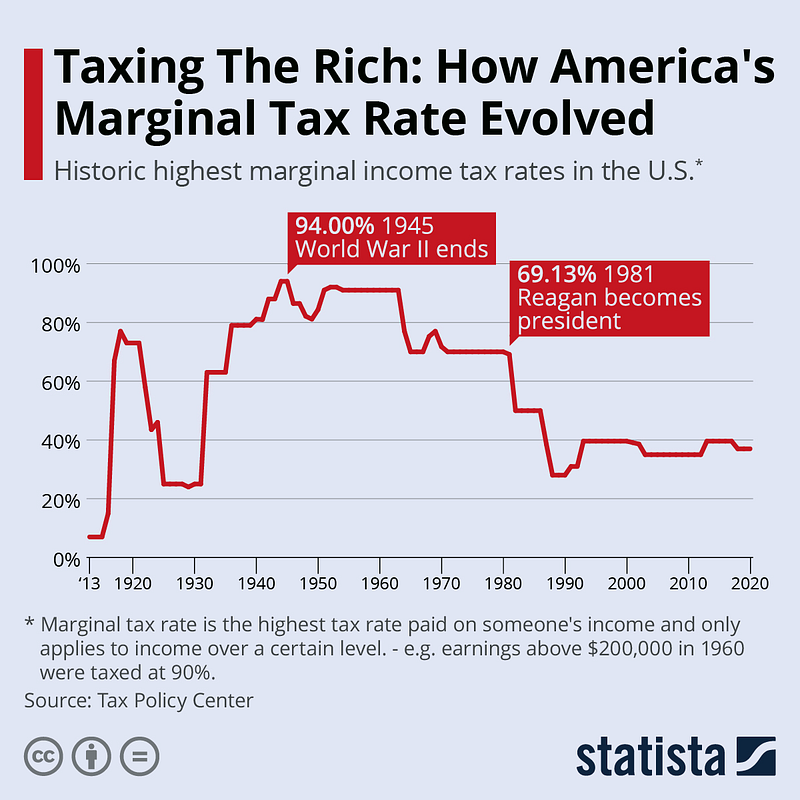
Figure 4

Massive Growth in DEX Volume

DEX volumes went parabolic in Q1 2021 reaching over $217 billion, up 236% from Q4 2020 (Figure 5). The biggest winner this quarter, and one of the more controversial DEXs, was PancakeSwap, a Uniswap fork on Binance Smart Chain (BSC). SushiSwap has reinvented itself as a serious competitor offering a more grassroots, fast-moving alternative to Uniswap. Meanwhile, Bancor’s fortunes are finally beginning to turn since the launch of V2.1.
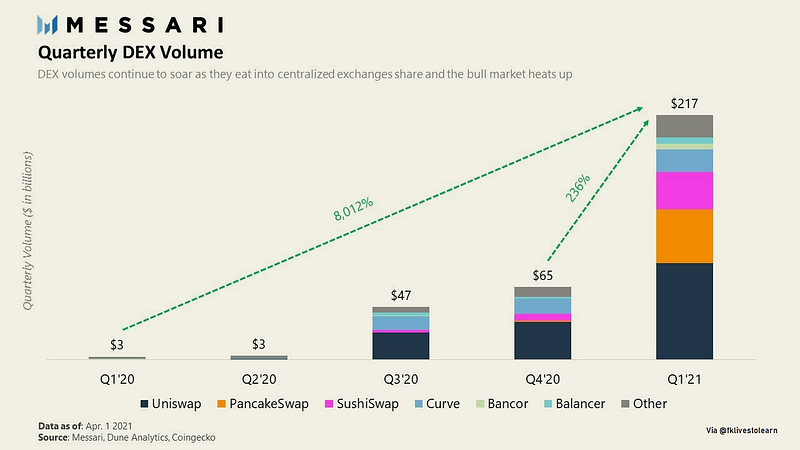
Figure 5

Top 10 Unicorn Investors

Every investor wants to back a unicorn. The CB Insights data looks at the most unicorns in their portfolios and the investors best at placing early-stage bets on companies now worth $1B+ (Figure 6). Over the years, some 1,300 investors have backed these unicorns. While 56% of unicorn investors have only invested in one unicorn company, there are some investors who have pulled away from the group, backing 10, 20, and even 100+ unicorn companies.
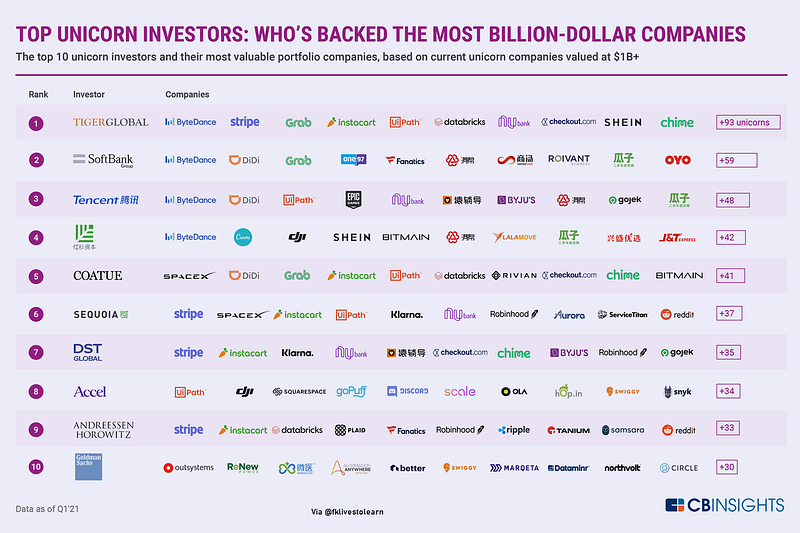
Figure 6

People want to Work from Home

In a survey by job listings site Flexjobs, an astonishing 65% of pandemic remote workers said they wanted to keep working from home and 58% even said they would look for a new job if they would have to return to the office. Only 2% said they would prefer to return, while 11% said that remote work was not essential for them. At a third of respondents naming it as their preferred mode of working, the hybrid model that combines office and remote work were also popular (Figure 7).
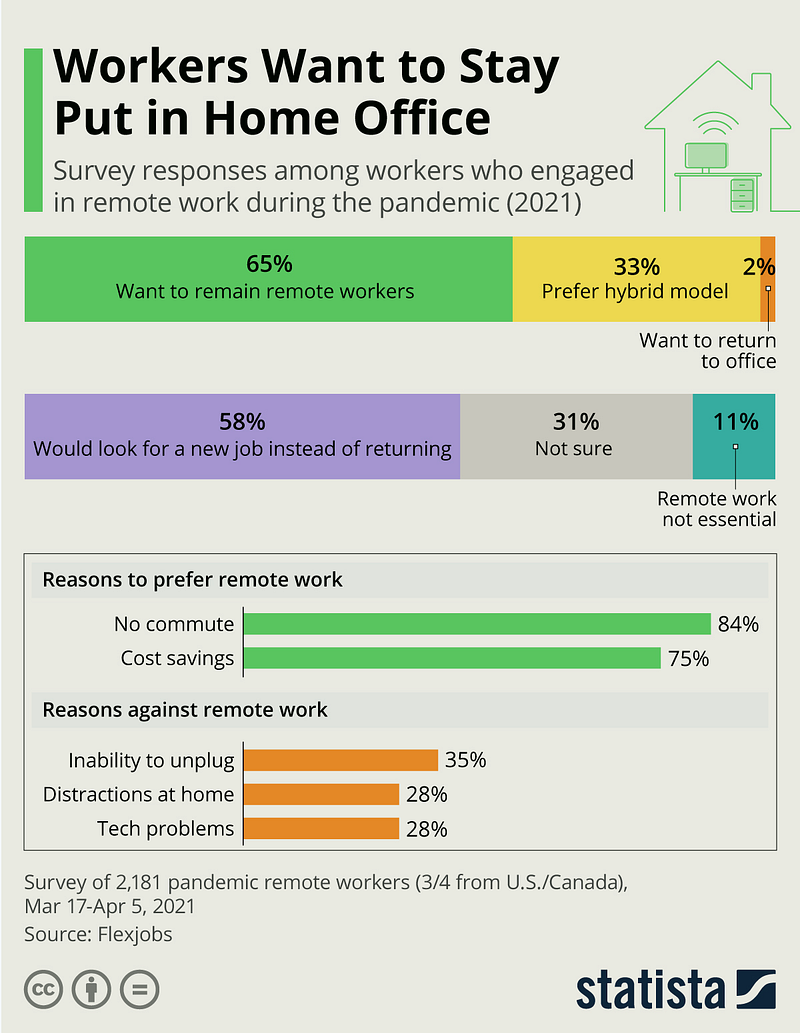
Figure 7

Top 5 Smartphone Companies: Q1 2021

The chip supply shortage comes at a time when consumers are eager to spend on new products, including cars and electronics. New car sales have soared in the past six months, as have smartphone sales. IDC reported recently that smartphone shipments grew more than 25% in the first quarter compared to a year ago. Smartphone vendors shipped nearly 346 million devices during the quarter, with the strongest demand coming from China and Asia/Pacific, where shipments grew 30% and 28%, respectively (Figure 8).
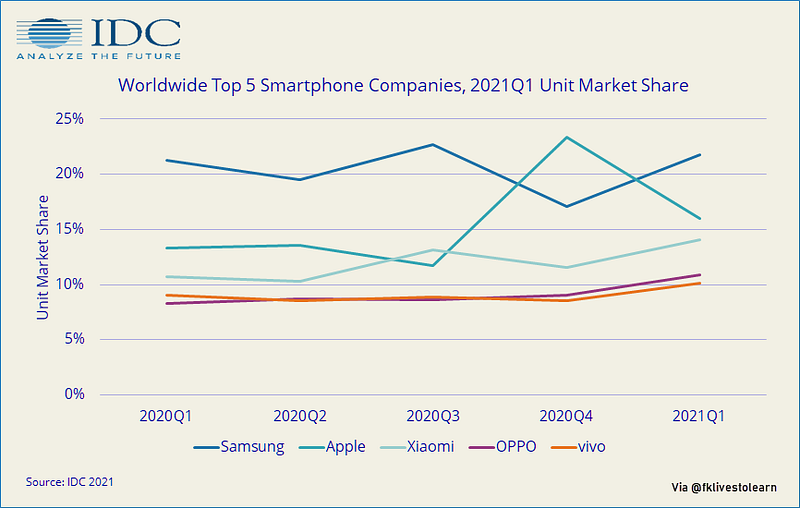
Figure 8

Global Rise in Poverty

The pandemic’s impact on the world’s poor has been especially harsh. COVID-19 may have pushed about 100 million people into extreme poverty in 2020 alone, while the UN warns that in some regions poverty could rise to levels not seen in 30 years (Figure 9). The current crisis has derailed progress toward basic development goals, as low-income developing countries must now balance urgent spending to protect lives and livelihoods with longer-term investments in health, education, physical infrastructure, and other essential needs.
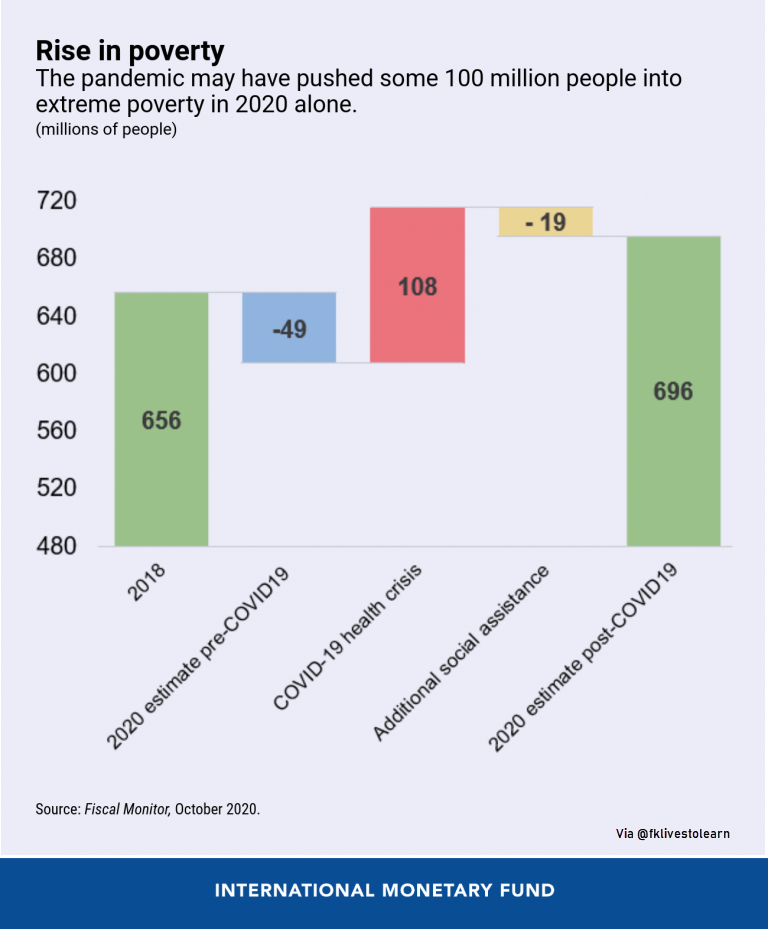
Figure 9

Big Techs Profits Soar

The e-commerce behemoth Amazon, saw net sales surge 44% to $109 billion in the three months ended March 31 (Figure 10), fueled by particularly strong growth of its core e-commerce and advertising businesses. As the following infographic shows, the entire GAFAM group, saw profits surge at the beginning of 2021, as Big Tech continues to profit from the pandemic’s stimulating effect on online advertising, e-commerce & consumer spending. With Apple, Alphabet & Amazon, three of the five even reported triple-digit profit growth, which is astonishing considering the level of profits these companies raked in last year already.
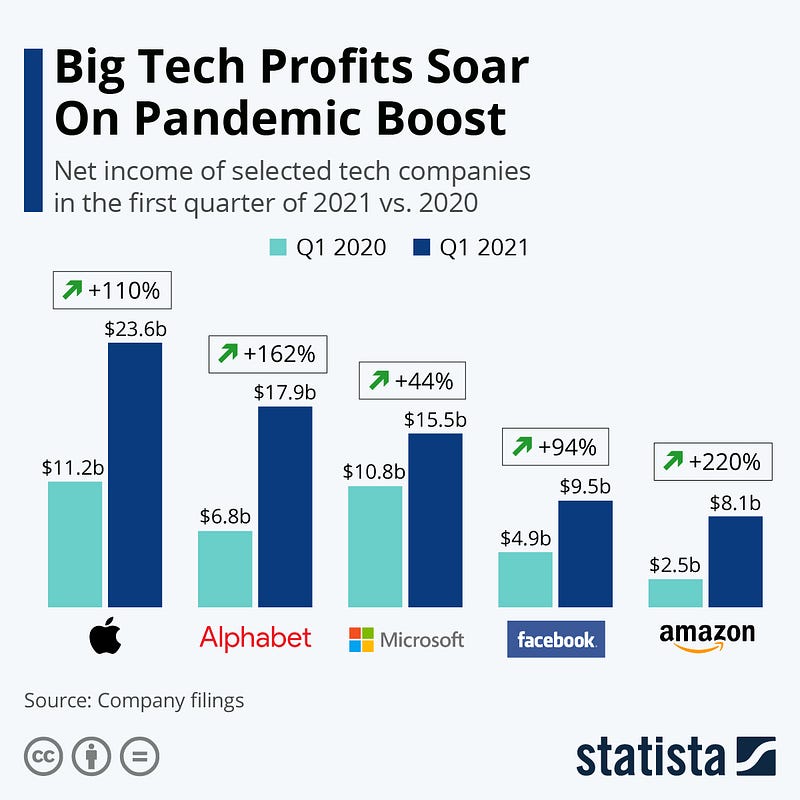
Figure 10

The infographic below (Figure 11) is based on the data from the UN’s World Tourism Organization (UNWTO) & plots the financial figures for tourism loss broken out by country. Spain had the single biggest drop in tourism spending due to COVID-19 from 2019 to 2020 when measured as a percentage of the total, decreasing from $79.7B to $16.2B or -80%. The U.S. witnessed the single biggest overall decrease, going from $193.3B to $63B, or about -67%. Every country in the visual experienced massive losses in tourism spending, with most countries suffering through drops of over 50%.
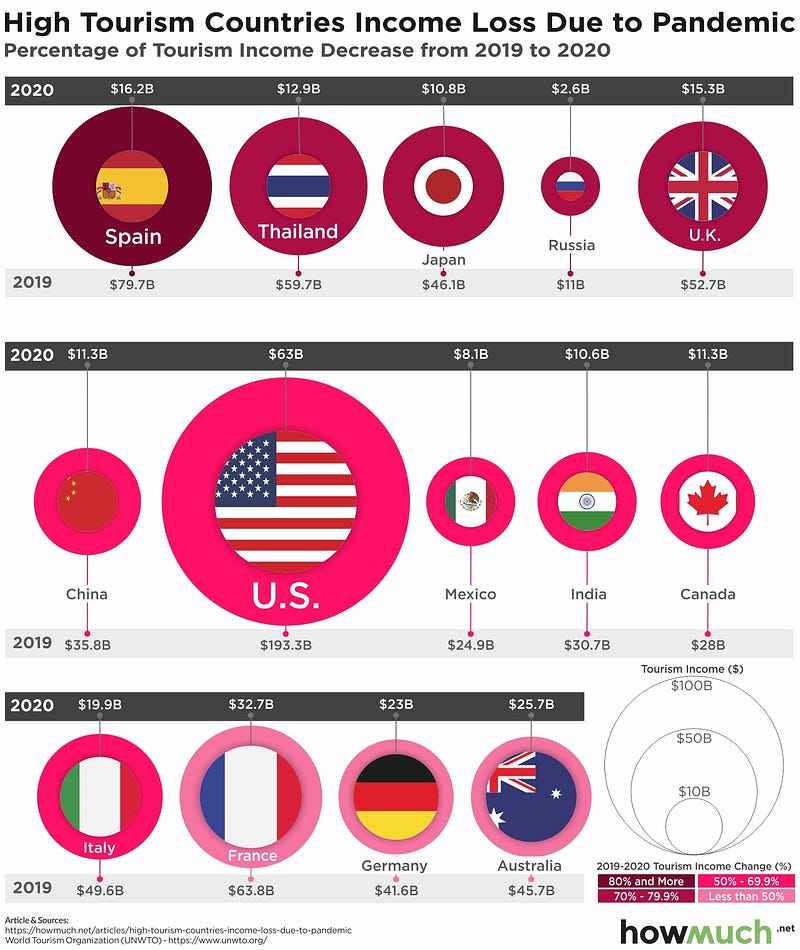
Figure 11

Market Humor: Biden’s New Tax Proposals
Previous Edition of GBW

Stay informed with the content that matters — Join my mailing list

Finance
Economics
Investing
Business
Bitcoin
Recommended from ReadMedium