
WEEKLY BUSINESS ROUNDUP
Global Business Week: Building a Portfolio for the Future
The state of Financial markets & Economies, Weekly Charts, Business Trends & Statistics
September is living up to its reputation as the worst month for U.S. stock market returns so far, but the selling has not been extreme. This was evident in the quick reversal that we saw on Friday. The Nasdaq fell the most (-0.87%) led by Apple, which was hit by unfavorable court ruling — something we will talk about later in this issue. The major averages closed logged five straight losing days for the first time since February & their worst week since June. While U.S. markets sold off this week, the selling was orderly and far from extreme.
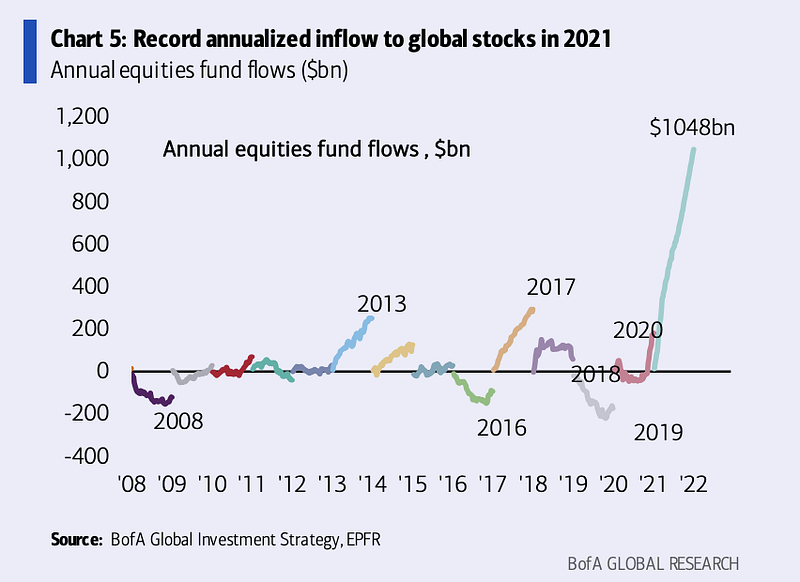
More signs of inflation (Producer Price Index rose 0.6%) and the worry for the investors were exacerbated by the news that the U.S. is considering an investigation into Chinese subsidies. Federal Reserve’s plan to pull back on bond purchases has already been on the minds of investors. For the week, S&P 500 closed down 1.7%, while the Dow & Nasdaq closed lower by 2.2% and 1.6%, respectively. Despite the selling in the U.S stocks, Bank of America Securities estimated that $12.5 billion went into global equities in the past week, bringing 2021’s total to a record-breaking $1.04 trillion.
It was a good week for the USD bulls as the benchmark index DXY closed up more than 0.7% for the week. With the equities slipping for most of the holiday-shortened week, investors were putting more of their money in risk-averse assets like the reserve currency. DXY closed the week @ 92.64, carving a higher low from the close at 91.93 last week. In the short term, the picture still looks a little muddied as DXY consolidated below the recent high of 93.73, however, more upside is favored for now.
Cryptos was rocked by more than one bad news this week. Official adoption of Bitcoin as the legal tender in the small Central American nation of El Salvador last week actually had the opposite effect as many were expecting — in a classic sell the news example, Bitcoin lost more than 17% at one point. And technical glitches in the rollout certainly didn’t help the bullish sentiment.
Taking a cue from BTC losses, most of the other digital coins in the Alt. coin universe also fell. One of the biggest crypto exchanges, Coinbase, also rocked Cryptoverse with the news that SEC wants to sue the only public crypto company. Apparently, SEC is not happy with the former launching a yield product for the digital assets. Although the cryptos have rebounded from their lows earlier in the week, the bearish pressure is still evident — BTC trading around $45.5k, while ETH is trending close to $3,315 at the time of writing.
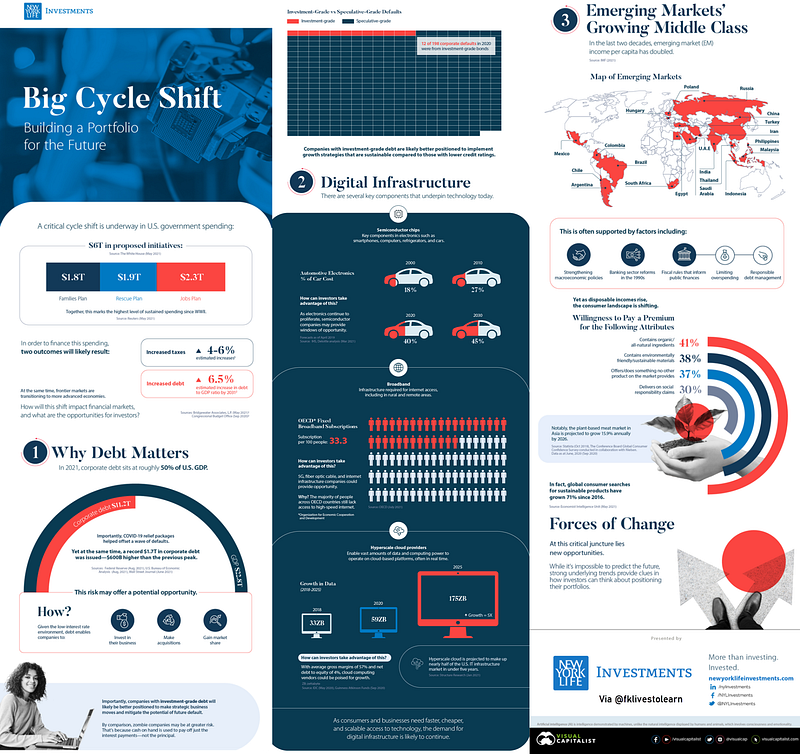
Today’s featured infographic (above) looks at what kind of investment opportunities will emerge in the future, with the sweeping measures that have been proposed to support the U.S economy in the pandemic— reaching levels of sustained spending not seen since WWII. These include a $2.3 trillion American Jobs Plan and a $1.9 trillion American Rescue Plan. The infographic from New York Life Investments explores three potential areas of growth.
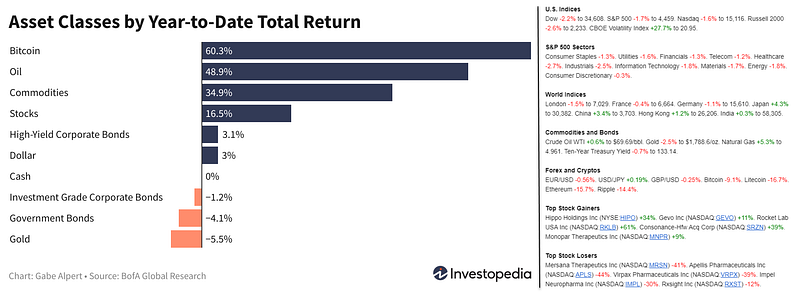
And finally, before moving on to some other statistics, here are the weekly & YTD numbers from various markets and different assets (Figure 1).
Global Consumer App Spending
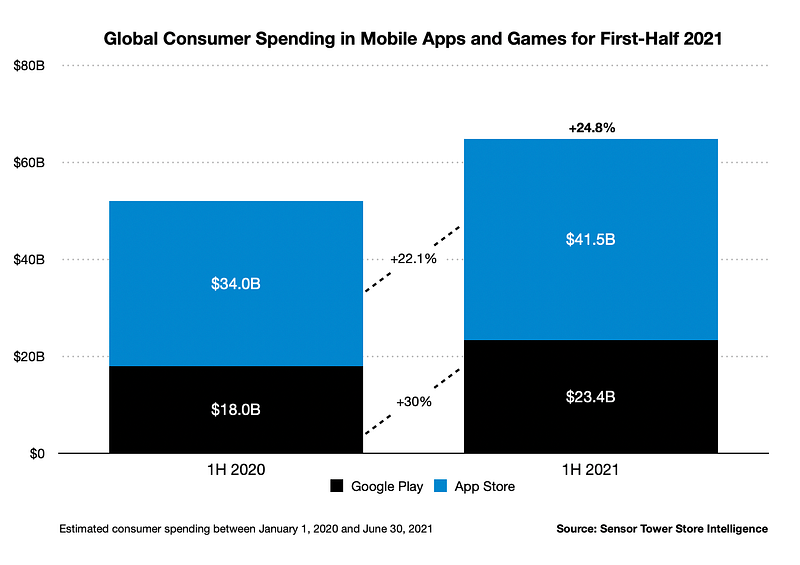
A federal judge has ruled against Apple in a lawsuit over the company’s policy that blocks app developers from offering consumers options to buy their products outside of Apple’s App Store. Judge Yvonne Gonzalez Rogers in Oakland, Calif., said Apple could no longer prevent developers from providing links or other communications that direct customers to sites outside the App Store. Apple makes 15% to 30% on App Store purchases. The decision comes amidst a rise in global consumer spending in mobile apps (Figure 2).
Gold Investments VS. Global Assets
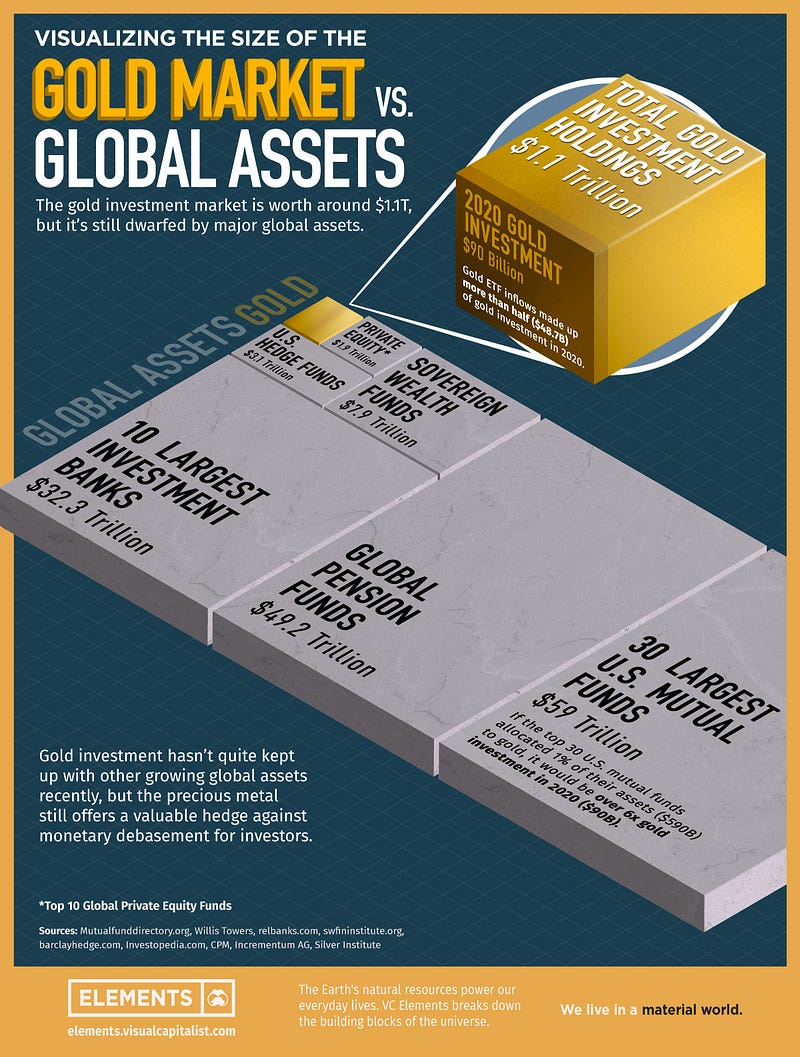
Gold has been a vital asset for investors and speculators to hedge against uncertainty and currency devaluation, but today it is just a small part of the investment landscape. While gold investment holdings stand at $1.1T, this figure is dwarfed by various other global assets and funds. The infographic below (Figure 3) compares the size of gold investment holdings to global assets, highlighting the difference in dollars invested, and where modern-day investors have (or haven’t) been allocating their money. The investment in the precious metal is largely outsized by private equity funds, hedge funds, and more, gold has taken a backseat for today’s investors when it comes to where they allocate their capital.
Companies Shaping Blockchain Landscape
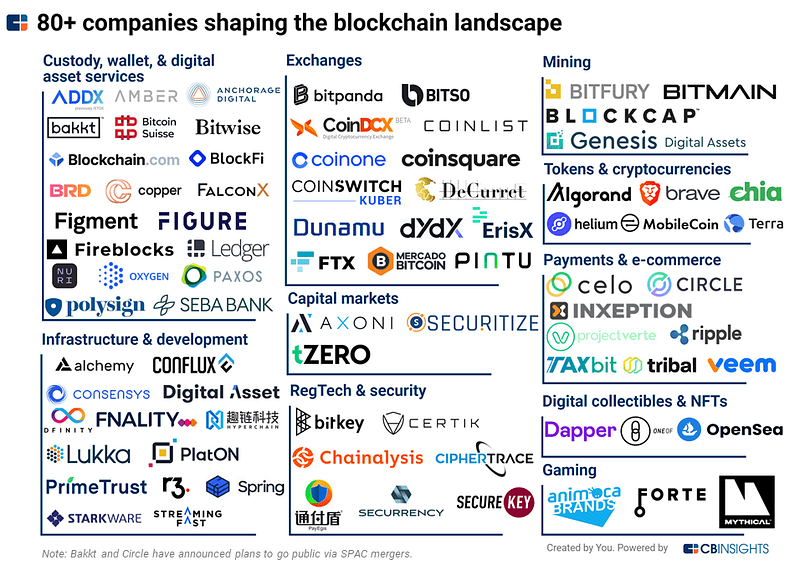
Blockchain tech has never been hotter. From crypto to DeFi to NFTs, here are how top-funded private companies are leveraging blockchain technology. Blockchain companies raised more venture capital and private equity funding in H1’21 than any full year in history. The space is rapidly evolving as startups tackle a wide range of challenges in financial services and other industries. But blockchain’s potential extends well beyond crypto and NFTs. Decentralized finance (DeFi), or the availability of financial products on a public blockchain without intermediaries, could disrupt the global financial system. Using CB Insights data, here are 80+ of the most well-funded private blockchain companies shaping the future of the space (Figure 4). This market map consists of private, active companies only and is not intended to be exhaustive of the space.
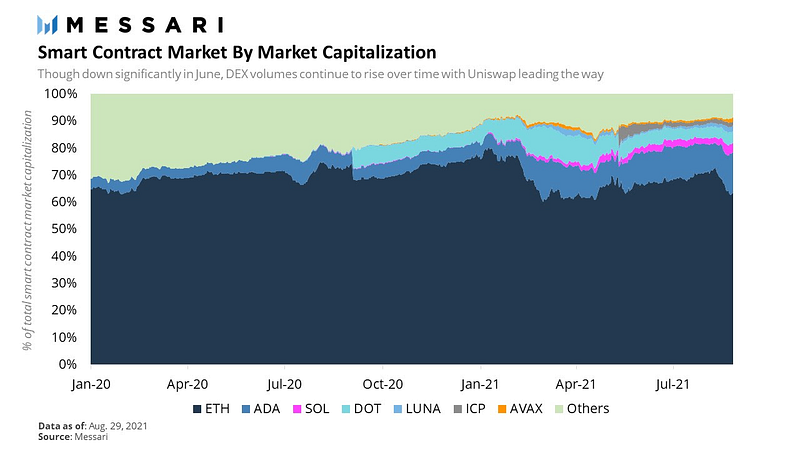
Smart Contract Platforms by Marketcap
The smart contract platforms are once again the center of speculation, but this time with a twist. Unlike prior cycles, smart contract platforms are no longer mere ideas for world computers, they are lively ecosystems of users, capital, and applications that are collectively driving trillions of dollars in economic activity. Ethereum has led the charge here, now securing over $700 billion in assets, transacting more than $2.5 trillion per quarter, and hosting thousands of applications. It has been rewarded handsomely for this growth with Ethereum reaching an all-time high of $450 billion market capitalization in recent months (Figure 5).
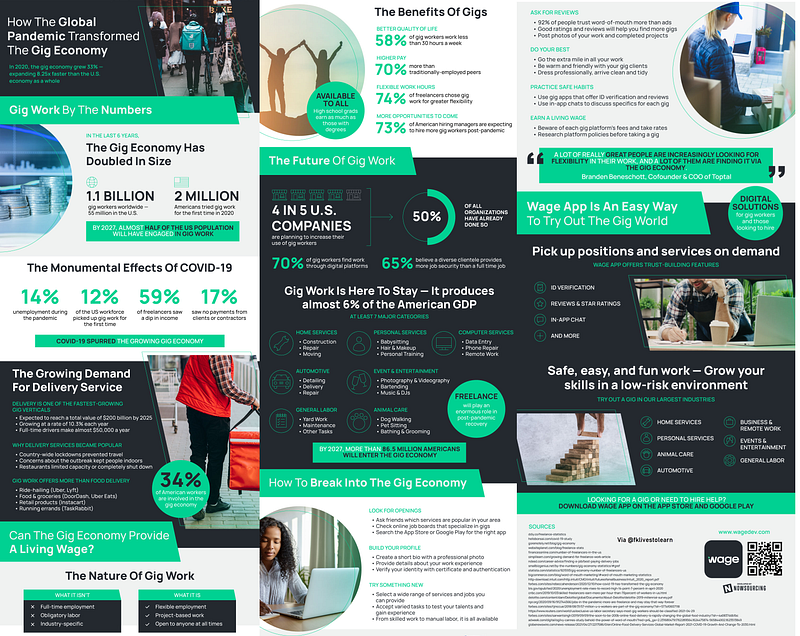
Gig Economy Transformation by the Pandemic
In 2020, the gig economy grew 33%. That is over 8 times faster than the US economy as a whole. Many are familiar with delivery drivers performing gig work, but there are numerous other industries in which gig work is prevalent. Home repairs, babysitting, disc jockeying, and dog walking are all jobs occupied by gig workers. 55 million Americans count themselves among the gig worker population. The pandemic did not create gig work. But it increased the pace of existing trends (Figure 6). Frustrated with high levels of pandemic employment, 2 million Americans tried gig work for the first time in 2020. Gig work avoids many of the formal structures imposed by typical employment. Gig work offers many benefits to businesses as well. Hiring by project allows for greater specialization and flexibility in hiring. Gig work is also not bound by many employment regulations, meaning red tape is averted. 4 in 5 US companies are planning to increase their use of gig workers. By 2027, over 86.5 million Americans will enter the gig economy.
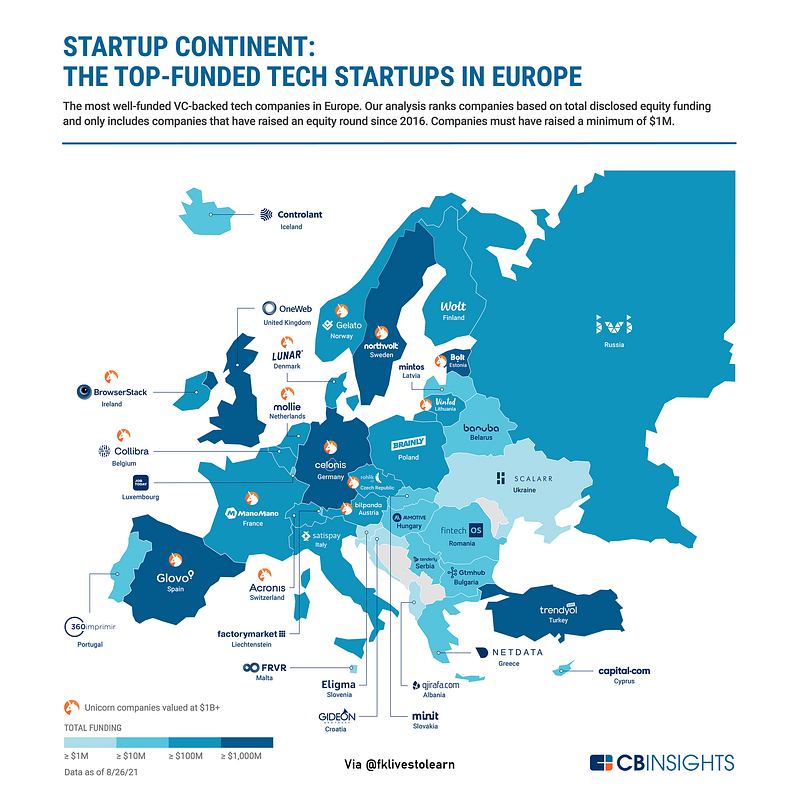
Top-Funded Tech Startups in Europe
Europe is home to prominent startup and innovation hubs across cities like Berlin, Stockholm, London, and more. But the tech boom is diffusing across the continent — and Europe-based startups are emerging far beyond the established tech hotbeds (Figure 7). Since 2015, more than $200B has been invested across nearly 23,500 equity deals to VC-backed startups on the European continent. This includes investments into leading tech unicorns like ride-hailing network Bolt in Estonia, delivery marketplace Glovo in Spain, and payments company Mollie in the Netherlands. Using CB Insights data, here are the most well-funded VC-backed tech startup in each country in Europe. Collectively, the startups on our map have raised nearly $21.3B in disclosed equity funding.
Record Inflows in Global Equities
While U.S. markets sold off this week, the selling was orderly and far from extreme. And the money keeps flowing into equities, according to Bank of America Securities. $12.5 billion went into global equities in the past week, bringing 2021’s total to a record-breaking $1.04 trillion (Figure 8). That’s greater than the cumulative inflows into global stocks from 2001–2020.
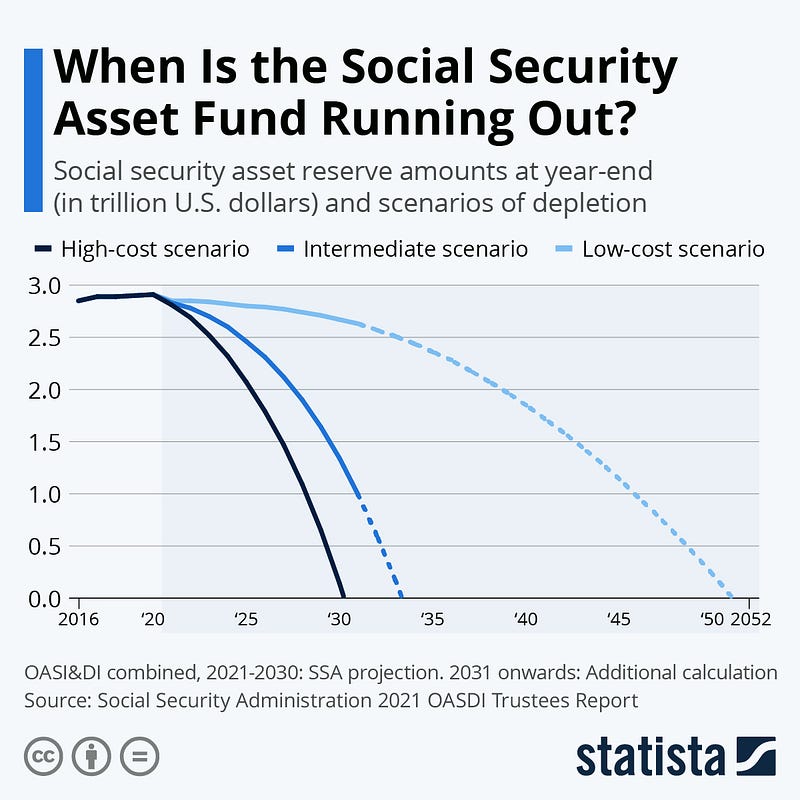
U.S Social Security Fund Going Running Out
A social safety net is synonymous with a failsafe for many, but in the case of the U.S. Social Security system, additional action is needed to ensure it stays that way. The annual OASDI trustees report by the Social Security Administration, covering old-age, survivors & disability insurance, shows that under the present circumstances, the asset reserve dedicated to the benefits program could be depleted sooner rather than later (Figure 9). Under the report’s intermediate scenario, asset funds would run out sometime in 2034, while this could happen as soon as 2031 if the administration was to shoulder a high volume of costs in the upcoming years. Under the low-cost scenario, the fund could remain solvent until 2052 or even longer, depending on the calculation. The intermediate date moved forward by one year since last year’s report as the COVID-19 pandemic seriously diminished Social Security’s income in payroll taxes.
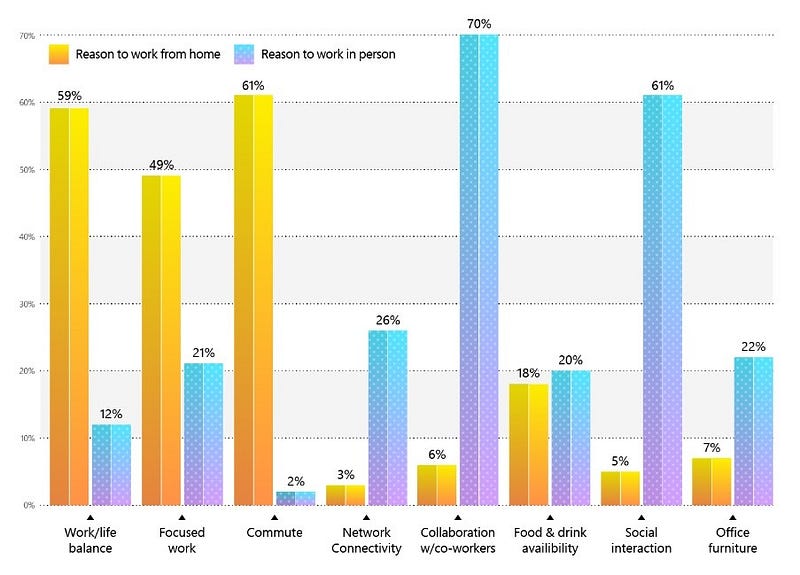
Tech Firms Delay Reopening
The big tech firms are pushing back their return to work plans following the rise in COVID-19 cases. Apple, Amazon, and Alphabet’s Google have recently announced they will wait until January for their offices to reopen. Twitter, like Microsoft, has not set a date. Along with its statement on reopening, Microsoft released a survey of its employees around the world that found working from home did not make them feel disconnected from the company. However, Microsoft added difficulties remain, noting issues with the hybrid model are “complex.” A recent survey suggests what employees think the benefits of remote working versus going to the office (Figure 10).
Global Outlook for Same-day Delivery Market
UPS explained it will use its recent acquisition Roadie as a way to ship perishable items and those that are small and not packaged in a way that can be processed through its regular system. It added UPS and Roadie drivers will not be used to deliver packages on the other’s networks. UPS has been looking to get into the same-day delivery market as consumer demand grows for faster shipping. Retailers such as Amazon, Walmart, and Target, as well as gig economy firms Uber and DoorDash, are already focused on providing same-day service — which is expected to see consistent growth over this decade (Figure 11).

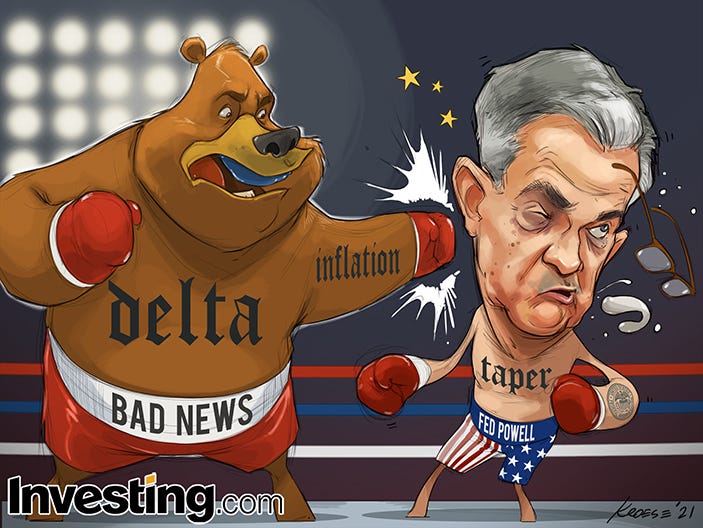
Market Humor: Bad News threaten Fed’s Taper Plans
Previous Edition of GBW
