
WEEKLY BUSINESS ROUNDUP
Global Business Week: Fixed Income ETFs are investors’ shortcut to flexibility
The state of Financial markets & Economies, Weekly Charts, Business Trends & Statistics
It was a roller-coaster week on the U.S stock market. U.S. equity markets ended a volatile week of trading by soaring higher, posting the first winning session in the last four days. A strong earnings report from Apple helped technology stocks rebound from the beating they had suffered so far this year. The S&P 500 added 2.4% for its best session since June 2020, the Dow Jones average swung from an early 350-point loss to end with a 565-point gain, and the Nasdaq Composite surged 3.3% but still remains on track for its worst month since 2008 financial crisis. For the week, the S&P and Dow rose roughly 1% while the Nasdaq ended flat, offering no hint of the volatility that happened along the way.
Friday’s advance was driven by strong earnings reports. Apple helped boost tech shares after the iPhone maker set records for sales and profits. Visa was the best-performing stock in both the Dow and S&P 500 on its better-than-expected quarter. Oil futures moved above $87 a barrel. The yield on the 10-year Treasury note fell to 1.78%. The dollar declined against the euro, pound, and yen. Next week is packed with employment data, as well as earnings from some of the biggest e-commerce and tech giants in the world, including Amazon, Alphabet, and Meta Platforms.
The dollar index (DXY) heads into a new week with a strong tailwind behind it. In addition to the boost from the Fed, rising global market volatility is playing another role in boosting demand for haven assets. The Greenback, which is the world’s most liquid currency, tends to be a prime benefactor when the market is in a risk-averse mood, like right now. All eyes will be on the NFP report next Friday — as the unemployment rate has been falling towards pre-pandemic levels, the labor force participation rate has remained stubbornly low compared to pre-pandemic points. The benchmark index closed on a new weekly height of 97.22.
Major cryptocurrencies also exhibited the same volatility as the tech-heavy Nasdaq during the week — finally rallying on Friday afternoon and keeping the momentum so far in the weekend. The digital assets have shown resiliency at these new lows to fall any further as they try to carve out a base here. At the time of writing, Bitcoin was trading close to $38.4k while Ethereum’s price was holding just above $2,610. Trading action in the last few weeks has shown that the cryptos are increasingly seen as a risk-on asset, moving in tandem with tech stocks. It will be interesting to see if this correlation holds going forward.
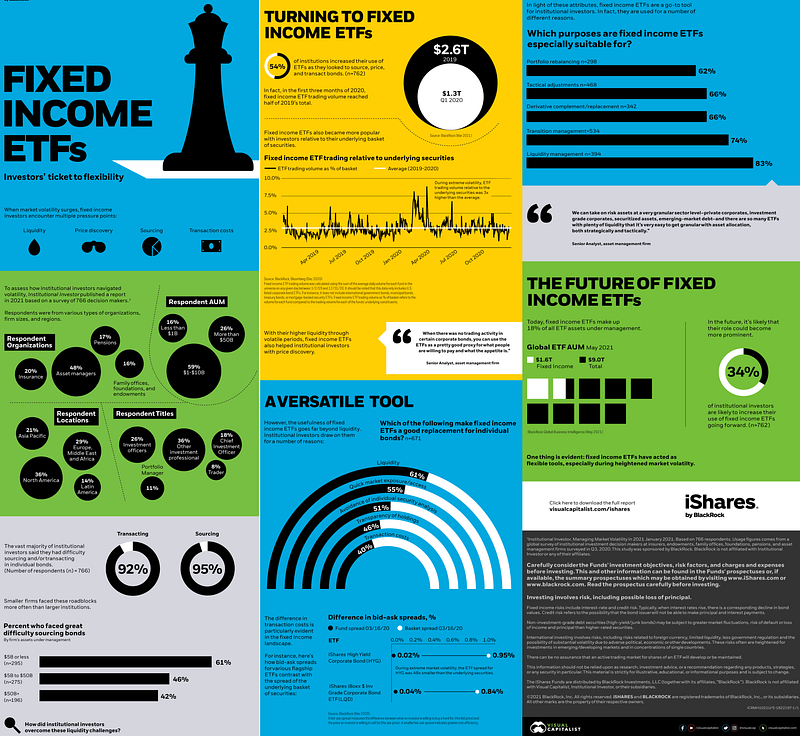
When market volatility surges like we are seeing right now, fixed-income investors encounter multiple pressure points. For example, they may face difficulties with liquidity, price discovery, and transaction costs. Today’s featured infographic from iShares shows how fixed income ETFs help address these challenges.
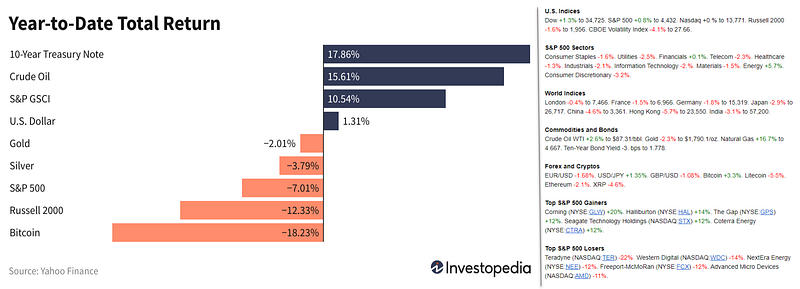
And finally, before moving on to some other statistics, here are the weekly & YTD numbers from various markets and different assets (Figure 1).
Fastest Growing IT Skills
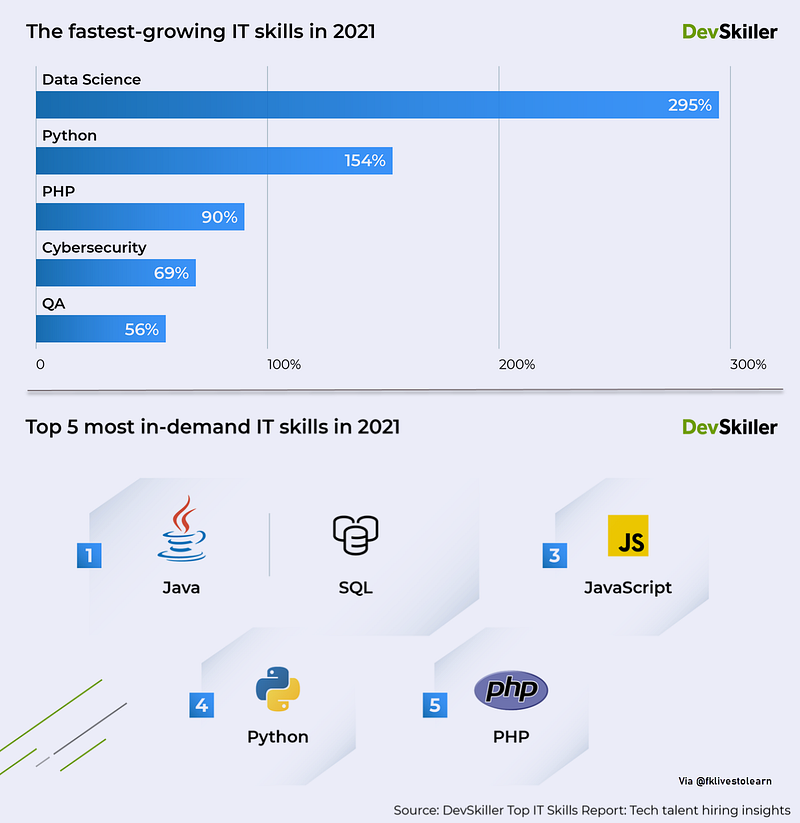
The latest IT Skills Report by developer screening and interview platform DevSkiller recorded a 295% increase in the number of data science-related tasks recruiters were setting for candidates in the interview process during 2021. This, in turn, fuelled the growth of Python, a programming language popular within data science and machine-learning applications, demand for which grew by 154%. DevSkiller’s findings were based on 102,869 coding tests sent through the DevSkiller platform between Dec. 1, 2020, to Dec. 1, 2021 (Figure 2). Java and SQL were each seen in 19% of DevSkiller test invites sent out to developers by recruiters in 2021. JavaScript, which tied the first position with Java in 2020, fell into the third position with 18% of test invites. Rounding out the top five were Python (9%) and PHP (6%), knocking out .NET/C# and CSS/HTML, respectively.
Financial Conditions Tightening
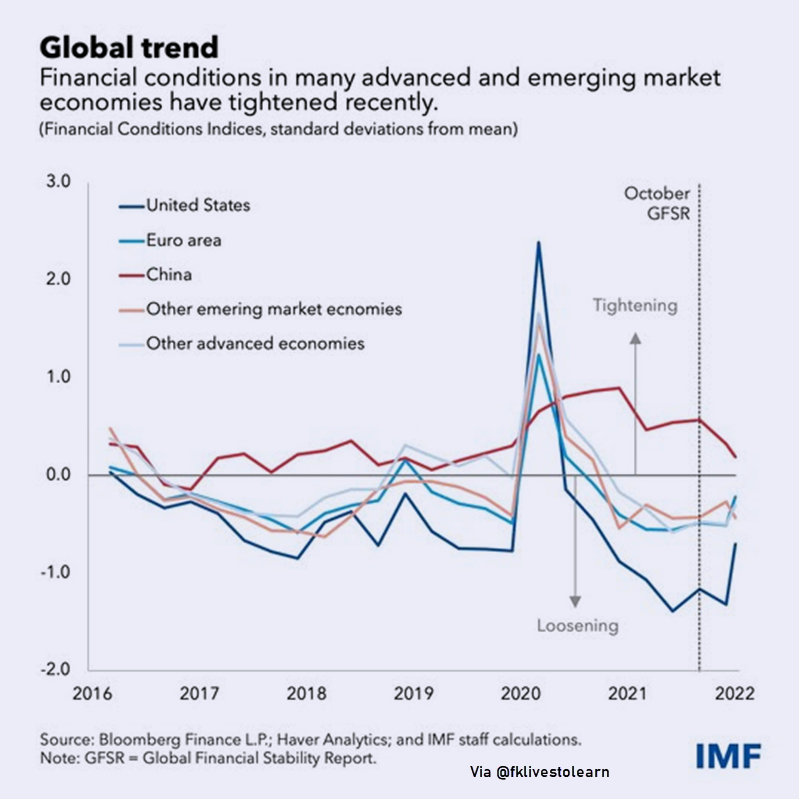
The unprecedented low real interest rates continue to boost riskier assets, notwithstanding the recent upward move. Low long-term real rates are associated with historically elevated price-to-earnings ratios in equity markets, as they are used to discount expected future earnings growth and cash flows. All things being equal, monetary policy tightening should trigger a real interest rate adjustment and lead to a higher discount rate, resulting in lower stock prices (Figure 3). Despite the recent tightening in financial conditions and concerns about the virus and inflation, global asset valuations remain stretched. In credit markets, spreads are also still below pre-pandemic levels despite some modest widening recently.
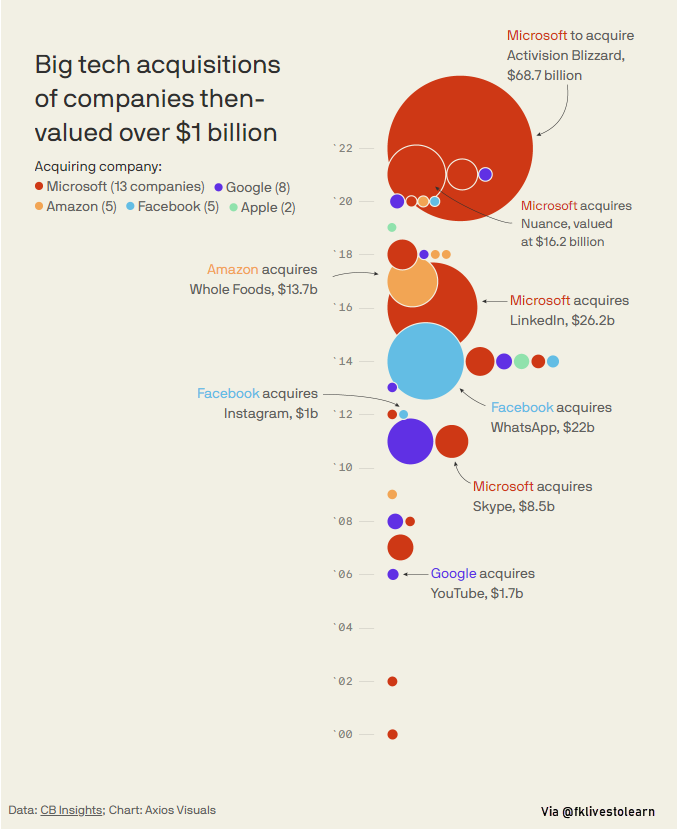
BigTech Acquisitions of Unicorns
Microsoft’s $68.7B deal to buy Activision Blizzard is part of a growing string of $1B+ deals by big tech. Major bets like Amazon’s $13.7B purchase of Whole Foods and Facebook’s $22B acquisition of WhatsApp have helped these tech leaders expand into new markets, product lines, and tech horizons (Figure 4). However, not all have been unqualified successes (think Microsoft’s $7.2B Nokia deal or the $12.5B Google paid for Motorola Mobility), and antitrust efforts could affect the viability of deals like Microsoft’s going forward.
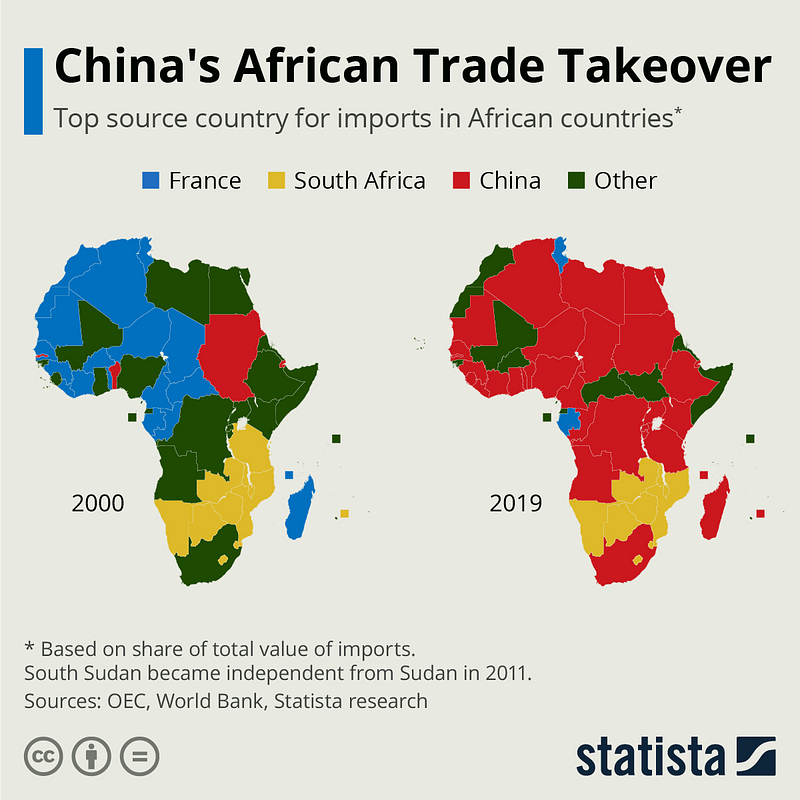
China’s Trade Takeover of Africa
In 2000, China was the leading source of imports for only a few African countries: Sudan, Gambia, Benin & Djibouti. But as this infographic shows, 20 years later the Asian superpower is now the top supplier of goods for over 30 nations on the continent (Figure 5). The China-Africa connection has been fostered intensely over the last two decades. In 2019, the total export value to China reached nearly 80 billion U.S. dollars. The growing Chinese demand for raw materials has found a strong supplier in Africa, with exports valued at around 17.5 billion U.S. dollars in 2019. Far beyond being a simple trade relationship, China has been the largest foreign investor in Africa for a number of years now. Additionally, the country was the source of 25% of infrastructure funding in the continent in 2018 — the second-highest share that year and only second to the financial commitments from national African governments.
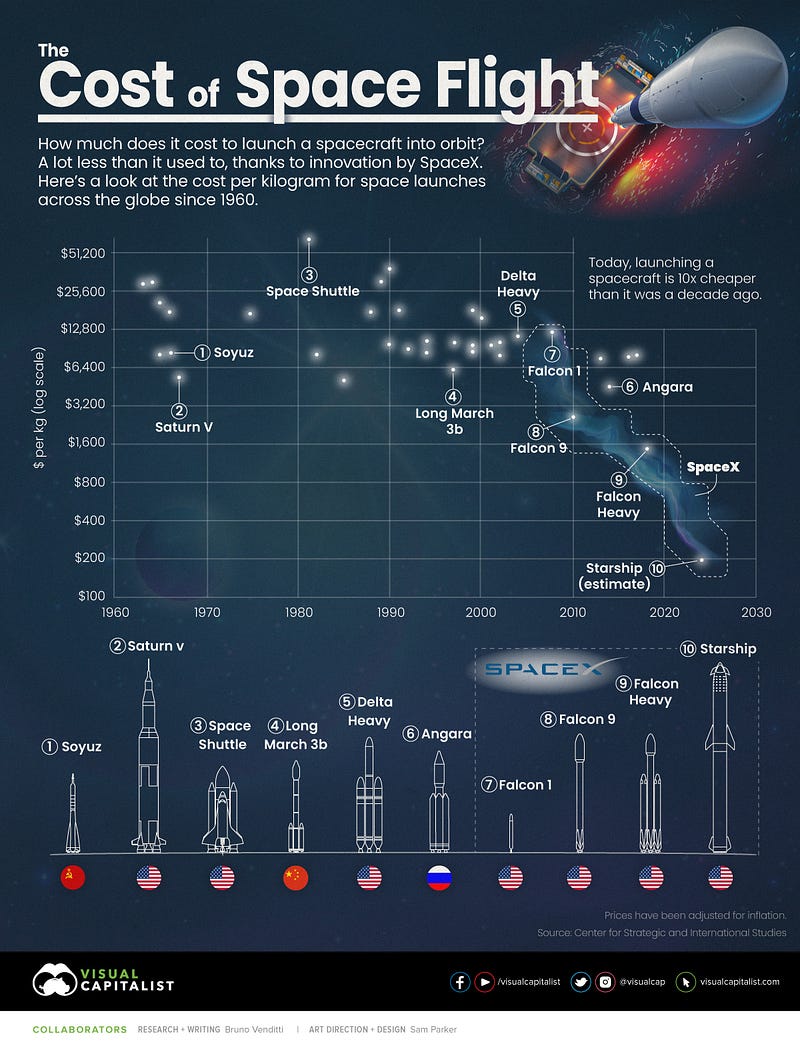
Cost of Space Flight
On December 21, 2021, SpaceX’s Falcon 9 rocket launched a cargo capsule to deliver supplies and Christmas gifts to astronauts in the International Space Station. Just eight minutes after liftoff, the rocket’s first stage returned to Earth, landing on one of SpaceX’s drone ships in the Atlantic Ocean. This marked the company’s 100th successful landing. Like other companies such as Jeff Bezos’ Blue Origin and Ball Aerospace, SpaceX is designing and building innovative spacecraft that are speeding up space delivery by making it more routine and affordable. But how much does it cost to launch a cargo rocket into space, and how has this cost changed over the years? In the image below (Figure 6), we take a look at the cost per kilogram for space launches across the globe since 1960, based on data from the Center for Strategic and International Studies.
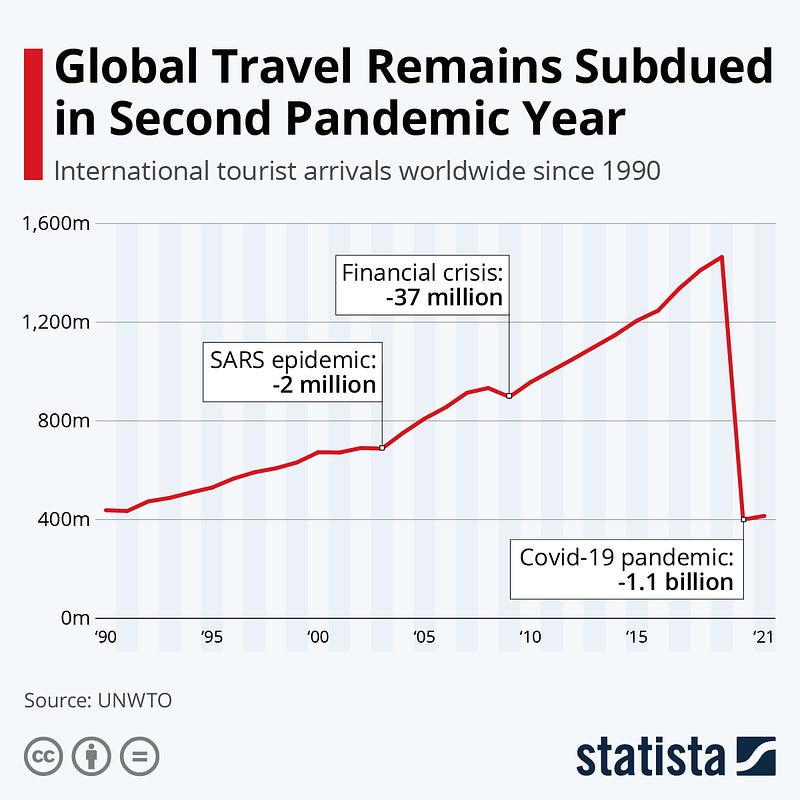
Global Travel Remains Subdued
While few industries have been spared by the impact of the COVID-19 pandemic, even fewer have been hit as hard as the tourism sector. As 2021 drew to a close with severe limitations to travel still in place, the World Tourism Organization (UNWTO) reported that international tourist arrivals increased by just 4% last year, remaining 72% below 2019 levels. That equates to more than 1 billion fewer international arrivals compared to pre-pandemic levels, keeping the industry at levels last seen in the late 1980s. Prior to the coronavirus outbreak, the global tourism sector had seen almost uninterrupted growth for decades. Since 1980, the number of international arrivals skyrocketed from 277 million to nearly 1.5 billion in 2019.
As our chart shows (Figure 7), the two largest crises of the past decades, the SARS epidemic of 2003 and the global financial crisis of 2009, were minor bumps in the road compared to the COVID-19 pandemic. Looking ahead, most experts no longer expect a full recovery until 2024 or later. While the UNWTO Panel of Experts is confident to see an uptick in travel activity this year, just 4% of the surveyed experts expect a full recovery in 2022. Roughly one-third of respondents believe that international arrivals will return to pre-pandemic levels in 2023, while 63% think it will take even longer than that.
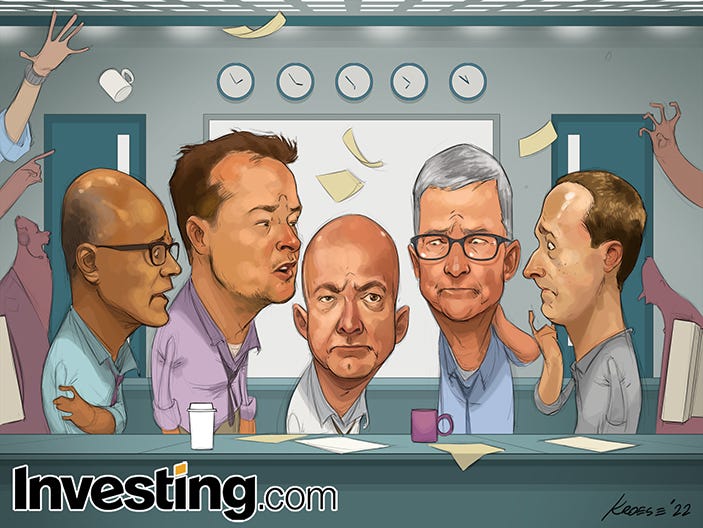
Market Humor: Tech Giants Report Earnings As Stocks Go On Wild Rollercoaster Ride!

Previous Edition of GBW
Read more stories like this and others by Faisal Khan on Medium.
Stay informed with the content that matters — Join my weekly Newsletter


