
Get it done with a simple reframe
How to easily dial up the motivation for yourself and others
You can come up with many thoughts about any given task. You get to choose which ones you want to honor.
Create better options and go with a productive thought that will decrease your dread, increase your motivation, and lead to the outcomes you want.
All it takes is a moment and a little creativity.
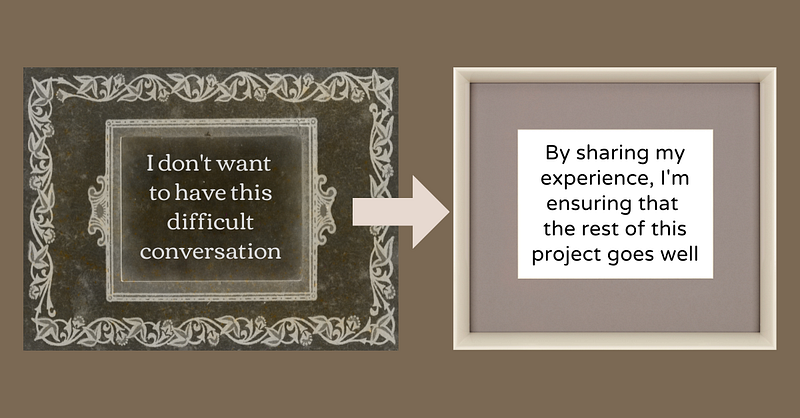
Telling yourself a conversation will be difficult before you’ve even had it will ensure that you see complexity over cooperation. A conversation can always be an opportunity to practice speaking up for yourself, or setting boundaries, or simply viewing interactions more positively.
Make everything easier and more interesting
You want to feel good. You don’t want to feel bad. Or unmotivated, full of dread, or bored. Yet there’s things you need to get done.
You aren’t resigned to feeling a certain way about those things. Shifting perspective — even just a little bit — will make doing any task much more enjoyable. That’s well worth it. Plus, there’s a knock-on effect for the rest of your day, your overall mood, and your attitude toward the remainder of your work. The impact of that is enormous. That’s what feeling good is all about.
The way to do this is to reframe your thinking around a task (or topic).

To reframe is simply to ‘put together again, to fashion anew’.
For a thought, this means to put it into new words.
Helpful reframes are ones that allow you to view a situation more positively or to feel more pleasant emotions. There are benefits beyond this, too.
The many benefits of reframing
When we make these subtle shifts, we ensure our success several ways:
- We give ourselves the best possible mindset for doing the work. It’s literally a better frame of mind — a complementary setting in which our mind can rest, gently bringing out the best of what it has to offer.
- Reframing increases our motivation through better thought loops — the relationship between thoughts, feelings, actions, and outcomes.
- Reframing allows for creativity as we challenge our minds to see things differently, e.g., to fashion anew.
- And it also reduces risk because we’re taking the time to thoughtfully plan for better outcomes.
- Lastly, reframing forces us to consider the broader picture — why are we doing this task? How does this fit into a bigger piece of work? How might this task align more strongly with my values or play to my strengths?
There are likely many more benefits, both generally and some personal to you. For example, as a wordnerd, I see reframing as an opportunity for fun and play. I often challenge myself to come up with increasingly better reframes; this is especially helpful for repeating or tedious tasks.
Several reframes to inspire your thinking
Below are some examples of helpful reframes I’ve come up with in my life. Feel free to adopt these, improve upon them, and come up with your own for whatever work you have that could benefit from a linguistic refashioning.
Reframing what a plan is…
We often view having (and especially making) a plan as an obligation, a set of constraints, or a list of criteria to measure success or failure later. However, a plan doesn’t have to be any of those things.
Reframe: A plan is simply a set of rails you build so that you can whoosh down them later. Like a waterslide.
Reframing what giving a speech feels like…
Let’s say you have to give a speech and you’re feeling very nervous. In fact, maybe you’re reinforcing this somewhat by telling yourself that you’re nervous. And anxious, and antsy, and sick to your stomach. You probably felt some of that just reading these words. That’s how powerful this stuff is.
Reframe: Tell yourself that you’re excited. Both feelings involve the same physiological response in the body, but excitement serves you better.
Reframing what doing your taxes is all about…
Maybe you’re feeling dread about filing your taxes. What’s the point of this anyway? Ultimately, it’s to comply with the law and be an upstanding citizen (or some variation thereof). In that sense, you actually DO want to complete this task. You’re just not particularly thrilled about the steps involved.
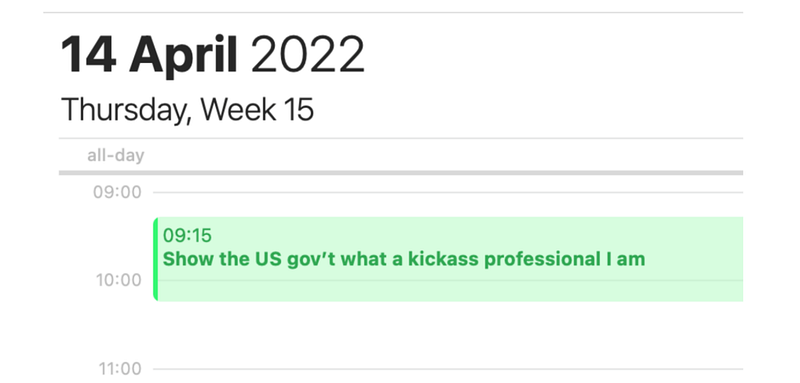
Reframe: Instead of ‘doing taxes’, you’re ‘demonstrating to the government what a kick-ass professional you are’. That feels slightly better already, which is good enough to get started, eh?
Reframing how you lead your team meetings…
It’s that time again. The hour-long group meeting where you get everyone to talk about what happened in the last sprint.
Reframe: you’re about to do the Making Sure Everyone is Happy Hour.
Reframing [insert your challenge here]…
In a sentence or two, describe something you’re currently struggling with.
Reframe: How will you ‘refashion’ what you described above? Ask yourself what you can omit. And has the broader purpose of this been included?
I’ve reframed my thought, now what?
Like building any good habit, you want to make your reframes visible, appealing, easy to understand, and rewarding to follow through on.
There’s no point in doing all this great reframing work in your head, only to undermine yourself later when you see ‘Do taxes’ on your calendar.
Make your reframes into visible reminders that will uplift and remind future you of your compelling reasons for doing all your stuff. Here are three ways you can start now:
- Update your calendar items and to-do lists with your reframed thoughts. Here’s an example of how I reframed ‘Do taxes’ from earlier this year:
- Print out your compelling reasons for doing your big projects as a visible reminder of the impact you are making with this work. If you’re feeling extra literal, put it in a frame; a visible reflection of the ‘mindset’ you want to cultivate.
- Create a mini-ritual before doing any task to help you generate motivation and get into the flow state. Start with asking yourself why you’re doing this work and spend 2 mins challenging yourself to come up with the best, most compelling reason.
Reframing final thoughts

This isn’t the end of the post. This is the beginning of your role as Curator in the art of Reframing Appreciation.
- What will you discover about yourself in this new mindset?
- What creative works will you come up with?
- How will you share your insights with the world?
If you want a proven, step-by-step method for reframing your thoughts, get the free Thought Model worksheet. Download the editable PDF and get access to the library of other free productivity, confidence, and communication resources immediately when you sign up to Hold That Thought — the weekly newsletter for insights worth sharing.
Originally published at https://www.witten.kim on April 11, 2022.
Kim is a life-long overthinker who has overcome many challenges to turn her mental energy into a super skill for getting things done and feeling great about it. She’s on a mission to help others do the same. Join the expert thinkers who are gaining clarity and focus with weekly insights in the Hold That Thought newsletter.


