
Generation Xcellent — Here We Are Still, Entertain Us
Why Gen X is more than a forgotten middle child
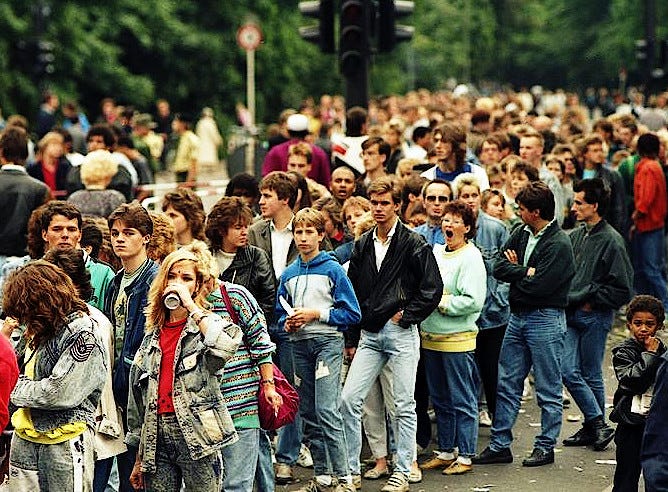
In 2019, news channel CBSN ran a report about the different generations. They completely omitted Gen X. You know when you suspect you’re being ignored, that you’re invisible? This time I wasn’t being paranoid.
Squished between two large and vocal generations, the Boomers and the Millennials, Gen X are what some describe as “Jan Brady of the generation wars”. Following the Boomers’ heyday, we had a brief moment in the sun during the 90s before we were washed away by a wave of millennials.
But Gen X hasn’t crawled off into suburban obscurity, although some of us live there. We are more than the “forgotten middle child”.
Gen X want you to know that we’re still here, we’re still relevant and we’re still excellent — albeit slightly cynical.
Who is Gen X?
Statisticians argue the point, but Gen X is generally said to be born between 1965 and 1980. I myself was born in the mid-1970s. My parents, Boomers, were born in the 1950s and my youngest siblings, Millennials, were born in the 1980s. My nieces and nephews are Gen Z and Gen Alpha. It’s a family affair and this article isn’t going to be a family fight.
According to the US Census Bureau, in 2019 there were 71.6 million Boomers, 72.1 million Millennials but just 65.2 million Gen Xers. I’m sure the proportions are the same in the UK, Australia, Canada and other countries with a similar cultural and social history.
Why so few Gen X?
Well, the FDA approved oral contraceptives in 1960 and the US Supreme Court legalised abortion in 1973. I’d say those are two big reasons for our smaller numbers. Also, the Boomers were, well, booming and Millennial numbers have been bolstered by immigration.
What is Gen X doing?
Right now, we’re in our 40s and 50s. Some of us are raising kids. Some of us are looking after aging parents. Some are doing both. We’re working, worrying about retirement and when that mortgage will be paid off.
But now and then, we’ll dust off that Pixies CD or reminisce about that great warehouse rave we once went to. Heck, we might still indulge in a few intoxicating substances every once in a while.
Some of us have kept our old hairstyles and our old Docs. Hey, they’re a comfortable shoe when you finally break them in.
How did Gen X get our excellent name?
The term “Generation X” was actually first applied to Boomers. In 1964, journalists Jane Deverson and Charles Hamblett wrote the book, Generation X, which captured the thoughts and opinions of Britain’s youth. A couple years later, a young Billy Idol read the book and named his band after it.
“We immediately thought it could be a great name for this new band, since we both felt part of a youth movement bereft of a future, that we were completely misunderstood by and detached from the present social and cultural spectrum. We also felt the name projected the many possibilities that came with presenting our generation’s feelings and thoughts.” Billy Idol
Idol, born 1955, may have been a Boomer but his words described to a T the generation that came after his.
Then, in 1991, another book came out, Douglas Coupland’s Generation X: Tales for an Accelerated Culture, which told the story of young adults “scarred by the 80s fall-out of yuppies, recession, crack and Ronald Reagan”.
There’s also the simple fact that members of Gen X refuse to be defined or pigeonholed. X is that unknown quantity, that random variable that can be anything.
Gen X attributes and values
“Caught between vast, self-regarding waves of boomers and millennials, Generation X is steeped in irony, detachment, and a sense of dread.” Rich Cohen
Although, I think there’s more to us, just like there’s more to the other generations.
Our childhood was marked by space exploration (and space shuttle explosions), the Cold War, AIDS (safe sex for us) and the arrival of the personal computer. My uncle got an Apple II when I was nine and we’d play games that were designed for computers and not arcades.
Our adolescence saw the collapse of communism. Walls were torn down and divorces were velvet. If we weren’t so cynical, we’d have felt optimistic.
And then with our young adulthood came 9/11…
Independent
Members of Gen X were some of the first kids to grow up with both parents working or in single-parent households. Brought up with daycare and divorce, being a “latchkey kid” could be lonely. Sure, it made us independent and self-reliant. It also turned us into helicopters when it came to our own children.
“Though we started babysitting at age 9 (and were responsible only for keeping our charges alive), as parents, we hire college-educated, CPR-certified, well-referenced, background-checked Pinterest enthusiasts who don’t just babysit our kids — they construct elaborate origami, re-enact Shakespeare and tutor our children in philosophy and Mandarin.” Anjali Enjeti
I was seven when I walked home from school by myself and 14 when at night I babysat not a kid but an actual baby. 100% of my Gen X friends’ kids would never be allowed to do those things. On a good note, our 1980s fears about chlorofluorocarbons and holes in the Ozone layer mean that we’re raising environmentally conscious kids who disrupt climate change conferences.
Maybe it depends on the individual’s experience, but I loved my independent childhood. I never felt neglected and I never felt unable to sort my own shit out. So thanks, Boomer parents.
Flexible
Gen X had no choice when it came to flexibility, what with the drastic social changes occurring during our childhood.
As a kid, I thought the Earth would explode either by deathly rays of sun that would come burning in through the hole in the Ozone layer or by a button pressed by one of the major Cold War participants. Nothing could be certain, so you made do with what was happening at the time. You partied like it’s 1999.
One minute we were typing “The quick brown fox jumps over the lazy dog” on a typewriter, the next we were chatting to a kid halfway around the world courtesy of the “information superhighway”. One minute Ellen was awkwardly dating men on her sitcom. The next she was awkwardly dating women.
Critical thinkers
Remember that?
Gen X have a higher education level than Boomers (29% have a Bachelor’s degree or higher, compared to 25% of Boomers) and we’re pre-cancel culture. Incidentally, 39% of Millennials have this same higher-education level, but this article’s not about them.
We learned to think for ourselves. We could see through bullshit and knew what was offensive, but we’d rather have a debate than ban someone from our college campuses.
Equal rights supporters
We grew up post-civil rights movement and post segregation (well, if we weren’t South African). So for most of us, diversity was the norm.
In my home country, the despicable White Australia Policy ended around 1966.
“From now on there will not be in any of our laws or in any of our regulations anything that discriminates against migrants on the grounds of colour or race.” Sir Keith Cameron Wilson MP
Increased (non-white) immigration meant that all colours and creeds of Gen X kids grew up together and formed lifelong friendships.
We were also coming out. Maybe not in high school, but by the time I got to university, around the time Ellen came out in 1997, few young people raised an eyebrow if you were LGBT.
Innovative
According to Sage’s State of the Startup report, 55% of startup founders are from Gen X. We were the first internet generation. We’re tech-savvy but also tech-daggy. For example, we have the highest generational use of Facebook.
In debt
As a young adult, I noticed credit card debt amongst my friends and peers that wasn’t present with my Boomer parents.
“Don’t worry, Uncle Visa will cover this,” was a popular saying in my friend group.
We’re still supporting children, and perhaps caring for elderly parents, and we’ve reached our peak earning potential. Our median retirement savings, if we ever get to retire, are the same as Millennials but we’re a generation closer to retirement.
Gen X are big spenders when it comes to non-essentials — hey, we like our restaurants. We have the highest credit card debt and the highest average debt of all the generations, although 62% of this is mortgage debt. So unlike younger generations, we’ve been financially privileged enough to be able to purchase a property.
Cynical
Given all of the above, can you blame us?
Unlike Boomers, there was nothing optimistic about the time we were born in. JFK had been assassinated, Manson had killed off the rest of the 1960s and oil was nowhere to be found.
Some say cynical. I say realistic.
Why Gen X is excellent?
Resilient
“Generation X, the last Americans schooled in the old manner, the last Americans that know how to fold a newspaper, take a joke, and listen to a dirty story without losing their minds.” Rich Cohen
We may be cynical, but we’re self-deprecating. We’re not snowflakes. We embrace and grow from negative feedback. The corporate 1990s were pretty rough times. We quickly learned how to be assertive when it mattered and also how to pick our battles. The 1999 black comedy Office Space taught me all I needed to know about work culture.
Analogue childhood, digital adulthood
We were familiar with technology, but not possessed by it.
We grew up with the independence of Boomers — riding bikes in the street, going to the park without adults — but also the influence of computer games brought to you by the likes of Atari and Nintendo.
We’re uniquely poised to empathise with and understand both Boomers and Millennials.
Hard-working
Despite accusations of being slackers, we’re actually pretty hard working. Maybe we took a gap year (or two) between school and work, but we pretty much haven’t stopped working since. We may not trust the corporate machine, we may switch jobs every three or so years, but we keep on working.
All those corporate takeovers and yearly management re-structures roll like water off a duck’s back. Like I mentioned earlier, we’re flexible.
We paved the way for what comes next
“Gen Xers laid the political, intellectual, social, creative and personal ground upon which the Millennials today walk, talk and text.” Christine Henseler, editor of “Generation X Goes Global: Mapping a Youth Culture in Motion”
We have the coolest generation name
X is edgy. X is undefined. X is easy to spell.
We’re the ultimate in teen angst
I was 16 when “Smells Like Teen Spirit” came out. If I wasn’t so apathetic, I would have been more excited by this.
I remember watching the video clip and those two guitar notes flicked something on in my brain. Until then nothing in popular culture had been created with me in mind. No one cared about me. Until then. Finally, I had an anthem. And I had a mosh pit.
A lot of Gen X angst came from not having anything to rebel against. There was no Vietnam War, no conscription. The Boomers had won all the personal freedoms we needed. Some of us rebelled by becoming conservative, like Alex P Keaton in Family Ties. The rest of us just yawned and said, “Meh.”
But if we didn’t have historic social movements, we had popular culture. We didn’t have the Beatles or the Rolling Stones, but we had some damn good songs.
Xcellent moments in popular culture
Music
Boomer music changed the world, but it had gone as far as it could go. Younger Boomers, sometimes called Generation Jones, gifted us with the excellent sounds of the late 70s and early 80s — punk, new wave, 2 tone, rap, electronic. (This is actually my favourite musical period, but that’s for another article.) All the Boomer music from the 50s through to the early 80s whirled around in our heads. It was time to take things to the next level.
Enter the MTV Generation.
A lot of the artists played on MTV were Boomers, but the audience was Gen X. If MTV wanted the ratings, Gen X was who they needed to please.
Hip hop emerged during the 70s, created by African American members of Gen X. The genre further developed in the 80s, becoming a popular music choice in the mid-90s and best-selling by the time we got to the late-90s and 2000s. Hip hop significantly influenced fashion, art (including street art), other music genres and youth culture in general.
Alternative rock had been around since the 80s, but the style was so beloved by members of Gen X it went mainstream in the 90s. The alternative ethos of DIY, anti-commercialism and pain-filled lyrics appealed to Gen Xers. As did the memorable guitar riffs. Even when the genre went mainstream, great guitaring remained. There was indie rock, there was shoegazing, there was Britpop and there was grunge.
Grunge emerged from Seattle in the mid-80s but it took off around about the time Nirvana released Nevermind. I was more into the jangly guitar of British alternative rock, but I was thankful to grunge for dispensing with 80s hair bands. There’s no denying the ground-breaking influence of grunge.
I don’t know if we’ll ever hear music like grunge again. There’s ample evidence that it was the last American musical revolution.
In the 90s, when I wasn’t wearing baggy shirts and Docs, I was wearing glow-in-the-dark bracelets, platform sneakers and flares the colour of a rainbow. Rave culture was the other big component of Gen X identity.
Raves started in the 80s as secret dance parties held at undisclosed locations. They were LGBT-friendly and focused on peace, love, unity and respect. Oh, and substances that gave you the energy to dance to questionable music all night…
No one was judged at a rave. You could wear what you liked, dance how you liked, and be as weird as you liked. Everyone was accepted.
When Gen X put away the happy pants and donned a bad suit to enter the workforce, our attitudes of tolerance have remained with us.
Movies
Gen Xers’ childhood imaginations were fired by stories set in a galaxy far, far away. Extraterrestrials would come to visit and befriend us. We’d sore on the back of a half-dog, half-dragon type of creature and argue over which name Bastian called out.
We also had nightmares about Freddy and Jason and poltergeists and dolls and clowns. So many clowns…
Then there were the John Hughes films. Finally, someone was able to depict our awkward yearnings of suburban youth. I loved those movies, even though I didn’t consider myself pretty and I rarely wore pink. I loved seeing everything work out for the plethora of high school caricatures, from the nerd to the jock.
I reached young adulthood in the 90s and one movie summed up my life more than any other — 1994’s Reality Bites.
Gen X was dealing with AIDS (or at least AIDS tests that were hopefully “negatory”), coming out, selling out, being unable to define irony after 16+ years of education, and having to work at the Gap after graduation because that’s the only job we could find.
The shitty jobs we got after all that education were also depicted in films like Clerks and Office Space. And people wonder why we’re distrustful of the workplace.
When we finally got a bit of money together (or a credit card) we filled our apartments with Ikea furniture. We took jobs whose titles would depress SpongeBob SquarePants, and we dreamed of doing something totally different, like joining a club with a first rule that you do not talk about it.
To escape we watched Tarantino movies. The violence and the ultracool soundtracks somehow soothed us.
Television
In the 90s, television was not only still watchable, it was really good. The closest thing we got to streaming was hiring a video, so Gen X was mostly still dependent on the television guide for our weekday entertainment.
My friends and I would have entire conversations in Seinfeld dialogue. On my first trip to New York, I bought all the candies referenced by this show — Pez, Junior Mints, Drake’s Coffee Cake, Jujyfruits.
The X Files made us wonder, Melrose Place fed our hunger for gossip, and Friends stayed with us as the 90s drew to a close and we became less cynical.
Fashion
As a teenager, I cut the shoulder pads out of all my clothes. The big hair, big shoulders and big attitudes of the 80s were out. The thrift shop look of Cyndi Lauper and Madonna remained, as well as a bizarre period when flowing floral dresses accompanied by white socks and boots reared its perplexing head.
I loved Gen X fashion, particularly from the 90s era. A certain time comes in a middle-aged person’s life when they stop following the trends and adopt a particular look as their permanent wardrobe. That’s why you see so many people in the 40s and 50s still wearing rock band tee-shirts, Converse and tracksuit tops. I recently considered getting a pixie cut again, but I’m too lazy for the growing-out stage.
90s fashion was versatile. You could slouch around in flannels and jeans, or fancy yourself up with a puffy white shirt. You could dye your hair pink, shave it off or get a “Rachel”.
At the end of the day…
I don’t think you can pigeonhole a person’s entire identity just by the decade in which they were born. But Gen X, like the other generations, does have a shared experience. World events and cultural movements do hold some sort of influence over us.
I’m happy with the life influences that contributed to making me the person I am today. There were some excellent songs and some excellent films that stand the test of time. The more laid-back style of parenting suited me and made me independent enough to eschew traditional career paths and travel the world instead.
Generation X gave you startups, online culture, and “over-bored” and “self-assured” teen angst. We gave you a love of recycling and an ability to look beyond the status quo.
Please don’t forget us in your Boomer-Millennial wars. Please don’t omit us and our contributions from your CBSN reports.
“Generation X is not the dorky middle child. Generation X is — and always has been — the moody kid from round the corner who just came over to smoke out of Marcia’s bedroom window and question the premise of the whole show.” Holly Wainwright
If the Boomers and Millennials are two slices of bread, Gen X is the delicious spread in the middle that makes the thing a sandwich. Add some spice from Gen Z and you’ve got yourself a pretty damn good meal.
Check out my article on Generation Jones here.


