
Unions | Serious Games
‘Beat the Boss’ Wants You To Unionize
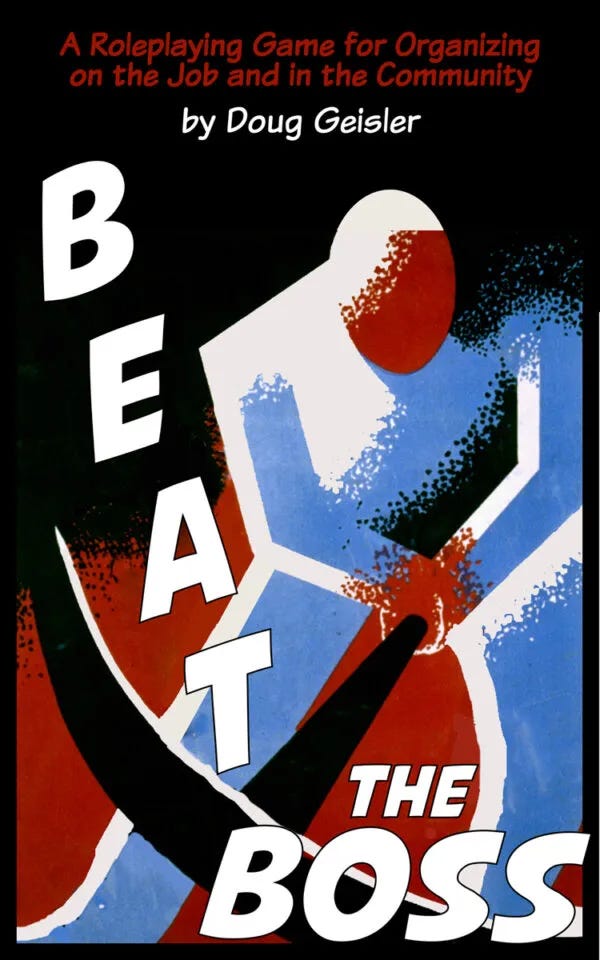
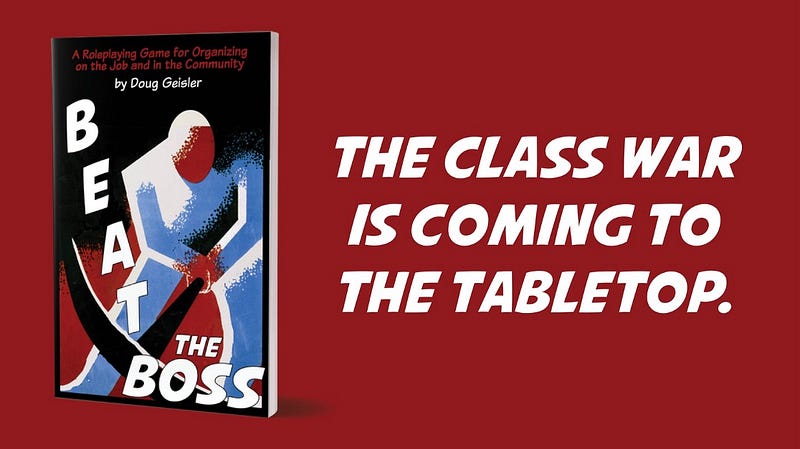
Beat the Boss: A Roleplaying Game for Organizing on the Job and in the Community
O’BRIEN: They fished his body out of the Allegheny river a week before the strike ended. Thirty two bullets he had in him. Or was it thirty four?
BASHIR: Well, he died a hero.
O’BRIEN: He was more than a hero. He was a union man.
— Star Trek: Deep Space Nine ep. 416 “Bar Association”
According to the news almost every single American of working age is either striking, voting to strike, unionizing, or talking about unionizing. Workers at Paizo announced that they’re forming a union. John Deere press-ganged salaried office staff into factory work to replace their missing workers. Workers at Kellogg’s have been striking for about a week now. Coal miners from Warrior Met have been on strike for most of this year. Nurses at Kaiser Permanente have voted to strike, as have film and TV workers. Labor is having a big moment right now. It seemed like the right time to talk about Beat the Boss, which I’ve put off for over year. I’ll be covering the PDF version from DriveThruRPG, not the print edition.
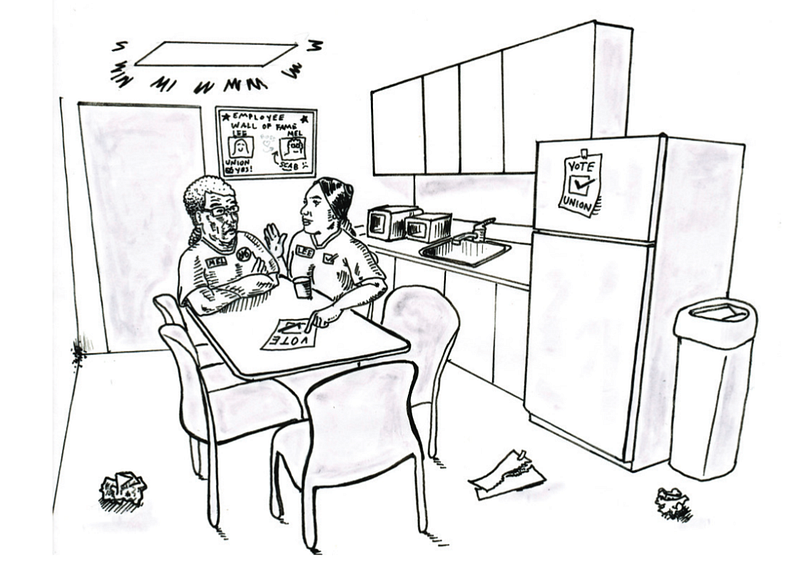
For those of you who have no idea what any of this nerdy shit is, Beat the Boss is a roleplaying game. Kind of like Dungeons & Dragons, except the dragon is your employer and the dungeon is full of union busters. The designer, a professional union organizer, created it to replace typical training sessions. Those sessions are usually on rails. Everything is per-determined and there’s no fail-state. The participants only learn what should happen in ideal circumstances. They don’t test the organizer’s ability to adapt or improvise.
But in Beat the Boss, you can get blindsided by a crafty manager or intimidated by a union buster. Stress-testing organizers and campaigns like this makes for better training and planning. It’s not too far removed from business wargaming or serious activist gaming.
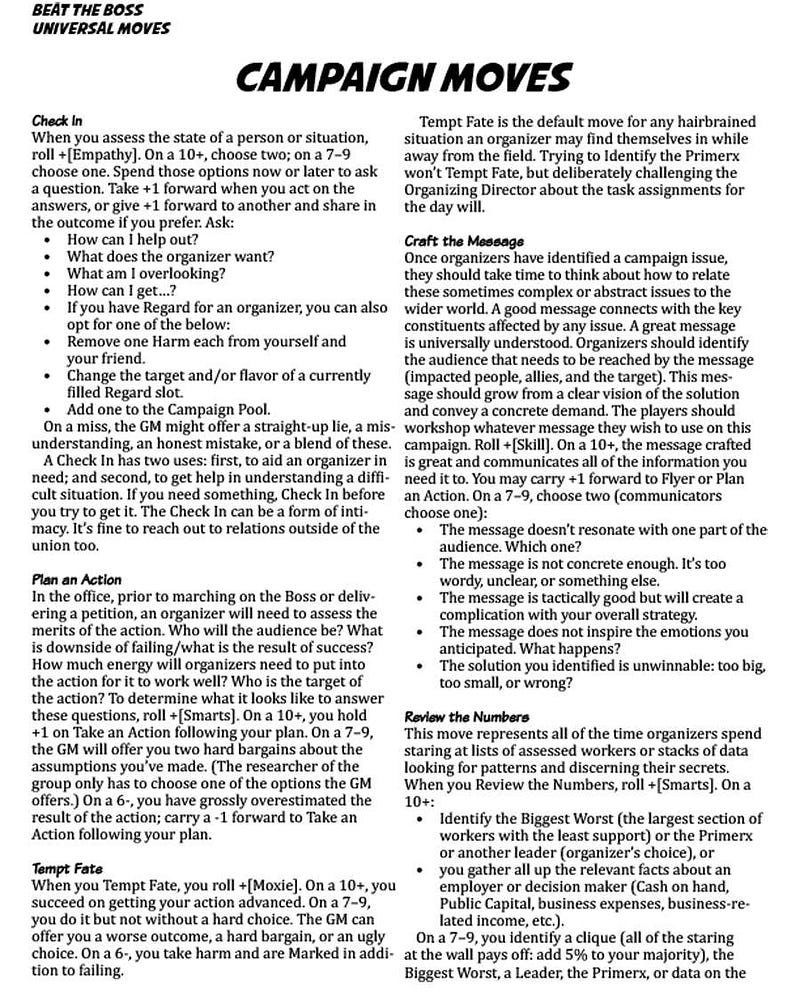
Beat the Boss is a PbtA-style RPG, but it plays somewhat like a serious wargame or a board game. Every player makes two Moves every Campaign Day, which is essentially a “turn”. Moves are the actions your character can take within the game, and they’re fairly self-explanatory.
- When your character plans out exactly how they will march on the Boss, they Plan An Action (shown above).
- Craft the Message (in the core book) is preparation for future communication. It’s basically what United Paizo Workers did before launching their website.
- UPW’s website launch could be considered a Flyer Move.
There are 16 Moves available to everyone, and each Tendency has five more Moves only they can use.
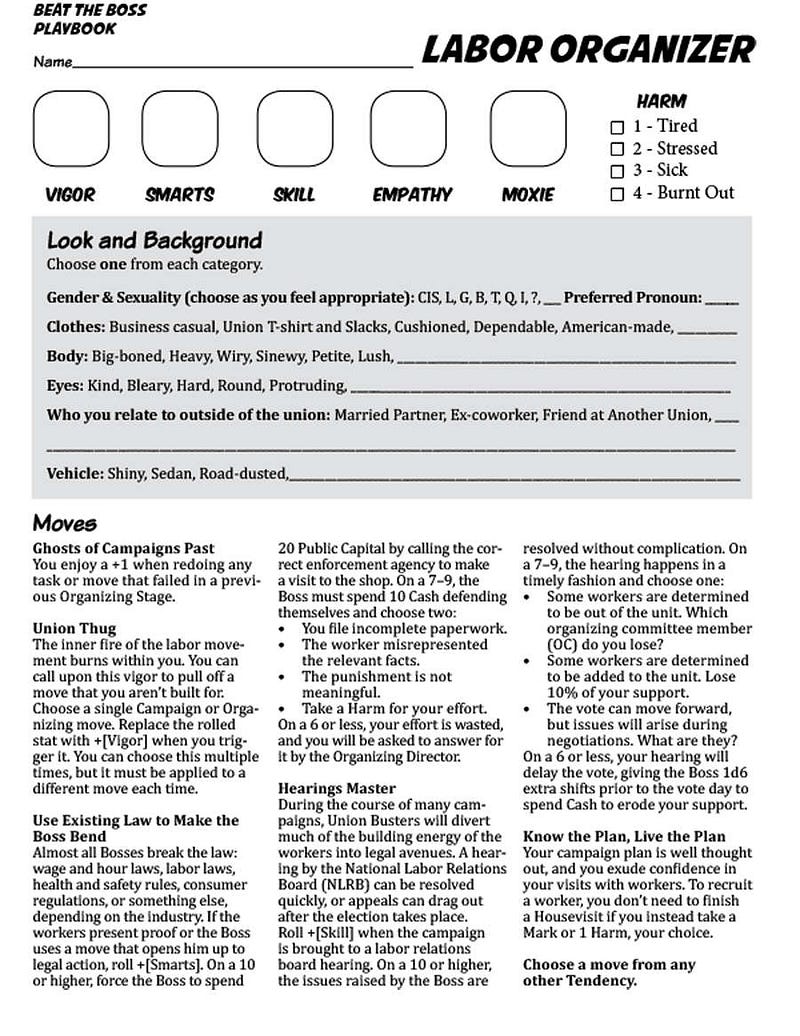
You’re character’s Tendency is how they normally deal with problems.
- Labor Organizers are traditionalists who play the long game.
- Community Organizers specialize in gathering the biggest pool of supporters possible.
- Social Servicers believe solving someone’s problem now is better than solving everyone’s problems later.
- Direct Action Organizers are all about the the protest, the strike, and the sit-in.
- Apparatchik are the loyalists who put the union movement first.
- Political Organizers focus on winning the vote to unionize.
On top of Tendencies, everyone has a specific Role to play in the campaign: Lead, Data Support, Field Organizer, Communications, Research Organizer, or Community Liaison. They’re all self-explanatory. Between Tendency and Role, every character brings something different and useful to the table.

But while the players are gaining support from workers, the Boss is making Moves of their own. Boss Moves include…
- Supervisors act to shut down supporters damages relationships between the player-characters.
- During one-on-one intimidation or persuasion meetings, managers and supervisors try to put workers off of unionizing.
- Sending a PR agent on a listening tour reduces support for unionization by 3% to 18%, depending on the roll of three six-sided dice.
The Game Master doesn’t roll dice when the Boss does something. Instead, Boss Moves cost Cash or Public Capital. Boss Moves automatically work so long as the Boss can afford it. But the Boss only has so much of each at any one time.
This might be the most telling mechanic in the game. The people who run big companies don’t have to actually do anything well. They just shell out whatever the price is and get what they want. To beat the boss, you have to make the conflict as costly as possible.
Beat the Boss can be exceedingly intense, even if you play it for fun and not as a serious planning tool. A lot of people work at some shitty places. Facing off against a Boss that reminds them of their real-life manager can trigger more tears of rage than any fire-breathing dragon.
Beat the Boss isn’t perfect. It needed another edit. The rules refer to “campaign playbooks” but the document the designers meant are called “campaign templates” (I think). Further, between the core book and the campaign template, it does a poor job explaining how much Cash or Public Capital a Boss should have. The author gives one example for starting and replenishing Cash, and not Public Capital, on page 92. The Campaign Template gives some vague advice but no actual numbers. It leaves it completely up to the GM without providing any sort of numerical range.
Also, the use of the words “comrade” and “revolution” was unnecessary. “Revolution” is only used once and “comrade” twice, but it’s still too much. Sounding like a commie doesn’t help the cause.
But what really chaps my hide is that the Tendency Playbooks, Campaign Template, Universal Move Sheet, and other cheat sheets and forms aren’t in the core book. Instead, they’re separate PDFs. They’re probably separate because they’re a different size, but that’s sort of the problem with zine-sized books.
All of the support documents are “Pay What You Want”, so you can just enter zero. Still, you have to go back to DriveThruRPG after you thought you got everything. Those docs are also bundled into zip files, called the GM Pack and Player Pack, but neither contain one missing document, the Organizing Chart. That’s a separate PDF! So if you went back and downloaded the two packs, you still have to return again for that missing document. That is a pain in the ass.
Those issues aside, this was a good idea implemented well. An experienced gamer, hobby or serious, can get a lot of mileage out of Beat the Boss. An eager newcomer to serious gaming can also make it work (now that I’ve pointed out the document drama).
You do not have to use Beat the Boss as intended. RPG’s are often hacked and remixed. An organizer can downplay the roleplaying aspects and treat it more like a serious wargame. Keep all the stats and Moves and whatnot to help quantify your capabilities, and those of the Boss, but gloss over the drama and playacting. As always, you do you.


