avatarAvi Kotzer

Free AI web copilot to create summaries, insights and extended knowledge, download it at here

3153

Abstract

e a first impression</h2><p id="3c06">The above was <b>Head & Shoulders’</b> tagline for many decades, starting in the 1980s. It’s what ad experts call “anxiety marketing” because it taps into people’s fear of dandruff. Proctor & Gamble reaped the rewards of that by selling gazillions of shampoos and conditioners. By the early 2000s, however, the brand had grown so much and displayed so many different varieties that shoppers needed second, third, and even tenth impressions in order to pick a bottle from the shelf. As a result, buyers chose other brands, sales dropped, and Proctor & Gamble got a taste of “anxiety marketing” themselves.</p><p id="8856">If only they had read this column and decided to use the much-cuter <i>furfur</i> instead of “dandruff” in their television ads…</p><p id="9dc8">Where does the word <i>furfur</i> come from, you asked? Oh, you didn’t? Well, I’ll tell you anyway. I need to get to those magical 4–6 minutes of reading time that Medium recommends. <i>Furfur</i> comes from the Latin <i>furfuris</i>, meaning bran. So I guess someone thought that the flaky, scaly stuff crumbling from people’s itchy scalp looked like the healthy dietary fiber many loafs of bread are made from.</p><p id="1753">If you think that’s yucky, it gets worse.</p><p id="3942"><i>Furfur</i> is also the surname of a yeast called <i>Malassezia</i> that commonly resides on the skin of humans and other mammals. Usually without permission. It’s responsible for a bunch of ugly conditions with even uglier names: <b>seborrheic dermatitis</b>, tinea versicolor, malassezia folliculitis, and pityriasis versicolor.</p><p id="3f95">The first one of those is called dandruff by many people — although dandruff is a milder form without the inflammation that <b>seborrhea</b> induces. Seborrhea gives you itchy, scaly skin that produces… you guessed it, <i>furfur</i>.</p><p id="a105">This skin condition cannot be effectively treated or cured with a mango-flavored dandruff shampoo; it requires anti-fungal creams and anti-inflammatory agents, like topical steroids. The Neutrogena T Gel and T Sal lines became very popular in the 1990s to combat this <i>Malassezia</i> intruder.</p><p id="04ce">If you have any serious dandruff condition, please go see your doctor. Or do what I did to eliminate mine: go bald.</p><h2 id="4a6e">Return to Peryton’s Place</h2><p id="0c05"><i>Furfur</i> with a capital F is the name of a lyin’, connivin’ S-O-B who happens to be the Great Earl of Hell. And when I say Hell, I don’t mean New Jersey. (Cue New Jersey readership plummeting instantly.)</p><p id="4a41">Hell as in demons. <i>Furfur</i> is a senior one, too, as he is in charge of 26 legions of little devils. He looks a bit like that Pegasus deer in the photo at the top. That creature is also known as a peryton, which is mentioned in Jorge Luis Borges’s <i>Book of Imaginary Beings</i>. Borges did not come up with the hybrid creature himself, but it’s exact origin is unknown.</p><p id="5539">Furfur may have first appeared in the “Infernal Dictionary”, a demonology tome published in 1818 by Frenchman Jacques Auguste Simon Collin de Pla

Options

ncy. Illustrations for the 1863 edition were provided by Louis Le Breton, a French painter who had specialized in marine paintings such as this beautiful one:</p><figure id="c2fa"><img src="https://cdn-images-1.readmedium.com/v2/resize:fit:800/0*GaHk5JK4mK7ZeOvc.jpg"><figcaption>Credit: wikipedia.com</figcaption></figure><p id="7a0f">When tasked with creating the art for de Plancy’s book, Le Breton promptly downed a pound of LSD and came up with these:</p><figure id="fb37"><img src="https://cdn-images-1.readmedium.com/v2/resize:fit:800/1*92uuJHOsvgguBeNN1OZGmA.png"><figcaption>Credit: wikicommons</figcaption></figure><p id="c4b8">There’s our pal, the hellish Earl, on the far right!</p><p id="c87c"><i>Furfur</i> originally appeared in <i>The Lesser Key of Solomon</i>. Contrary to popular belief, that was not the tiny key King Solomon used to open his mailbox, and kept losing around the palace. It’s a textbook of magic and the occult compiled in the 17th century.</p><p id="7d39">It explains how to conjure demons, Furfur included. When you summoned him up, you had to make sure to trap him in a magic triangle that compelled him to say the truth, the whole truth, and nothing but the truth. That’s how the idea for the witness stand came about. Just kidding! I think…</p><p id="e6f8">Furfur was responsible for creating storms, thunder, lightning, as well as love between a man and a woman. Which, come to think of it, can sometimes be like a storm full of thunder and lightning.</p><p id="91cb">In conclusion, whether you’re talking about dandruff or love demons, please don’t use the word <i>furfur</i>. Because, as you know by now the editors of the Spelling Bee puzzle decided that word is a <a href="https://www.merriam-webster.com/words-at-play/dord-a-ghost-word"><b>dord</b></a><b>.</b></p><p id="1c99">Please check out my previous entry on another <b>dord:</b></p><div id="2a08" class="link-block"> <a href="https://readmedium.com/clitic-4f2ce5010eae"> <div> <div> <h2>Clitic</h2> <div><h3>I bet you use this anatomical part every day</h3></div> <div><p>medium.com</p></div> </div> <div> <div style="background-image: url(https://miro.readmedium.com/v2/resize:fit:320/0*57V61TRVwRSMQEiV)"></div> </div> </div> </a> </div><p id="a3f9">*What the heck is a <b>dord, </b>anyway? Here you go:</p><div id="ce71" class="link-block"> <a href="https://www.merriam-webster.com/words-at-play/dord-a-ghost-word"> <div> <div> <h2>'Dord': A Ghost Word</h2> <div><h3>One of the questions people like to ask lexicographers is this: Can you sneak something into the dictionary? Can you…</h3></div> <div><p>www.merriam-webster.com</p></div> </div> <div> <div style="background-image: url(https://miro.readmedium.com/v2/resize:fit:320/0*afvWuGD4eDO-gtMf)"></div> </div> </div> </a> </div></article></body>

Furfur

A beastly yeast or a yeasty beast
Credit: Tsaag Valren, via wikicommons

UPDATE: March 24, 2021 featured two Spelling Bee puzzles. The New York Times’ official explanation has something to do with computer bugs, or real bugs creeping into computers… I’m not sure which. But we here at Silly Little Dictionary! know the truth. The Times is trying to sabotage our efforts and confuse all three of our readers. I promise you, they won’t get away with it! I’ll write two or three or fifteen Spelling Bee columns a day if I have to. (Fifteen being the limit Medium places on daily articles, or so I’ve heard.)

Anyway, I promise you that, although the link to the Spelling Bee Master shows different letters than the ones below, the letters I used for this column did appear at some point during the day. Okay, here we go, then:

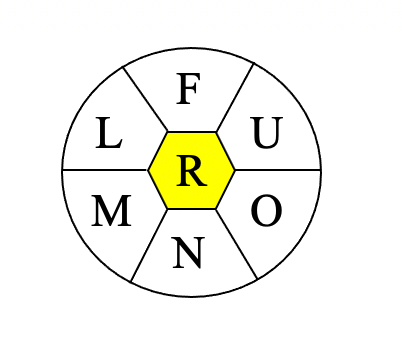
Today’s New York Times Spelling Bee letters:
Art: Iva Reztok

F, L, M, N, O, U, and center R (all words must include R).

Merriam-Webster says…
Credit: merriam-webster.com

Silly little dictionary! Don’t you know furfur can’t possibly be a word if the New York Times says it ain’t?

For further fascinating facts, check out the Spelling Bee Master.

What’s your favorite dord* from today’s puzzle?

My Two Cents

There was some real anguish earlier today among the crowd of Spelling Bee gamers. (Yeah, I know we’re just nerdy puzzle solvers, but “gamers” makes us sound just a tad cooler.) The link for today’s edition was broken until well past sunrise. For those who don’t play it on a regular basis, the Spelling Bee is “reset” at 3 am EST every day. That’s usually 9 am here for me in Spain, which gives me some time to fuddle around with it and try to reach at least Genius level before I pick a word for my daily column.

Anyway, for a while there I was worried I would have to just pick a random dictionary word to write about, instead of poking fun at the New York Times like I do every day.

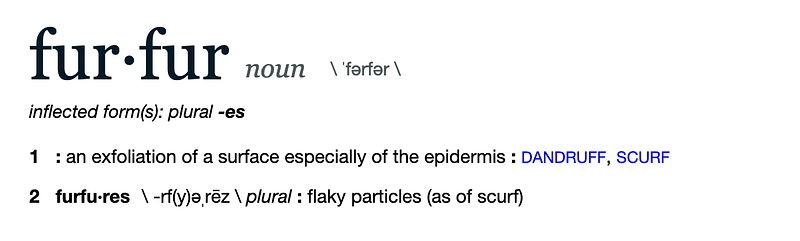
But I didn’t. I was tempted to go with ruff, but I’ll save it (and an old joke it reminds me of) for a rainy day. Today’s word is furfur, which Merriam-Webster kindly tells us is a cutesy way of saying “dandruff”.

You never get a second chance to make a first impression

The above was Head & Shoulders’ tagline for many decades, starting in the 1980s. It’s what ad experts call “anxiety marketing” because it taps into people’s fear of dandruff. Proctor & Gamble reaped the rewards of that by selling gazillions of shampoos and conditioners. By the early 2000s, however, the brand had grown so much and displayed so many different varieties that shoppers needed second, third, and even tenth impressions in order to pick a bottle from the shelf. As a result, buyers chose other brands, sales dropped, and Proctor & Gamble got a taste of “anxiety marketing” themselves.

If only they had read this column and decided to use the much-cuter furfur instead of “dandruff” in their television ads…

Where does the word furfur come from, you asked? Oh, you didn’t? Well, I’ll tell you anyway. I need to get to those magical 4–6 minutes of reading time that Medium recommends. Furfur comes from the Latin furfuris, meaning bran. So I guess someone thought that the flaky, scaly stuff crumbling from people’s itchy scalp looked like the healthy dietary fiber many loafs of bread are made from.

If you think that’s yucky, it gets worse.

Furfur is also the surname of a yeast called Malassezia that commonly resides on the skin of humans and other mammals. Usually without permission. It’s responsible for a bunch of ugly conditions with even uglier names: seborrheic dermatitis, tinea versicolor, malassezia folliculitis, and pityriasis versicolor.

The first one of those is called dandruff by many people — although dandruff is a milder form without the inflammation that seborrhea induces. Seborrhea gives you itchy, scaly skin that produces… you guessed it, furfur.

This skin condition cannot be effectively treated or cured with a mango-flavored dandruff shampoo; it requires anti-fungal creams and anti-inflammatory agents, like topical steroids. The Neutrogena T Gel and T Sal lines became very popular in the 1990s to combat this Malassezia intruder.

If you have any serious dandruff condition, please go see your doctor. Or do what I did to eliminate mine: go bald.

Return to Peryton’s Place

Furfur with a capital F is the name of a lyin’, connivin’ S-O-B who happens to be the Great Earl of Hell. And when I say Hell, I don’t mean New Jersey. (Cue New Jersey readership plummeting instantly.)

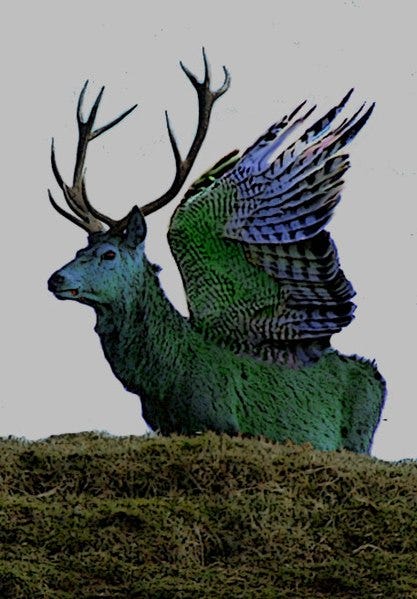
Hell as in demons. Furfur is a senior one, too, as he is in charge of 26 legions of little devils. He looks a bit like that Pegasus deer in the photo at the top. That creature is also known as a peryton, which is mentioned in Jorge Luis Borges’s Book of Imaginary Beings. Borges did not come up with the hybrid creature himself, but it’s exact origin is unknown.

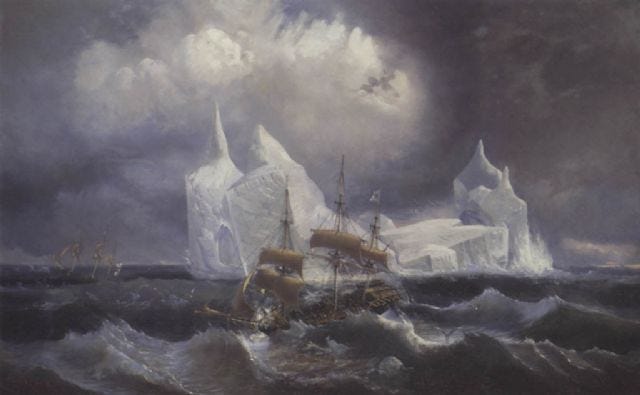
Furfur may have first appeared in the “Infernal Dictionary”, a demonology tome published in 1818 by Frenchman Jacques Auguste Simon Collin de Plancy. Illustrations for the 1863 edition were provided by Louis Le Breton, a French painter who had specialized in marine paintings such as this beautiful one:
Credit: wikipedia.com

When tasked with creating the art for de Plancy’s book, Le Breton promptly downed a pound of LSD and came up with these:
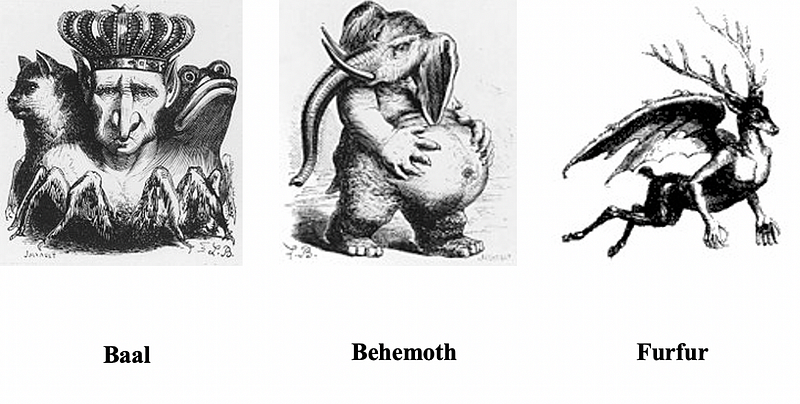
Credit: wikicommons

There’s our pal, the hellish Earl, on the far right!

Furfur originally appeared in The Lesser Key of Solomon. Contrary to popular belief, that was not the tiny key King Solomon used to open his mailbox, and kept losing around the palace. It’s a textbook of magic and the occult compiled in the 17th century.

It explains how to conjure demons, Furfur included. When you summoned him up, you had to make sure to trap him in a magic triangle that compelled him to say the truth, the whole truth, and nothing but the truth. That’s how the idea for the witness stand came about. Just kidding! I think…

Furfur was responsible for creating storms, thunder, lightning, as well as love between a man and a woman. Which, come to think of it, can sometimes be like a storm full of thunder and lightning.

In conclusion, whether you’re talking about dandruff or love demons, please don’t use the word furfur. Because, as you know by now the editors of the Spelling Bee puzzle decided that word is a dord.*

Please check out my previous entry on another dord*:

*What the heck is a dord, anyway? Here you go:

Spelling Bee
Language
Books
Dandruff
Science
Recommended from ReadMedium