
Writer’s Challenge
Fruit Loops and Pet Rocks
Our love-hate relationship with Advertising
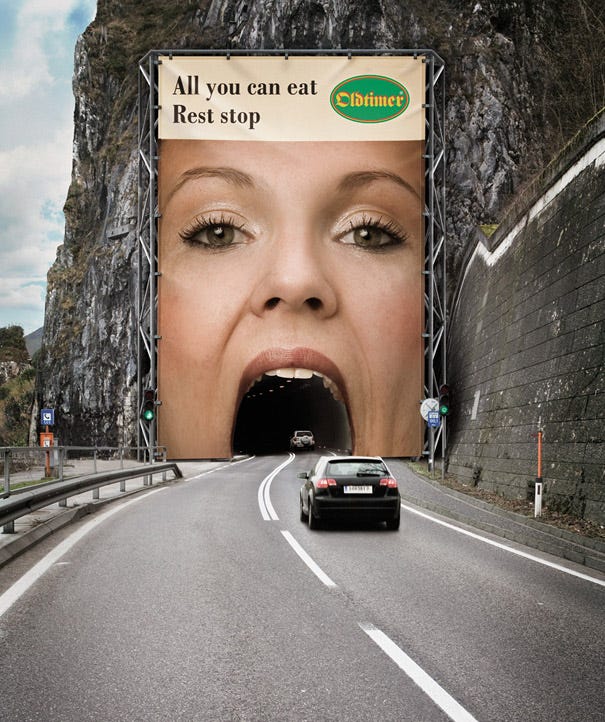
I was tagged by Paul Myers on a fascinating article about advertising and influence. Paul asked: “Who are we based on how we have been influenced. Are we a result of our marketing exposure, our experience, cognitively matched by a brands’ congruence of our self-image?”
Here’s how advertising has impacted me over the years.
My wife affectionately calls me Google Brain. Though I didn’t always take it as a compliment. At first, I thought she was calling me a database. A human repository of everything trivial and inconsequential.
That hurt. For a little while, and then I saw it for what it was. And accurate statement of my penchant for remembering the odd and unusual. For connecting random words spoken today with lyrics from a band that had one hit in 1963 or with a TV series that aired in 1974.
It’s not that there’s nothing “up there” but reruns of I Love Lucy and My Favorite Martian, but that I have a genuine interest and fascination with American Culture. And there’s probably nothing as uniquely American as our Advertising. Our constant and unrelenting desire to change the way we think and act. Especially in regards to products that are perfect for us and only cost $19.99.
But, wait, there’s more.
Advertising, American or otherwise is an odd creature that is an amalgamation of art, business, music, deception and sex. In no particular order.
All in an effort to get human beings to agree on something they normally wouldn’t even consider or to purchase something, they really don’t have a need for.
Think of what is being attempted here by looking at it in terms of our daily life.
Dad, can I have the Keys to the Car please?
Instead of asking the question, simply at dinner one night, you create an advertising campaign designed to change a point of view, from a negative to a positive.
a. That with these keys come responsibility and personal growth, thus fewer future problems
b. That with the keys, dating becomes safer and a more controlled experience — thus less worry.
c. That with the keys, comes trust and an improved self-image. An improved relationship between father and son occurs.
So, you tap into the appropriate Apps; design the art and message and make your presentation during a moment of relaxation.
Result: An evening out with Alyssa in your dad’s Jeep Wrangler. Or so you hope.
SELLING LIKE IT MATTERS
Advertising assumes you may not want what they are selling. That you may not need what they are selling. That it may be too expensive and actually quite foolish for you to even consider buying it, given the mortgage payments, day care expenses and so on.
But they do it anyway.
It’s ingenuous. It’s magical in many ways.
It seamlessly transports an idea from the boardroom to your brain, resulting in a financial transaction, a change of disposition, or the removal of a barrier that was erected long ago — for a very good reason — thus opening up an opportunity for someone else to influence you.
Advertising is cute and funny, sometimes really funny. Inventive, original, moving and ultimately one of the worst things Man has ever created.
Okay, next to the Hydrogen Bomb and those fucking plastic bottles, maybe not that bad, but close.
Why?
Because its intent is often to override our innate sense of right and wrong and insert in its place an opinion or idea held by someone else. An opinion, that under normal circumstances and access to a greater depth of information, we would never embrace.

We are emotional creatures. Alas, even Mr. Spock was sometimes swayed to do something counter to his training and discipline.
We love being a part of something. Of agreeing with ideas or positions that other important people share. Of tagging along with celebrities and figures we see online or on TV. Not mindlessly of course, with our full agreement. Or so we think.
As noted, we are emotional creatures and not computers. We do not have algorithms in place that endlessly compare and contrast information so that we are always on the cusp of making the right decision.
We make mistakes. We let our emotions get the better of us. Our feelings of loss and anger. Our desire to right a wrong, done against us or someone else, that we were not able to do in the past.
Advertising, whether it’s hawking a product, person or political expedient, is all about planting an idea in the vicinity of where you “live” and getting you to take in that idea, as if it were an orphan child. Nurture it, care for it, even if only for a short period of time. It will eventually be replaced by another.
Or so they think.
What social media platforms have done for us over the past few years, is both beneficial and damaging.
Con — It makes it too easy for information, visual and data, to penetrate our analytical defenses and influence us in some way.
Pro — it has made it obvious that this is exactly what is happening and we had better take note. Not later, but now.
FRUIT LOOPS AND PET ROCKS
Advertising is not always insidious, manipulative or mean. Sometimes it’s just trying to do one thing — get you to buy the Fruit Loops.
We may not need those artificial flavors and colors, but they are fun and make breakfast a lot more cheerful than white toast and marmalade. They have a point.
Sometimes, Ads are just an extension of one person or company’s desire to be successful, which we can all relate to. If it makes us laugh, or if we buy something we can use, even if only once, what’s the harm in it?
Ever own a Pet Rock?
I never saw the value, since my backyard was filled with them, but I didn’t fail to note the ingenuity and sheer magic involved in getting people to shell out hard earned money for a piece of igneous rock and assorted accessories. Brilliant. Give credit where credit is due.
I don’t watch many commercials these days — the mute button is my friend. But even with all the electronic barriers, and other ways to avoid them, some still get through and I laugh and nod and think, they got me that time.
And that’s okay. Commercials are not evil. Most are at best, fun to watch, and at worst, easy to turn off.
But make no mistake, we are being influenced. As long as we can separate out cause and effect and understand the process at work, we’re safe to watch as much television as we like.
Of course, too much of the boob tube will rot your brain, but that’s another story.
“A good ad should be like a good sermon: It must not only comfort the afflicted, it also must afflict the comfortable.” — Bernice Fitz-Gibbon
Joe Luca is writer and editor for ILLUMINATION and a published author and writer of children’s stories, short fiction, non-fiction articles, screenplays and poetry. Publications include Child’s Life, Children’s Playmate and others. There are some other articles below — have a read. And thank you for stopping by.
Those tagged by Paul and now me. Karen Madej💛, George J. Ziogas, Chris Hedges, P.G. Barnett, Kathryn A. LeRoy, Ph.D. Sinem Günel, Julia E Hubbel, Aurora Eliam, CMP, Rasheed Hooda, R Tsambounieri Talarantas, Terry Mansfield, Dew Langrial, Sylvia Love Johnson Lori Brown, Desiree Driesenaar, Jessica Cote, Sumera Rizwan Lanu Pitan Arthur G. Hernandez Ming Qian