
Speaking Bipolar
From the Pages of a Perpetual Pariah — My Day of Reckoning
The Hidden Chapter, Page 1
I didn’t particularly like him. He was a tall, strong, young, black Staff Sergeant that worked in the radiation lab. He had a very powerful personality, and his presence filled the room. It was obvious that he didn’t care much for me either. He definitely didn’t appreciate me telling him what to do. Regardless of whether that was my job or not.
It was at the end of 2008. He and I got into an altercation at work over some training he was required to do but refused to complete. Insisting that he had already done it when I knew he hadn’t. He argued with me over it. I should have taken it up the chain, but I didn’t. As non-commissioned officers, we were taught to handle things at the lowest level and that’s what I was attempting to do.
Suddenly an all-too-familiar rage inside me surfaced. Unlike times in the past, this instance was uncontrollable. I “pulled rank” on him which essentially means I told him he had to do what I said because I outranked him. That sort of thing was virtually unheard of, especially between an E-5 and E-6. By the time our brief but heated interlude had ended, I was shaking and crying uncontrollably. I found myself sobbing hysterically in my Superintendent’s office. I was a mess.
After that encounter, I knew something was really wrong with me. I had never allowed my personal escapades, impulsivities, proclivities to collide with my job. I was always able to keep them separated. I had lost control. My day of reckoning had come.

They Were Wrong Because I Lied
I t took them 12 years to figure it out. Because I had lied. Or, rather yet, I had omitted all the details. I didn’t want to get kicked out, so I lied for a decade. I faithfully took my prescribed SSRIs and attended my mental health appointments. So, anything worse than major depression wasn’t even considered. I was beyond thriving. I was excelling. They were wrong because I lied. They were treating me with medications that merely made me worse for a decade.
Medications are used diagnostically. Take them, and if they work then that’s the problem. If not, move onto the next thing. I started with Lithium, but because a physician failed to take note of it, they prescribed me Mobic which caused me to have lithium toxicity. I was then put on Depakote which made me rapidly gain weight. I was already overweight, so this did little more than increase my depression. We finally found Lamictal which did the trick and I’ve been taking that for 13 years with very few incidents of mania.
People that are Bipolar don’t tend to thrive well with employment. I was the exception. I had discovered a way to channel my mania for good. At work, anyway. Home was entirely different. So, anything more than depression didn’t seem to be the problem. Had they only known.
Before I continue, I wanted to say that this is the first and only time I’ve had the opportunity to publicly tell my scandalous story. And it turned out to be pretty damn scandalous, indeed. There was a sequence of events that occurred and from the outside, it probably looked different than it really was. I don’t really care at this point, 13 years later. But it marked a pivotal turning point in my life. A storm had been coming for a long time and it had begun hovering directly over me. It remained there for years while life happened, as it does.
A 4–7 minute read alone will not cover the story I’m introducing here. I’m writing a book which covers this in much more detail so I’m attempting to summarize here, which I’m not particularly great at. Bottom line, there’s more to this story, so there will be more to come. I’m beginning a series here with this article. I hope that you follow me through it.
Certain aspects of it are already covered in published works on Medium. Thus, I obviously cannot re-publish them here. If you happen to visit my profile, you will find some explicit content that occurred in conjunction with this story but it’s not family-friendly so you will have to read those on my profile, outside this publication. They establish my state of mind at that time, which is really important. Proceed with caution. I’ve provided links to some very important pieces of this puzzle at the bottom. I urge you to read them.
Me in 10 Pages
B y Jan 2010, after 13 years of exemplary military service, I had been summed up in a 10-page packet.
“Patient appears older than stated age, short hair in bob, no apparent distress, wearing blues and no wedding rings, cooperative with good eye contact, PMA mildly decreased, speech is normal in rate/rhythm/tone/volume.”
“Impression — 33 yo female USAF AD E-6 with genetic loading for substance use disorders & personal psychiatric Hx of chronic mood instability who is experiencing worsening depressive symptoms without manic symptoms in the context of significant acute familial stressors.”
“Sessions #28 content: Patient reports current mood as depressed and endorses difficulty trusting others with mild paranoia, poor sleep, anhedonia (inability to feel pleasure), guilt, loss of energy and poor concentration.“
“Patient has been prescribed multiple antidepressants (sertraline, buspirone, escitaopram, bupropion, venlafaxine, fluoxetine and amitriptyline).“
“Results of Psychological testing data, 8Sep09: “The member’s level of intellectual functioning was in the average range, and there was no indication of cognitive dysfunction. In measures of personality functioning, her response style suggested an overly negative self-portrayal with an unstable sense of self, unstable interpersonal relationships, and poor emotional regulation.”
M y service had begun in 1997 with a lack of depth perception that was easily overlooked to an abrupt end in 2010 with a serious mental illness. Unfortunately, that one wasn’t.
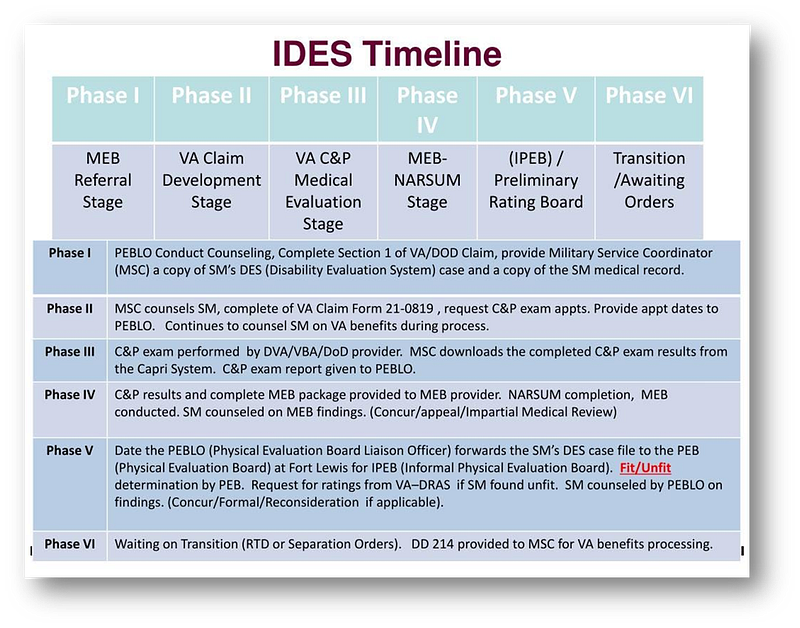
My Breaking Point
I n that past year, I had changed duty stations. Taken on a newly created position that had not existed before I got there. I was a guinea pig, of sorts. While I loved what I was assigned to do, at least half of the 34-man team members didn’t feel the position was even needed. Nobody understood the importance of it. Leadership did. That’s why they established it. That’s why I was there.
They felt I was getting special treatment, of sorts, working directly with leadership, being solely responsible for managing all their required training. Telling them they had to complete specific requirements before they were qualified for this very specialized team. Coordinating with our sister services regarding our team’s readiness to deploy within 24 hours. They didn’t fully grasp what I was doing. I was seemingly included but talked about behind my back. I held my head high, doing what I was assigned to do whether they liked it or not.
But there was more going on behind closed doors than managing team capabilities and once I had arrived at my new position, I began breaking my own rules in addition to the military’s. This is where that explicit content fits in.
I had also not kept up on my meds during my move. I hadn’t seen a psychiatrist in months and no idea how long it had been since I had taken a pill.

Essentially, I had begun that very steep downward spiral that I’m sure all of you are intimately familiar with. I was going down fast, and I was pulling others down with me. I couldn’t keep my mouth shut. Impulsive in more ways than one. I bragged about my excursions to anyone who would listen. Became “friends” with the wrong people. The ones who gossip and stab you in the back. I was a loose cannon. I was dangerous. This much was true.
The Results
When they tested me for determination of an official diagnosis, I was informed that my results were indicative of almost 50/50 Bipolar/Borderline. I guess that made me borderline Borderline. My psychiatrist could have gone with either Dx, but opted for Bipolar because I believe she sincerely cared for my wellbeing and knew that if I were “kicked out,” it would likely be a retirement as opposed to a separation. Retirement, the more likely outcome with a Bipolar Dx, would give me all the benefits of a retiree for the rest of my life. Separation, the more likely outcome with BPD, was a lump sum and nothing more.
The Findings of the Board
“Technical Sergeant Ellis’s medical condition is not compatible with the long-term rigors of military service. She has Bipolar Disorder Type I and requires medication that limits her ability to deploy. The member will need ongoing psychotherapy with lifelong medication. The Informal Physical Evaluation Board finds the service member unfit and recommends permanent retirement.”
My appeal was denied. I could have appealed again but was advised against it.
And just like that, my career ended with a strike of a pen.

The Secret Was Out
I t was true. Something was very wrong with me. And I had known that for a very, very long time. Three failed marriages, a lifetime of risky behavior, promiscuity, including repeated affairs with all of my husbands and any serious relationship I ever had. And most recently, all the wreckless affairs I had been having. One that was still going on. This just wasn’t normal.
I had served faithfully. Worked hard. Poured my heart, every bit of myself, into my job. Repeatedly recognized at Group, Wing, Command, and Air Force-level. Received five Achievement medals, three Air Force Commendation medals, and an Army Commendation medal. Was a “fast burner,” which meant I was testing up the ranks quickly. At an above average pace.
I served in OPERATIONS SOUTHERN WATCH and OEF/OIF ENDURING FREEDOM. I missed my only child’s first birthday and first steps to fulfill my commitment.
I have a slew of bronze eagles, awards, challenge coins, citations as proof of my tireless dedication to my country. As long as no one knew what was going on behind closed doors, I set the example. I was told my contributions reflected great credit upon myself and the USAF. It had been read to an audience 10 times.

Picking Up the Pieces of My Life
Medical retirements are processed within 90 days. That meant I had three months to figure out what the hell I was going to do with my life. I had planned to have at least seven more years to prepare but that was gone. I had literally just left my husband of eight years and was a single mom. No job. Very little time to find secure employment and had begun to live off a single credit card I had. It all happened so fast. My new meds hadn’t even taken full effect.
My permanent retirement was indeed a blessing, but I was retired at 30% of an E-6 base pay which equated to a little over $800/month. I was awarded 60% VA disability which merely reduced my taxable retirement pay by a little over $200. They don’t add the two. So, I got a little over $800/mo and full retiree benefits. Definitely better than nothing, but not enough to support my daughter and me. Not even enough to cover her after-school care. I had just signed a lease for my own place. I had a $25K credit limit and 90 days to figure things out. What the hell was I going to do?
Everything was a mess. I had no family. No support system. Everyone had betrayed me or dismissed me altogether. My daughter’s dad was livid with me for leaving. Enraged when he started learning the details of my actions over the past year. Hurt, rightfully so. I left him an empty house to come home to. I had given him notice. He just didn’t believe I would really leave. But I did. That’s one thing I don’t regret. I regret it happened the way it did, but not that it happened.
My Own Gift of My Own Life
I t was Dec 2009 that I lay under my Christmas tree, wasted, for once in my life, seriously contemplating suicide. I knew how I would do it. I had gotten myself into this impossible situation and didn’t see any way out other than going back to my daughter’s dad, which I wholeheartedly didn’t want to do. I had successfully humiliated myself, my husband, and brought discredit on the USAF. I was utterly lost and alone.
But I closed my eyes tight and even as the world spun, I returned to my center: my daughter. More than my own unhappiness, my heart broke at the thought of her having to grow up without a mom because she had killed herself. That I had abandoned her. If that meant going back to her dad, at least until I could develop a plan, then I would make that sacrifice for her. So, I chose to keep my life. To be true to her. At least I would be alive for her to hate when she was older.
Joining the Air Force was the best decision I ever made. It has shaped me into who I am. It was my family when I had none. Gave me a purpose. Structure. Something to be a part of. It recognized all my hard work. Introduced me to so many people. An impulsive decision made when I was 20 years old, while sitting on my forklift in the shipping department of a small automotive plant turned out to be the best impulse ever had.
I hated to go out like I did, but it was my penance. My necessity.
Until the next page, my friend. To be continued…
Follow my series: “From the Pages of a Perpetual Pariah:”
Other related stories:


