
From Monet to Kandinsky: The Irresistible Lure of the Avant-Garde
The Metamorphosis of Styles in European Art
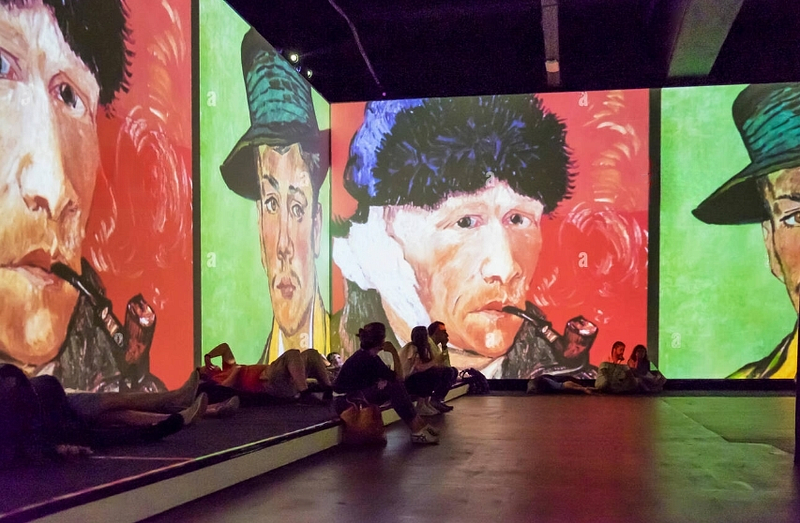
The world of art is a dazzling, mutable kaleidoscope, each turn bringing forth a myriad of new colors, forms, and perspectives. Today, let’s embark on an exhilarating journey, threading the narrative from the lush gardens of Monet to the abstract dimensions of Kandinsky, and beyond, into the heart of the Avant-garde movement that revolutionized European art.
Monet, the harbinger of Impressionism, painted not just what he saw but how he saw it. His palette was imbued with an empathetic understanding of light, color, and their ephemeral dance. In the wake of academic art, Monet’s oeuvre like “Impression, Sunrise” was a breath of fresh air — the dawn of a new age in artistic expression.
His paintings were symphonies of color, every brush stroke a note in a melody that changed with the passing hours. This was a radical departure from the norm, a revolt against the literal representation of the world. It was the birth of ‘impression’ over ‘precision.’ Monet and his fellow Impressionists defied academic rules and opened the floodgates to more drastic breaks with tradition, laying the foundation for what would become the Avant-garde.
In the next few decades, Europe witnessed an eruption of stylistic innovations — Post-Impressionism, Symbolism, Fauvism, Cubism, Futurism, and Dadaism. While distinct in their aesthetic and philosophical outlook, each of these movements shared an inherent spirit of rebellion, an urge to shatter the confining mold of tradition.
The art world, once dominated by faithful depictions of reality, now teemed with artists like Picasso, who fractured the physical world into geometric abstractions, or Munch, who wove raw emotion into the fabric of his compositions. From Monet’s fleeting impressions, art was fast morphing into a canvas for the mind’s inner workings.
However, with Wassily Kandinsky, a Russian-born artist, European art took its most daring leap into the abstract. Kandinsky abandoned the constraints of the physical world entirely. His art was not a window, but a mirror, reflecting the internal landscapes of the soul.
Inspired by music, his paintings are symphonies in their own right.
In compositions like “Composition VIII,” every line, shape, and color is a note, and their interplay creates a harmony that resonates instinctually.
Here, there was no need for literal representation, for the motifs of his art were the emotions and ideas that defy physical form.
Kandinsky’s radical abstraction culminated in a journey that started with Monet’s impressions. By distilling art to its purest elements, he paved the way for other movements like Suprematism and Constructivism. His art was the realization of the Avant-garde’s quest — the total liberation of art from the constraints of the symbolic world.
The Avant-garde’s legacy is profound and continues to reverberate in contemporary art. They redefined art as a realm of limitless possibilities, where the canvas could be more than a passive reflection of reality — it could be a vehicle for the artist’s most profound thoughts and emotions, a battleground for ideological discourse, and a playground for aesthetic experimentation.
From Monet’s Impressionism to Kandinsky’s Abstract Art, we see a seismic shift in artistic paradigms, a glorious evolution sparked by the irresistible lure of the Avant-garde. This metamorphosis illustrates art’s capacity for change, fluidity, and potential to transcend boundaries.
As we delve into the intricacies of European art’s evolution, we realize that the spirit of the Avant-garde isn’t confined to a moment in history. It is a perpetual force, constantly pushing the boundaries, challenging norms, and inspiring innovation. It is the force that propels art and artists into uncharted territories, imbuing them with the courage to explore the unexplored, to reimagine the known, and to give voice to the voiceless.
This journey reminds us that art is not static but a living entity, constantly evolving, continually moving. From Monet’s gardens to Kandinsky’s abstract forms, we glimpse the dynamism of the Avant-garde, a vitality that continues to shape and drive the artistic world.
And so, as we stand on the precipice of the future, let us remember the daring spirit of the Avant-garde. For in its audacity lies the key to evolution, and in its unyielding quest for novelty lies the potential for undiscovered artistic revelations.
In the end, the irresistible lure of the Avant-garde lies in its promise of perpetual revolution, the ever-present potential for metamorphosis. It serves as a reminder that art is a dialogue, an ongoing conversation between the artist and the world, between tradition and innovation, and between the past, present, and future. The Avant-garde challenges us not just to observe this dialogue, but to participate in it, to contribute our voice to the magnificent chorus of human creativity. Because art, after all, is the collective voice of humanity, echoing, forever evolving.
Thanks for taking the time to read. I’d like to hear your perspective.
You can also refer to the related articles:


