
From Hopelessness To Action: An Anatomy of a Park Protest
What does it take to help protect the environment?
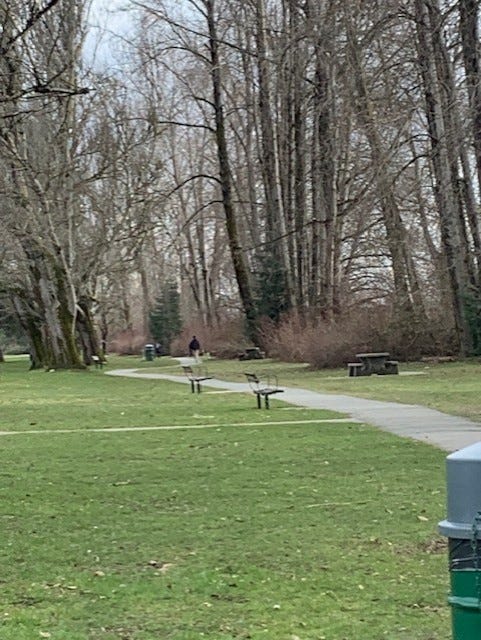
This year marks the first anniversary of an event that triggered outrage and action among the residents of a burgeoning suburb of Vancouver, Canada. (Above: I took a photo of Foreshore Park. )
I, along with many other residents of Burnaby, was upset last year because the city was considering cutting up 21 acres of parkland to build a green recycling and organic waste plant facility.
The biggest hurdle for some residents was the city’s use of the alternative approval process (AAP) to remove trees from Foreshore Park. The AAP required at least 10 percent of all registered voters to submit the form, which meant that more than 16,000 people were required to oppose the development—a difficult, if impossible, threshold to meet.
Located next door to the Fraser River, Foreshore Park is ideally positioned near the Fraser river; many trees offer a canopy to shade from the sun. Cyclists, dog owners, and some locals come daily to the park to chat with friends and enjoy the breeze. A short distance away, the park has an ecological section, home to a diverse range of wildlife, including eagles, beavers, otters, coyotes, muskrats, and other wildlife. Years earlier, I learned about this quiet oasis because my elderly father asked me to drive him to Foreshore Park, where he sat on a bench to drink coffee and smoke a cigarette. He passed away due to COVID-19 in 2022, and I knew my Dad would be pleased to see me fight to save the trees.
The issue brought about a diverse course of action from some residents. Some residents did nothing; some turned to complain to council members; others wrote angry letters to the local papers, and individuals participated in groups and scrambled to get people to sign the ballots.
This article covers my journey as a passive, law-abiding citizen to someone who decided to make a concerted effort to stop the city from developing on parkland.
As a shy person, it took a colossal effort to come out of my shell. What I found most helpful was when I stopped thinking of myself and dwelled on the issues.
The first stop: the local library
I rushed to the local library to print some AAP forms and hand them out to residents who might have been unaware of the situation. The printer somehow jammed, and before I knew it, I explained the situation to a library user, Cathy, who saw my frustration with the printer.
I must have sounded passionate because she agreed to help distribute more forms to her neighbours and friends.
Craiglist
I also turned to Craiglist to enlist the aid of residents to hand out the AAP forms. I dropped off some forms to a resident and met up with an equally passionate woman who, despite being in between jobs, offered to help out.
I recalled working as a market researcher, which came in handy when I boldly confronted park visitors and shoppers to sign the forms.
During the few hours we spent at the grocery store, we tried to get as many people to sign in as possible, but deep down, I felt we seemed doomed.
The Lightbulb Moment
In university, I often attended rallies by student organizers fighting for various issues, such as protesting student tuition, student cuts to programs, etc.
I remembered thinking about organizing a rally, too. Not too long ago, I watched a group of six residents get a lot of media attention for protesting the building they were living in. If these six could boldly talk to the media to discuss their issues, why couldn’t I try to do the same?
Some Challenging Days Lay Ahead For Me
I called one of the largest environmental groups in the world for assistance: Greenpeace. In my naivety, I thought Greenpeace would be a great choice for helping with my rally. However, my calls and emails were unreturned.
I continued the hunt and tried another organization, the Sierra Club of BC. To my surprise, David called me, and he was encouraging. Since he was not based in my city, he could only offer advice. He first told me about setting up a Facebook group called Save Foreshore Park. True to my word, I chose a date to stage the rally, March 19, the day before the city council would be conducting a special meeting. After a few days of posting and sharing the links, I got lots of attention and was contacted by a woman who agreed to help me get media coverage. Incredibly, several media contacted her and agreed to show up to cover the event.
Shocking News
I attended a local environment meeting and urged the roomful of 30 or so people to attend the rally and show support. A few hours later, I got a text message from one of the organizers who said his group would not attend. Discouraged, I cried for about one hour after the call and wondered if I had done something wrong. (It later turned out that one of the leaders had told the group members that they were better off canvassing residents to sign the forms than wasting time at the rally.)
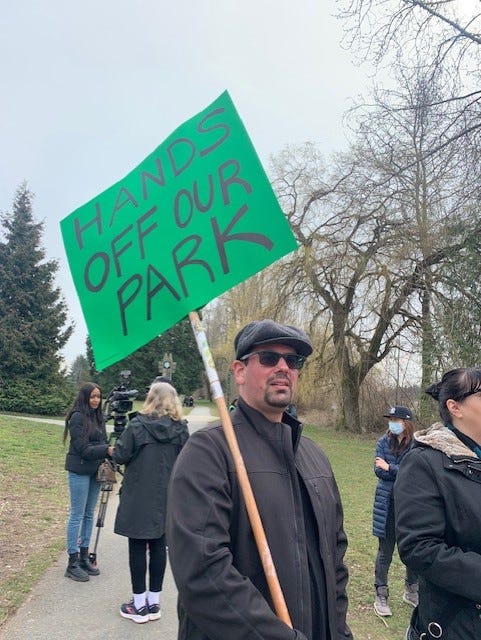
Below is a protester at the rally on March 19, 2023.
The Rally
I had no idea what to expect on the day of the rally. I knew it was a long shot to get some spirited speakers. I was grateful for the volunteers who agreed to assist me, and I urged them all to create colourful posters and bring them to the rally. I spent some time crafting a speech, which I hoped would help build momentum.
With the help of my friend Julie, I set up the rally stage, which included a table I bought from Home Depot, a microphone, and a busking speaker box I had previously owned.
Margaret Mead was a speaker I admired in the environmental movement, and I used one of her favourite quotes.
Never doubt that a small group of thoughtful, committed, citizens can change the world. Indeed, it is the only thing that ever has.
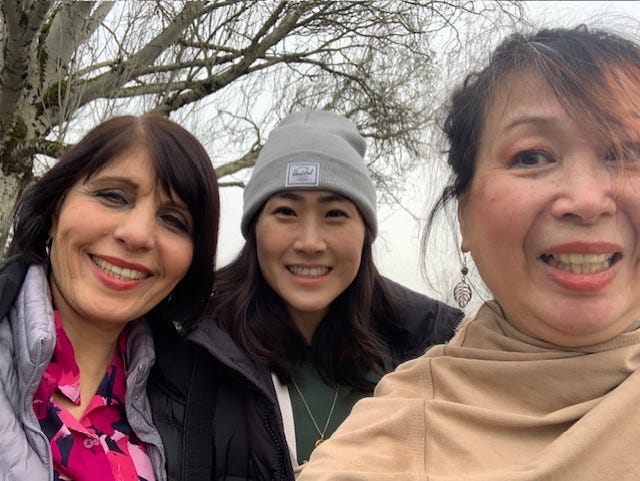
Below: myself (far right) and a few protesters at the rally)
A Surprising Turn of Events
A few moments before the rally started, I was surprised to see many environment group members show up just as various members of the television and newspaper media were setting up.
Pockets of people appeared to support the cause, and many curiosity-seekers joined that.
Nervously, I took the microphone, and without looking at the crowd and media cameras, I read out my prepared speech, shortly followed by another succession of other passionate speakers, including a former elected politician.
Hours later, I watched as the rally was aired on the 6 o’clock news and picked up by several local news media.
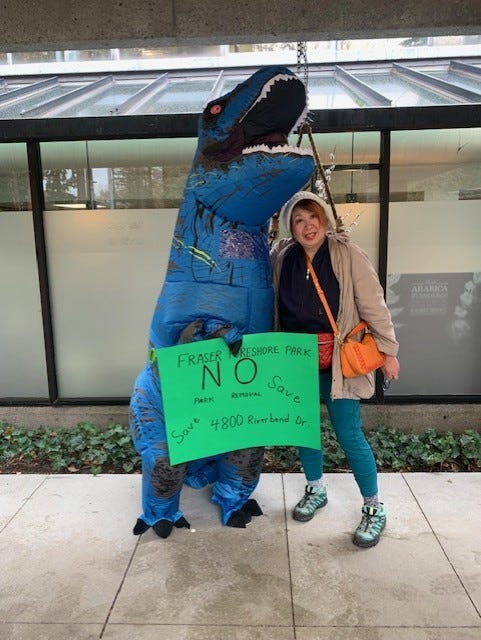
Below photo: myself and a protestor before the meeting at city hall
March 20, 2023 — A Pivotal Moment
The following day, someone texted me to meet outside the council hall because some media would be waiting. I answered a few questions, along with other activists. I went to the meeting and was surprised to see it chock full of people; it was standing room only. I met up with a few of my fellow activists, Cathy and Eudora, and we had a tight squeeze as we awaited the council’s decision on the much-disputed park plant.
In a special council meeting, city council unanimously agreed to cancel the AAP that was underway. As soon as the announcement was made, the people at the meeting erupted in thunderous applause, and it was a moment in time that I will not likely forget about soon.
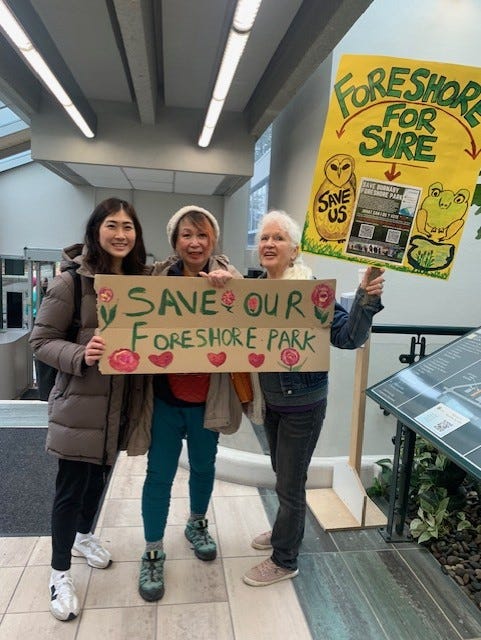
Below: the writer (center) flanked by fellow protesters after the city hall meeting.
Lessons Learned
I was overwhelmed initially by the process of fighting for the environment.
I assumed that large organizations like Greenpeace would help me organize a rally to oppose the proposed development. I didn’t hear a word.
I learned that activism is very much grassroots-based. The only people you can count on to do the job are yourself, local groups, and other like-minded individuals.
Afterwards, I tried finding a job to help the environment but found few prospects. Most jobs I could find were in the fundraising area and paid minimum wages.
If you are passionate about local issues, you can join a civic group and participate in efforts to do local cleanup or other things. If bigger issues demand more attention, find people who share the same values and find ways to bring them to the attention of civic leaders. If all else fails, keep trying and go to the media.
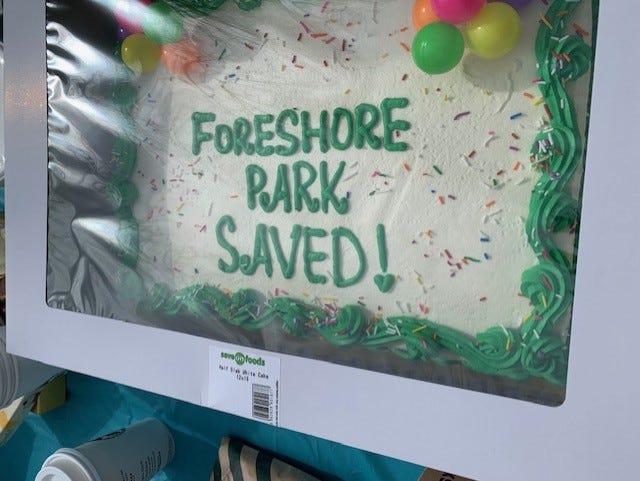
See below: cake donated by a local store for volunteers to celebrate the city’s plant cancellation at Foreshore Park. Photo by the writer.
Additional Sources:
As 2023 ended, the local paper considered the cancellation of the proposed compost plant at Foreshore Park as one of the year's top local stories. There’s a story about our efforts to save Foreshore Park on the Sierra Club Website.
I hope you like this story of a protest that miraculously ended well.
These days, I remain vigilant and work with others to protest current parkland and wildlife conservation issues. Once one issue goes away, there is always more that needs attention.
Hope you like this story and would appreciate any comments and feedback.
Does this resonate with you? Already on Medium? Don’t miss any of my stories, and if you are on Medium, subscribe to me via email here to get my latest articles. Please also support and follow me and this publication, Illumination Curated.
Check out my previous articles here:


