
From Banana Peels to Bank Robbers — Unexpected Causes Behind Injuries
The complex world of proximate cause and legal liability.
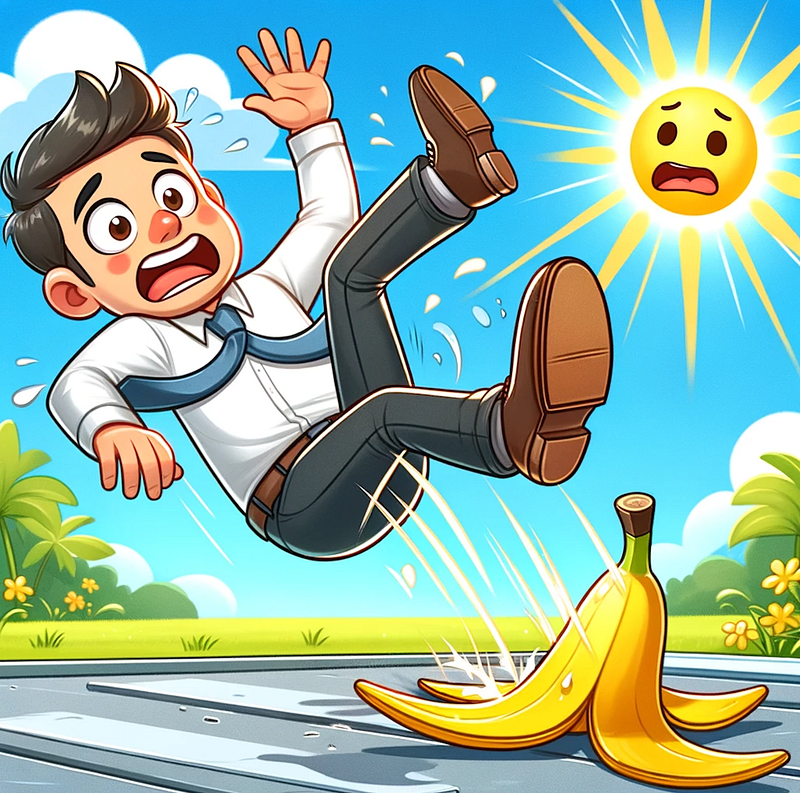
In our previous article (see below) we looked at situations where everything happens in a straight line: the defendant does something, and then the plaintiff gets hurt. Today we are going to look at situations where other people or unexpected events come into the mix and play a part in causing the plaintiff’s injury. Say our Joe is walking down the street and suddenly, whoops! He slips on a banana peel (carelessly left by Kevin) and hurt himself. Classic, right? But here’s the thing: the pavement he slipped on is in terrible shape, full of cracks and bumps. So what’s the real culprit? The banana peel or the badly maintained pavement?
Legally speaking, we are cutting through the layers of this banana-flavored oddity to find the proximate cause (again). Was it the banana peel (an intervening cause), something so unexpected and oddly placed that no one could have seen it coming? Or was it the state of disrepair of the pavement, a disaster waiting to happen (the original negligence)? Here we take the elements of foreseeability, negligence and liability to bake another of today’s legal cake.
Slipping into Complexity
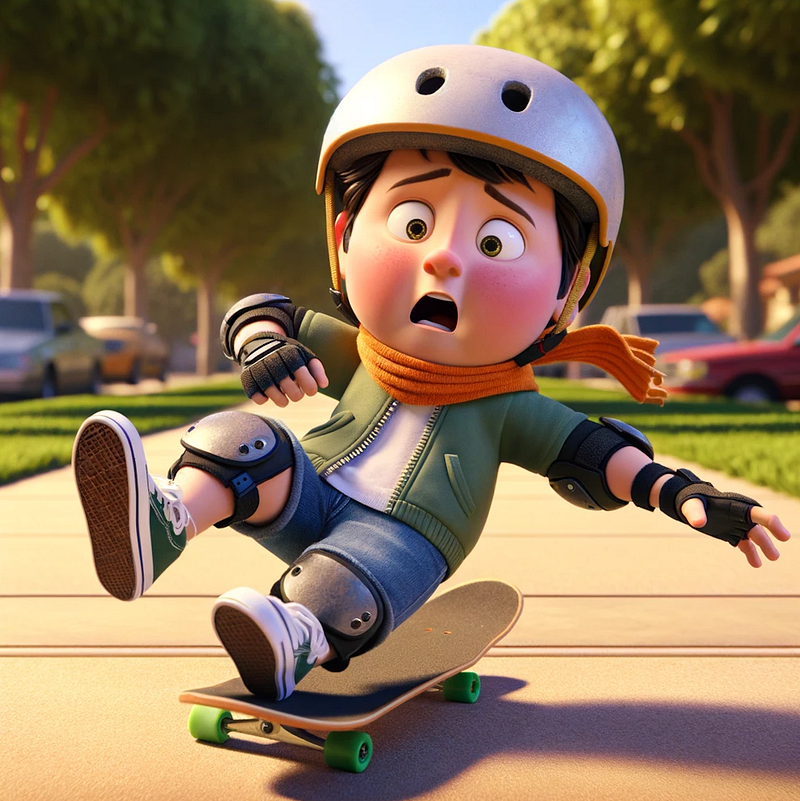
This time, imagine that after his comic slip on the banana, Joe is about to regain his balance. Just then, out of nowhere, Kevin’s rogue skateboard zooms by and sends him tumbling again. Now it’s not just a story of Joe vs. Banana, it is Joe vs. Banana & Kevin’s Runaway Skateboard.
Intervening and Superseding Causes
In the legal community, the skateboard is what we call an intervening force. If this skateboard was lying around because of Kevin’s forgetfulness, and it is something that could reasonably happen on a busy pavement, then Kevin is still part of our story. The skateboard does not break the chain, it just adds another link.
But let’s take this story one step further. Suppose the skateboard was part of an unexpected street performance, something completely out of the ordinary for this quiet neighborhood. That is what lawyers call a superseding cause. It is so unusual and unpredictable that it breaks the chain of causation. In this case, it does not seem fair to blame Kevin for Joe’s second fall; the skateboard move is the new lead character in our story.
So, in our sidewalk story, it is important to decide whether the skateboard is just another scene or an entirely new act. If it is something you might expect to see on a busy street (like a skateboard left carelessly), it is part of the ongoing narrative. But if it is a dramatic and unforeseen event (like our street performance), then this is a game-changer that takes previous characters (like Kevin) out of the spotlight.
Domino Effect — Joe, Kevin, and the World of Intervening Forces
There are different types of intervening forces, which refer to various events or actions that occur after the initial act of negligence and can affect the outcome of a legal case. These forces, which include the negligence of others, natural events, or unforeseen actions, can have a significant impact on the determination of liability in complex situations.
Negligence of the Third Persons
- The Butterfly Effect. Imagine this — Kevin has left his skateboard in a bad spot. Joe trips over it and gets hurt. Now, if a doctor trying to treat Joe’s injury makes a mistake, that new mistake is linked back to Kevin’s skateboard mishap. It’s like a chain reaction where one mistake leads to another, and Kevin’s original mistake still plays a starring role.
- The Rescue Gone Wrong. Now imagine a good neighbour sees Joe in trouble after his fall. They rush over to help, but inadvertently make things worse, perhaps by moving Joe to a more dangerous spot. This turn of events is somewhat expected in our story — after all, people often try to help. But it is still part of the unfolding drama that started with Kevin and his skateboard.
- The Ripple Effect. Here is where it gets really tricky. Let’s say Joe tries to avoid Kevin’s skateboard and stumbles into the street. Suddenly he is in the path of a lorry driven by someone who is also not paying attention. Now we have two acts of negligence — Kevin’s skateboard chaos and the bus driver’s inattention. Kevin’s first act sets off a chain of events that leads to a climax that nobody saw coming.
Foreseeable Reactions of the Third Persons
What if, in response to seeing Joe fall, a nearby driver swerves to avoid him, causing a minor collision? This is a natural human reaction to an unexpected obstacle (our unfortunate Joe). In this scenario, Kevin’s initial carelessness with the skateboard still reverberates through these events.
Increased Risk of Harm
Let’s say that Joe, after slipping, is near a construction site. His presence there, a direct result of Kevin’s skateboard tactics, increases his risk of being hit by falling debris. This does not let Kevin off the hook; it’s another chapter in the story he started.
Unforeseeable Force of Nature
Here’s where things get wild. Imagine that just as Joe is recovering from his fall, a sudden, freak storm comes through and knocks a signpost onto him. This is so unexpected and unrelated to Kevin’s skateboard that it is like a plot twist in a film. In legal terms, this storm is a superseding cause — it’s so out of the blue that Kevin’s role in Joe’s misadventure becomes a distant memory.
Crimes and Intentional Torts of Others
Finally, imagine that in the confusion of Joe’s fall, a pickpocket sees an opportunity and snatches Joe’s wallet. This crime is usually considered a superseding cause — it’s a separate wrongful act that Kevin could not have foreseen when he carelessly left his skateboard.
If we want to give our characters more depth, assume that Kevin is not just a friend, but has a position of responsibility over Joe — as a teacher or guardian, for example. In this change, Kevin also has a heightened duty to protect Joe from harm, including potential criminal acts by others. If Kevin’s negligence in this role puts Joe in a risky situation where he’s harmed, the plot thickens and Kevin’s liability may extend beyond a misplaced skateboard.
When the Unexpected Redefines Responsibility
In the continuing adventures of Joe and Kevin, we come to a concept of Superseding Causes. These are the moments in a tale when something so unexpected happens, it completely alters the course of the story.
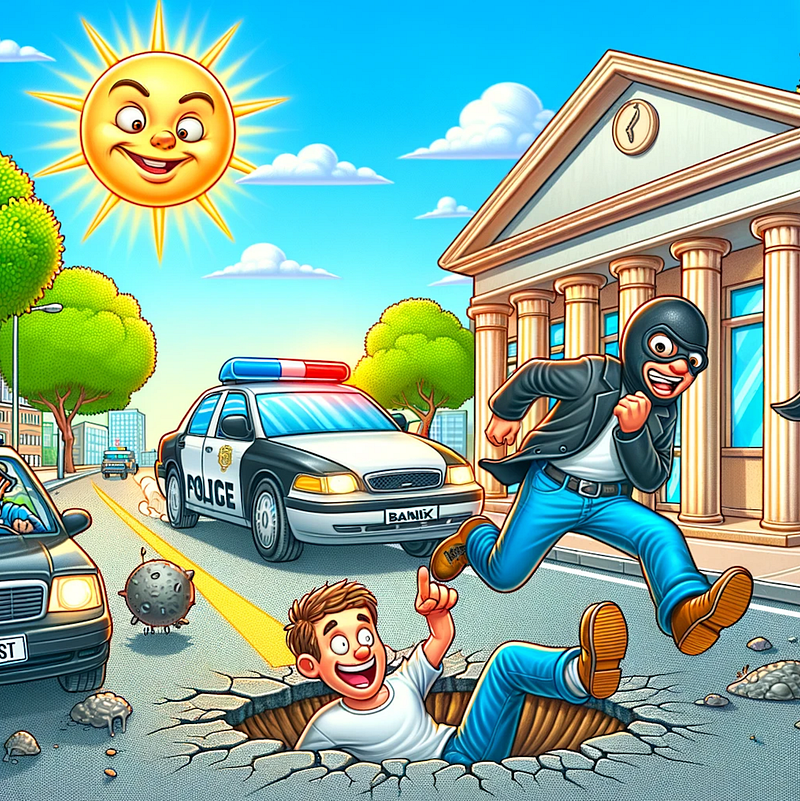
For instance, Kevin’s negligence causes a large pothole in a busy road. Joe can not avoid the pothole and falls, but is initially unharmed. When Kevin sees this, he rushes to get help because of Joe’s vulnerable position on the road. Meanwhile, an unrelated chase between the police and a bank robber is taking place on the same road. In a desperate attempt to evade capture, the robber veers onto the pavement and hits Joe, injuring him. The high-speed chase and the robber’s criminal actions are highly unusual in this quiet neighborhood and could not have been foreseen by the defendants when they failed to repair the pothole. Thus, the bank robber’s intervention constitutes a superseding cause which breaks the causal link between the Kevin’s initial negligence and the ultimate harm to Joe.
Some Thoughts
As we close another chapter on Joe and Kevin’s eventful escapades, I hope we have all gained some new insights into the actions and consequences.
If there is one thing we can take away from Joe and Kevin’s experiences, it’s the importance of being cautious and thoughtful in our actions. A small oversight, such as leaving a skateboard unattended, can lead to a series of unforeseen events. It’s a gentle reminder to tread carefully and consider the potential effects of what we do (or don’t do). But remember: every situation, especially the challenging ones, is an opportunity to grow and adapt.
So as you go out into your world today, take the lessons of Joe and Kevin with you. Be careful, be curious and above all, be ready for the adventure that is life. Here’s to making choices that lead to happy endings (or at least interesting stories)!
Be careful and stay safe!
Disclaimer: The information provided in this article is for informational and educational purposes only and is not intended to serve as legal advice or as a substitute for legal counsel. While efforts have been made to ensure the accuracy and completeness of the content herein, it is important to note that legal principles and regulations can vary significantly based on jurisdiction and specific circumstances. Therefore, this article should not be used as a definitive legal resource or as a basis for making legal decisions. Readers are strongly advised to consult with a qualified attorney for advice on legal issues or matters, as each individual case may require detailed and personalized legal analysis.
Reliance solely on the information provided in this article without seeking professional advice from an attorney may lead to unintended legal consequences or misinterpretation. The author or publisher of this article do not accept responsibility for any potential errors or omissions, nor will they be responsible for any losses, injuries, or damages arising from its display or use. The information provided here does not create an attorney-client relationship between the reader and the author or publisher.