
When Accidents Escalate: the Surprising Truth Behind Proximate Cause
Discover how simple actions lead to complex consequences.
Have you ever wondered if a butterfly flapping its wings in Brazil could really cause a tornado in Texas? Well, in the world of negligence law, we have something like that. It is called a proximate cause. Think of it as the juridical way of playing a game of “cause and effect.” Only instead of butterflies and tornadoes, it involves everyday actions and their sometimes crazy consequences.
Proximate cause is like that friend who is really good at pointing out the obvious. She asks, “Could anyone have seen this coming?” You are not expected to have psychic abilities or to foresee the future, but rather need to expect the obvious, like not being surprised that ice is cold or that wearing socks with sandals is a fashion crime. In legal terms, it means that a defendant won’t be held responsible for the consequences of his actions that would make even Nostradamus scratch his head.
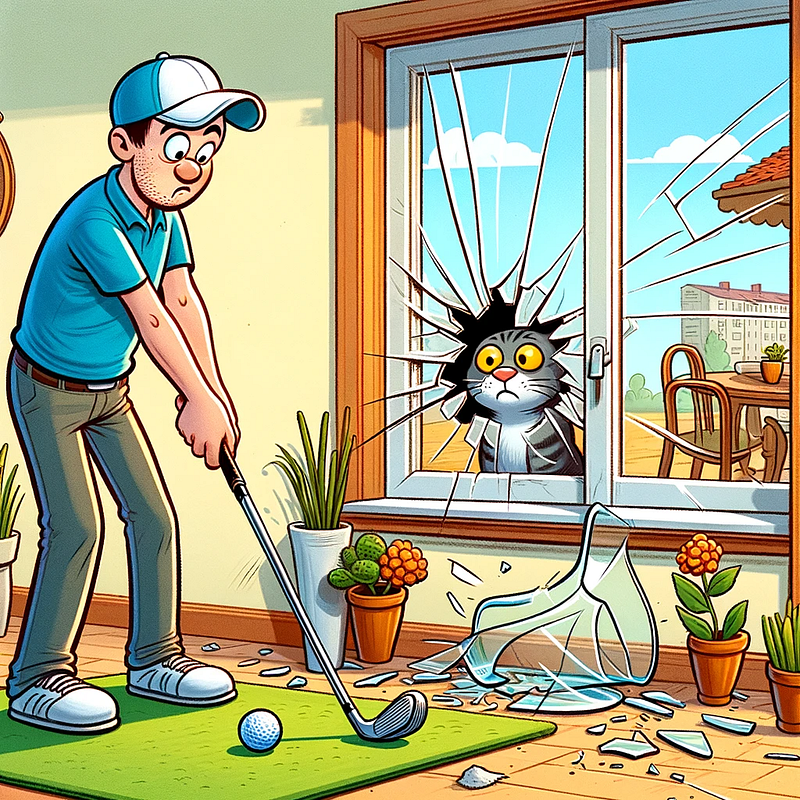
Let’s say you decide to practice your golf swing in your tiny apartment (because who needs a driving range, right?). You take a swing, and your golf ball goes through your neighbor’s window. Now, it’s reasonable to expect a golf ball to break a window. But what if, on its way to window glory, the ball knocks over a vase, which scares a cat, which jumps onto a shelf, which knocks over a jar of marbles, which spills onto the floor, causing your neighbor to slip and fall while chasing the cat? Are you just a clumsy apartment golf enthusiast or real Rube Goldberg machine? That is why we need a proximate cause to step in and speak its word.
So buckle up and let’s take another ride into the land of the law. Hopefully we will learn something interesting and new!
Read this if you’re bored 🙂
The Restatement (Third) of Torts § 29: “An actor’s liability is limited to those harms that result from the risks that made the actor’s conduct tortious.” Essentially, a defendant is not liable for all outcomes of their tortious act, but rather for those harms a reasonable person could have foreseen.
Foreseeability
Foreseeability is the cornerstone of proximate cause. It is like trying to predict whether your morning coffee will actually make you more awake or just more jittery. Foreseeability is what could reasonably be expected to happen, not the plot of a sci-fi movie. This is a way of asking, “Could you have seen this coming without a crystal ball?” We are talking about the kinds of things that a reasonable person, let’s call him Kevin Average, would expect to happen, not the kinds of things that Joe Down the Street (who believes in aliens) might predict.
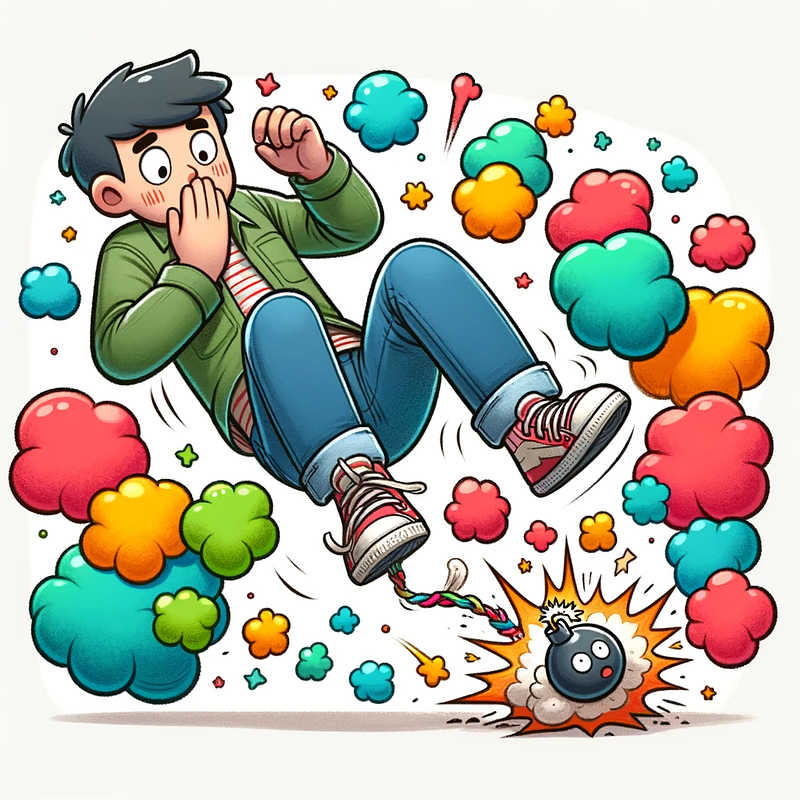
Imagine that our Joe decides to play a prank on Kevin by tying his shoelaces together. Kevin trips and falls (classic Joe). But here is the trick: Kevin, a secret agent in his own mind, carries a flash bang smoke grenade in his pocket (because why not?). When he falls, the explosive goes off, creating a smoke and noise show worthy of a rock concert. The entire office is unable to work. Now, should Joe have foreseen the smoky grand finale?
The law says, “Take it easy, Joe’s not a mind reader.” The reasonable expectation when tying someone’s shoelaces is a stumble or a small fall, not a mini-reenactment of an action movie. So while Joe may be guilty of a juvenile prank, he is not liable for Kevin’s unexpected smoke extravaganza.
Distinguishing Harm: Type vs. Severity
Let’s now talk about the difference between the type of harm and the severity of the harm. In legal terms, it is vital to distinguish between what kind of harm was expected (the type) and the actual impact or severity of the harm (the extent). The law has a saying, “The defendant takes the plaintiff as he finds her.” This means that if you are responsible for harming someone, you are responsible for the full extent of the harm, even if it is more severe than what most people would experience under similar circumstances.
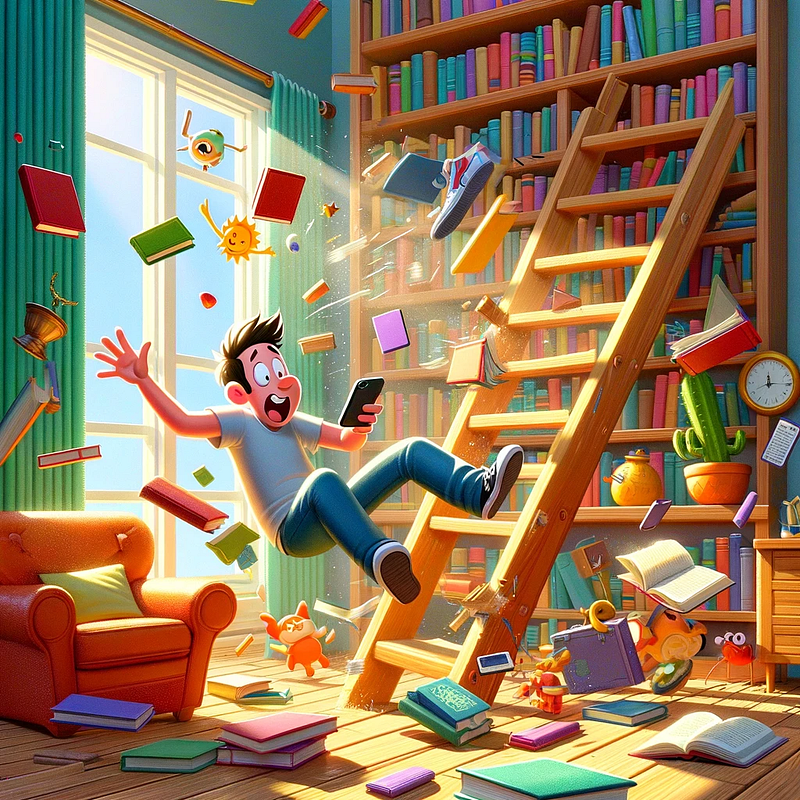
Let’s take another look at our friends Joe and Kevin. Joe, in a moment of mischief, decides to play a prank on Kevin by hiding his phone in a high place, such as the top of a tall bookcase. Kevin, in a panic to find his phone, climbs up to look for it. Unfortunately, while reaching for his phone, Kevin becomes dizzy, loses his balance, and falls, breaking his arm.
In this scenario, Joe might have expected a bit of searching and frustration, but not a serious fall. However, the law holds Joe responsible for Kevin’s injury. Why? Because the potential for a fall and subsequent injury was a foreseeable risk when Joe decided to hide the phone in a hard-to-reach place. Even without knowing Kevin’s specific health problems (frequent dizziness), Joe’s prank unintentionally set the stage for a more serious accident.
Expected Harm and Unpredictable Outcomes
There is a kind of interesting extension to the idea of foreseeability. This is not just about predicting the kind of harm, but also understanding that the exact sequence leading up to that harm can be as unpredictable as a plot twist in a soap opera.
The law distinguishes between the type of harm that can reasonably be expected and the exact, often convoluted, series of events that lead to that harm. You may expect toast to burn when you leave it in the toaster, but not expecting the fire department to show up because your cat knocked the toaster over and started a small fire. The principle here is that only the general nature of the damage needs to be foreseeable; the bizarre path to that damage does not need to be predicted.
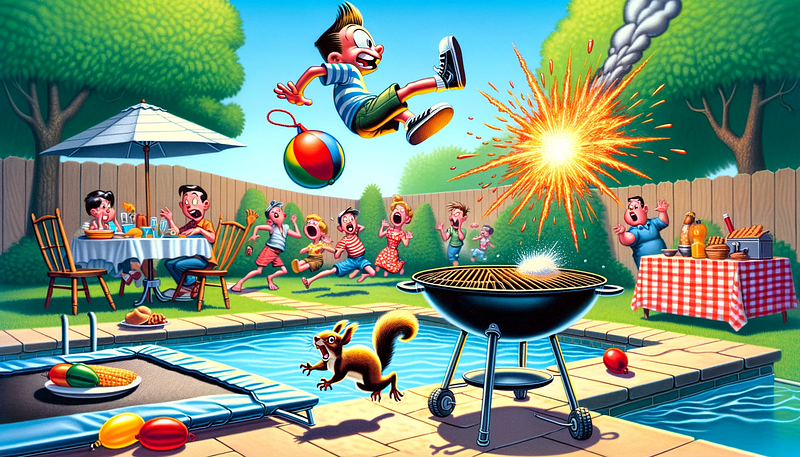
Imagine Joe (he is restless), in a moment of misjudgment, decides to start a little water balloon fight at Kevin’s backyard barbecue. He expects some laughter and maybe a few wet shirts — the typical outcome of such a fight. What he does not expect is for one of his water balloons to miss Kevin, bounce off a trampoline, and then land on the barbecue grill, causing a small explosion of sparks. These sparks startle a nearby squirrel, which then jumps on Kevin, causing him to lose his balance and twist his ankle.
Here, while Joe could reasonably foresee that throwing water balloons might lead to some wet guests, the sequence of events leading to Kevin’s twisted ankle is something straight out of a comedy show. The law essentially says, “Joe, you are responsible for starting the water balloon fight, but not for the squirrel-led mayhem that followed.”
Some Thoughts
Proximate cause is a lens through which we can view the delicate dance of cause and effect in our lives. It is same to having a mental map to drive the highways and byways of “What if?” and “Then what?” It challenges us to think critically, not just about the splash, but about the ripples that follow.
Whether we are at home, at the office, or anywhere in between, the principles of proximate cause provide a structured way to evaluate the consequences of what we do (or do not do). In professional settings, this can also mean better decision making, and in personal life, it can lead to more thoughtful interactions.
I hope this read has been helpful. Maybe the next time we find ourselves in a Joe- and-Kevin scenario, we will see it through a different, more informed prism.
Best of luck and take care!
Disclaimer: The information provided in this article is for informational and educational purposes only and is not intended to serve as legal advice or as a substitute for legal counsel. While efforts have been made to ensure the accuracy and completeness of the content herein, it is important to note that legal principles and regulations can vary significantly based on jurisdiction and specific circumstances. Therefore, this article should not be used as a definitive legal resource or as a basis for making legal decisions. Readers are strongly advised to consult with a qualified attorney for advice on legal issues or matters, as each individual case may require detailed and personalized legal analysis.
Reliance solely on the information provided in this article without seeking professional advice from an attorney may lead to unintended legal consequences or misinterpretation. The author or publisher of this article do not accept responsibility for any potential errors or omissions, nor will they be responsible for any losses, injuries, or damages arising from its display or use. The information provided here does not create an attorney-client relationship between the reader and the author or publisher.


