
Fresh On the Mind — Focus on Important Quality Reasons
In response to Dancing Elephants, Press Prompt 46 of 52

I would love to thank Vidya Sury, Collecting Smiles, for the prompt used to create this article. Her prompt was provided in her article titled https://readmedium.com/write-about-something-that-has-had-a-positive-impact-on-your-life-fd604e828543. I have decided to write this article about something that I learned while going through my childhood and tell you about how it affected my personality.
Childhood Lesson
I can remember from my earliest memories how my mom and dad would encourage my siblings and me. They shared the phrase, “Anything Worth Doing is Worth Doing Right.” They tried to enable us to adopt the mantra that with anything in life, if something is worth doing, it is worth doing right and to the best of your ability.
This was a familiar phrase that they shared with us. I must admit that this phrase’s meaning can be taken beyond what is reasonable. Type A personalities aside, just about anyone could get caught up in perfectionism; this phrase seems to encourage it.
For example, should we do all things to perfection? If so, what effect does this have on our time? Is it all right to do the essential things to the best of our ability and leave the less important things as just done?
Guard Against Perfectionism
Doing everything to the best of our ability can lead to perfectionism and a waste of time. Would it be better to do less important tasks without perfection? Would that give us more time to get more things done?
This is something that only some people know and understand when they begin work. It is often learned from experience and lessons learned while completing tasks or projects.
Where This Phrase Originated From
This phrase became popular because it has been used through time to encourage and emphasize putting your best effort into what you do and developing care for the things you accomplish. In other words, don’t strive for mediocrity, or you will get just that. This phrase is attributed to an English Clergyman named John Ruskin.
This gentleman lived during the 19th century and believed in the power of excellence and the pursuit of perfection in all aspects of life. When taught this lesson, it is imperative not to expect yourself or others to be perfect in everything you and they do. I had to learn this when I first joined the military. There was always more to do than there was time to do it.
I have always tried to give my best effort in my tasks, so letting go of even the tiny details sometimes was challenging.
Ruskin influenced many people with his ideas on the value of quality workmanship and attention to detail. Again, the phrase was intended to go beyond a half-hearted effort that led to mediocre results. Its encouragement urged people to give their best effort and pay attention to detail, increasing opportunities for success and satisfaction.
Importance of Phrase
The phrase is inspirational, and people should go beyond just doing the job or task. They should invest time, energy, and passion. This mantra encouraged me to do my best work and taught me that some things are not as important as others.
Assuming perfectionism is the single desired result could lead to being less productive. If every little detail of a task or project is expected to be accomplished to perfection, then lower-priority work that could be left as just done would require much longer to complete.
Allow Mistakes on Less Critical Tasks
People are human and make mistakes; expecting everything to be perfect can lead to analysis paralysis. In this situation, an individual is reluctant to take on tasks because they think others expect everything to be perfect when the job is completed.
It can and often does result in hindering progress and creativity. Until I learned that not everything needed to be done in a perfect way, I strove for that in everything I did. When I fell short, I got down on myself and didn’t give myself credit for the part of the task or project I had completed unless it was perfect.
I learned that it is impossible to do everything this way, and now I celebrate victory when it comes along. Striving for excellence is the correct meaning behind this phrase; we should expect people to make errors and have setbacks in the learning and growth process.
Some tasks don’t require that things get done to perfection. Doing some tasks to the standard of just good enough saves time, resources, and energy. Tasks we repeat often or consider unimportant do not need to be done to perfection.
Doing so may make your effort less effective when excessive time and effort are overused. Tasks that have little to no impact on the result of the work effort can be completed to an acceptable level instead of stressing over every tiny detail.
Sometimes, time is very important. When that is the case, task completion is more important than perfection. Prioritizing tasks can help when completing time-sensitive projects, meeting a tight deadline, or responding to an urgent client request.
For example, when a writer needs to write an article and have it ready in minimal time, ensuring the story is accurate and meeting the deadline is more important than ensuring every sentence is perfect.
When the expectation for completing a task or project is not absolute perfection, and mistakes are not critical, aim for “good enough.” For example, if you are a facility manager (I did the facility manager job in the Air Force as a civilian), making sure the floors are spotless each week may be one of your goals. Still, if no distinguished visitors are expected during the week, then perhaps sweeping and mopping the floor each day may be unnecessary.
Focusing on completing the task to an acceptable standard rather than striving for flawless perfection can be a practical choice. This could allow you to save time and energy and invest in more important tasks.
To achieve excellence, you must focus on areas you are strong and passionate about. This approach allows you to enjoy the work you do and excel in it. For example, if you are an experienced writer, you could pursue a content creation or journalism career. This could allow you to develop your natural abilities even more and to have even greater success.
Identifying and prioritizing mission-critical goals can lead you to successfully complete the most significant task or project. You operate most effectively when you allocate time and resources to these goals. You increase your chances of achieving excellence. This is how I managed the tasks and projects I completed as a military and civilian manager.
Choosing work that will positively impact others is also essential when pursuing excellence. A greater sense of purpose and fulfillment can be achieved.
Importance of Reputation and Brand
Your positive, productive reputation and personal brand are also critical. When you have a strong reputation for high-quality work that exceeds customer expectations, it opens doors and other opportunities. A solid personal brand helps you stand out in a competitive market by attracting clients or employers who value excellence.
Balance is Important
Perhaps of equal importance to the mantra “Anything worth doing is worth doing right” is balancing perfectionism and efficiency. This balanced approach to quality can help you achieve success without wasting time on unimportant tasks. As I said, most workers learn this through experience.
Before you begin work on a task or project, defining what success looks like is critical. Outline goals and expectations, allowing you to focus on meaningful work. A clear vision of the expected result will help prioritize effort and energy to make the most significant impact.
Some tasks are more important than others in their impact on the result. Identification of critical tasks drives project completion. Goals are achieved when time and energy are focused on essential duties. Allocation of the correct resources to the right goals maximizes productivity and success.
Deadlines and Timelines
Deadlines provide structure and keep folks accountable. They are an essential part of any task or project. It is imperative to set realistic deadlines. The task or project complexity must be considered.
Developing a project timeline based on an unrealistic time for completion of tasks can lead to results that could be better. Setting deadlines that are longer than required can lead to delays. It is necessary to find the right balance of time allocated to tasks to maintain a high level of quality.
Knowing when to move on is as important as striving for excellence. Sometimes, accepting the task as complete with minor imperfections can help you move on to the next job. Spending time and resources being concerned about perfection can hinder your progress. You must trust your abilities and know when to let go.
Pareto Principle
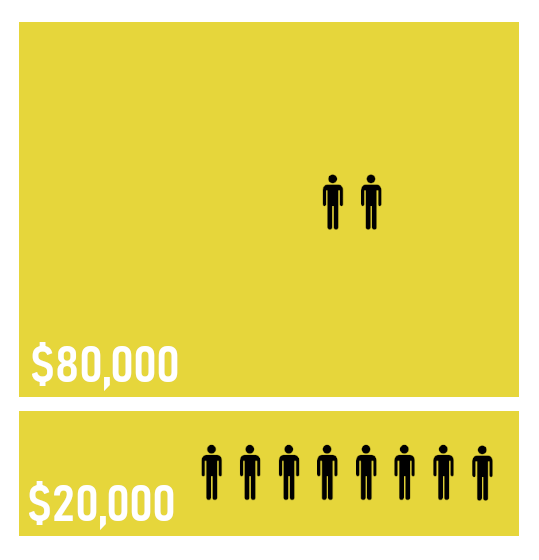
The Pareto principle can be used for individuals and companies interested in improving their manufacturing or business processes. When it comes to achieving success, it’s important to understand the concept of the 80/20 rule, also known as the Pareto Principle. This principle states that 80% of the results come from 20% of the efforts. In other words, a small portion of your activities will contribute to most of your success. Pareto principle. (2023, August 11). In Wikipedia. https://en.wikipedia.org/wiki/Pareto_principle
Understanding and applying this principle can improve your productivity and effectiveness. The Pareto Principle, or the 80/20 rule, is important when identifying and focusing on quality. The Pareto Principle prioritizes the most important tasks (20%) that impact goals that produce 80% of your revenues. Pareto principle. (2023, August 11). In Wikipedia. https://en.wikipedia.org/wiki/Pareto_principle
This helps you to be efficient and not waste time on tasks that don’t provide significant results. It allows an increase in profit and success. While concentrating on the prioritization of the 20% is essential, it is also vital to accept imperfections when tasks have a minimal impact on your overall goals.
Pareto Priority Index (PPI)
The Pareto priority index (PPI) prioritizes quality improvement projects. The PPI is calculated as:

PPI and Six Sigma
The PPI is used in the surroundings of Six Sigma projects. A high PPI indicates a high-priority project. Six Sigma is a set of techniques and tools for process improvement. Pareto priority index. (2023, July 30). In Wikipedia. https://en.wikipedia.org/wiki/Pareto_priority_index
The PPI and Six Sigma are not intended to be computed by everyone. Six Sigma experts use empirical and statistical quality management methods. If you have a solid mathematical background and have been trained as a Sig Sigma expert, you will understand better than those who do not.
Six Sigma is intended to improve manufacturing quality, identify and remove causes of defects, and minimize variability in manufacturing and business processes. Six Sigma. (2023, July 29). In Wikipedia. https://en.wikipedia.org/wiki/Six_Sigma
Conclusion
Some things need to be done to perfection, while others do not. By accepting imperfections in these less significant activities, you can save time and focus your energy on more critical tasks.
When working on a task or project, identify the critical tasks that require attention to detail and precision. Also, identify functions that allow a level of imperfection. Allow more effort for the essential duties. Allow some defects in less critical tasks. This will help you stay calm and will increase productivity.
This article is complete. Thanks for reading, and please provide any constructive criticism appropriate. We value your time and very much appreciate your reading and commenting.
If you liked this article, please clap for it, mark yourself as a follower of mine, and join me on my journey in writing as I contribute to various publications on medium.com.
The more time people spend reading my articles, the more it encourages me to continue writing — many thanks for taking the time to read what I have written. Get access to unlimited articles here on Medium!
Where else can you read articles written by artistic and creative authors on so many different topics for $5 a month?
Please consider joining Medium, and please join my email list. When I write something new, the system will notify you. My writing success depends on readers like you who appreciate and support my writing. Thanks so much for taking the time to read and help me.
I would love to give a Big Shout Out to Rick Allen for his article titled https://readmedium.com/from-a-chance-encounter-in-mexico-to-a-dream-change-in-my-career-df642c806e09.
He tells the reader a story about helping a stranger in a store in Mexico who turned out to be a lifelong friend. He explained that this friend offered him a 1-year contract in the Dominican Republic, where he could make new friends and live on the beach. His contract expired after 2.5 years.
Rick is a great writer who writes from the heart and tells stories not to be missed. His experiences are all exciting. Thanks for sharing, Rick, and Congrats on being named Dancing Elephants Press writer of the month for July 2023!
I would love to give a Big Shout Out to David Cerqueira for his article titled https://readmedium.com/have-i-told-you-about-the-guy-who-wore-pajamas-to-job-interviews-794f9d6d8c2c. In this article he tells the reader about a time when he met a gentleman from Burundi that was going to the same job interview, he was.
They met in Boston on the 27th floor of the business district. The Burundi man was wearing pajamas to the interview. David switched his suit for the pajamas so the Burundi man could interview him in the case that David wore. The Burundi man got the job, and the two stayed in touch until the man from Burundi returned home. This is a humorous article, and I recommend it to anyone who loves reading a good story. Great job on the article, David!


