
Free Speech Is America’s Achilles Heel
Misunderstood, misused, and destined to be our undoing
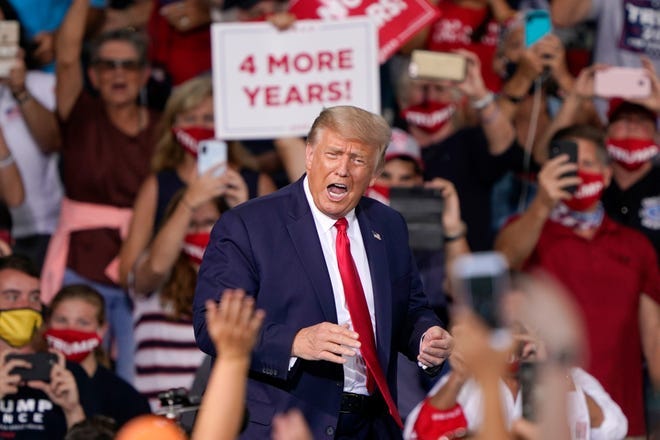
In the last four years, one of the most fascinating things I learned about modern culture is that world leaders have an unprecedented amount of freedom on social media platforms. They are not held to the same standards as other users and are allowed to break many of the rules that would get someone like me permanently banned from the platforms.
I’d guess that this is a surprising lesson that every American learned in the past four years, watching our president use Twitter to share racist comments, conspiracy theories, and threats of violence.
What’s particularly fascinating is that this social media exemption for world leaders was created after Trump became president, in response to his unprecedented behavior.
“…[Twitter] codified its reluctance to remove Trump into policy, writing out an exemption to its rules for ‘world leaders, candidates, and public officials.’ Incitement to violence, hate speech, targeted harassment: Offenses that would get others removed from Twitter were acceptable from Trump and other politicians.”
Mark Zuckerberg, founder of Facebook (which owns Instagram), has likewise been championing the rights of political figures to say anything they want on his platforms, including sharing false information and spreading conspiracy theories, because of his passion for defending free speech. Though it appears he has finally reached a breaking point, suspending the president’s account for the next two weeks, in response to Trump’s insurrection on January 6th (which he planned on his social media accounts, for all the public to see).
Twitter, still determined to make sure Trump has access to the public, suspended his account for a mere 24 hours after his attempted coup, with the stipulation that he must delete a few tweets that were apparently too far over the line, even for a world leader with social media immunity.
Coup or not, there was pushback against “Big Tech” for these decisions. People called it a threat to the First Amendment, a violation of an American’s right to free speech.
In fact, that’s a popular argument for a lot of things these days. You can bully and harass people of color with racist rants because…free speech. You can publish misleading political ads on social media with the intention of influencing elections because…free speech. You can lie about medical treatments for a pandemic in ways that will endanger millions of people because…free speech.
And if you speak up and question this, if you dare to tiptoe too close to anything that vaguely resembles censorship, then beware. You’re a fascist. (Or is it socialist? Which one is supposed to be worse? I can never tell in the current social climate.)
But it’s long past time that we take an inventory here. Because free speech is a deadly weapon in the hands of a country that is too immature to wield it.
It’s also not the free pass that we like to believe it is.
What does free speech mean and what is it for?
Let’s remember that the Constitution is not a document carved into stone. It is a living agreement between the government of the United States and its citizens.
To say we have free speech is a far-reaching and entirely unclear statement. If you run a business wherein you need your employees to maintain a certain level of professionalism, whose rights win? Yours? Or your employees’ right to say whatever they want in front of your customers?
As a country, we are constantly asking ourselves what “free speech” really means. Our understanding of the limits and scope of our constitutional rights is constantly shaped by these questions, which often take the form of court cases.
Each case further elucidates what free speech actually means, though we will never truly have an answer for that because as our culture evolves over time, we continue to find ourselves in new, unprecedented situations — for instance, in a world in which social media offers everyone a microphone that can be heard across the planet, giving everyone the opportunity to become global influencers, without any regulation, whatsoever (thus far).
We can say with certainty, however, that free speech has limits. If it did not, it would threaten the other rights that we hold so dear: the right to accessing clear, factual information in a global medical crisis, the right to assemble peacefully, and the right to a non-violent transfer of power after a presidential election, just to name a few.
So what does “free speech” mean? The First Amendment gives us this protection from the government. It doesn’t protect our right of free speech across the board as that might pertain to private institutions, businesses, schools, social media, etc. The latter, in particular, is an ever-evolving exploration that we have only just begun to dip our toes into.
It most definitely was not meant to mean that anyone could say anything they want at any time in any place. There’s a reason people say the pen is mightier than the sword. Words can be used as weapons. We have seen a powerful example of that over the past four years in the form of a president who has used his words to amass an army of insurgents who are doing their best to fortify white supremacy and to ensure that their leader can remain in power indefinitely.
And all he had to do was tweet.
Freedom is not free. I don’t like to say that because even though I think it’s true, I believe we too often use that term as pro-war propaganda.
But I’m not talking about our stance on socialism, our presence in the Middle East, or our often xenophobic relationships with communist countries. I’m talking about the average person, here at home, and the responsibilities we have as citizens of a free nation.
America is a teenager compared to many other countries, and we most certainly act that way. We want unlimited personal freedom (immediately), we don’t want to work for it, and we won’t accept any responsibilities that come with our freedom.
All these rights that we so cherish in America are vehicles of immense power: speech, assembly, press, protest, religion. As sayeth the sacred Peter Parker Principle, “With great power comes great responsibility.” Lest one accuse me of relying on American pop culture to make such an important point, this quote has been traced back to the French Revolution (which was inextricably intertwined with our own): “Ils doivent envisager qu’une grande responsabilité est la suite inséparable d’un grand pouvoir. (They [the Representatives] must contemplate that a great responsibility is the inseparable result of a great power.)”
One of our greatest failures as a democracy is our persistent refusal to accept our civic responsibilities as citizens of a free nation.
It is our duty to demand impartiality (as much as can be expected) from the media, to stop buying into a system in which they manipulate our attention in order to make more money from advertisers.
When millions of our fellow citizens tell us the system is rigged against them, that their lives are literally in danger, and all evidence supports their assertions, it is our duty to listen and do something to protect them.
It is our duty to protect our fellow citizens by wearing masks in a pandemic and to be extra mindful of what information we choose to share during such a crisis.
It is our duty to rigorously research any information before sharing it online, in a day and age when words spread faster than viruses and misinformation and propaganda are the most dangerous pandemics we are facing.
It is our duty to confront our own biases and if we can’t confront them, then we at least must be aware of them and how they affect our behavior, what we say, and what we choose to believe.
This is, of course, not an exhaustive list, but it’s a start.
These are the things that we must recognize and implement if we are to see this “experiment in democracy” mature into adulthood. If we continue on the path we are on, we will remain teenagers and the experiment will fail.
The Constitution is flawed. We must always remember that. That doesn’t mean it’s worthless. That doesn’t mean we can’t continue to work with it.
The problem is, the document is, always has been, and always will be, aspirational.
It was written by white men, most of whom wrote it solely to protect their own rights — not anyone else’s. Fifty-six men signed this document; it is believed that 41 of them owned slaves. The freedom they were creating for themselves obviously did not extend to their slaves, who would not be free for another 87 years. Nor even to their wives or female descendants who wouldn’t get to vote for another 144 years.
It’s been my observation that most white men don’t really care about this — and understandably so, as they believe that since the Constitution was written by them, for them, they’ll always be okay.
But then why are white men the ones so overwhelmingly threatened by equality, by progressive politics that address racism, sexism, and homophobia? Why are white men so overwhelmingly the most likely demographic to storm government buildings while heavily armed?
It’s because they know instinctively, as we all do, that a “free nation” that only protects the freedom of one group of people is not actually free.
In their minds, the solution lies in strengthening their own freedoms without limit while preventing anyone else from achieving the same freedom. They don’t understand that they are simply recreating the same problem over and over again.
Our freedom of speech, and every other freedom we have as Americans, was given to us to protect us from the monarchical rule that we chose to reject. Our Constitution was largely constructed as a safeguard to prevent us from being subjected to a government that didn’t recognize the sovereignty that we imagined for ourselves as American citizens.
It is not a permission slip granting us the right to behave in any way we choose and despite our insistence to the contrary, it never will be.
The First Amendment aspires to protect democracy, the “plurality of opinions in the national conversation,” political writer Masha Gessen states. But “we talk about rights without talking about responsibility,” he goes on to say.
When we give teenagers keys to a car, we expect them to follow the rules of the road which protect them and other drivers. Yet when it comes to free speech — a vehicle with far great potential for destruction — we have no such expectations for demonstrating responsibility or accountability.
Facebook and Twitter are far, far too late in taking action now. They are complicit in January 6th’s insurrection.
And anyone speaking out against their choices to limit the reach of Trump’s voice, regardless of their motives or political affiliation, is stubbornly refusing to put in the work of taking a more nuanced look at the situation.
This isn’t a binary issue: free speech versus authoritarianism. This is about what democracy really means and how our rights must be constantly balanced with our responsibilities. We cannot have one without the other.
© Yael Wolfe 2021
More on today’s America:


