
Fredrick Douglass the Self-Educated ex Slave Who Swayed Abraham Lincoln’s Opinion — Part 2
‘Men of Color To Arms Now,’ He Rallied Black Troops
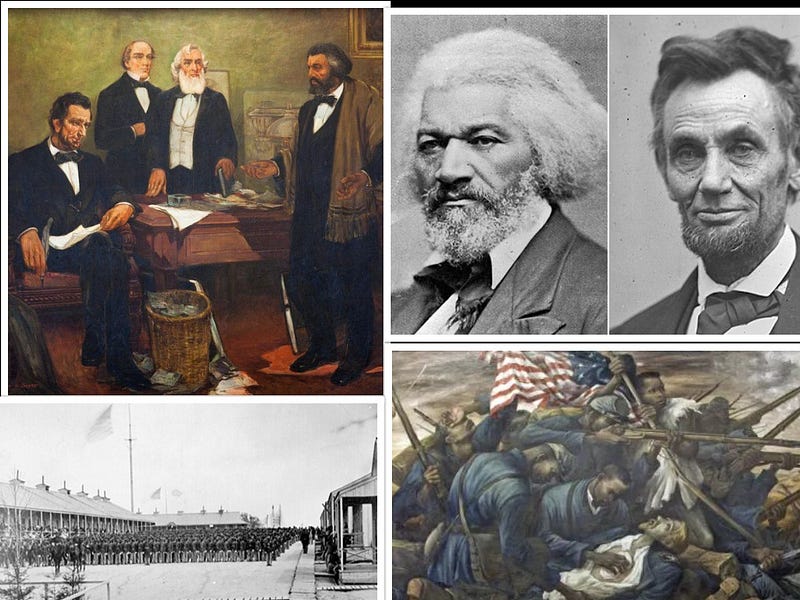
On a blistering August afternoon, an incensed black man stormed the White house. He didn’t have an appointment. But he had to see the President.
The Civil war was raging. Black people were still slaves. Seven months earlier the President, Abraham Lincoln, had signed the Emancipation proclamation, ripping the nation into two, and now he was surrounded by a war council. Fiddling with a war machinery that was costing lives.
The white house was under siege. A throng of white citizens, ragged and worn out from days of waiting, barricaded his way. His was the only dark spot, a black face in a sea of white. They all wanted an audience with the president.
His card went up the line. He stood no chance of getting close, not close enough to touch the hallowed entrance anyway. He was resigned to his fate, but seeing the President he had to. Two minutes later a voice rang out, the white house messenger called out, “Mr. Frederick Douglass!”
He responded shoving and pushing elbowing his way through an unwilling crowd. Grumbling white voices rose in dismay. “Yes, damn it, I knew they would let the n**** through!!’” they griped.
Frederick Douglass didn’t care. He was a man on a mission.
The war had been a white man’s affair. Now it wasn’t. Frederick Douglass had seen, a “golden moment,” a historical turning point for black people.
Black men had to “assert their claim to freedom and manly character.” He told black people. Here was a great opportunity, handed to Black people on a plate — It was an opportunity to “claim America as their country — and have that claim respected.” Said Douglass.
“Is he not a man?’ Douglass argued with white supremacists. “can he not wield a sword, fire a gun, march, and countermarch, and obey others like any other?” he asked.
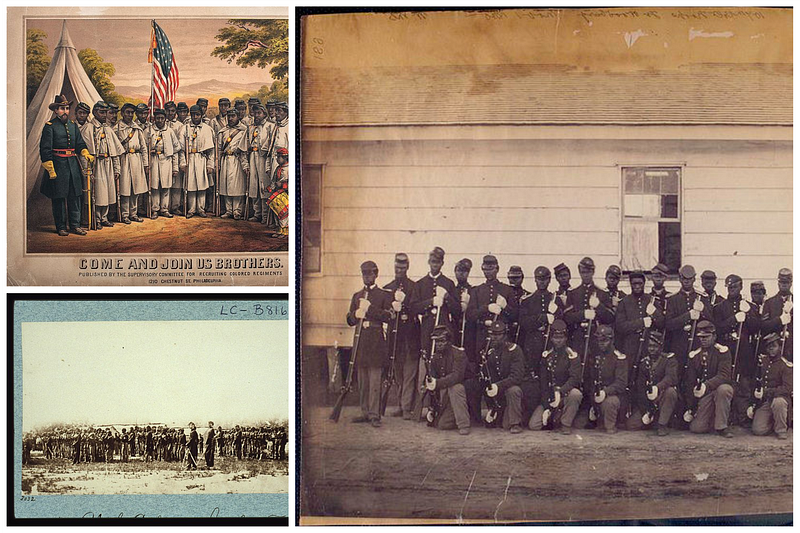
The President acquiesced. The day was Jan. 1, 1863. Issuing the proclamation he appealed. Could Black men enlist in the US army? The Union could put to use any man who could weld a weapon.
Douglass’s work was cut. As the most prominent black man and powerful orator, his voice would galvanize black people to action.
Rallying Black brethren. He penned emotive words;
“Once let the black man get upon his person the brass letter, U.S., let him get an eagle on his button, and a musket on his shoulder and bullets in his pocket, there is no power on earth that can deny that he has earned the right to citizenship.”
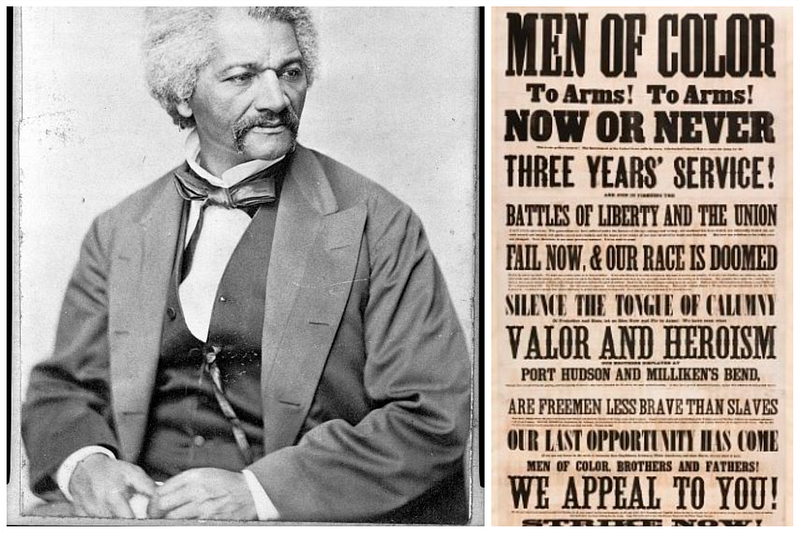
Pamphlets flew off the North Star’s printing press. They screamed to every black person. “Men of Color to Arms! Now or Never!” — It would become the most famous broadside in history. The ‘Men of Color’ was distributed in all northern cities.
“Rise up in the dignity of our manhood, and show by our own right arms that we are worthy to be freemen.” Douglass milled a black fraternity.
He led by example. Two of his sons, Charles and Lewis, were the first black men to enlist in the 54th Massachusetts regiment. One of the two first “colored” regiments.
It was a hard task, convincing Black men to enlist while swaying white opinion. In the minds of white people, black men couldn’t weld a weapon. Douglass proved them wrong.
As enlistment in the 54th Massachusetts Infantry regiment swelled. Massachusetts Legislature felt indebted. Douglass’ was ‘compensated’ for his efforts. A weekly token of $10. It was a slap in the face but it was sufficient.
Douglass didn’t care. He wasn’t doing this for money. The ominous Dred Scott ruling that rendered black people stateless had to be overruled.
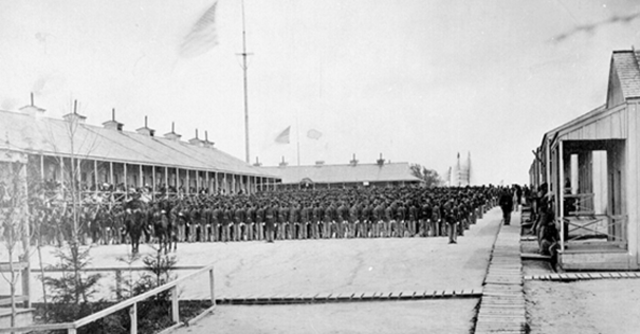
Black people were filled with pride. The day was May 28, 1863. A day that would go down black history. The 54th regiment the first ‘colored’ troop marched through Boston streets. Their boots gleamed. The eagle on their buttons sparkled, they marched to war their muskets oiled and ready.
Douglass was in the streets. In droves, black people witnessed a stupendous transformation. His sons marched together with the troops. He was there to send the men he had helped recruit to war.
David Blight, author of the biography Frederick Douglass: Prophet of Freedom, would capture this breathless moment;
“No one who witnessed this event would ever forget what they saw that day, a thousand smartly stepping black men with Enfield rifles, leaning forward gracefully, moving as one body toward history, heroism, and death to prove to their slaveholding country that they were indeed truly men.”
A white Union officer would describe the stupefying transformation: “Yesterday a filthy, repulsive ‘n****r’, today a neatly attired man, yesterday a slave, today a freeman, yesterday a civilian, today a soldier. He is nothing of what he ever before was, he never was aught of what he now is.”
History would ring true, the prophetic words would be hallowed.
Pushing through the grumbling white mass blocking his way, Douglass was a man on a mission. He had to see the President. As he shoved through the surly crowd. He was propelled by dead black faces swarming in his periphery.
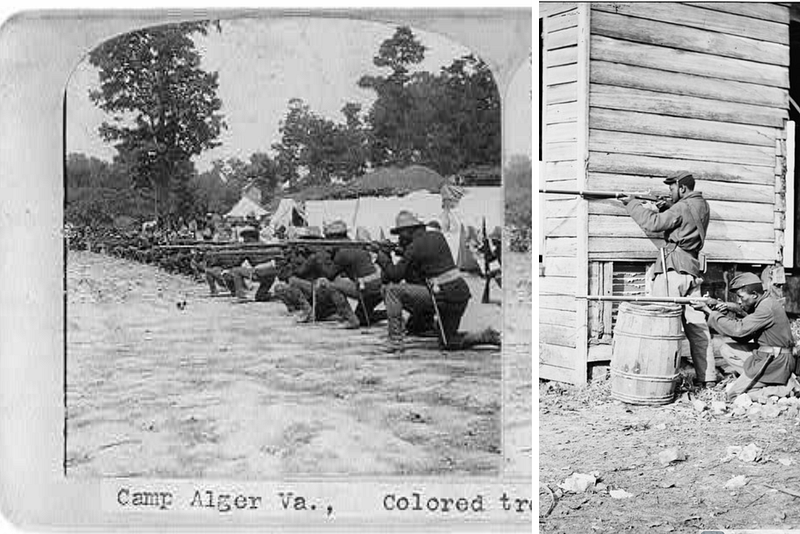
Confederate troops refused to acknowledge Black soldiers captured as Prisoners of war. They mutilated, shot, tortured, and assassinated them in cold blood. Some were stripped of their uniform and sold into slavery.
The white house was quiet, Frederick Douglass was furious.
A letter to Maj. George L. Stearns recruiting commissioner of the U.S. colored troops met with deafening silence;
Douglass raised his voice, “I owe it to my long-abused people, and especially to those already in the army, to expose their wrongs and plead their cause,” he wrote.
He explained it would not be in good faith to continue recruiting black men if the President and the War Department did not retaliate for “colored” prisoners of war assassinated in cold blood by Confederate troops.
“No word is said when brave black men, who according to testimony of both friend and foe, fought like heroes to plant the star-spangled banner on the blazing parapets of Fort Wagner, and in doing so were captured, some mutilated and killed, and others sold into slavery.” He peeved.
“No word was said when free men from Massachusetts were caught and sold into slavery in Texas,” But all the peeves and pleas met with dead silence. Something had to be done. Fast.
Only the President’s voice could end the savage war crimes. Somebody had to let him know, and it wasn’t going to be a white man.
Maj. George L. Stearns understood Douglass’ frustration. He was however helpless, captive to a system unwilling to embrace black soldiers. His advice to Douglass was harebrained. “Go meet the President” He urged him.
It was a journey filled with peril for a black person. Douglass bit the bullet, for the troops he had helped recruit, he was willing to risk it all. A letter from Maj Stearns was all he had;
“I hereby authorize Frederick Douglass to go to Washington, D.C. as my Agent to transact business connected with Recruiting Service for United States Colored Volunteers.” Stearns Wrote.
Stearns letter safely tacked in his pocket, Douglass still needed a miracle to see the President;
“The distance then between the black man and the white American citizen was immeasurable, — I was an ex-slave, identified with a despised race, and yet I was to meet the most exalted person in this great republic.” He expressed his apprehension.
Elbowing his way through the disgruntled crowd Douglass cut a distinguished figure He was dressed in a white stiff collar and black overcoat.
On the steps of the white house, he was met by Samuel C. Pomeroy senator from Kansas who ushered him to see the President.
The Oval Room was a flurry of activity.
Lincoln sat in a low-arm chair, his feet extended. Stacks of documents threatening to overrun the office. He looked haggard, worn out by the rigors of war. Busy secretaries buzzed as they piled more documents on an already chaotic jumble.
It was a scene devoid of pomposity and ceremony. Lincoln was a tired man carrying the weight of a bleeding nation.
Douglass began by introducing himself, the President cut him off, “I know who you are, Mr. Douglass.” He said standing up and extending his hand.
Douglass took the cue, “Mr. President” he said, wasting no time,
“I wish to bring to your attention, first, that colored soldiers ought to receive the same wages as those paid to white soldiers.” He said starting with the softer point.
“Second,” He delved into what he had risked his life for, “colored soldiers ought to receive the same protection when taken prisoners, and be exchanged as readily and on the same terms as any other prisoners,” His eyes were fixed on the President as he continued;
“If Jefferson Davis should shoot or hang colored soldiers in cold blood, the United States government should retaliate in kind and degree without delay upon Confederate prisoners in its hands.” Douglass’s mission was accomplished. He had delivered the message.
Lincoln’s voice quivered as he responded, “If I could get hold of the men that murdered your troops, murdered our prisoners of war, I would execute them,” He told Douglass. “But I cannot take men that may not have had anything to do with this murdering of our soldiers and execute them.”
The president tactfully sidestepped the request for equal pay but promised, — “to sign any commission recommended by the secretary of war for black soldiers.”
Back home Douglass would write, “Though I was not entirely satisfied with his views, I was so well satisfied with the man and with the educating tendency of the conflict that I determined to go on with the recruiting.”
Frederick Douglass had achieved the impossible.
References: