
France — World War II — D-Day — Pegasus Bridge and Pegasus Bridge Museum, 1 Avenue du Major Howard, 14860 Ranville, France — part 2 of 4
The attack on the bridge
August 2017
The attack on Pegasus Bridge is described at the Pegasus Bridge Museum as follows:
“The Landing of Glider n°1 (PF 800)
In the spring of 1944 General Richard Gale, then commanding the British 6th Airborne Division, received orders from Field-Marshal Montgomery to secure the east flank of the Allied landings which were to take place on the beaches of Normandy. This east flank had to be firmly held without fail. It would soon be the hinge upon which the whole of the Allied armies would swing their weight out of the bridgehead to attack the Germans in the rest of Europe.
It was decided therefore, that for the initial assault to have the best possible chance of success, gliderbome troops must be used to capture the two important bridges over the Caen Canal and the river Orne. The use of gliders for this operation was preferred, since a body of troops required in an operation was surprise — and the ability to back up that surprise where minutes counted — could be delivered quickly and at one place together, as distinct from using parachutists who inevitably became scattered over a wide area.
It fell therefore, to the lot of 180 men of ‘D’ Company of the 2nd Battalion, the Oxfordshire and Buckinghamshire Light Infantry, commanded by Major John Howard to lead the initial assault, three gliders going to each bridge. The Airspeed Horsa gliders were piloted by very skilful and highly trained army pilots of the Glider Pilot Regiment. The importance of their task can be underlined by the words of General Gale in his orders to Brigadier Nigel Poett, under whose command the company was to operate:
“The seizing of the crossings intact is of the utmost importance to the conduct of future operations. As the bridges will have certainly been prepared for demolition, the speedy overpowering of the bridge defences should be your first object. They must therefore be seized by a coup de main party, landed in gliders as near to the bridges as is humanly possible. You must accept risks to do this.”
Absolutely on time, the gliders swooped down silently out of the cloudy night sky, and, right on target, glider N° 1 (PF 800) piloted by Sgts Jim Wallwork and Johnny Ainsworth landed at the side of the line of trees near the canal. Major Howard had asked Jim Wallwork to land his glider just through a barbed wire fence which was known to be about 50 meters from the bridge. When interviewed later, Jim said
“I landed very hard and very fast — too fast, tearing off the undercart. Now just on the skid I went through one farm fence which didn’t slow me down at all, so I deployed the arrestor ‘chute for just one or two seconds, then released it. It braked the glider very well, lifting the tail up high causing the nosewheel to collapse, and we went through the wire fence.”
This final impact caused the cockpit area to collapse pinning both pilots under the debris, but fortunately without serious injury.
Major Howard and his troops dashed forward and took the German defenders by surprise. The bridge over the canal together with the bridge over the River Orne, some 350 meters away, were captured intact and held against massive counter attacks for many hours until relief later on D-Day. Amazingly the bridges were captured with the loss of only two men killed, and fourteen injured.
Lieutenant Herbert Denham ‘Den’ Brotheridge was a platoon leader in ‘D’ Company, and was one of the first to cross the bridge. Tragically, he was also the first Allied soldier to be killed on D-Day. He was later found lying in front of the Gondree Café having been shot. Lieutenant Brotheridge is buried in the Churchyard at Ranville, in grave 43. He was 29. “Greater Love Hath No Man Than He Who Lays His Life For His Friends” (John 15: 13)”
When you look at the landing ground and its proximity to the bridge, it shows a fantastic bit of piloting that dropped the gliders on that spot. Remarkable. The skill.
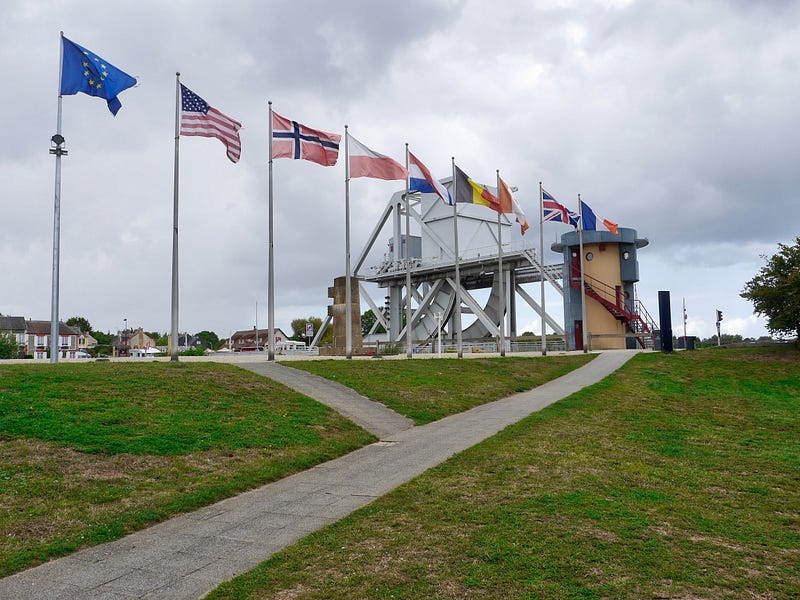
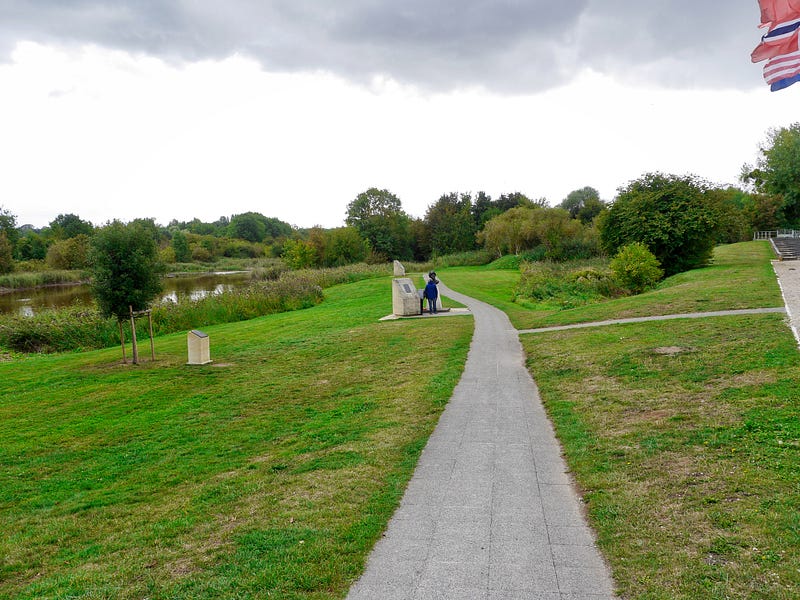
Mayor John Howard was the company commander of ‘D’ Company, 2nd Battalion Oxfordshire and Buckinghamshire Light Infantry — the same battalion my great uncle served with in the First World War.
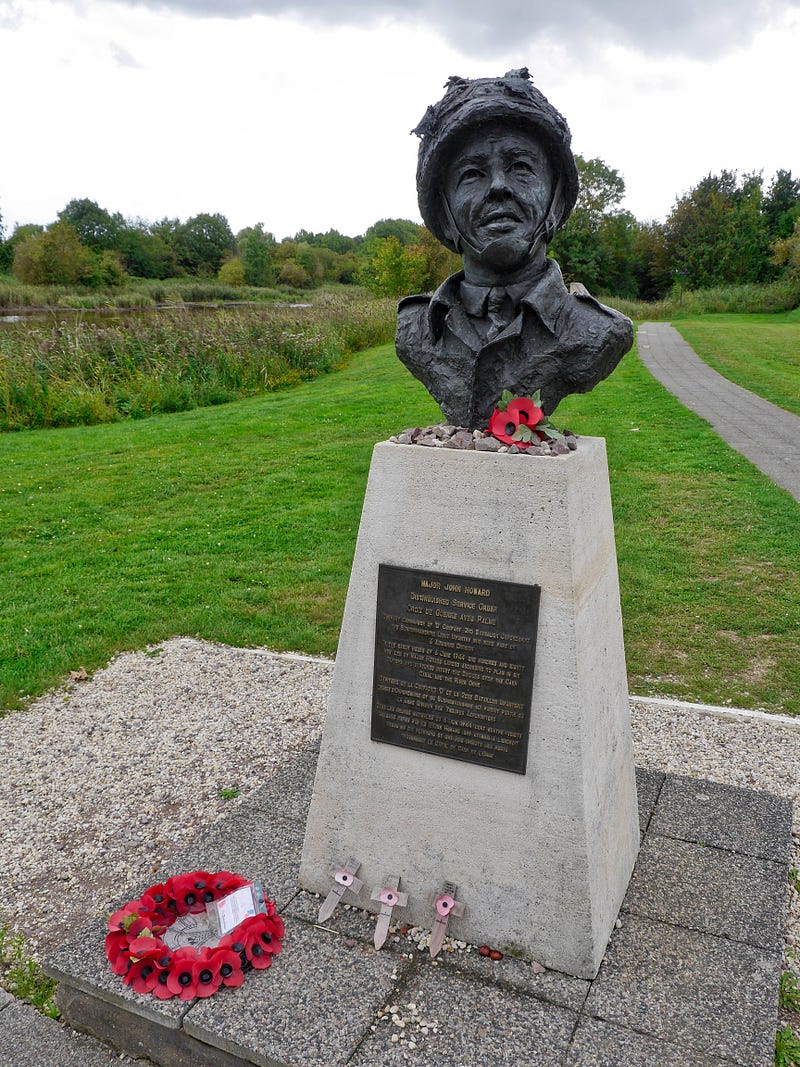
’D’ Company 2nd Battalion Oxfordshire and Buckinghamshire Light Infantry (OBLI) were part of the 6 Airborne Division, and in the early hours of the 6th of June 1944, 188 men in six gliders, under the command of Major Howard landed and captured the bridges over the Caen Canal and the River Orne.
At the glider landing site near Pegasus Bridge, there are various markers for where the different gliders landed.
The first one I read was for Major R.J. Howard’s glider.
“The Horsa glider of Major R.J. Howard, Oxfordshire and Buckinghamshire Light Infantry, who commanded the operation to capture the bridge, landed on this spot together with Lieutenant H.D. Brotheridge and 28 soldiers, at 0016 hours on 6 June 1944 the pilots were Staff sergeants Wallwork and, Ainsworth”
Lieutenant Brotheridge was to become the first Allied soldier to be killed on D-Day.
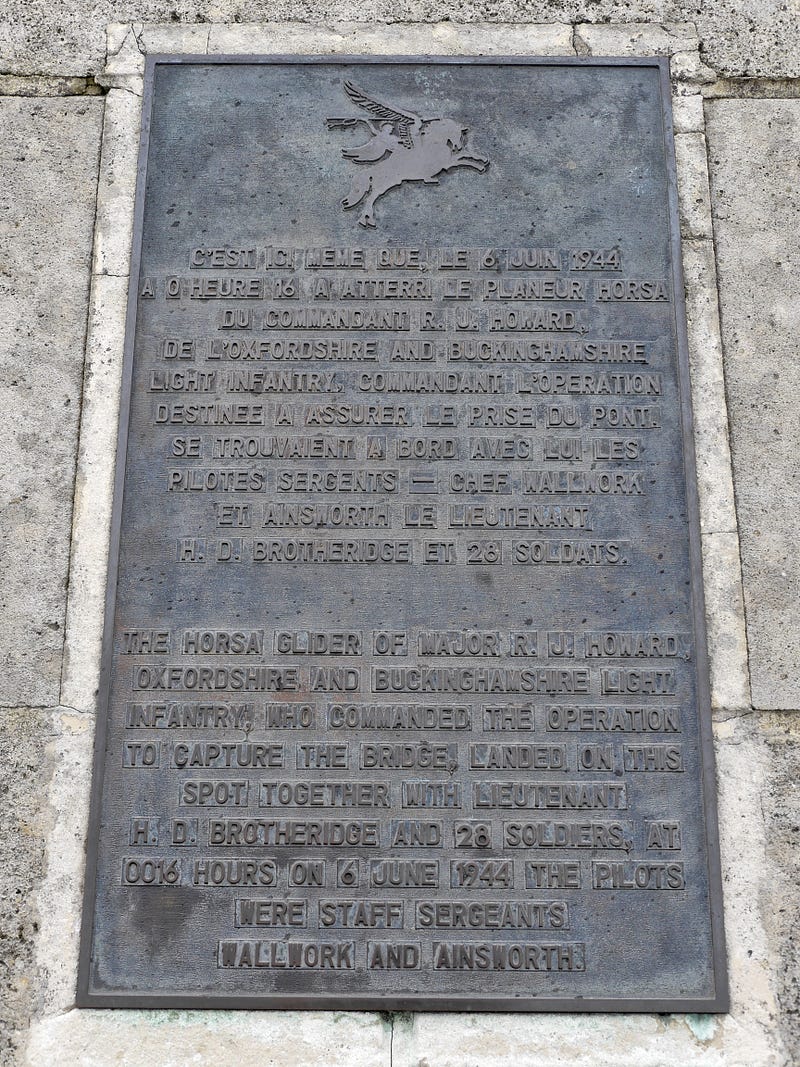
One of the other markers reads:
“The Horsa glider of Lieutenant R.A. Smith, piloted by Staff Sergeants Barkway and Boyle and also carrying Captain J. Vaughan, Royal Army Medical Corps and 28 soldiers landed on this spot at 0018 hours on 6 June 1944.”
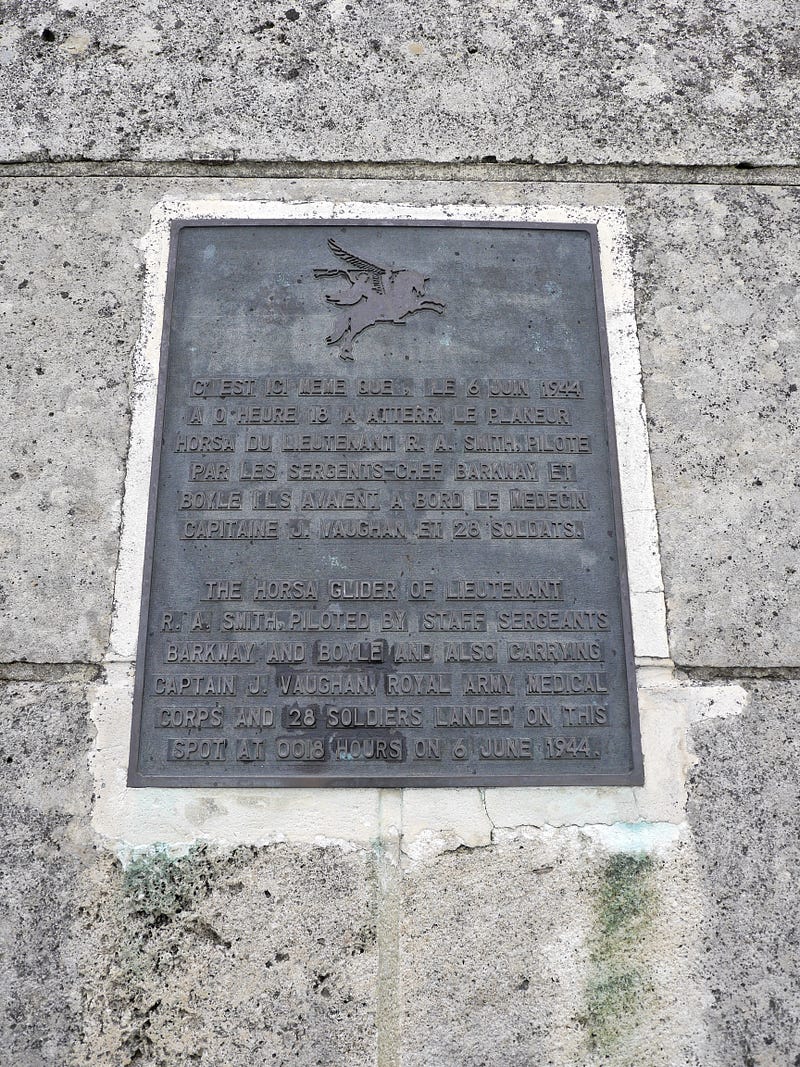
Nearby was another marker that read:
“The Horsa glider of Lieutenant D.J. Wood, piloted by Staff Sergeants Poland and Hobbs and also carrying Captain H.R.K. Neilson, Royal Engineers and 28 soldiers landed on this spot at 0017 hours on, 6 June 1944”
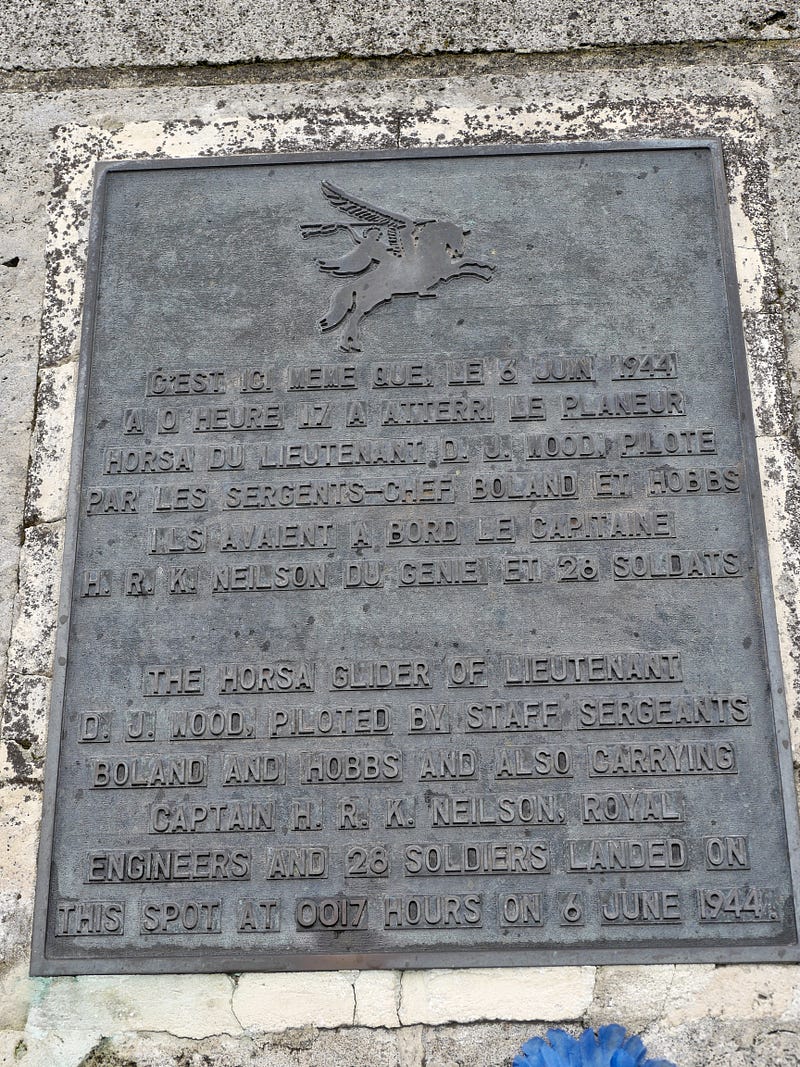
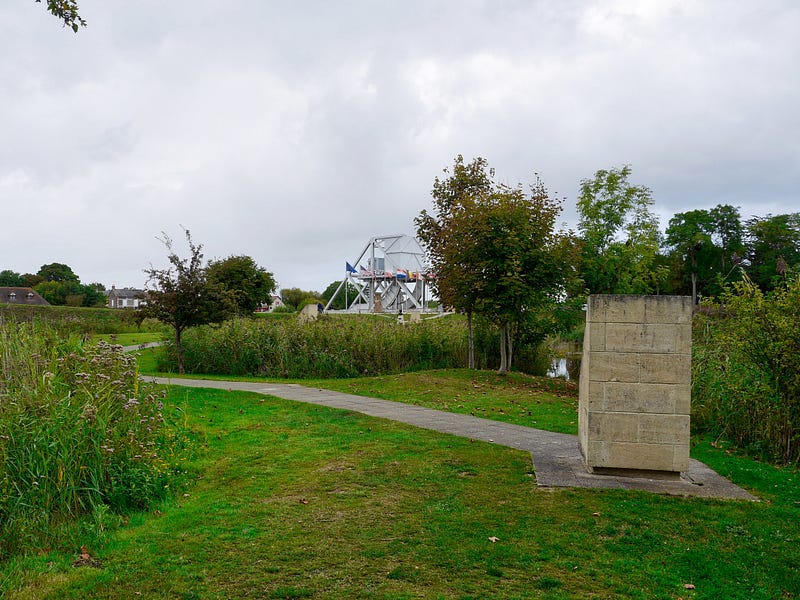
I read, and I can’t remember if it was in the museum or later in a book, that when some Russian Officers were shown the site, they thought it was a mock-up. The gliders were still in position then, and the officers could not believe how close the gliders had landed to the bridge.
Foursquare: Pegasus Bridge Museum
Foursquare: Pegasus Bridge


