
NATURE PROMPT | PHOTOGRAPHY
Forest rewards attention
Forest coaxes us to pay keen attention to its milieu and in return satiates us with loads of thrill and sensory bounty
What is the biggest crisis of humankind now? Well, there are a lot of crises — wars, pandemics, climate change, and poverty to name a few.
But at an individual level, the biggest crisis according to me is the mental pandemic and one of the manifestations of it would be Dopamine overload and eventual attention deficit.
As we make rapid strides in technology our ability to hold attention long enough seems dwindling. How many times does that urge to check the damn notification overpower us in the middle of doing something important?
The real problem of humanity is the following: We have Paleolithic emotions, medieval institutions, and godlike technology. — Edward Wilson
Well, our emotions still seem to be tuned with the Paleolithic age, when humans lived in the forest. Living in the forest is not easy and nearly impossible for most of us now. But spending a few hours in the forest is a perfect antidote for our dwindling attention problem.
Have you ever walked through a forest or trekked a mountain?
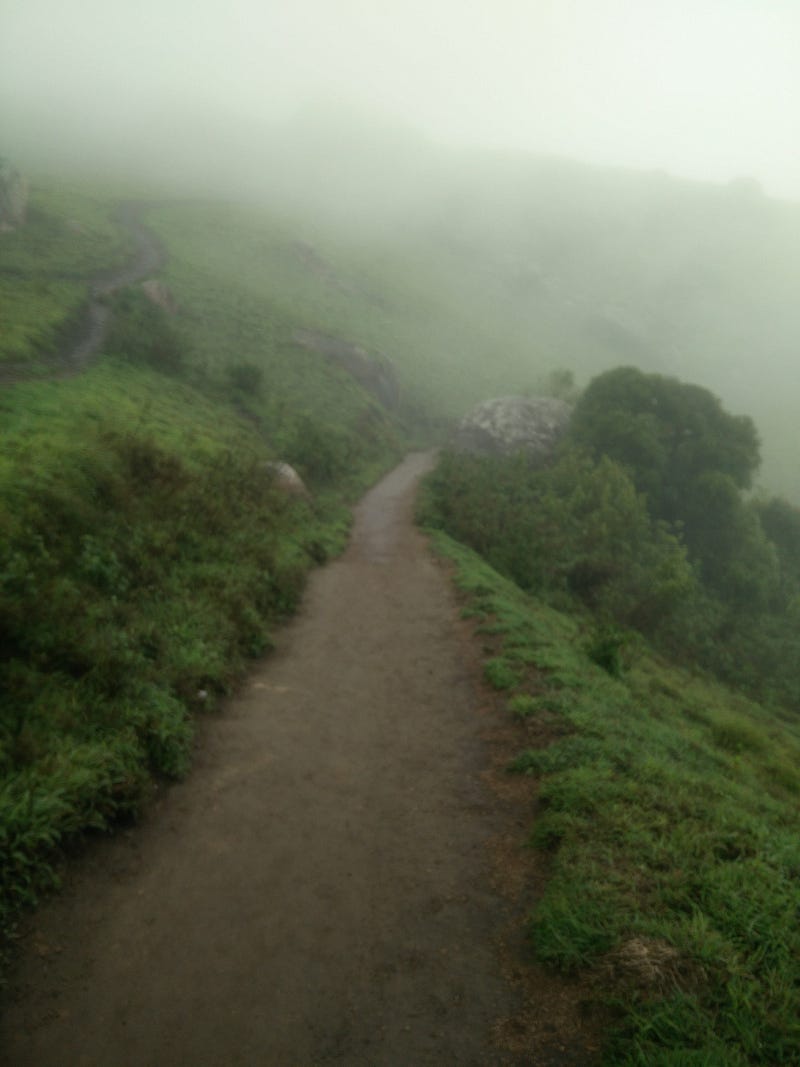
Walking through a pristine forest without much human activity can be a rewarding as well as scary experience. The most important thing needed to traverse the path is unbridled attention. Every year I trek high up mountains through the forests to a cave temple in one of the peaks of the Western Ghat mountains. It is an arduous 8-hour trek that strains every sinew of the body.
A wrong foot in the terrain can prove to be fatal. And this trek is an acid test for holding my attention without any distractions and wanderings of the mind. Each moment can mean an undulation between a step forward or a fatal fall, the forest forces me to pay attention to each step with all the focus I can muster.
What is around the corner?
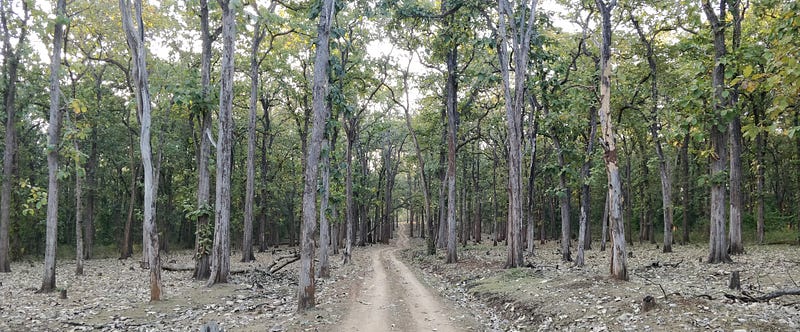
As my interest in photography picked up, my visits to forests also picked up. Catching up with the action in a forest is a question of holding attention for the longest. Often a three-hour time spent rewards only with a few seconds of action and adventure. And paying unwavering attention is the key to not missing the rewards.
Riding through miles and miles of thickets and shrubs can be a test of patience but you never know when the tide is going to turn. In one of those trips after multiple safaris through the forest and bereft of any result, things were poised towards a point of no return. Still, my wretched eyes were foraging for a prized catch, and my keenness of attention paid rewards as the tour was about to wind up.
The elusive eyes of the striped cat were perfectly camouflaged behind the bushes and caught my prying eyes! My wretched eyes were twinkling with happiness.
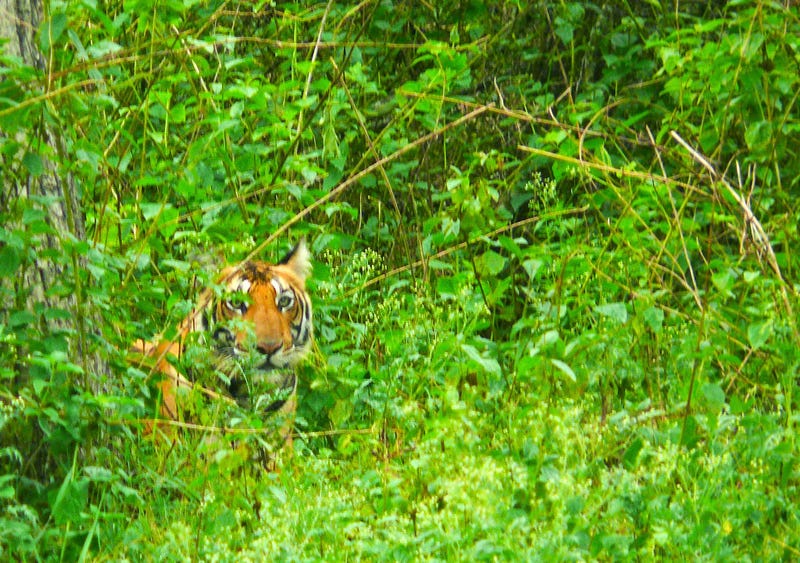
Such is the mystery of the forest, you never know what is around the corner and the only tool you have in your hand is your undivided attention.
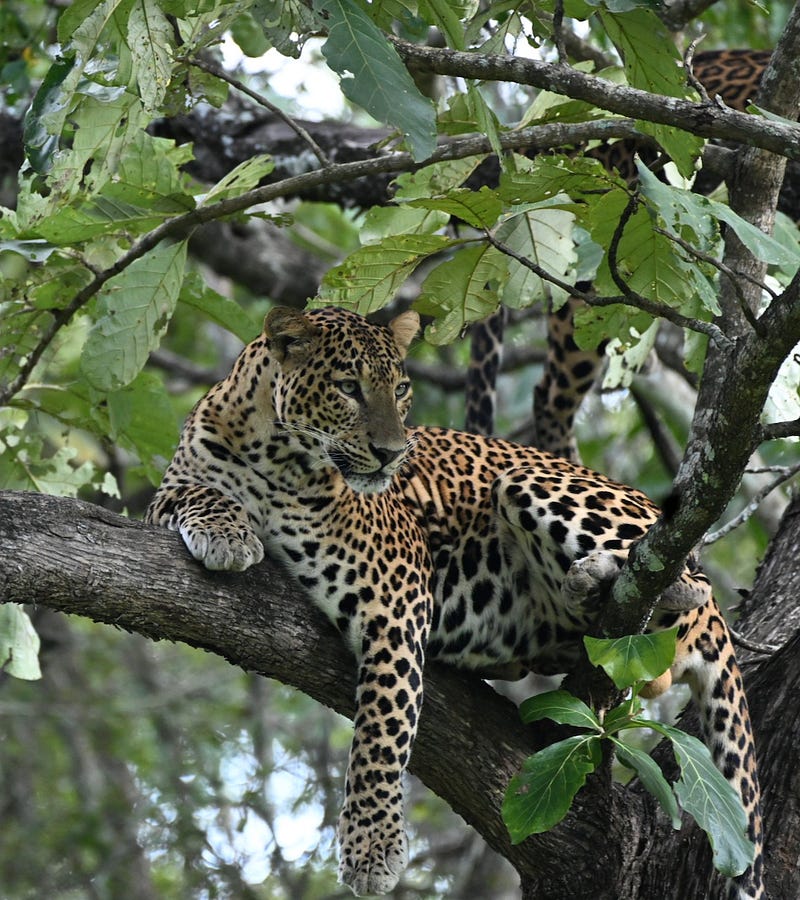
Maybe you see the path ahead clearly, there is no activity, there is no sound, and there is no movement. The eerie silence of the jungle subsumes your mind. Looking around nothing seems promising. You get tired after the persistent pursuit and you relax.
You look up to the skies to ask for that lucky break. And there you get the reward. At first glance you don’t recognize it, something is there up the tree then you position yourself and see it. A beautiful “Panthera Pardus” aka the Leopard is relaxing high up the tree. Even when your body is tired and feels like giving up the ability to focus, paying keen attention helps in unlocking the hidden facets of nature.
I have seen people getting bored during a safari through the forest. They lose interest, they lose their attention and they start fiddling with their phone. They miss the whole point.
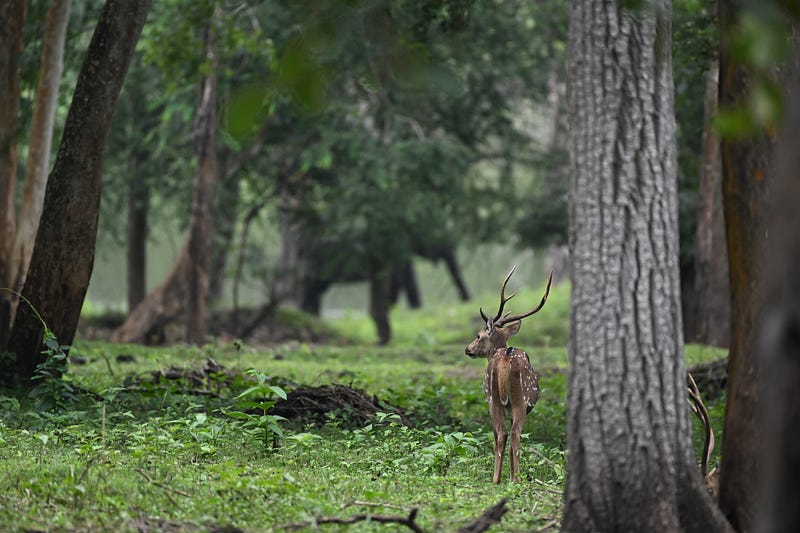
We see a deer.
Oh! Another deer, by then sighting a deer is akin to sighting a dog in Indian streets, they seem to be everywhere.
But dare I say, they miss the whole point. Because where they see a deer paying keen attention I see an elephant.
Like this.
Some see a bee-eater — as a common farer in the forest and city landscape, but sometimes it can reveal why it is called a bee-eater in the first place. The key to it is holding attention even if you are seeing the same damn bird for the umpteenth time.
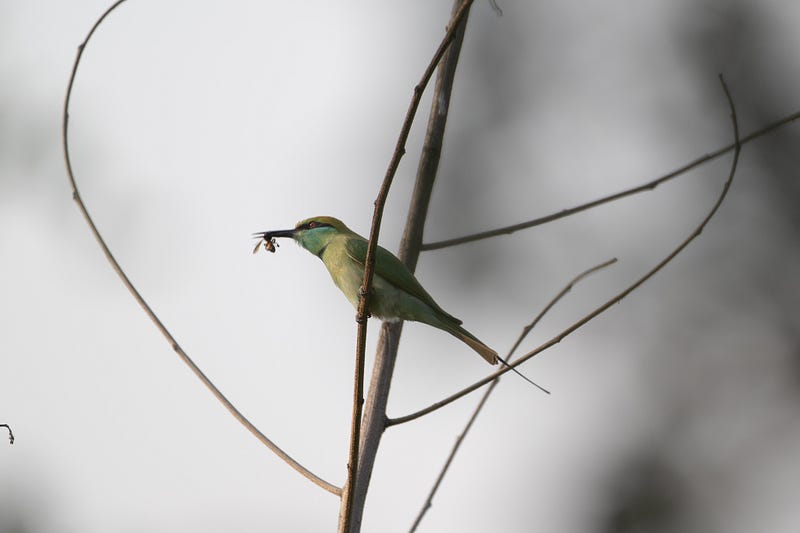
Seeing a bee-eater is common, but seeing a bee-eater catching a bee is a very memorable experience.
As my Guru succinctly puts it
The depth of your attention determines the depth of your experience. If your attention is profound, your experience of life is profound.
I enjoyed reading a moving piece by Mia Verita on her healing path, which is deeply emotional and spiritual.
The well written article about friendship between Stork and a man in Turkey evoked my curiosity and made me dream if I too had such a friend in my life Gulsun Uluer


