
NATURE
Forest Bathing — The Japanese Practice of Shinrin-Yoku
Enabling you to reconnect with the natural world — and boost your body’s killer cell activity at the same time.
Greater Tokyo is the most densely populated land mass in the world. In 2019, its population peaked at 37.468 million. This was more than the entire population of Canada.
Life in Tokyo can be stressful, with famously long working hours and a frenetic pace of life. Japanese words have been coined to describe some of the unfortunate results of this stress-filled lifestyle — karōshi, death from overwork, and hikikomori, people who shut themselves into their rooms for years on end.
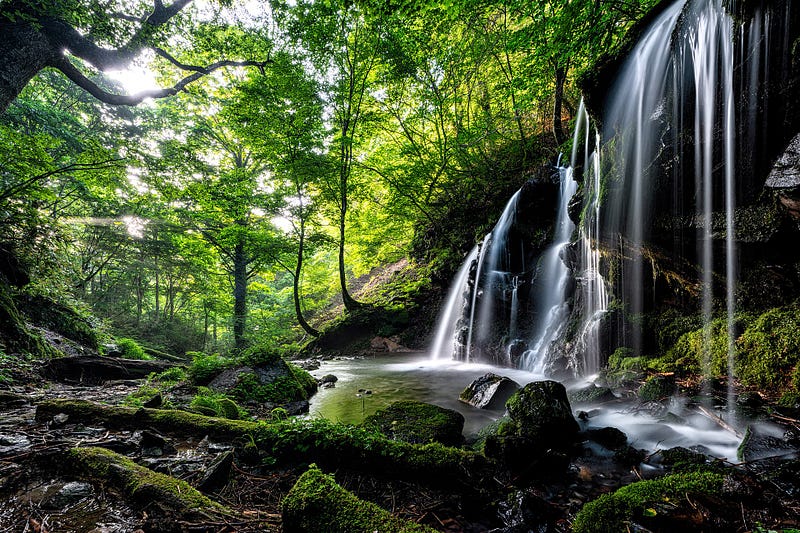
Yet stepping outside of the bustling big cities reveals a world of natural wonder. More than 70% of Japan is blanketed by mountains and forests in which can be found magnificent cedar trees, diverse moss-covered rocks, and thundering majestic waterfalls.
It is no wonder that the practice of forest bathing developed in Japan to provide an antidote for the stresses of big-city life.
The Uniquely Japanese Origin of Forest Bathing
People in Japan started to practice forest bathing in the early 1980s out of the intuitive notion that spending time surrounded by greenery was good for them. The practice was christened shinrin-yoku in 1982 by the Director General of the Agency of Agriculture, Forestry, and Fisheries, in a dual campaign to encourage people to visit forests for their health, and also as a means of protecting the forests. If people spent time in forests, so the thinking went, they would be more likely to want to protect them.
Shinrin-yoku is a combination of Japanese words — 森林 shinrin, forest and 浴 yoku, bath. Simply put, forest bathing is opening up our senses to drink in the natural world. It conveys the delight of walking in a forest and taking time to observe nature in all its detailed wonder.
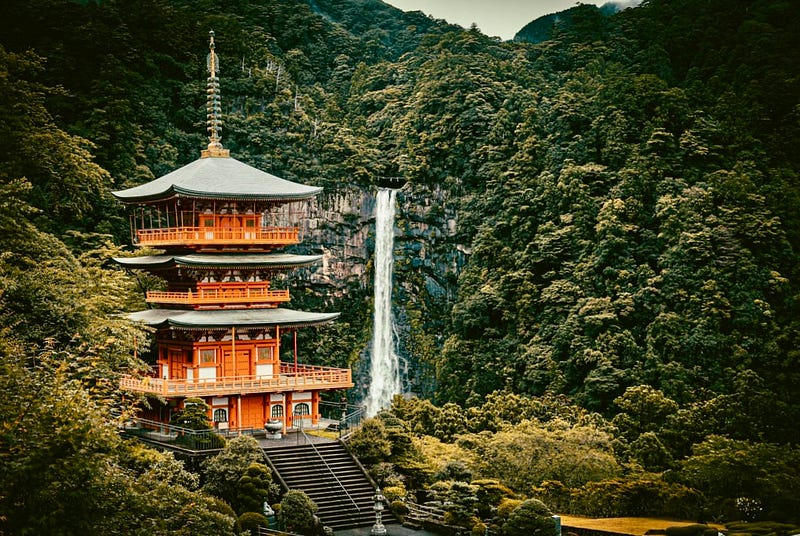
Japan’s indigenous religion, Shinto, holds that millions of deities called kami inhabit nature. Stones, waterfalls, and trees can all be homes to kami. Some of the most beautiful places in the country are sacred spots that are marked with Shinto shrines. With this long history of reverence for nature, forest bathing is natural in Japan.
Why Practice Forest Bathing?
We humans spent millennia living among nature. Only in recent history has our species begun living in artificial environments with electric lighting and constant temperature control. This is highly unnatural. We evolved to live with nature.
The famed psychologist Erich Fromm describes man’s innate desire to connect with nature as an integral part of our biology. When we rob ourselves of this, our emotional and physical health suffers.
Forest bathing bridges the gap between ourselves and nature, bringing our minds, bodies, and spirits back into harmony with the natural world.
The Unexpected Impact of Forest Bathing
According to the US Environmental Protection Agency, Americans spend 93% of their time indoors. Europeans are not far behind, staying indoors 90% of their time. Much of that time is spent in front of a screen using just two of our senses — sight and hearing.
This screen time causes a variety of problems which have come to be known as “technostress.” This differs from the traditional concept of stress, in that technostress is directly linked to our interaction with technology.
The symptoms of technostress are alarming. Problems with focus and concentration, muscle tension, poor posture, insomnia, chronic fatigue, depression, panic attacks, and general burnout. Perhaps we’ve all experienced some of those.
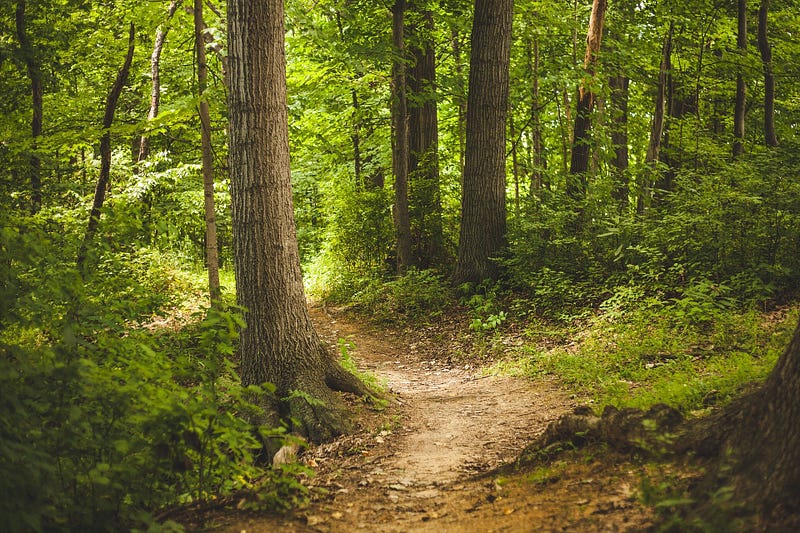
In sharp contrast to the two senses we exercise in our indoor life, when we walk among nature, we open up all our senses.
- We can feel the breeze. We can touch the rough bark of trees, the smooth cool surface of a stone, and the gentle softness of moss. We can sense the unevenness of the ground beneath our feet.
- We can hear the whisper of the wind in the leaves, the burbling of water, and the song of birds.
- We can smell the blossoms among the earthy fragrance of the forest.
- We can taste the freshness in the air.
- And above all, we can see the green leaves, the blue sky, and the clear streams.
Walking in a beautiful forest not only lifts our spirits, but it can have a direct impact on our health.
Killer Cell Activity Boosted by Forest Bathing
Aside from flooding our spirits with gratitude and wonder which lifts our hearts and alleviates stress, there are actual physical changes that occur when we spend time in forests. Most importantly, our immune systems improve.
The positive emotions we experience when surrounded by natural beauty can increase our levels of anti-inflammatory cytokines, the proteins that transmit messages that boost our immune systems.
As well, “evergreen trees are great producers of phytoncide, a chemical that increases natural killer cell activity,” said Charlie Hall, professor and Ellison chair in the department of horticultural sciences at Texas A&M University in College Station.
Phytoncides are the natural tree oils that defend against damage from insects, fungi, and bacteria. The lovely fragrance of a cedar forest is due to the presence of these phytoncides. Breathing in such air stimulates our natural killer cells — the part of our immune systems that targets and destroys virus and tumor cells.
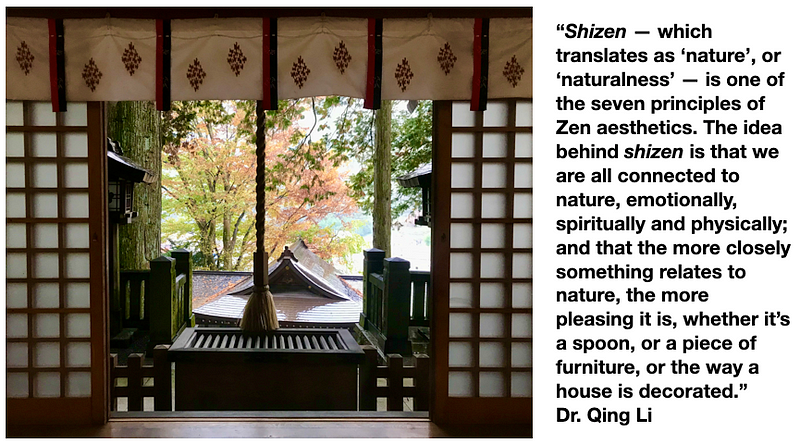
Experiments done by Dr. Qing Li of Tokyo’s Nippon Medical School back up Dr. Hall’s claim. After three days and two nights in a forest, study participants’ natural killer cell activity increased by 53.2%, and killer cell numbers increased by 50%. Other anticancer protein counts also increased significantly, from 28–48%. These increased levels continued for as long as 30 days.
The Benefits of Forest Bathing are Boundless
There are many other advantages of forest bathing. Walking in the forest:
- Calms our spirits
- Clears our minds and improves mental well-being
- Increases problem-solving abilities
- Improves our memory
- Increases creativity
- Promotes prosocial feelings and behavior
- Gives us a more positive outlook on life
And many more.
Do What You Can, and Look to the Future
If we cannot spend time in a forest, we can still gain some benefits of interacting with nature by spending time in a neighborhood park. We can fill our homes with plants, and we can breathe in the fragrances of the forest through tree oil diffusers.
Ideally, though, forest bathing involves actually spending time in a forest. We are not rushing through it. We take our time. We stop. Observe. Listen. We use all our senses to experience what nature wants to give us.
Long before the word “forest bathing” was coined, John Muir wisely said,
In every walk with nature, one receives far more than he seeks.
Let us not only practice forest bathing ourselves, but let us teach our children to enjoy time in forests, for their sake and for the sake of the forests. Children that learn to love forests will grow into adults who strive to protect them.
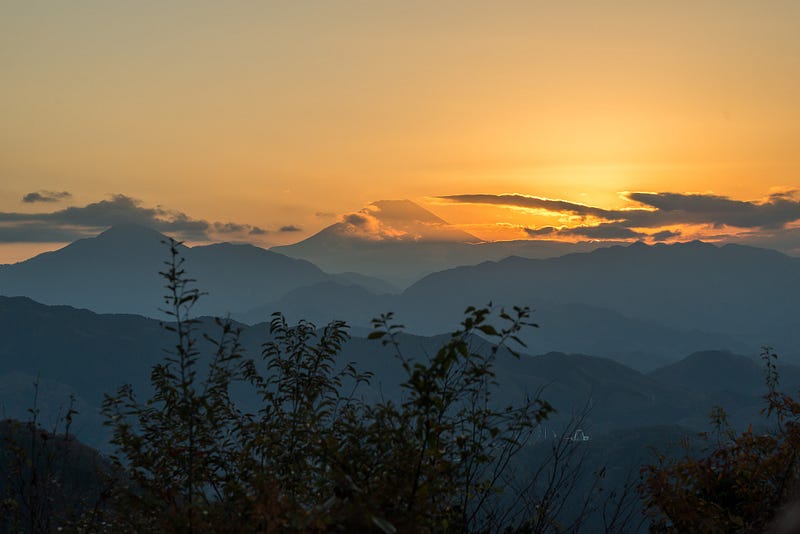
Alvin T. recently wrote an excellent article about the diversity of life in Tokyo, from bustling Shibuya to the breathtaking natural beauty of Okutama. Surprisingly, there are a lot of places where one could forest bathe in Tokyo. In fact, the most climbed mountain in Japan is — no, not Mount Fuji, but — Mount Takao, in Hachioji, Tokyo!
This article is updated from the original published on my blog, More Than Tokyo.
References:
Statistics: https://www.worldometers.info/, https://www.macrotrends.net/cities/21671/tokyo/population
Forest bathing studies: Forest Bathing: How Trees Can Help You Find Health and Happiness, by Dr. Qing Li, “These Christmas trees may improve your health,” CNN, “What Is Technostress? And How You Can Manage It”, Forest Therapy.
If you want to join Medium to get access to all content, I’d be glad if you used my referral link. Doing so gives me a small commission at no extra cost to you. Thank you!


