
Forest Bathing Makes You Mentally Ripped
A guide for guys and other cynics
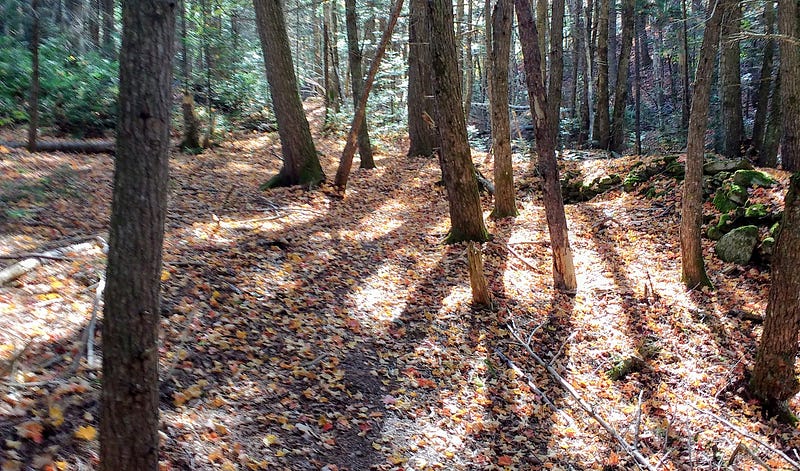
Cynicism aside, forest bathing is a big deal and is here to stay. It’s more than a new-agey fad. It's an industry with a professional association and more than 2,000 guides in 60 countries. Hundreds of these guides are in the United States.
A few misconceptions to clear up:
- You don’t need a towel or flip-flops.
- You can keep your clothes on.
- It doesn’t involve soap.
What is it, anyway?
So let’s get it straight. Forest bathing doesn’t involve baths or bathwater, soap, or towels. Turns out you don’t even have to sit. It also turns out you don’t need a forest. So what is it anyway?
Forest bathing, at its essence, is a slow, meandering walk through a vegetated natural area. This could be a forest, but it also could be a meadow or even a garden. You can also practice the related mental state of “blue mind” by walking along a shoreline — or by swimming or paddling — and get many of the same benefits.
Forest bathing originated in Japan in the 1980s. The English term came from the Japanese Shinrin-yoku or “forest bath.” If you want to put an even more sophisticated spin on it, you can use the French, “Bain de foret.”
The goal of forest bathing is an increased connection with nature. A Time Magazine article explains, “By opening our senses, it bridges the gap between us and the natural world.” It’s a form of mindfulness in nature. It’s about slowing your body and thoughts.
Calming your mind actually supercharges it for future bursts of productivity. It’s counterintuitive but true. If you want to be mentally ripped, you need to take some time to go easy and go slow.
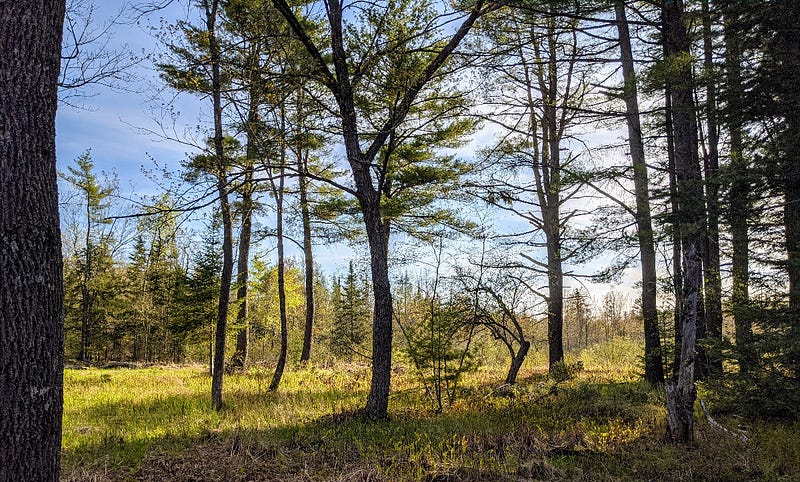
A rose by any other name would smell sweeter
So really, misconceptions aside, it’s a down-to-earth activity nearly all can benefit from — going for a walk in the woods.
Part of the problem is that guys especially can get hung up on the names of things. Forest bathing has two words and one of them is “bathing,” and for American men, that’s a stumbling block.
In Japan, where forest bathing originated, baths are popular among both women and men, with more than 60 percent taking a daily bath in the winter months. In Japan, a bath is for relaxation. People clean off by showering before the bath. So, yeah, taking a bath has a way different connotation there.
In the United States, by contrast, fewer than 9 percent of men take baths. Baths involve sitting, baths take time, baths don’t work well if you’re dirty. Who knows why American men don’t take baths? The point is they don’t. And if you don’t take (or have warm fuzzy feelings about) a bath in a tub, why would you want to take a bath in a forest?
The irony, of course, is that exactly because guys tend to be action-oriented and goal-driven, they stand to benefit even more from slowing down and taking time for being rather than doing.
So if the name “forest bathing is not a winner, what then? It happens that in the United States at least, the term forest therapy is increasingly being used instead of forest bathing.
But the word therapy isn’t exactly pay dirt either. If you’re not a guy, go ahead and ask the nearest guy, “bath or therapy?” Most guys aren’t lining up for either. But, yeah, guys might be willing to go for a walk in the woods.
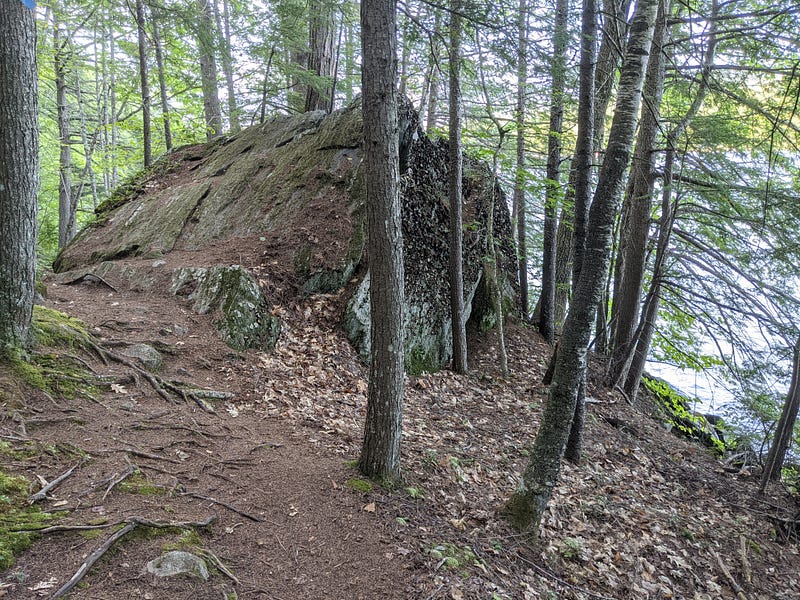
It’s simple but it’s not
The second hangup that guys and cynics need to get over is the advent of an industry involving something that might feel like it should be, well, more natural.
Forest bathing, forest therapy, whichever you call it, at first seems contrived. A little too much like a sharing circle or group hug. How about just going outside? Hanging out in the woods?
Human beings have been going out into the woods to hunt, fish, and gather wild edibles for millennia. Successfully doing so requires a quieting of the mind and opening of the senses. It requires a mindset that is not far off from that of forest bathing. So cynics who question whether forest bathing brings anything new are partly right. On the other hand, most of us didn’t grow up hunting, fishing, or gathering wild edibles, so probably we need the practice.
This is one of the problems when anything becomes an industry. Once there are specialists, there are people who feel they need the specialists. Once there is a product, there will be a consumer. People suddenly feel unqualified to do something on their own but instead rely on trained experts.
For example, recent trending Google searches on the topic include: How does one take a forest bath? What happens to our bodies when we go forest bathing? How long do the effects of forest bathing last? How often should you forest bathe?
But let’s not throw the forest bathing out with the bathwater. What forest bathing promotes is a really good thing, even if the name is somewhat unfortunate. Even if it’s something some of us can do without being guided by a trained expert.
If you have little experience in the outdoors, if you’re not going to do it unless it’s on your calendar, or if you’re not going to put your phone away unless someone tells you to, seeking out a forest therapy guide might be a good idea. Otherwise, you might consider giving it a try on your own.
The truth is, some of us have been doing it since we were kids. We didn’t know why, we just knew that hanging out in the woods made us feel good inside, peaceful and happy.
The bottom line is you can call it anything. Or don’t call it anything. Just do it. Go for that walk in the woods.
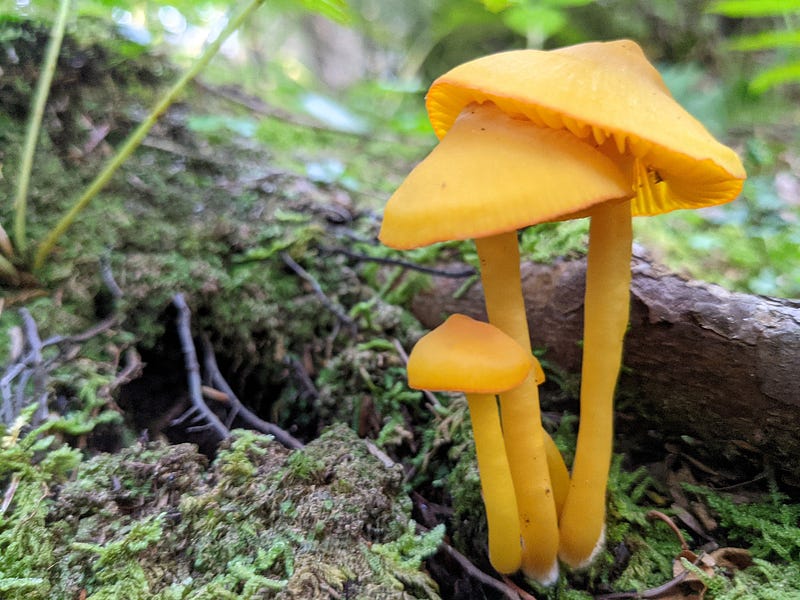
What forest bathing can do for us
Controversies aside, forest bathing really is good for us. The physical benefits of forest bathing are documented in numerous studies. The health benefits include lowered blood pressure and reduced stress levels. Other studies have shown it increases creative thinking and altruism.
A benefit particular to spending time in forests with evergreen trees is that these trees not only smell good but also emit airborne oils called phytoncides that provide a natural immunity boost. At least one study has found that the health benefits of this phytoncide “shower” can last for weeks.”
Another benefit of spending time in forests and along shorelines is that these areas tend to have high levels of negatively charged ions. Once breathed in, this type of air molecule enters the bloodstream and boosts serotonin levels, which leads to decreased stress and improved mood.
The real genius of forest bathing is that it helps people break out of the mentality that they always need to be doing something. Americans, and especially guy Americans, like to have a clear purpose and an outcome. Except when they’re mindlessly watching tv or scrolling social media, of course.
When you go out empty-handed, you find ways to occupy yourself. You pay attention to what you would not have otherwise found. When it stops being about the bringing, it becomes more about the finding.
Americans go into the woods and they’ve got their phones on their armbands and their earbuds in their ears. They are talking and scrolling and timing themselves. They have cameras or binoculars. They have their boats and fishing poles. They have bikes or wakeboards or kite skateboards. They have coolers. They want to build a fire or dig a hole — or something. Hang a tarp. Chop wood. Walk, run, orienteer. Find a geocache. Fly a kite. Use a metal detector. Eat. Drink. All these can be good things and are good things, each in their own time. But each can be a way to distract us from simply being. Just breathing, listening, looking, and seeing what comes up.
Bringing stuff with you when you go outdoors gives you a focus. If you go outdoors without anything, what will you do? That prospect makes people nervous. But that’s the whole point. When you go out empty-handed, you find ways to occupy yourself. You pay attention to what you would not have otherwise found. When it stops being about the bringing, it becomes more about the finding.
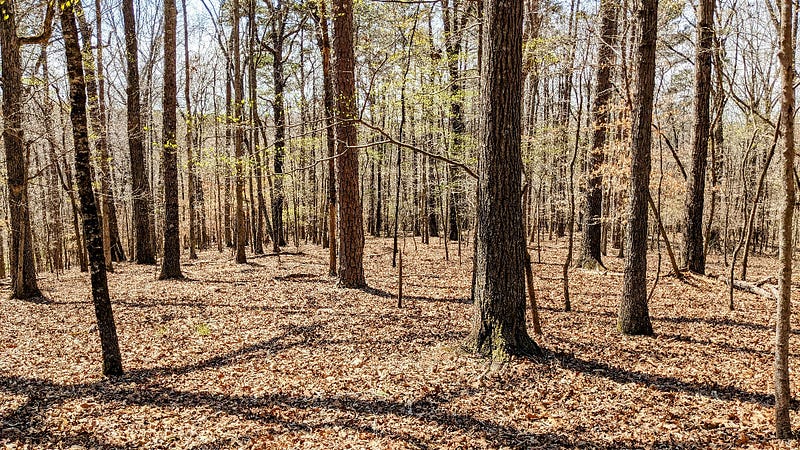
A few suggestions for hanging out in the woods
Forest bathing is not the only way to connect with nature. In a related article, I talk about an array of outdoor activities that promote connection with nature and have all kinds of mental and physical benefits. On the other hand, forest bathing may be the activity that feels the most foreign to Americans, and that alone is a reason to give it a try.
I am not a certified forest therapist, so I won’t give formal advice on forest bathing. But as an outdoor trip leader and woods person who has read and thought about the benefits of spending time in nature, I offer the following common-sense guidelines for hanging out in the woods.
The challenge is to spend time in the woods but without a trail and without a destination. The “no destination” part seems especially important for our destination-driven culture. We are accustomed to focusing on getting somewhere rather than being somewhere. Well, for once, you are not competing and not performing. You are doing something truly radical, you are slowing down.
- Wear comfortable clothes for the weather and conditions.
- Be prepared to protect yourself from the sun and biting insects, as needed.
- Bring a phone — it’s an emergency device and helpful if you get lost — but silence it.
- Walk off the trail and find what draws you — this may be a tree, rock, moss, ferns, sunlight, shade, a place to sit, a stream, or a body of water.
- Breathe deeply, smile.
Well, for once, you are not competing and not performing, you are doing something truly radical, you are slowing down.
6. Open your senses. Take the time to feel the roughness of tree bark or the coolness of moss. Look up to the treetops and down to the earth at your feet. Close your eyes and listen.
7. What do you smell? What do you feel? What do you see? What do you hear?
When you hike on a trail, you can stay on autopilot, and your mind can be in all kinds of places besides the present. When you step off-trail, you suddenly have to pay attention. You’re finding your way. You’re seeing what you’ll see. You’re awakening other parts of your brain. And that’s what it's all about.
Note: No guys were harmed in the writing of this article. Any gender stereotypes within are intentional, are for humor, and are not intended to limit any guy’s perception of the many things a contemporary guy can be.
Enjoy more on Medium. Become a member with the link below.
Your $5.00 Medium membership will grant you unlimited access to my stories and the stories of many interesting writers. (I will receive a small commission if you use this link.)


