
Election|Politics|Leadership
For What It’s Worth
The time to change the future is now
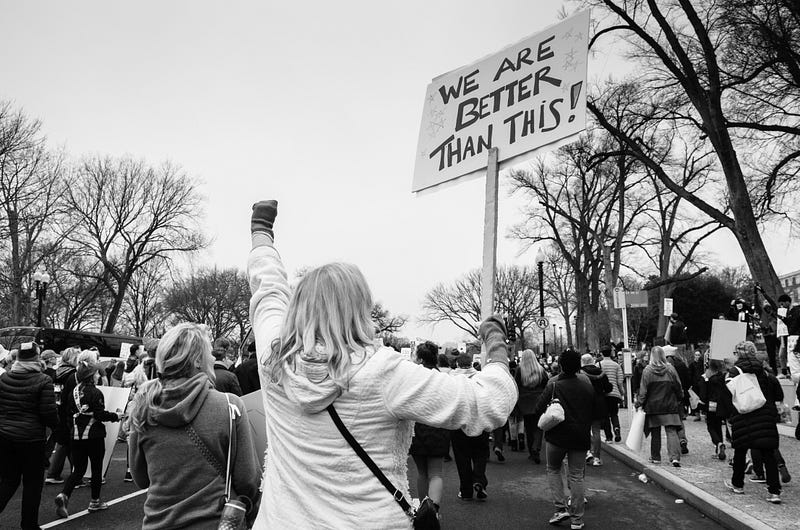
I was driving up a canyon yesterday afternoon, in sunny Southern California, trying to make sense of the world, the news, the feelings roiling inside of me, when an old favorite came on the radio — Buffalo Springfield’s, For What It’s Worth.
A song about the 1960s. About the Vietnam protests. The disillusionment of everyday politics. The pervasive sadness from the constant loss of life, the injustice in our society, and the tone-deafness of our leaders.
As if on cue, a mist suddenly rolled up from the valley floor below and overtook me. Filling in the space before my car with soft white clouds, I felt unable to resist and soon found myself lost within it. Still moving forward, music still playing on the radio, I drifted to another time; to a place I knew well. Brooklyn, 1968.
To the corner of 69th Street and 12th Avenue. To a cool Fall afternoon, where I saw myself with two or three others, standing quietly. Making like we knew why we were standing there but feeling an uneasiness inside that was threatening to take over.
Hands in pocket, eyes distracted by the passing cars, and the mothers picking up their kids at PS 176, we waited for the right moment to reveal our thoughts. To speak the words that were rattling inside our heads and struggling to come out. But the moment never came — that day. Not the right one. Not the one that made the most sense.
We were young. We had time. Time to re-think those thoughts. To re-consider how we felt on that day. To re-structure our view of the world and how it would impact us. Eventually.
In 1968, life for us was just beginning. We were the next generation. The torch, though readying somewhere behind us, had not yet been passed along, so we had time. There was no rush to judgement. No need to provide answers to questions that had not yet been asked.
But we heard it all around us. The pain and hurt. The anger at a war that just didn’t make any sense, no matter how many words the politicians threw at it. No matter how many speeches were aired on the nightly news.
All we could see were the numbers. Those dying and in hospital. Those coming home with dark circles of mistrust around their eyes, hunched shoulders and a fear for whatever was stalking them.
We saw this every day in friends returning. In awkward greetings on the corner, before the newcomers shuffled off, to spend the rest of the night walking the neighborhood, looking for relief in the shadows cast by flickering street lights.
We watched our leader on television. The newly elected Richard M. Nixon. An odd-looking man, with hunched shoulders, mistrust around his eyes and a haunted look wherever he appeared.
A man possessed of the ability to talk of problems as if they existed and did not exist, all at the same time. Who spoke of prosperity and honor and the greatness of America. Of our nation moving forward with pride and integrity, as if these things had been lacking — even if the average citizen had not noticed their absence.
He spoke, and spoke and rambled on and on, as if his brilliance was measured by the number of words he used. And as the years passed, those on the corner changed and yet remained the same.
New faces appeared, old ones returned as war and injustice and discrimination raged on. Battles fought overseas and at home.
Great men dying for their causes. Greater men speaking of their loss. Of the need for change.
As the kids and mothers disappeared, we each held vigil in our own space. Waiting.
A convertible pulled up to the stoplight with the same song playing. I looked over at the woman behind the wheel, and nodded. She raised the volume as high as it would go — and the words rang out.
There’s battle lines being drawn And nobody’s right if everybody’s wrong Young people speaking their minds A-gettin’ so much resistance from behind
I think it’s time we stop Hey, what’s that sound? Everybody look what’s going down
What a field day for the heat A thousand people in the street Singin’ songs and a-carryin’ signs Mostly say “Hooray for our side”
It’s time we stop Hey, what’s that sound? Everybody look what’s going down
Paranoia strikes deep Into your life it will creep It starts when you’re always afraid You step out of line The man come and take you away
We better stop, hey, what’s that sound? Everybody look what’s going down
The car drove away as the light turned green, with me now sitting in the passenger seat, heading down 12th Avenue.
The music played on as we drove. Listening and sharing a moment. Just ahead, a familiar mist rose from below, covering the road as we neared 67th Street. The woman turned to me and smiled, then drove straight in.
The car, my car, continued on the canyon road, the final chorus of the song playing out. It all reminded me of today. Of 2020 and the Pandemic with its daily numbers. Of the politicians, working side by side with vested interests, as the citizens fell into despair. Of the protests in the street as the images of injustice and rage appeared on televisions across the nation.
It reminded me of a president who cared about his image above all else. Who adamantly cried out, that he was not a crook. And yet, everything we heard and read and watched, spoke to a different truth. A different reality that was being fought every step of the way.
A reality that is right there, here and now, as it was in 1968.
Life changed back then, for many of us, but not all. It took a national scandal. A dishonored president. The courage of people willing to “leak” the truth so we could all bear witness to it. It took several years, because we were all a little complacent. A little bemused and uncertain by a government that had “always” been for the people and yet, was suddenly indifferent to them.
But change eventually took place. In fits and starts at first. Healing too, with so much of it continuing today. But memories, of those times and those people are still with us. Still capable of informing our decisions.
What is that expression: Those that don’t pay attention to the past, are doomed to repeat it.
Are we willing to do that? Today in 2020?
For what it’s worth — we have options. We can make a difference come November 3rd.
Be there. Vote!
Joe Luca is writer and editor for ILLUMINATION and a published author and writer of children’s stories, short fiction, non-fiction articles, screenplays and poetry. Publications include Child’s Life, Children’s Playmate and others. There are some other articles below — have a read. And thank you for stopping by.
Paul Myers MBA Tree Langdon, CPA, CGA Karen Madej Britni Pepper Dr Mehmet Yildiz Caroline de Braganza Dew Langrial Liam Ireland Desiree Driesenaar George J. Ziogas Amy Marley Harley King The Maverick Files Geetika Sethi Michele Till


