
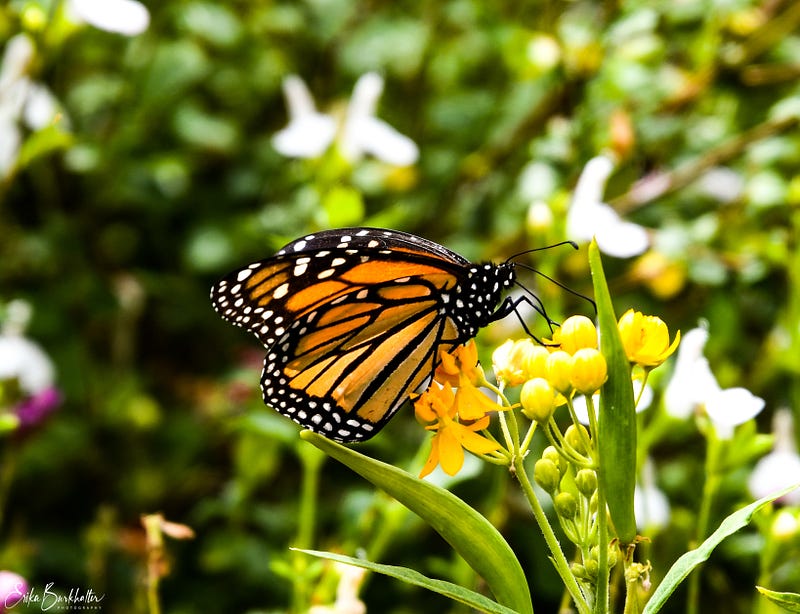
For the Love of Monarchs
It’s the time of year to cut back that Tropical Milkweed in order to stave off those nasty protozoans which can harm monarchs
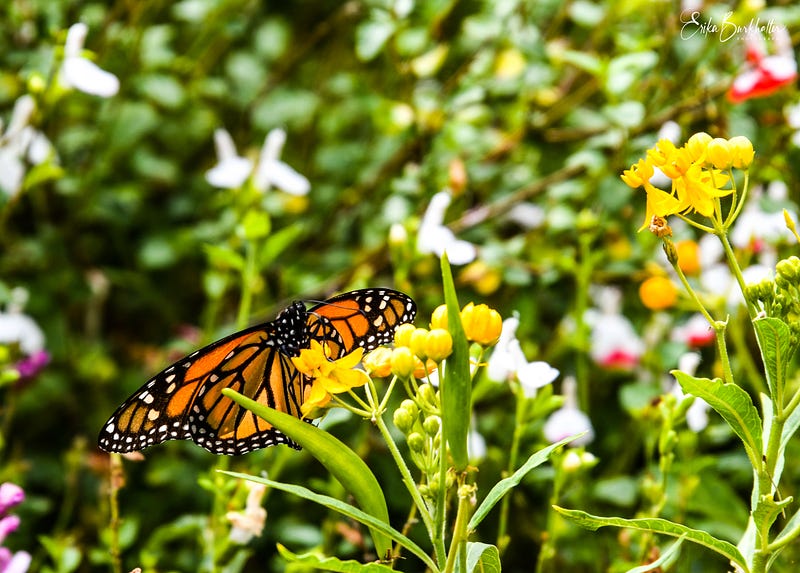
Those fluttering orange wings, that almost-out-of control looking float through the breeze, the tenuous dance between two monarch butterflies always brings me such tremendous delight each spring.
For years now, I have planted milkweed for the monarchs. And, each year, they arrive en masse from Mexico to lay their tiny cream-colored eggs on it. Once those eggs hatch (after about three to eight days), the tiny larvae feast on the milkweed plant, which nourishes them. The milkweed also helps to protect them from predators, because it makes the monarchs foul-tasting and poisonous due to the presence of cardenolides which they consume and integrate into their bodies when they ingest the milkweed.
The larvae then morph into caterpillars, which go through five major stages of growth before entering the pupa or chrysalis stage. After each of these five phases, the caterpillars molt, or shed their skin, as they grow. During this time, they dine solely on milkweed to provide energy in the form of fat and nutrients. This energy carries them into the next stage of life when they sequester themselves inside of a cocoon before emerging as a butterfly.
We used to have more wild, native milkweed plants, however agricultural practices where genetically modified seeds are bred to resist herbicides have severely depleted the growth of milkweed, which is NOT resistant to the glyphosate applied to corn and soybean crops. The increased use of these crop strains is correlated with the sharp decline in monarch populations between 1999 and 2010.
According to Xerces Society, the monarch population in California decreased 86 percent in 2018, going from millions of butterflies to tens of thousands of butterflies.
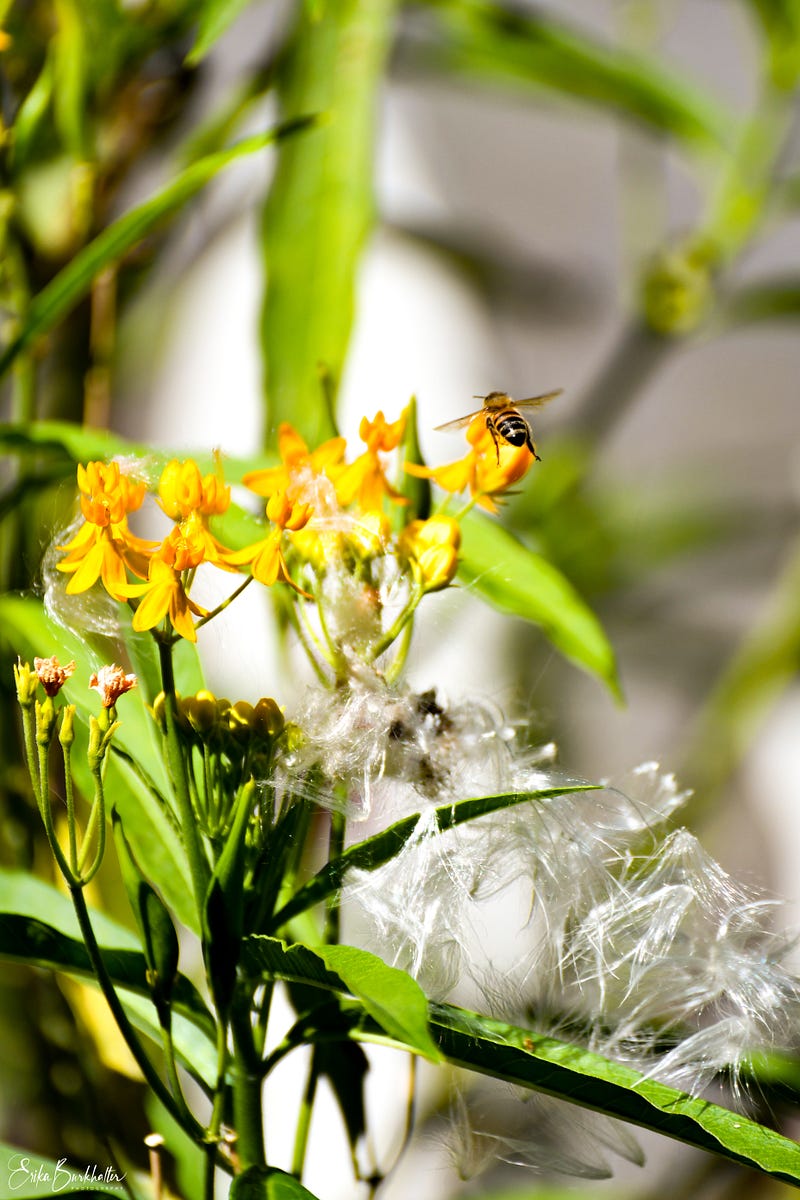
So, in an attempt to help the monarchs, whose populations are severely threatened these days, more and more people are providing household “stopping grounds” by planting milkweed.
The problem is that the most commonly-planted form of milkweed is the tropical milkweed (Asclepias curassavica). This is what you will most often find in your garden store. But this type does not deteriorate in cold weather, like native species would, so it continues to thrive, producing new leaves and flowers in the fall and winter. And this causes monarchs to stay where the food is instead of continuing their migration south for the winter.
To make matters worse, researchers have found that monarchs that did not migrate were more likely to be infected by the protozoan Ophryocystis elektroscirrha (OE), which causes the butterflies to suffer from wing deformities, smaller body size, reduced flight performance, and shorter adult lifespans.
So, what should we do to help the monarchs?
Most experts seem to agree that there is nothing inherently wrong with growing tropical milkweed, although planting native species is definitely preferable. But we should be cutting back our tropical milkweed to about 6 inches in height from October to February, for two reasons.
First, cutting back the tropical milkweed encourages the monarchs to migrate rather than stay put.
And, second, it “cleans up” the plant, getting rid of those nasty OE parasites, so that when the butterflies return in the spring, they are returning to clean plants.
Modern farming practices have not been kind to the monarchs. But modern backyard gardeners can be! Just think about what it would look like, from a butterfly’s point of view, to cruise along the airstreams, heading north, and all along your way, you found yard after yard in which a few milkweeds had been planted.
It might be possible to form a “grassroots” highway made of native milkweed for the monarchs, if enough people pitched in.
Milkweed does not take much room to grow. Even a sunny pot can be enough room. And, as I have experienced, year after year, the sight of the monarchs dancing on the spring breeze in my garden brings me such joy that I can’t help but try to spread the word to the world to try to save them.
Erika Burkhalter is a yogi, cat-mom, photographer, and lover of travel and nature, spreading her love and amazement for Mother Earth’s glories, one photo, poem or story at a time. (MS Neuropsychology, MA Yoga Studies).
If you enjoyed this piece, you might also enjoy this “photo-poem” about a Grandfather Tree:
Or the point-of-view of a bug on a raindrop:
Or about what it is like to be a photographer’s daughter:
Photos and story ©Erika Burkhalter. All rights reserved.