
For-Profit Health Insurance: Slow Death by 200 Billion Paper Cuts in the U.S.
Q&A tour-de-force by U.S. Rep. Katie Porter on the topic of U.S. for-profit health insurance companies and what our health insurance dollars REALLY get spent on.
Related and recent articles
• Has U.S. Healthcare Really Become a Mob Protection Racket? • My Health Insurance Company Asked for Feedback on My Specialist. I Blew My Top. • My Top 1% Friend Was Floored by the Cost of His Family’s Health Insurance • (Part 1 • Barnacles) Six Behavioral Barriers That Prevent You from Changing the Status Quo • What Does “Exponential Growth” Really Mean, and How Does It Work? • Semiconductor Socialism — Why Such a Rush to Pass the CHIPS Act?
(Subscribe to receive email notifications when I post new articles.)
U.S. Congresswoman Katie Porter (D-CA) has become well-known for her informed and blunt — but fair — Q&A sessions with CEOs and expert witnesses on topics that matter greatly to working Americans.
Health insurance, pharmaceutical products, affordable housing, living wages, etc.
In late March, 2022, Rep. Porter went through an eye-opening and eye-popping series of questions with an expert witness on the topic of health insurance. (The link to the full video is here, and I will also embed the video at the end of this article.)
Here’s a quick summary of how it went.
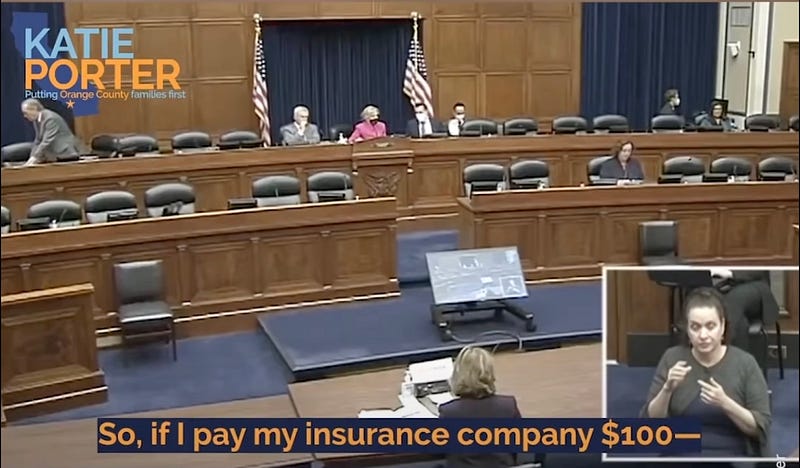
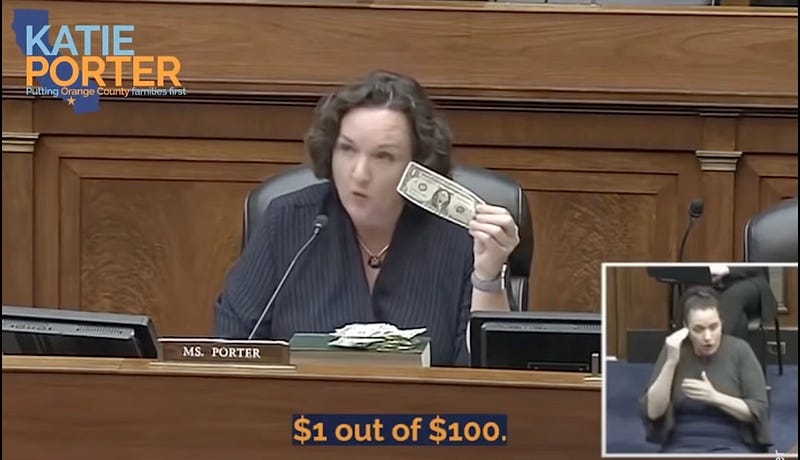
Porter starts out by framing things in terms of where the dollars go if she is paying her insurance company $100 to begin with.
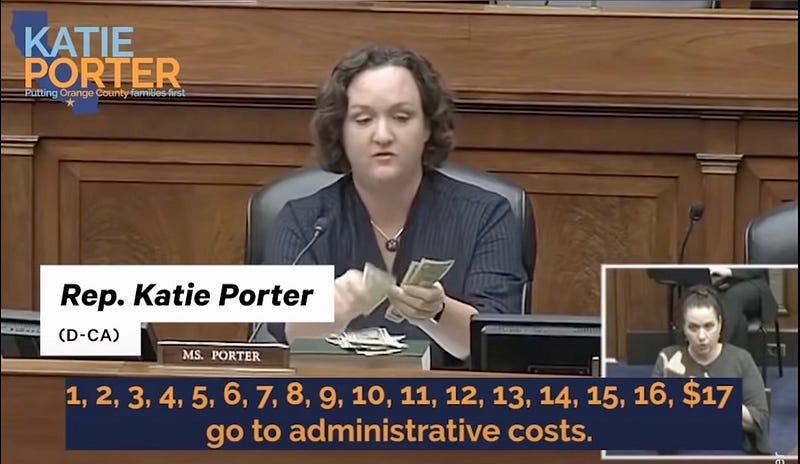
And we see right off the bat that in the world of U.S. for-profit health insurance, $17 out of every $100 of revenue goes to “Administrative Costs.”
So U.S. for-profit health insurance companies spend 17% of their revenues on “Administrative Costs” — a.k.a. paper-pushing.
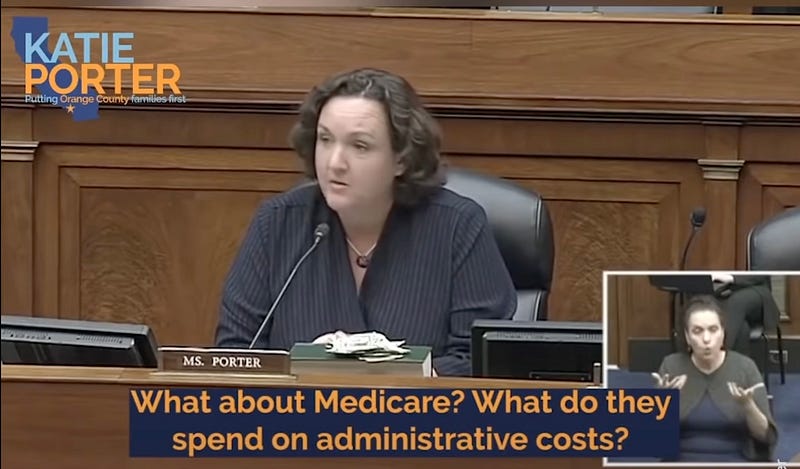
And then Porter brings the first of several hammers down to get a baseline comparison.
“What about Medicare? What do they spend on administrative costs?”
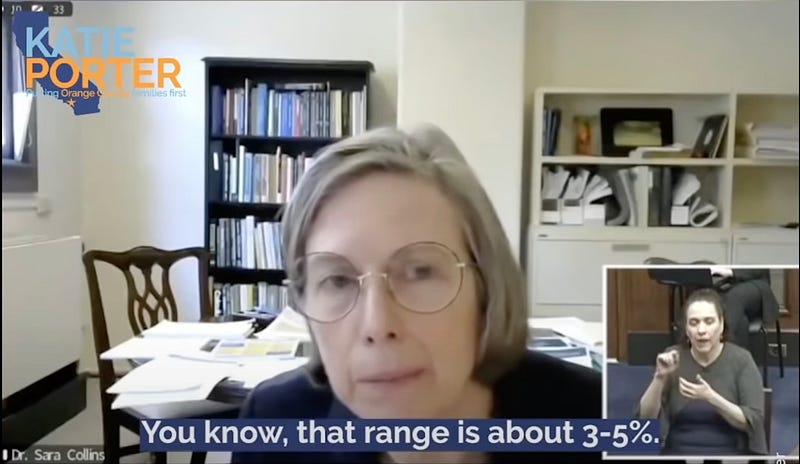
The answer is “somewhere around 3–5%.”
Or, if I do the numbers, 3–5% is roughly 70–80% LESS than the 17% that private, for-profit health insurance companies seem to “need” to spend.
Wait a minute here. Hold on.
I thought that the Republican and Democratic neo-liberal mantra ever since Reagan in the 1980s and Clinton in the 1990s was that privatizing government services saves money.
This is evidence to the contrary, right?
And we’ll see in a moment or two — and as I showed in an article yesterday — that 17% of a MASSIVE “total revenue” number still ends up being a pretty large number itself when it comes to “Administrative Costs.”
How massive?
For just the 7 largest private, U.S. for-profit healthcare companies, their total revenues were $683 BILLION in just the FIRST HALF OF 2023.
For more details on that “$683 billion” revenue number for just the first half of 2023, see: “It’s Health Insurance, Jim, But Not As the Rest of the World Knows It.”
Now, excuse me for a moment while I get a 6th grader to help me with the math on this.
Annie, would you come over here for a moment, please? Help me with this multiplication problem.
17% times $683 billion = what?
Um….it looks like the answer is: $116 billion, Jeff.
That’s perfect, Annie — thank you for the help with this.
Ok, so that’s $116 billion for the admin costs for just these 7 companies in only the first half of 2023.
Now let’s get back to Rep. Porter and see where she takes us next.
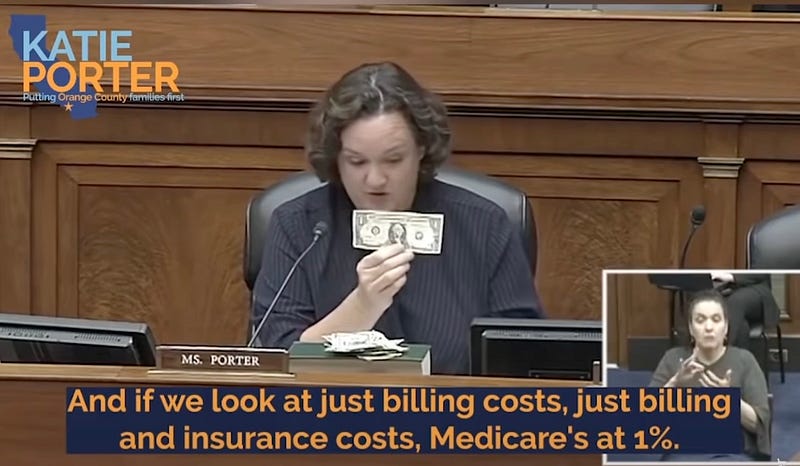
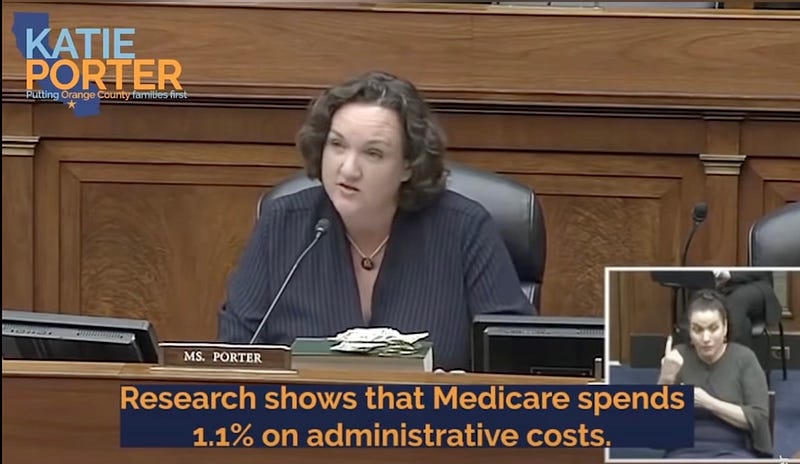
Porter now looks at the comparable number for Medicare, and — surprise surprise — it’s only 1% for billing and insurance costs.
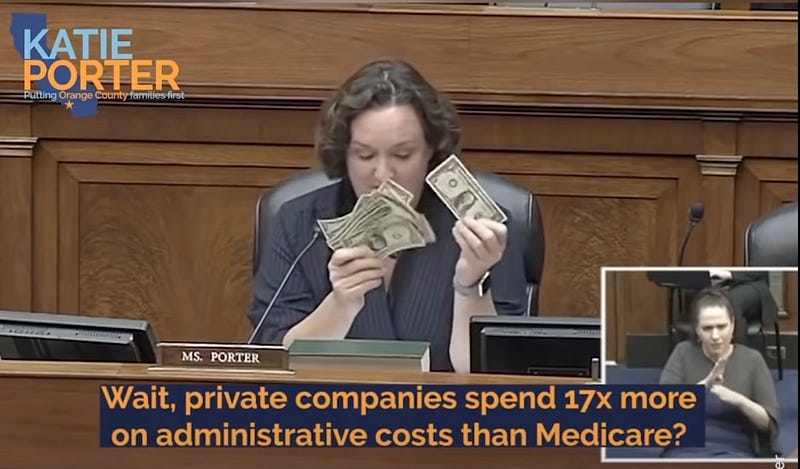
It’s hammer time as Porter notes that private for-profit health insurance companies in the U.S. spend 17 times more on administrative costs than Medicare.
17. Times. More.
(As we continue to go through Porter’s questions here, keep in mind that what she illustrates here with our for-profit health insurance is duplicated over and over again across other industries in the U.S.)
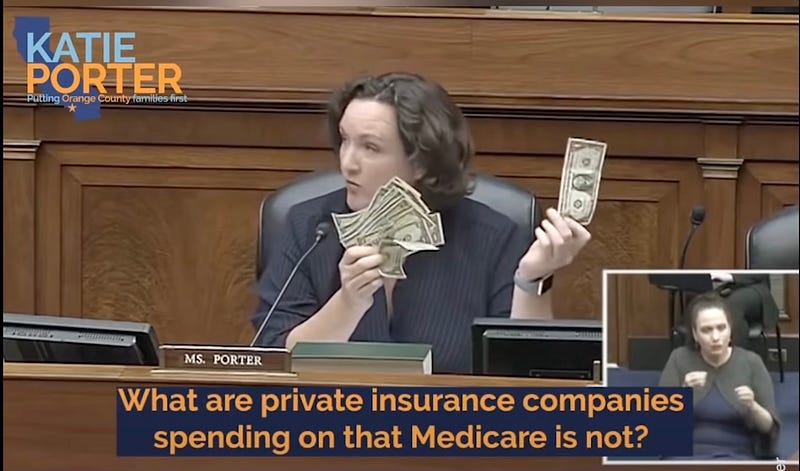
Now, as long as we’re here and we’ve already covered administrative costs, let’s look at other big corporate expenses that for-profit U.S. health insurance companies have.
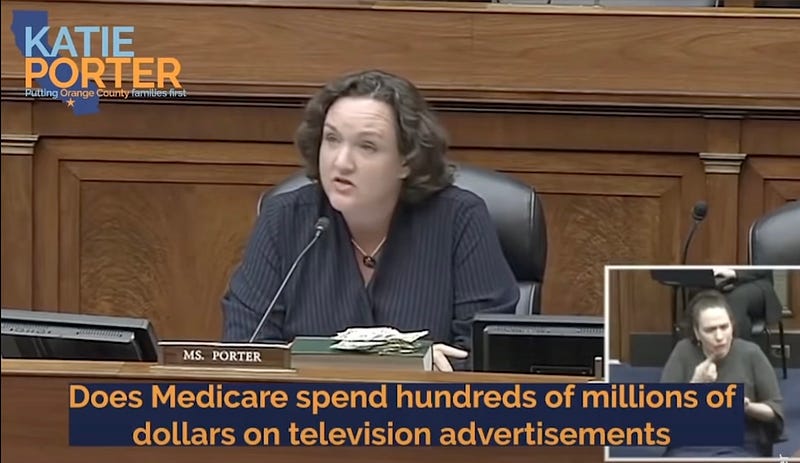
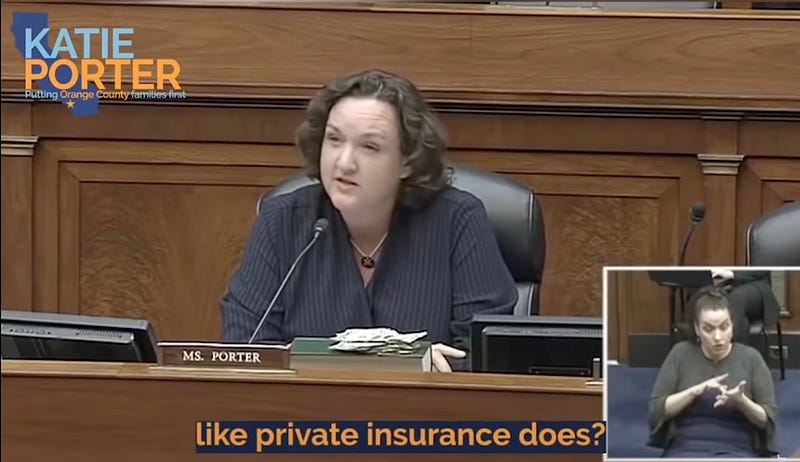
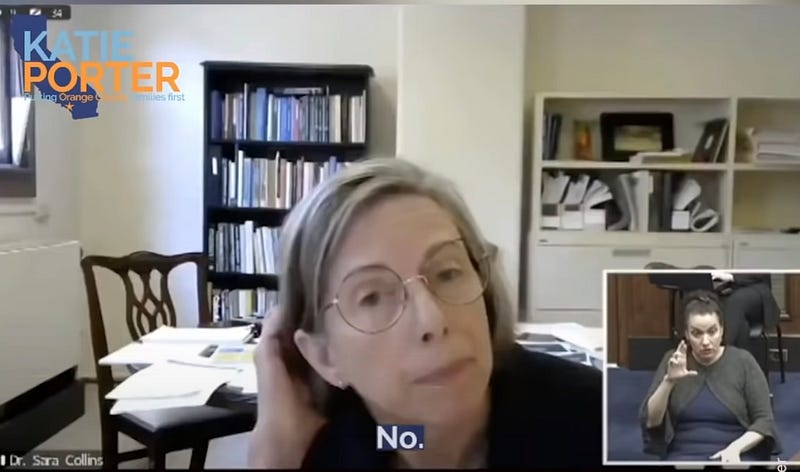
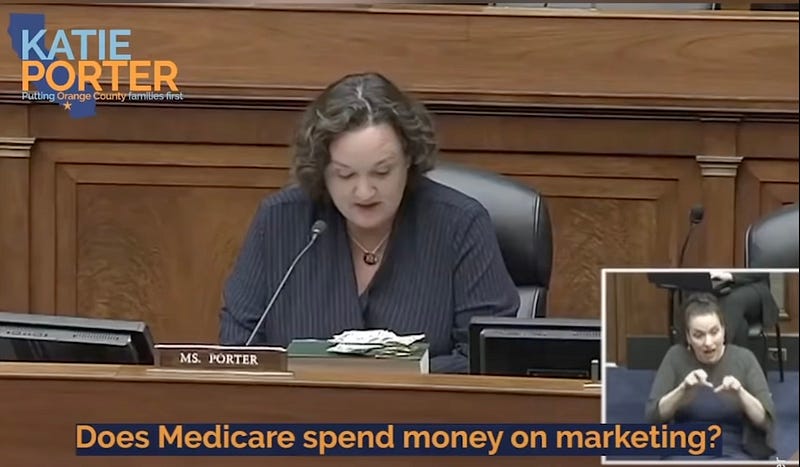
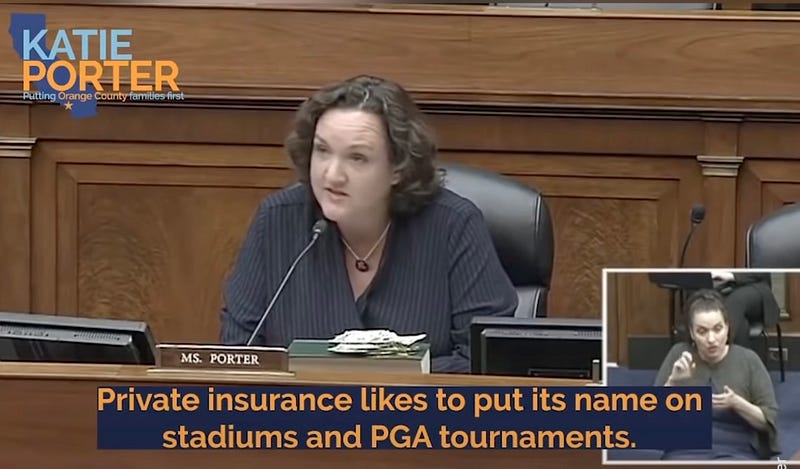
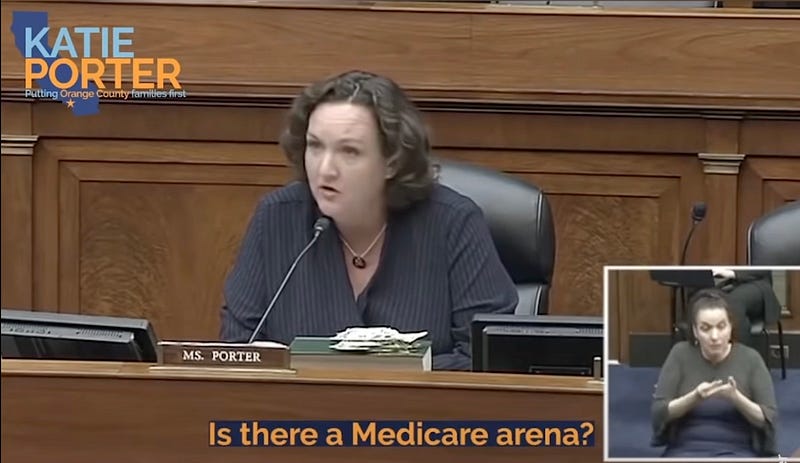
Well, we know that private insurance companies spend money all day long on advertising on TV.
Does Medicare have similar expenses for running their operations?
(By the way, I have not yet dug into these numbers, but I suspect that U.S. for-profit private health insurance companies spend BILLIONS of dollars a year on TV advertising, not the “hundreds of millions of dollars” that Porter mentioned in her question. If I’m correct, then Porter understates the amount of money that these for-profit health insurane companies spend on TV advertising.)
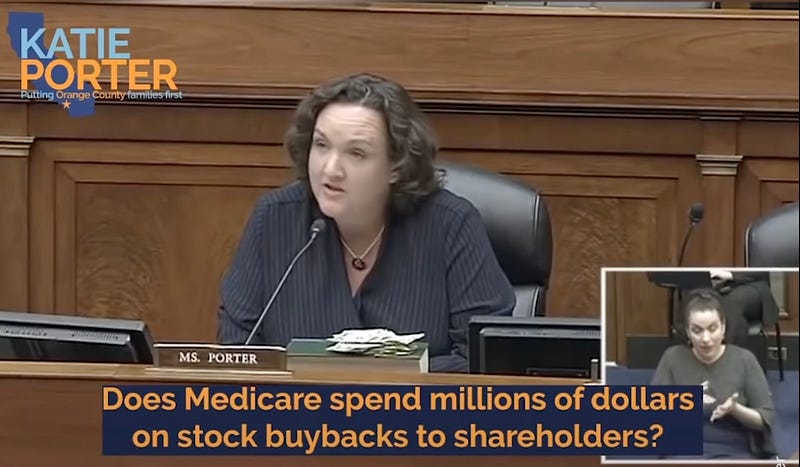
I’ll save the detailed discussion on stock buybacks in U.S. for-profit health insurance for another time, but this is a SUPER-important topic.
Their stock buybacks demonstrate how wildly and unbelievably profitable these health insurance companies are. The fact that they get that money by strip-mining hundreds of millions of Americans is grotesque and sociopathic.
Again, topic for another day.
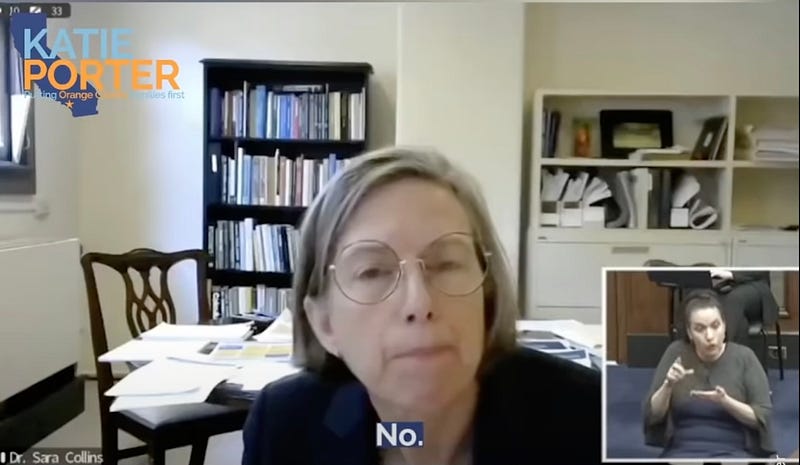
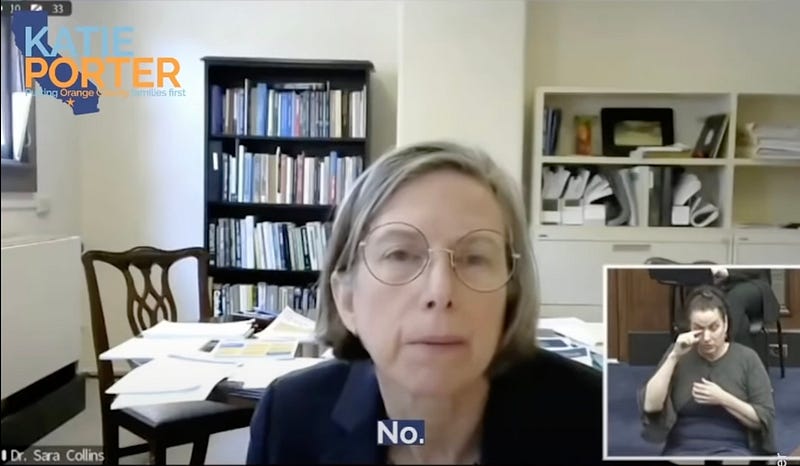
Ok, we can already guess the answer to this one, but let’s get the “No” on record.
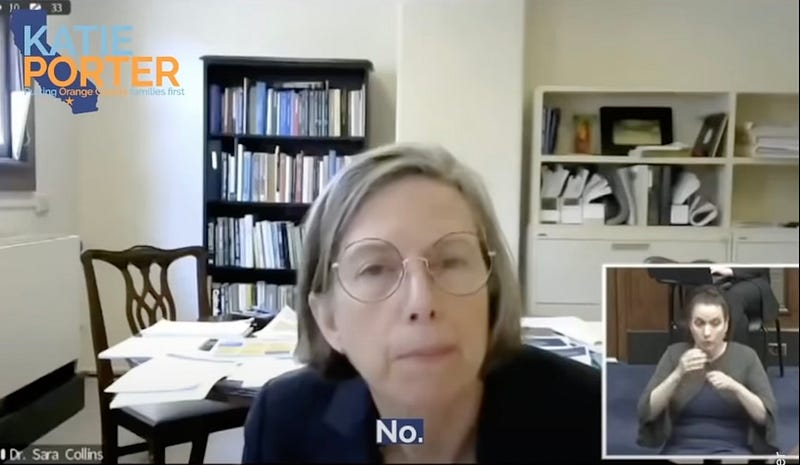
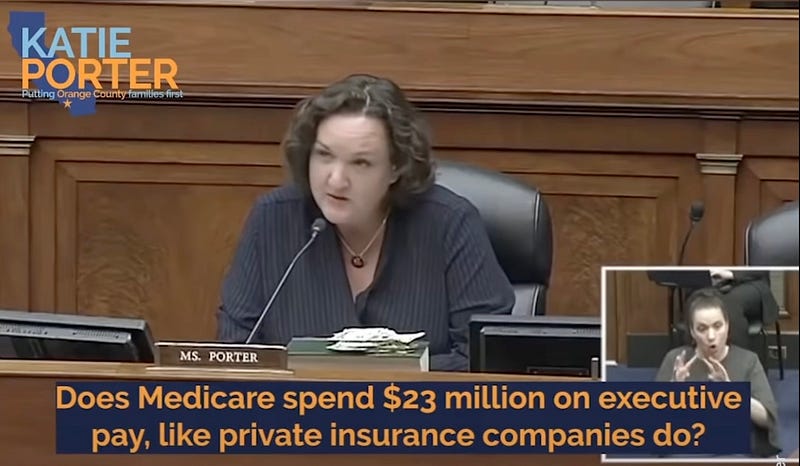
Again, I haven’t looked up the “$23 million” number that Porter is referring to here, but I would guess that this is just the cash compensation number for one particular executive. If so, then there’s a good chance that that executive made substantially more than $23 million off of their stock/equity compensation.
With corporate CEOs, the really outrageous part of their compensation is almost never the cash compensation part. Look to the stock/equity part of their compensation for where the real money is.
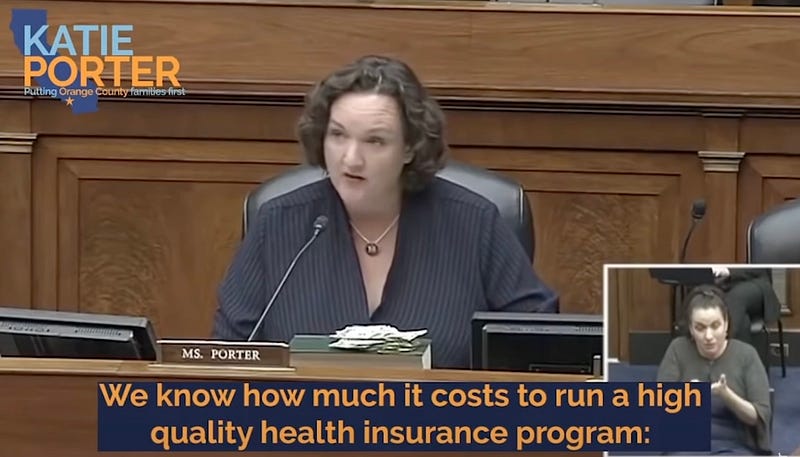
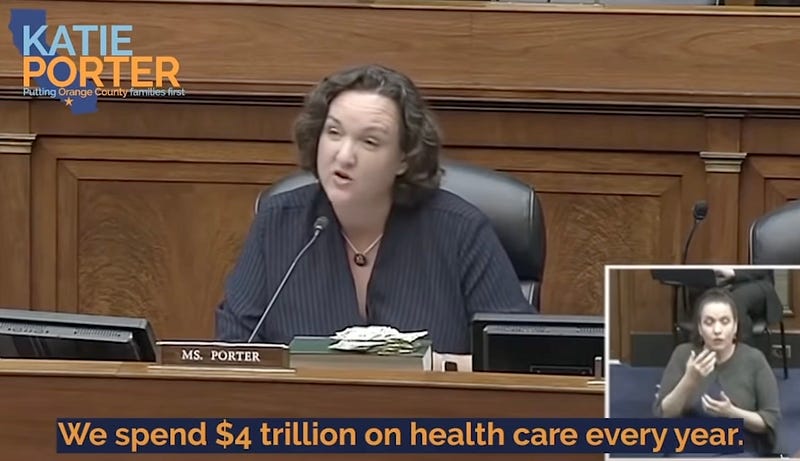
It’s hammer time again as Rep. Porter tells us how much we could be saving EACH YEAR on administrative costs if the U.S. had a Medicare-for-All kind of government-run single-payer health plan for everyone.
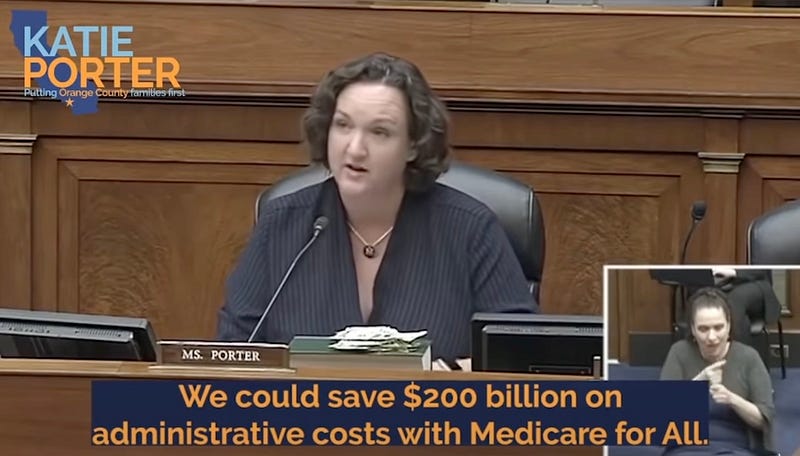
How much could we save?
$200 BILLION…
…per year.
And what could we accomplish with the money we would save?
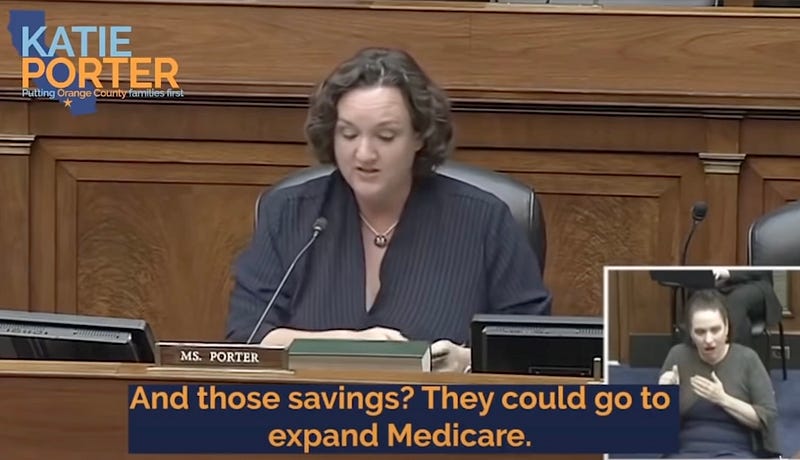
Expand Medicare.
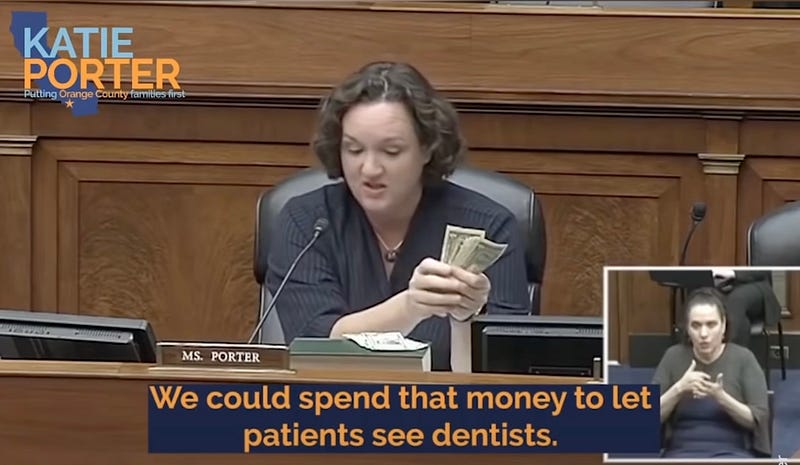
Add dental benefits.
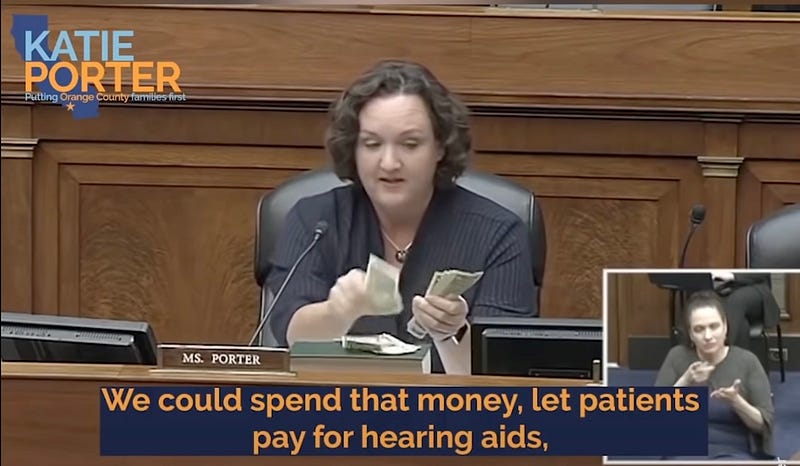
Pay for hearing aids.
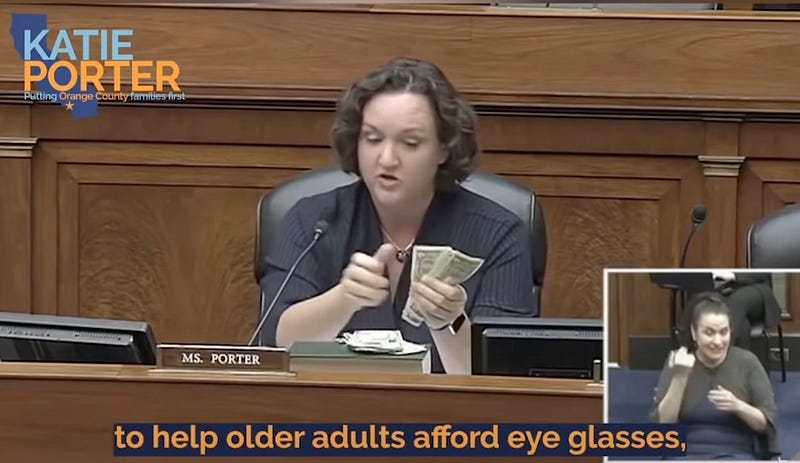
Pay for vision and eyeglasses benefits for older Americans.
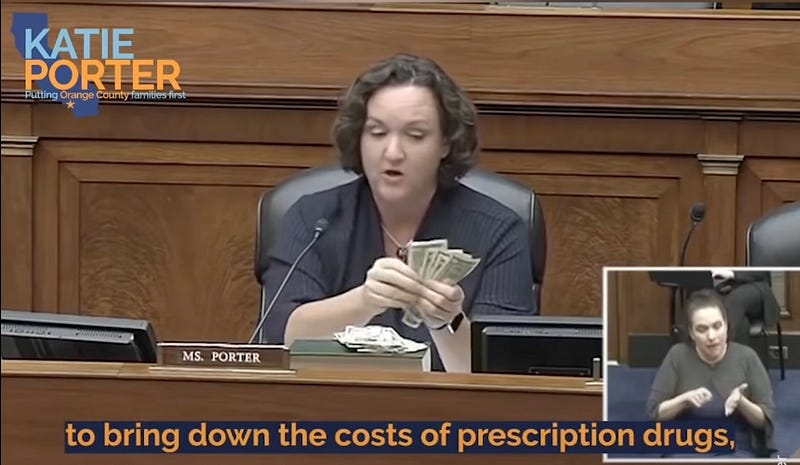
Bring down the incredibly inflated costs of prescription drugs in the U.S.
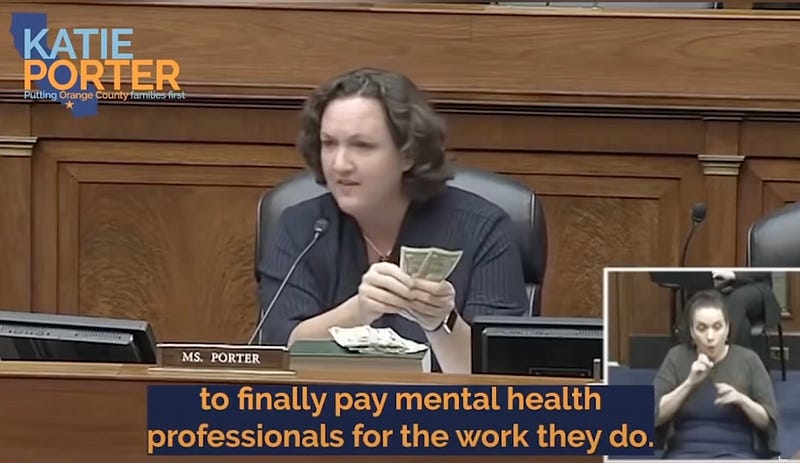
Pay mental health professionals better for the work that they do.
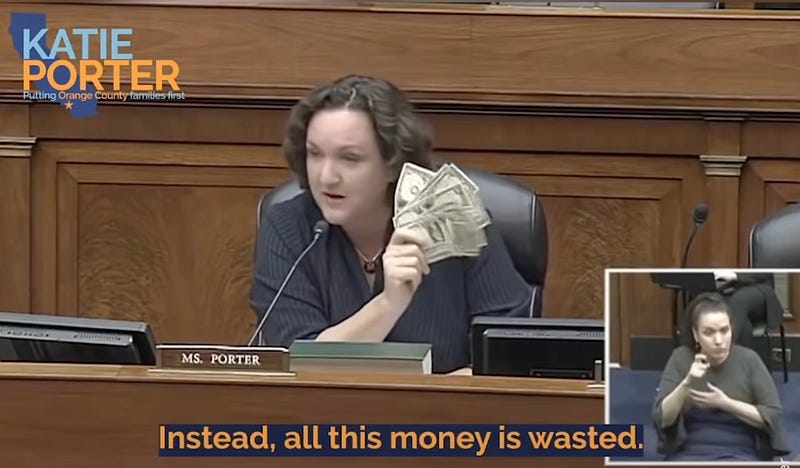
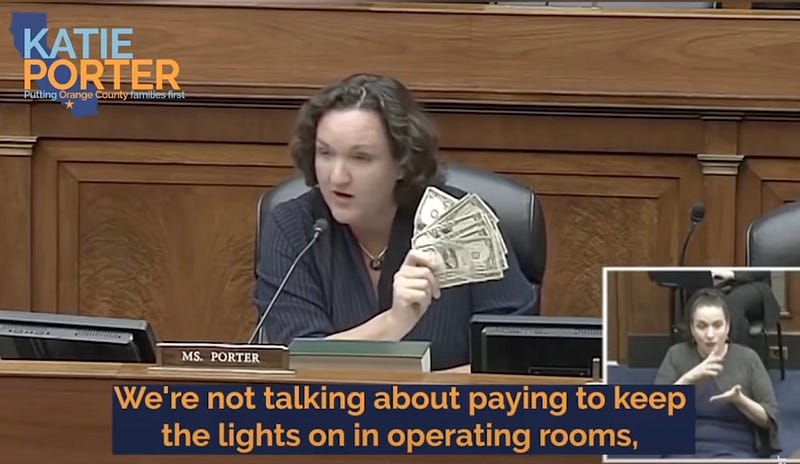
And Porter makes it clear here that this $17 out of every $100 in revenue that the U.S. for-profit health insurance companies spend is not money that goes to actually provide healthcare.
That 17% expense line item is NOT, as she says, keeping the lights on in operating rooms.
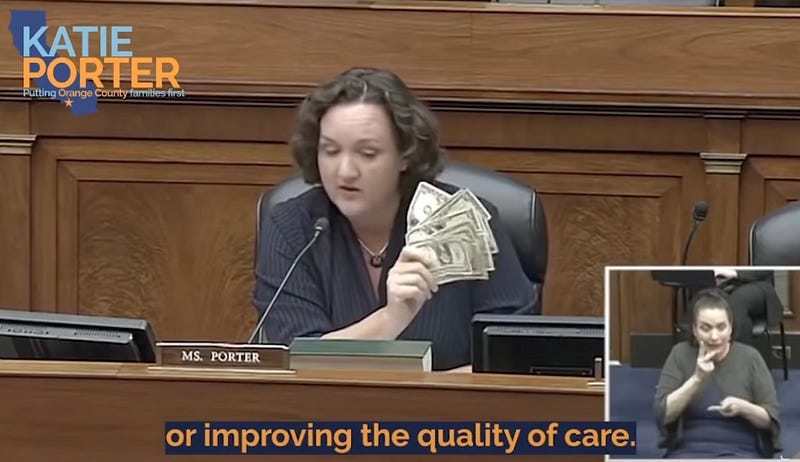
And it's also not improving the quality of care.
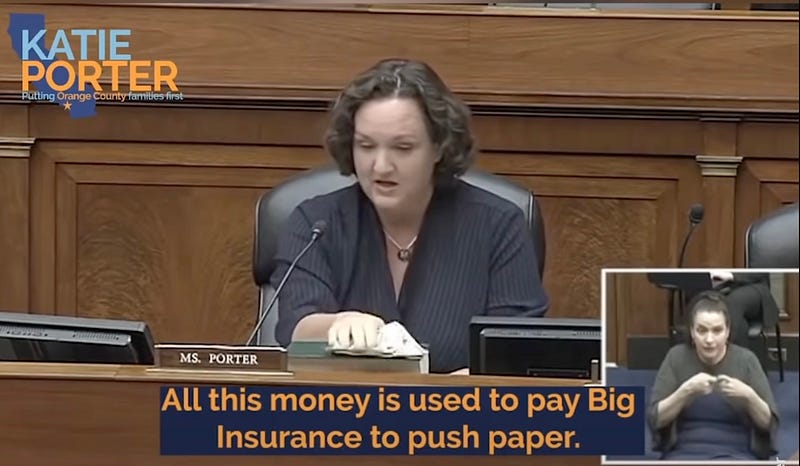
All this money is doing is (1) pushing paper around (2) paying bloated administrative and executive salaries at these for-profit health insurance companies.
Bottom line, what does this $200 billion per year that gets spent on administrative costs in U.S. for-profit health insurance companies signify?
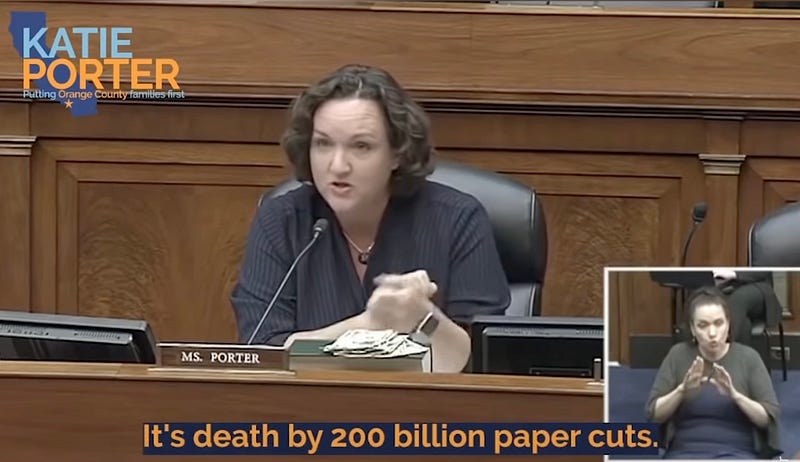
Death by 200 billion paper cuts.
Well said, Rep. Porter!
Here is the original 4-minute video. It’s worth listening to Porter run through the discussion live.
Related and recent articles
• Has U.S. Healthcare Really Become a Mob Protection Racket? • My Health Insurance Company Asked for Feedback on My Specialist. I Blew My Top. • My Top 1% Friend Was Floored by the Cost of His Family’s Health Insurance • (Part 1 • Barnacles) Six Behavioral Barriers That Prevent You from Changing the Status Quo • What Does “Exponential Growth” Really Mean, and How Does It Work? • Semiconductor Socialism — Why Such a Rush to Pass the CHIPS Act?
(Subscribe to receive email notifications when I post new articles.)
Thank you for reading, subscribing, clapping, and sharing — I appreciate your time and attention.