avatarCeleste Wilson

Summary

The website content discusses using food coloring as an alternative to watercolor paint for artistic purposes, emphasizing its vibrancy and cost-effectiveness, while acknowledging its limitations for fine art due to its runny consistency.

Abstract

The article titled "Food Coloring Is an Alternative to Watercolor Paint" explores the author Celeste Wilson's experimentation with food coloring as a painting medium. Wilson, who enjoys mixed media art, found that food coloring provided vibrant colors and was easy to work with, especially when mixed with water on a paint palette. The consistency of the mixture is similar to water, making it suitable for abstract art but less ideal for fine art due to its tendency to run. The author divided a watercolor paper pad into mini canvases to test the colors and found that a little food coloring goes a long way, even allowing for the creation of a larger painting with leftover 'paint.' The article also suggests that while there is no white pigment in food coloring for creating pastels, one could potentially mix it with white watercolor paint. After the paint dried, Wilson enhanced the artwork with gel and paint pens. The article concludes with the author's musings on the potential of adding white watercolor paint to the food coloring in future projects.

Opinions

  • The author initially considered using food coloring for art a "wacky idea" but was pleasantly surprised by the results.
  • There is a concern about staining work surfaces, although the author notes that their creative space is already stained from previous projects.
  • Food coloring is praised for its vibrant colors and cost-effectiveness, being described as "dirt cheap."
  • The medium is deemed unsuitable for fine art due to its runny nature, which is more conducive to abstract art.
  • The author expresses satisfaction with the ability to layer the food coloring paint and add details with pens after it dries.
  • There is an openness to experiment further, as indicated by the author's consideration of mixing food coloring with actual white watercolor paint to create pastel shades.

Food Coloring Is an Alternative to Watercolor Paint

If you run out of your favorite color of watercolor paint, raid the pantry for some food coloring.
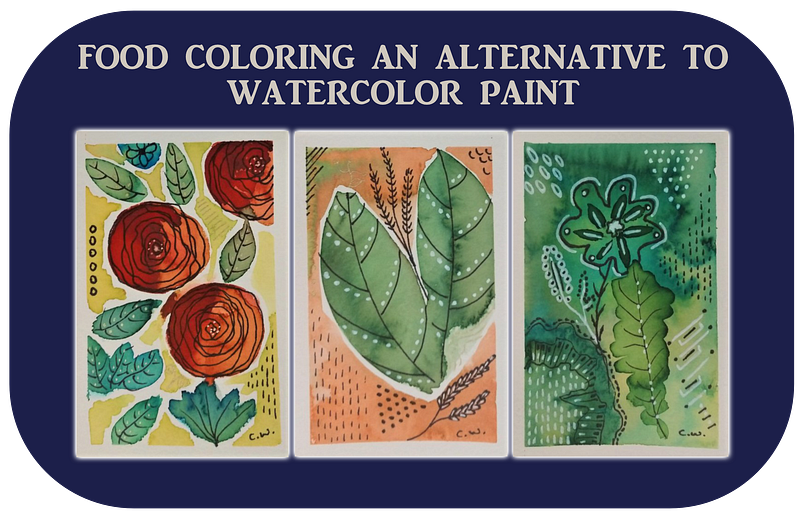
Image and art credits to the author Celeste Wilson

My Experiment With Food Coloring

I enjoy playing around with mixed media just to see what happens. Yesterday, I must have been craving some frosting or maybe a piece of cake. Every time I opened the pantry, the food coloring caught my eye.

I’ve thought about painting with food coloring before but shelved it as a wacky idea. I’m not going to lie I was worried about staining my work surface. That’s probably the weakest excuse in my book because my creative surface looks like a mosaic of spilled colors.

I was just putting it off. So, finally, I thought I’d give it a try. I really like how easy it was to work with and how vibrant the colors are.

I added one drop to my paint pallet and some water. The more water you add the lighter the color will dry on the paper. It’s very runny since the ‘paint’ has the same consistency as water and drips easily.

It’s not suitable for fine art but it’s great as an abstract art painting medium.
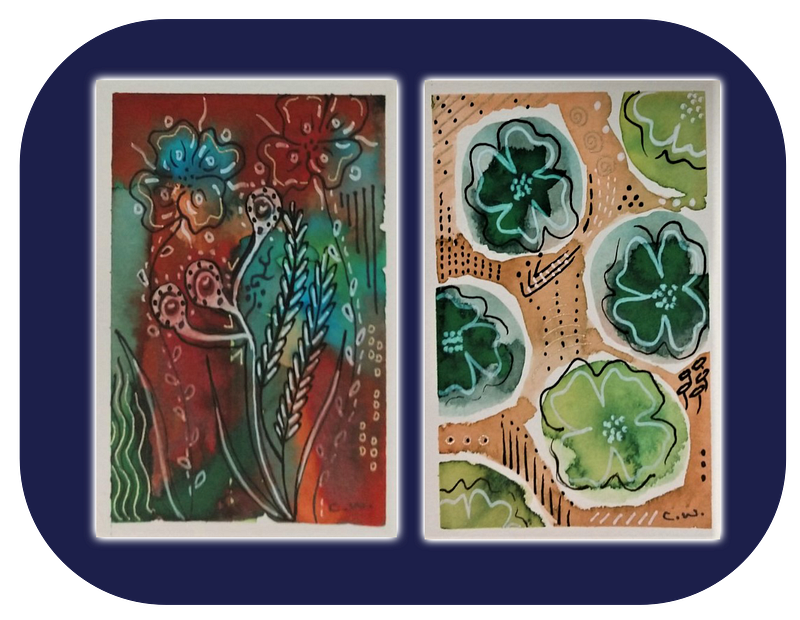
Image and art credits to the author Celeste Wilson

Start Small

I have a 9 x 12-inch watercolor paper pad and divided it into eight 3 x 4.5-inch mini canvases.

After coloring all 8 areas, I still had paint left to complete a larger 9 x 12-inch full painting and could possibly have done a second large painting.

So, it’s not only a good paint for watercolor paper but also dirt cheap. I only used one drop of food coloring color per color. You can mix colors too. The blue and yellow made a wonderful bright green. While the green directly from the bottle was darker.
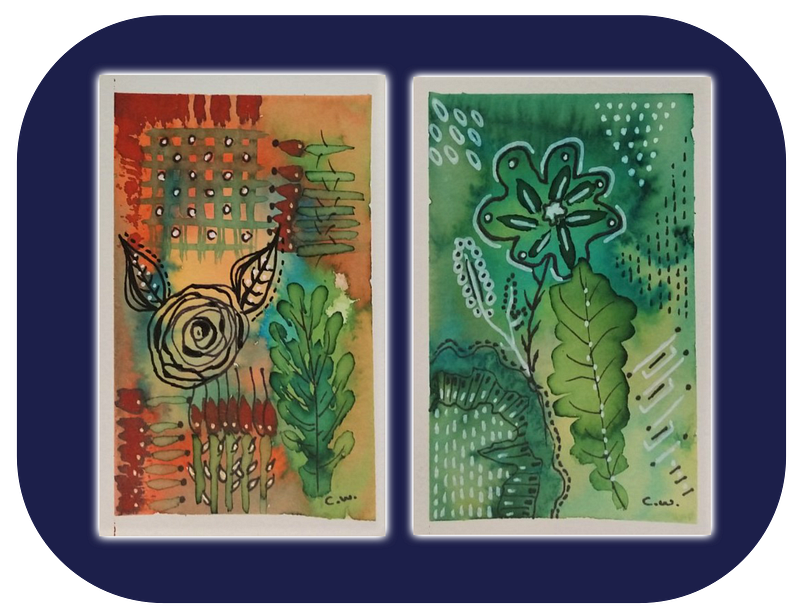
Image and art credits to the author Celeste Wilson

Let It Dry and Add Layers

Once the paint had dried on my watercolor paper, I used gel pens in black and gold and a white paint pen to doodle on the colorful canvas.

Are There Limitations?

Fine artwork will be difficult because the paint is so runny — like water.

The only other thing is that there is no white pigment to make pastels.

I don’t mind either of these. I wonder if I added actual white watercolor paint.

Hmm? Maybe next time.

Please visit me online at:

You Tube | Society 6 Online Store

Share Your Creativity
Watercolor Painting
Mixed Media Art
Diy Painting
Doodle Art
Recommended from ReadMedium