
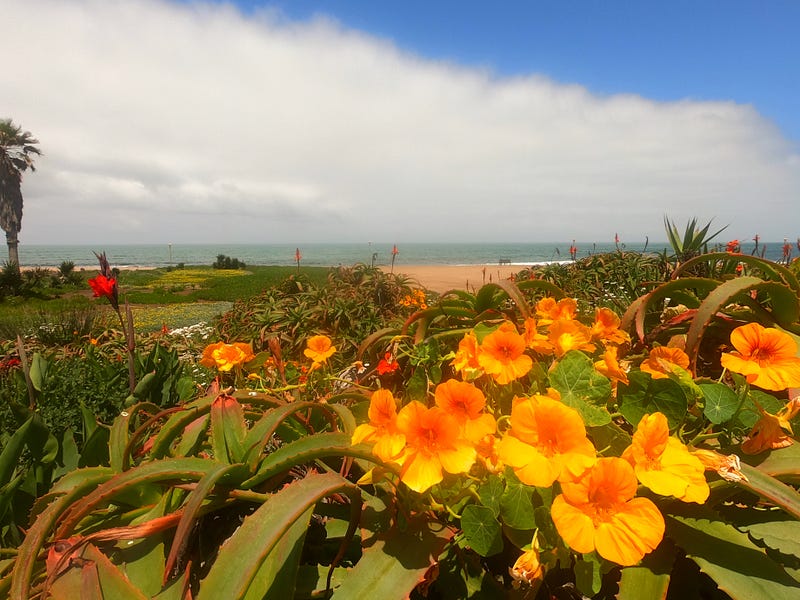
PHOTO-A-DAY CHALLENGE
Flowers, Beach Walks and More Sand
Week eighteen of the photographic documentary of my daily life
A new week has begun. We are finally settled now. After days of stressful traveling and days spent dealing with paperwork issues, we can sit back and take a deep breath.
Living at the ocean for the next couple of months we are doing our best to embrace that privilege every single day. Explore the coastline, be active in the water, smell the ocean breeze, and taste the saltiness in the air.
Dennett started this challenge back in July and I haven’t missed one week since then. Select one photograph a day for seven days and share it with the amazing community. As easy as that. A photography challenge for the fun of it rather than the competition between each other.
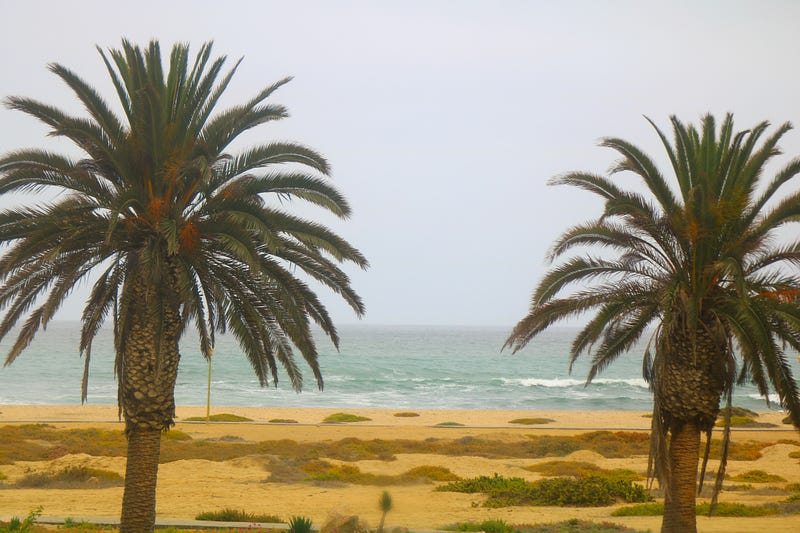
Today was the first day back home at the coast where we could sit back and relax. We slept in, had a late breakfast, and stayed in bed for the most part of the day. And this is a picture taken from the living room. A stunning view isn’t it?
Later we went grocery shopping in the mall. It’s still weird for me to see restaurants open and being able to walk into stores without wearing a mask. All of that wasn’t possible just a few days back in Germany. Strict lockdown is what they have.
Over here Covid doesn’t seem to be a thing. People are simply trying to survive. Due to months without tourism lots of companies in Namibia had to lay off staff trying to survive or gave up already ending up in bankruptcy. It’s sad but it’s the truth.
The tourism sector is (or was) the largest-earning industry in the country. Meaning it leaves thousands without an income. Those people usually living day-to-day can’t feed their families anymore.
People don’t care about Covid if not having a roof over their head or nothing to eat. People die in this country from Malaria, Typhus, Hunger, and despair. I just heard recently on the radio that over 500 000 people are dependent on food supplies to survive.
The country only has 2,5 Million inhabitants in total. That means 20 percent of the people can’t survive without support. It’s a lot. And it never was that bad. Namibia is actually a stable country with people living more or less in peace.
When I got here during the start of the pandemic I was supporting a charity feeding families with children with special needs. I might contact them again. Even if it’s just a small drop, every little step we do does count.
I can’t see kids sitting on the street begging for food. It breaks my heart. But unfortunately, it is the reality. In some other countries more than here. While we are fighting a pandemic all they want, is not going to bed with an empty stomach.
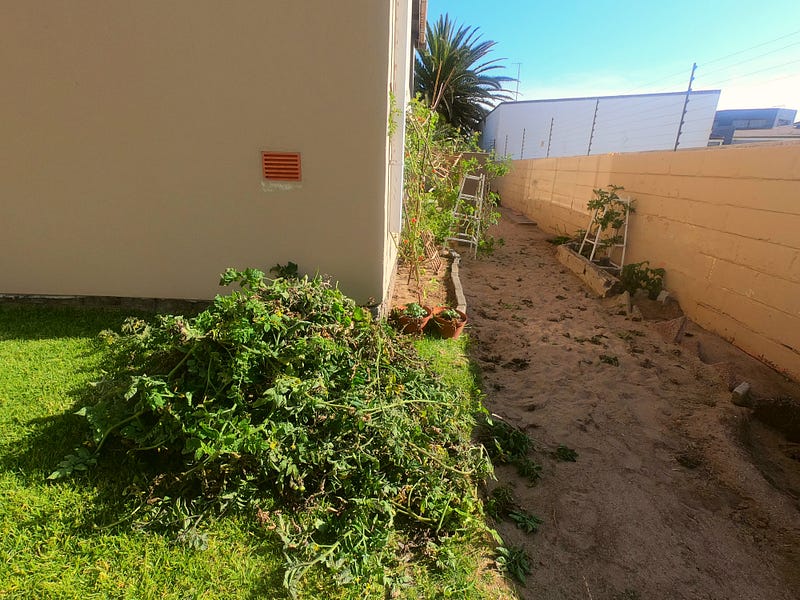
This is the aftermath of me trimming down the tomato forest. I might have overdone it a bit. But guess what? I can’t reverse it. What is off is off!
To explain to those who haven’t read my article about the tomato bush in my in-law’s garden: I’ve been busy today. When I left Namibia six months ago this tomato plant was already bigger, stronger, and heavier than any other tomato plant I’ve ever seen.
But after six months of getting no care except from water every three days an entire forest flourished. Out of one single tomato plant. It’s unbelievable. I did not know tomato bushes can grow that big.
But there was a problem. It was too big. The branches were entangled, hanging down, crawling on the floor. The bush was so thick I couldn’t see where tomatoes were growing and where not.
I had to trim it.
Maybe not that much but it’s too late now. That huge pile of cut off tomato branches is now spread over three trash bags. Yip that is how much I cut off.
Taking over the garden again I am starting step by step. This forest was definitely the first project I had to face. There’s another one. A smaller tomato bush. But it also needs a decent trim.
And then I will see what vegetables I am going to plant again.
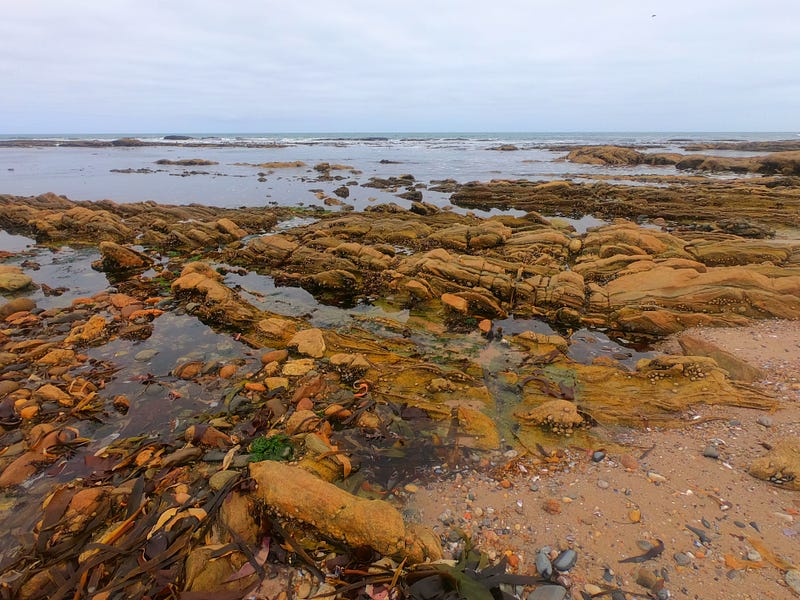
The predictions weren’t great. Not for crayfish diving. The swell was 2,3 meters. Perfect for surfing. But not for diving. You want calm waters when looking for delicious seafood in the ocean.
My partner still wanted to go and check it out. It was a misty morning. A cold wind was blowing off the ocean. As I stepped out of our car on the beach I had made up my mind. I’m not going in.
I know it sounds weird since I’m always up for a new adventure. But today I just wasn’t feeling it. My body is still in relaxing mode after weeks of mental stress. I didn’t feel like fighting in the waves and freezing in the water.
But the waves looked big. Sitting in the car, I rolled down the window and watched my partner go in the water. Keeping an eye on him since he was going for the rough spots.
Apparently, the crayfish sits deep when we have north wind. But in a swell like this, it’s difficult to dive to the deep spots with one breath. You get thrown around a lot. You hit rocks and get entangled in seaweed.
Diving for crayfish isn’t easy. Or fun. For most of us at least. But the reward is amazing. Getting fresh seafood out of the ocean. Where else in the world can you get lobsters just like that?
Because that is what a crayfish is. In mini lobster.
Covered in a warm jacket I’m watching him. You never know what can happen. The Atlantic ocean is rough and the coastline here dangerous. I’m just looking out for that head to pop out of the water. He’s taking a breath and then he’s gone again.
Sometimes I can’t see him for minutes. That’s at least how it feels like. Also because he is sometimes hidden behind the waves. Then my mind starts working. What would I do if-? I don’t really know. Of course, I would run into the ocean. But until I get there… And there he pops out again. Phew.
Despite the rough conditions, my partner got a few crayfish out. Back home we put them in the freezer. If we don’t eat them the same day we freeze them. You are only allowed to dive for them for six months a year. The rest of the year we give them to grow and recover.
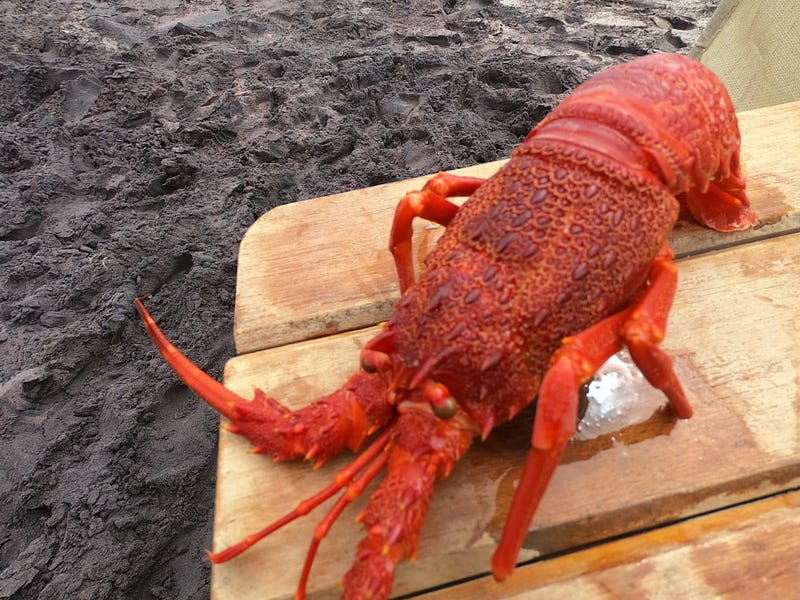
It’s Sunday. Sunday is beach day. We’re heading out with the family, setting up our new gazebo, and jump in the water. Yes, today I’m coming with. That is important because you are only allowed to bring out seven crayfish per person.
You need a fishing permit to go crayfish diving on the coast. You are not allowed to dive with any additional gear. No diving gear allowed. And diving from the boat is also not allowed.
We both have a fishing permit and have two bags. Each of us carrying one around the waist. Not like I’m going to catch any. I’ve tried it a lot. But I’m just too scared. To reach with my hands underneath rocks to feel if there’s something spiky down there.
And I can’t hold my breath long enough.
So my job is to play around in the water for an hour. That’s usually how long my partner spends in the water looking for crayfish. I just swim a bit, hit my knees on rocks, and hold onto seaweed when the current is too strong.
Until he gets out. Then we sit on a rock far off the beach, still in the ocean. We inspect his crayfish. Measure them and throw the undersized ones back in the water. The good ones we split into our bags. So that none of us has more than seven.
The government officials patrol almost daily during low tide, which is the time to go dive. So when you go out of the water they are sometimes waiting for you already. They will measure and count the crayfish you have in your bag. And wait for you to fetch the permit out of the car.
If you fail one of the rules you get to pay a fine. A fine that does hurt. So you rather follow the rules.
But they are not here today. We get out of our wetsuits and drive down the beach a bit where we set the camp for the day. The crayfish comes now into a pot and gets boiled in saltwater until they are bright red.
Then I cut them open into halves and add garlic butter to the crayfish tails. They go for a few minutes on the grid over the fire for the butter to melt and the delicious meal is ready.
From catching the seafood until we ate it less than two hours have passed. That is what I count fresh! Love it. Beach life. Namibian style.
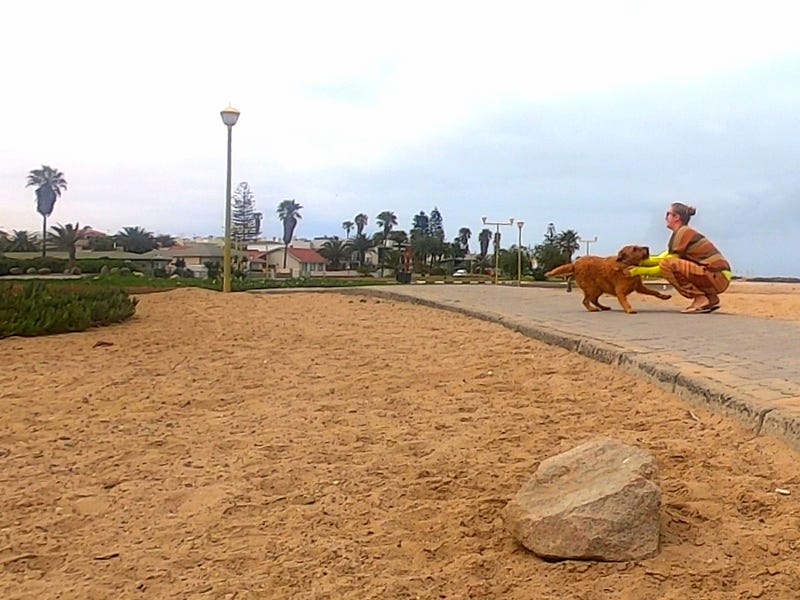
Reunion. This dog is special. To me. Six years ago I was still scared of dogs. Hated them. My mom never figured out why but from a young age on I was afraid of any type of dog.
Until I met Zak. Zak is the dog of the owner of the sandboarding company I used to work for. I had to run this company several times during the four years I worked there. Whenever the boss would go on holiday I would be in charge.
The first time I was in charge was seven days after I started working in the company. I had to run daily sandboarding trips without really knowing the staff, the schedule, the tour operators, or any of it. I knew how to snowboard. So I knew how to sandboard. That was how far my knowledge went.
And I was supposed to look after the house. Including a dog and a cat. A dog I was scared of and a cat that loved me. After those first initial three weeks of being in charge of everything I lost 10 kilos, figured out I was allergic to cat hair, and fell in love with the dog.
This dog.
Today I got a text from her, my former boss, saying she would go for a walk on the beach. If I don’t wanna join her. And Zak. Of course, I would. During those years of staying with her, I grew very attached to this dog. He taught me a lot about dogs.
And this is the picture of the reunion. I thought it’s perfect for today’s photo essay. He came racing at me from far. He spotted me tail wagging and couldn’t break anymore. Smiling from one ear to the other.
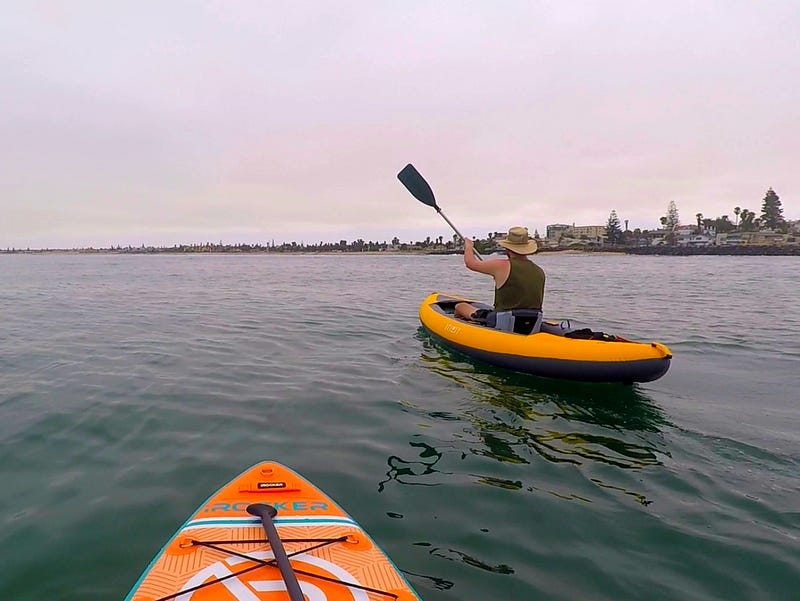
It’s the first day we’re taking our new toys onto the ocean. After our initial test drive on a lake in Germany’s black forest, we trust our inflatable paddleboard and kayak.
This morning I’m waking up not hearing the ocean. That means there are no waves. Perfect for an excursion. Packing the backpacks with our gear in the car we head out.
Pumping up the board and the kayak is a little exhausting but I think from now on we just leave them inflated and strap them on the car. Grabbing my GoPro and the paddle we walk down to the water.
Two steps into the cold ocean and I jump onto my board. It floats so nicely across the water. My partner also got into the kayak and started to smile immediately.
A few minutes into the paddle we spot a seal ahead of us. Paddling towards him we get closer and see him jumping out of the water now and then. It looks like he has a crab or a crayfish or something he’s playing with.
Constantly throwing it into the air and catching it afterward again in the water. Seems like he’s enjoying his game. And we’re enjoying watching him play. From a safe distance.
What a lovely day to be on the ocean. It’s still overcast and therefore not too hot. No wind to feel. Yet. I’m coming back here tomorrow again!
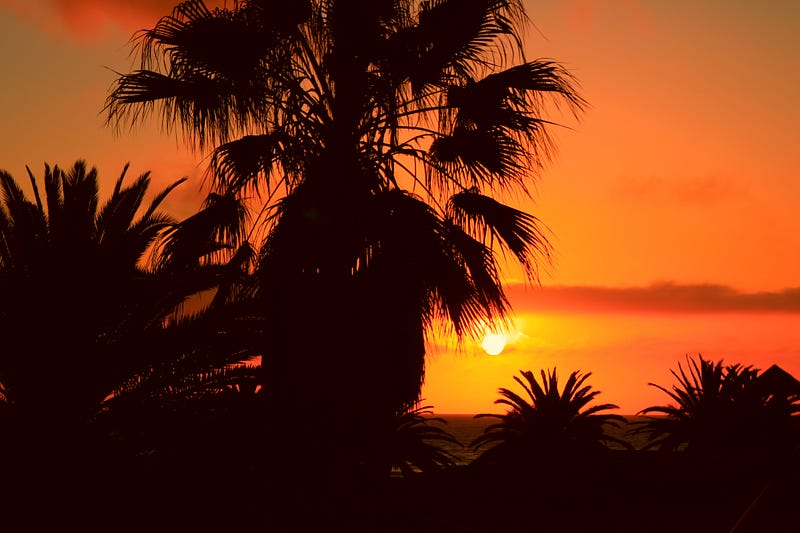
It doesn’t happen often. That we get to witness a sunset on the coast. Most of the time the fog is back in and hiding the sun for the rest of the day. But when it happens. When we get to see the sun setting into the ocean. Then you’ll know it’s a special day.
I love those days. I love sunsets. I love the beach life. Ocean life. I’m an active girl. Let’s do stuff and have fun.
I can see with the upcoming summer that we are getting more and more days with the sun setting over the ocean and I’m excited about it. I’m excited about sundowners on the dunes. Beach days. Sushi and white wine at the oceanfront. Braais in the river and many other adventures.
This has been my week in photographs. I hope you enjoyed it and in case it inspired you to join the challenge, I highly motivate you to start now. It’s lots of fun. And don’t forget to tag me. I’m curious to also get an insight into your life!
More of my photo essays on Medium…
Join my email-list here.
Anne Bonfert is a traveler. Photographer. Writer. Teacher. Skydiving instructor. Adventure enthusiast. Nature lover. And fell in love with the African continent.


