
Floating and frying and freezing…Oh my!
Using darkness, silence, heat, and cold to build a better, more resilient self.
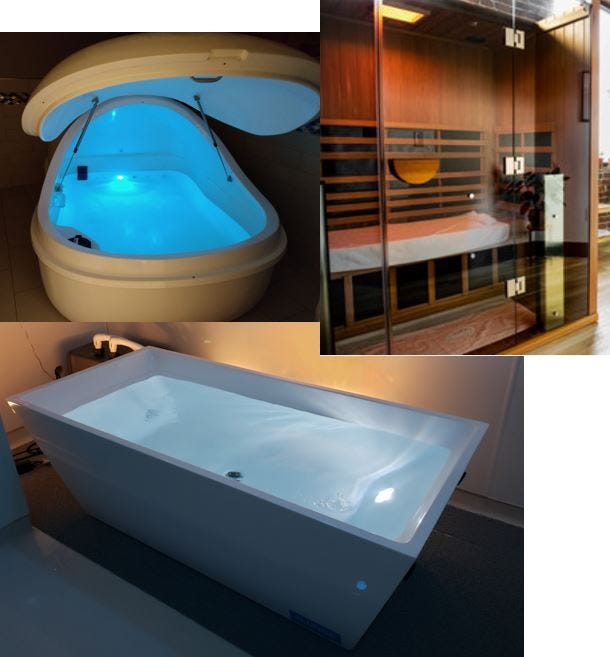
The bottom of the tank was slick from the saltwater, so I had to use the handholds sticking out from the walls. I eased into the heated water, careful not to splash, working to avoid getting any in my eyes. I’ve done that before and it was not a pleasant way to start off an experience that is supposed to be deeply relaxing.
I got into position so I was floating on my back, a thin foam ring helping support my head, looking like a gothic halo framing my face. It had taken me a few sessions to figure out how much more I could relax that way.
I shut off the light. Then the jets moving the water around cut off. The water was heated to approximately body temperature. It was only about a foot deep, but so highly salinated I never touched the bottom unless I sat up. The earplugs gave it the final touch.
It was just my mind, my breath, and my heartbeat. The closest you can come to being back in the womb.
Often this is simply called floating, or float therapy. One of the more technical names is Restricted Environmental Stimulus Therapy or REST. More and more float centers are opening in cities around the world (click here to find float locations). New research on the benefits, from mental health to pain management, is being released all the time.
I’m not sure how many hours I’ve spent floating, but I stand by the benefits. It is an important tool for healing. If you try it for yourself I ask that you don’t go by only your first session. It may take a few sessions to understand how to best use the experience.
But, this session was going to be different. I was trying something new.
I had my float session and, as anticipated, I came out very relaxed. I immediately went into a sauna for a half-hour sweat.
I am also a big fan of the sauna. The float center only used infrared saunas. They are not my first choice because the temperature does not go as high as a typical dry heat sauna, but they still get the sweat going. I meditated in the heat, riding the wave of relaxation from the float.
The benefits of heat can go beyond removing toxins and other impurities from your body. At high enough temperatures specific proteins are activated and the heart can respond as if engaged in exercise.
Many studies consistently show an overall reduction of nearly all types of death through regular sauna use. Dr. Rhonda Patrick has some great resources on these benefits which you can find here.
Following the half-hour in the sauna, I went back in for a second round of floating. This was new for me; I had down a two-hour float, but I had never gotten back in after getting out.
The first session had allowed me to go inward, and the sauna had helped me stay in that state. The second float pushed me even deeper.
The saltwater allows your body to relax in ways that you just can’t any other way. It’s the closest thing to zero gravity, and your muscles start releasing tension in interesting ways.
Releasing chronic tension can be a bit uncomfortable. Muscles can cramp. I’ve had moments where I couldn’t tell if I was relaxing or tensing muscles that I had been unaware were carrying so much stress.
Allowing my body to trust this new state is a process. That’s why I recommend multiple sessions before deciding whether floating is helping. It took me two or three floats to figure out what to do with my arms.
After my second float, I headed back into the sauna. I felt like putty. In a good way.
My mind was calmer, my body so relaxed. More time for meditation in the sauna.
Time to cap this experience off, prepare for reentering the world. Bring my mind back into focus.
So, I did a few rounds in the cold immersion tank. I did three rounds of three minutes in the water, with about 90 seconds of warming breathing and movement between. Typically, the water in a cold immersion tank is kept somewhere between the low 30s and upper 40s (degrees Fahrenheit).
This type of application of intense cold is referred to as cryotherapy. As with heat, Dr. Patrick also has a lot of useful information on cryotherapy. You can find that information here.
I wrote about experiences I’ve had during cold exposure, which you can read about here. It definitely transcended the physical discomfort of the cold.
The result of stacking the cycles of floating and sauna with the cold immersion was a unique blend of physical and mental relaxation with a detached feeling of focus. For hours afterward, I retained relaxed alertness. Normal stress triggers were less effective. I was in more of an observer role with my thoughts and emotions.
I believe stacking these and other healing modalities can be a kind of force multiplier, each increasing the benefits of the others in unique and exciting ways.
If you have had experiences with mixing tools and techniques, I would love to hear about them. You can click here (please) to contribute to a survey helping me with my research into different types of self-care and healing modalities. I am always looking for ways to lower barriers to entry for these greatly beneficial tools.