
Fleetwood Mac: Who Are They, Exactly?
Would The Real Fleetwood Mac Please Stand Up
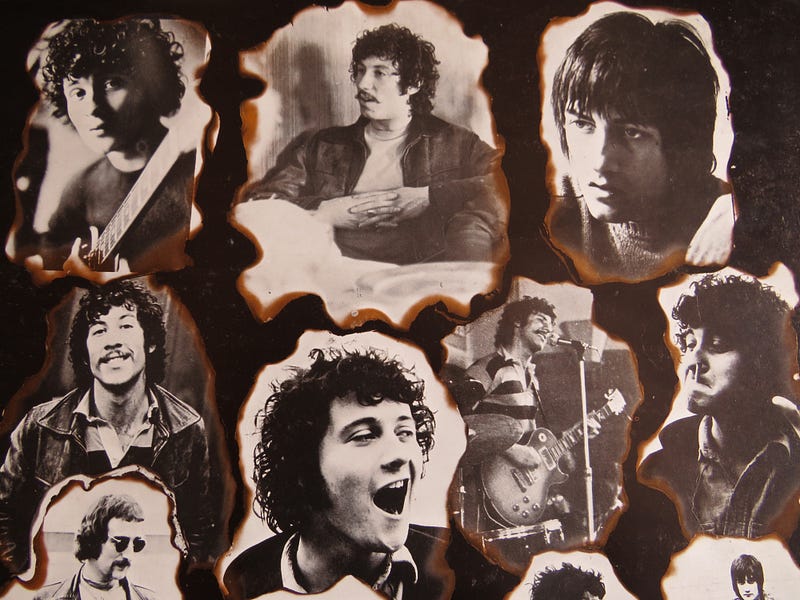
Fleetwood Mac is a bit of an enigma. In 54 years, the band has had around 18 different members and a variety of line-ups. The Rock and Roll Hall of Fame credits this diverse cast of characters for the band’s experimentation and variety — with elements of pop rock, blues, and soft rock.
Mick Fleetwood admits that many fans of Fleetwood Mac don’t know it was originally a blues band. They think of the group as the 1978 Grammy award-winning bunch, with Christine McVie, Stevie Nicks and Lindsey Buckingham, whose ‘Rumours’ sold over 40 million copies worldwide, making it one of the best-selling albums in history.
A new release is about to be launched documenting their early history. But who are, and what is, Fleetwood Mac?
UK band Fleetwood Mac was formed in 1967 by former members of John Mayall’s Bluesbreakers — under the direction of lead guitarist Peter Green, with drummer Mick Fleetwood, bassist John McVie and slide guitarist Jeremy Spencer. Guitarist Danny Kirwan joined later and the band found instant success during the British Blues boom with its debut album and their first UK #1 hit single ‘Albatross’, in 1968.
It’s odd they topped the charts with such a ‘smooth’ and commercial sounding record as ‘Albatross’, when the ‘B’ side, ‘Jigsaw Puzzle Blues’, has a more fascinating blues appeal.
I loved the fact Danny is playing a British guitar, a Watkins Rapier 33, the same model I bought in 1966, which I still own, but could never get the sound Danny created in this clip.
Peter Green had made his recording debut with the Bluesbreakers in 1966 on the album ‘A Hard Road’, which featured two of his own compositions, ‘The Same Way’ and ‘The Supernatural’. The latter was one of Green’s first instrumentals, which would soon become his trademark. So proficient was he that his musician friends bestowed upon him the nickname The Green God.
Fleetwood Mac had further UK Top Ten hits with ‘Man Of The World’, ‘Oh Well’, and ‘Green Manalishi’, but by 1970 all was not well with Peter Green.
By then he was taking large doses of LSD, had grown a beard and begun to wear robes and a crucifix. He became concerned about accumulating wealth, and wanted to give his money away. The other members of the band didn’t agree with that philosophy, so he left the group.
No less an authority than B.B. King once said Peter Green was the only English guitarist whose playing “made me sweat — he had the sweetest tone”.
I recognised that sweet tone the first time I heard ‘Need Your Love So Bad’.
That record got me into a lot of trouble.
In the late summer of 1968 me and a mate were camping in the English Lake District. Huddled in a small tent, drinking beer, listening to the tinny sound emanating from our cheap transistor radio, we heard those Peter Green guitar riffs for the first time. It was after midnight, when the camp warden ripped open the tent flap, bawling, “Turn that bloody racket down. You’re waking up half the campsite. You’re out of here in the morning.”
Every night that song was played on Radio Caroline, a pirate radio station we tuned into. We gave up camping, slept in the car, and headed to the coast to find a record store. I just had to have that record.
Hyped, we arrived in the fishing port of Fleetwood, naively thinking we might catch a glimpse of the band walking about. Later, I discovered they were named after a drummer and bass player, not an English town reeking of fish, and were from London.
We searched the town’s record stores, but none stocked the single, so we drove south and tried the glitzy seaside resort of Blackpool. Again, no record store had the single, but we had just enough cash between us to buy the Fleetwood Mac album, ‘Mr. Wonderful.’
Mortified, we found the single wasn’t on it. However, to compensate there were a couple of driving twelve-bar blues in the style of Elmore James, but mostly it contained numbers penned by the band themselves.
This is the Fleetwood Mac I know. A Blues band. The other lot are a different entity altogether. Without Peter Green they may not have made it.
Oh, yeah, I did get that single eventually. I also got over their transformation into a commercialised soft rock band and bought those albums too.
Mick Fleetwood acknowledges Peter’s role in a recent quote:
“I have so much admiration for Peter, and affection. He was a major, lovely friend, for sure. And no better musical lessons were learned by all of us, including me, in all of that work we did together and what he did to lead us as a band.”
Mick Fleetwood never gave up his dream of bringing Peter Green back to Fleetwood Mac. He organised a tribute to Peter at the The London Palladium on 25 February 2020. Peter was aware of the concert but did not turn up.
Five months later, on 25 July 2020, Peter Green died aged 73.
Peter Green was inducted into the Rock and Roll Hall of Fame, together with Fleetwood Mac, in 1998. Rolling Stone magazine rated Peter as one of the 100 Greatest Guitarists of all time.
Danny Kirwan died 8 June 2018, aged 68.
The companion album and video package, ‘Mick Fleetwood and Friends Celebrate the Music of Peter Green and the Early Years of Fleetwood Mac’, is released on 30 April 2021.
Here are some more of my stories featured in The Riff:


