
WOMEN | RACE | SEXUALITY
Flap Over Wap: A Brief History of ‘Pussy’ from Fairy Tale to Hip-Hop to Culture-Wars Flashpoint
If we don’t want our children to be exposed to sexual vulgarity, let’s not teach them the vulgarity of hypocrisy and systemic racism
Trickery and deceit
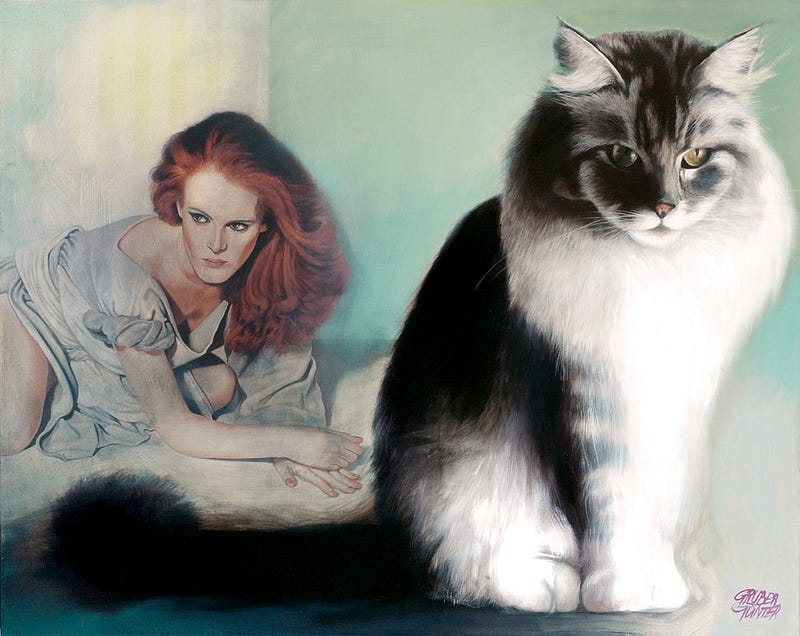
Once upon a time, there was a popular entity known as pussy. According to the Oxford English Dictionary (OED), ‘pussy’ is a cat. But according to that same OED, pussy is also a girl or woman with characteristics associated with cats, especially sweetness or amiability. Citations for both uses date as far back as the 16th century (between 1530 and 1560).
Perhaps the most famous early reference is the story of a cat that used trickery and deceit in order to gain power, wealth, and a princess for its penniless and low-born master. These antics were chronicled in a popular fairy tale called “Puss in Boots.” But did you know the story’s original title was “Master Cat” or “The Booted Cat” when it was first told in Italy and France around 1697?
By 1895, pussy had become firmly affixed to kitty ‘litter-ature.’ Parents in London could pick up a copy of Songs for the Nursery, read a poem to their children called “Pussy Cat, Pussy Cat,” and think nothing of it.
Later in the 19th century, British writer Edward Lear wrote “The Owl and the Pussy-Cat.” A poem about two unlikely companions who went to sea in a beautiful pea-green boat: “They took some honey and plenty of money wrapped in a five-found note.” The expedition was such a pleasure that the owl proclaimed:
What a beautiful Pussy you are, You are, You are! What a beautiful Pussy you are!
Later still, author Rudyard Kipling wrote “Pussy Can Sit by the Fire and Sing,” in which a cat plays Man Friday, rubs his knees with its head, and “pretends that she loves me hard.”
Literary references to pussy include, “Pussy Cat Ate the Dumplings,” “Pussy-Cat, Wussy-Cat,” and even a Beatrix Potter variation on “Pussy-Cat Sits by the Fire,” in which a cat is called “Mistress Pussy” by a dog. Another poet known only as Anonymous penned this verse:
I love little pussy, her coat is so warm; And if I don’t hurt her, she’ll do me no harm… I’ll pat pretty pussy, and then she will purr; And thus show her thanks for my kindness to her… I never will vex her, nor make her displeased — For pussy don’t like to be worried and teased.
Randy Victorians and guilty coverups
According to Merriam-Webster, pussy simultaneously carried three “vulgar” meanings as far back as 1699. At that time, pussy could mean: 1) vulva, 2a) sexual intercourse, and 2b) the female partner in sexual intercourse. It was not until 1942 that pussy branched out to include a weak or cowardly man or boy. As in, “Stop being a pussy.”
Note: Despite its similarity to pusillanimous, which means coward, pussy does not derive from that longer word. Nor do the two words share a related etymology, as indicated in various Internet posts since 2014.
Everyone knew this other meaning of pussy was there, but no one talked about it openly. This attitude was reflected in western thinking about female genitalia in general. Some women felt so confined by society’s attitude toward their “female parts” that they barely looked at what they had “down there.” Certainly, no one used the term pussy in polite company even though the “vulgar” sense of the word had been around since the dawn of the 17th century.
Perhaps the closeted aspect of the word was responsible for its libidinal charge. Long before Internet porn made its way to smartphones all over the planet, Victorians made hot use of The Olympia Reader, in which a well-dressed but horny gentleman might find this line: “Anita is whipping her pussy on me like mad!”
‘Pussy’ and the double entendre — from James Bond to Brad Pitt
As long as the boundary between naughty and nice remained in place, writers, comedians, and actors loved pussy. It was not uncommon for them to make allusions to it without actually using the word in a rude and brazen manner.
In Goldfinger, for instance, Sean Connery’s James Bond wakes up to a stereotypical blonde bombshell played by Honor Blackman. “Who are you?” he asks. “My name is Pussy Galore,” she says. To which Bond replies, “I must be dreaming.”
In 2019, pussy made a similar appearance in Quentin Tarantino’s Once Upon a Time in Hollywood. That happens in the scene where Brad Pitt’s character picks up a hitchhiker who goes by the name Pussycat. When he drops her off at the ranch where the depraved Manson Family lives, one of her friends says, “We love Pussy.” Pitt’s response? “Yes, we do!”
With the boundary of presumed innocence and hoped-for respectability in place, the word pussy brought endless opportunities for innuendo and allusion. Its use was a wink of the eye. The double entendre. Tongue in cheek (so to speak). A nod to the hip what’s-happening.
The fun of such wordplay lay in getting as close to the boundary as possible without actually crossing the line. Comedians in the 1960s understood this. From Rowan and Martin’s Laugh-in to Johnny Carson’s Tonight Show.
Inching up to that titillating point of no return sent waves of laughter through late-night TV audiences. The shared understanding went like this: “It’s not what you say; it’s what you don’t say.” We know what you’re talking about, said their snickering. Wink, wink.
Despite the adult fun of games like this, their use acknowledges the hypocrisy societies are known for. We need that boundary, folks used to think. It’s a cultural norm we must maintain — for the sake of the children, if nothing else.
After all, do we really want our eight-year-olds talking about pussy in ways that have nothing to do with cats? Do we really want that word to go from vulgar to vernacular?
Too bad. It’s already happened.
Reclaiming the word — Norah Jones
The millennium no longer cares whether we want that circumstance or not. Sure we have parental-advisory labels. But how effective are they? Look at the middle-school kids on TikTok dancing to lyrics that could get your mouth washed out with soap back in the day.
Hip-hop lyrics by male artists have been full of pussy for years. Examples include Two Live Crew’s “We Want Some Pussy” in 1986; DJ Quik’s “Sweet Black Pussy” in 1991; and Lil Wayne’s “Pussy Monster” in 2008. Three little songs doesn’t begin to cover it. But you get the idea.
If men could do that, why couldn’t female rappers sing about pussy, too? And so, Lil’ Kim came out with “Hardcore” in 1996, while Missy Elliot delivered “Pussycat” in 2002.
But they’re not the only ones to bring pussy mainstream. Can anyone forget that a presidential candidate once said that being famous means you “can grab ’em by the pussy?”
Or that two days after this comment went viral, Melania Trump appeared at the second 2016 presidential debate wearing an eyebrow-raising fuchsia blouse with — of all things — a pussy bow?
And consider Puss N Boots. Not the fairy tale or movie. But the female alternative rock band formed by Norah Jones, Sasha Dobson, and Catherine Popper in 2008. Are they cats? Hardly. They have something very different in mind in the title track from their new album Sister.
You can’t blame women for wanting to reclaim this word. To restate it in their own terms in much the same way African Americans have sought to reclaim nigger and feminists have sought to reclaim bitch.
For years, these words have been used to denigrate, deprive, and oppress. The effort to take them back is both necessary and noble. But it comes with a downside — a crazy little thing called etymology.
Does reclaiming ‘pussy’ erase its etymology?
Etymology is the study of the history of words. But as language historian Anne Curzan revealed in a Ted Talk, it’s also the study of how a word and its meaning change over time.
For example, silly used to mean “worthy” or “blessed.” The word clue was once defined as a ball of yarn, which is not at all what Agatha Christie had in mind in her 77 novels. As for hussy? The earliest definition was “housewife.” Just imagine if all those women who used to list “housewife” as their occupation had written hussy instead? And how about a TV show called Desperate Hussies?
It takes a long time for the meaning of words to change. Which means several generations may have to come and go before people can hear the word pussy as a universal symbol of power — the reclamation of a term once used to denigrate women as sexual objects — and not hear the negative and vulgar connotations that have accompanied it since 1699.
That’s a tall order. Look no further than nigger to understand why. Writers like Ta-Nehisi Coates can talk about context when explaining why white people should never use that word. But Dave Chappelle uses nigger in ways that “unreconstructed” white folks and white trash have used it for generations, as with his Founding Fathers joke. “Hurry up and finish that Constitution, nigger. I’m trying to get some sleep.”
As long as the old use of a word remains current, the process of reclaiming it is that much further down the road.
Still, as Jimi Hendrix once said, “Music doesn’t lie. If there is something to be changed in this world, then it can only happen through music.”
The pussy revolution
By the time Cardi B and Megan Thee stallion reached center stage, pussy had already become both an emblem and a cause celebre. Consider Pussy Riot, the feminist-protest-punk-rock group in Russia. Think about Pussy Power, which advocates for equality of the sexes, as well as social, political, and economic rights for women. And who can forget the pink pussy hat during the 2017 Women’s March?
When it comes to pussy, the boundary between naughty and nice has come down like the Berlin Wall.
Pussy, which used to hide in the euphemisms of nursery rhymes and in the pages of Victorian porn, has gone mainstream.
Anne Hathaway takes a step
The word is used so widely now that a 36-year-old Anne Hathaway felt comfortable enough to refer to her own pussy on The Late Show with Stephen Colbert in May of 2019. When RuPaul made a surprise appearance that night, the Oscar-winning Hathaway told him and a national audience that thanks to Drag Race, she had learned to “step up her pussy.”
It’s impossible to imagine Bette Davis, Audrey Helpburn or Grace Kelly saying something like that. Certainly Cicely Tyson or Angela Bassett wouldn’t. Not on television. In fact, there may be many women today who wouldn’t.
Once again, one is reminded of nigger. White children from respectable families were brought up not to use that word. Only white trash said nigger. The words you choose always say more about you than the thing you’re attempting to describe. Language reveals class, the kind based on personal values as well as socioeconomic expectations. But it also lays bare the enemy at the gates, America’s raging class-divide.
Cardi B, Megan Thee, and the raging class divide
As we learned from Straight Outta Compton, hip-hop is a cultural response to the injustices experienced by the Black underclass. Those left behind when the end of segregation made it possible for middle-class Blacks to abandon previously segregated communities for the suburbs.
This break has led to a widening class divide between middle-class Blacks and impoverished Blacks that is now as wide as the gap between Blacks and Whites in general.
Hip-hop has helped close that gap for many. With its roots in so-called gangsta culture, it’s become a social and financial juggernaut. It’s a major innovation in music that’s also a path out of impoverishment. And it has accomplished this by bringing street-culture to the mainstream with all the rough and savvy understandings that come with it. Forget euphemisms. Let’s talk pussy.
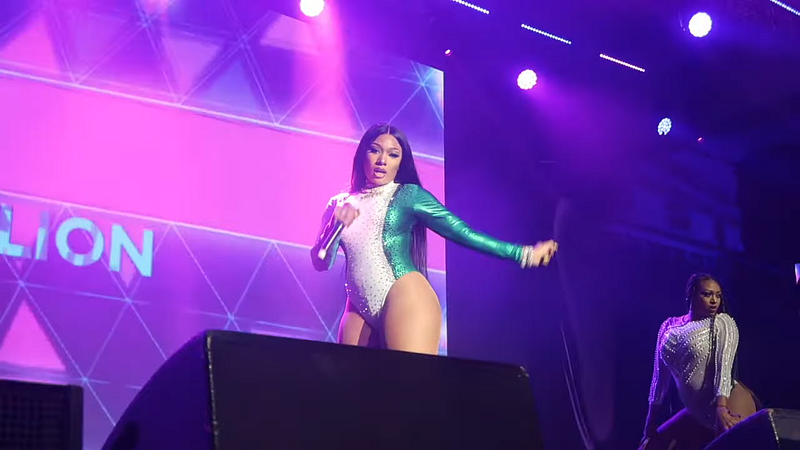
What we have here is a cultural revolution of the kind Jimmy Hendrix described. As he predicted, music is in the vanguard. And the most famous recent entry in the pussy revolution is undoubtedly the runaway hit single “WAP,” by Cardi B and Megan Thee Stallion, which debuted at Number 1 on the Billboard 100, generating a record 93 million streams within one week of its release on August 7, 2020.
If you haven’t heard about the controversy over “WAP,” congratulations. You are the winner of the Socially Distanced Mindset Award for 2020.
Here’s how New York Times Culture Critic Jon Caramonica describes the song:
“Yes, sure, “WAP” is salacious, bawdy, unerringly humid, vividly detailed. Perhaps distractingly sordid, if you’re unfamiliar with the work of, say, Trina, or Madonna, or Philip Roth, or Jeanette Winterson, or Egon Schiele, or Bernardo Bertolucci, or Dr. Ruth Westheimer, or Call Her Daddy.”
Ben Shapiro and the fear of frank sexuality
Caramonica nails it. It’s not as if “WAP” has anything on Portnoy’s Complaint, which was published in 1969 with such overtly graphic sexual images that they remain in the mind years later.
Like it or not, frank sexuality is a Pandora’s Box that cannot be closed, no matter how many times 36-year-old conservative commentator Ben Shapiro reads the “WAP” lyrics to his YouTube audience, replacing pussy with the euphemistic P-word.
Shapiro is so hip he doesn’t even notice the implication when he says, “It’s called ‘WAP,’ which we’re going to get into in just a second.”
Really, Dude? You wish.
Fox News commentator Tucker Carlson also weighed in, joining a list of white conservatives who have helped promote the song by lashing out against it. One wonders if they would care quite so much if the video did not include a cameo by Kylie Jenner, a white woman.
Must we go back to 1970 and Germaine Greer’s Female Eunuch to understand this? If there’s one thing white conservatives fear more than anything, it’s sexually empowered white women.
If Greer is to be believed, these men are heavily invested in the sexual repression of their women, which devitalizes them, turning them into eunuchs. Kylie Jenner’s presence in the “WAP” video pushes all their fear buttons at once. Because you cannot control a sexually free woman. No wonder Shapiro, Carlson, et al., have become dyspeptic over it.
But there’s even more to their disdain than this. And it’s rooted in racism. These men are asking female artists of color to adhere to the values of a white privileged class that doesn’t understand them at all. Nor does it care about them. Its commentators seek to silence and vilify women of color for creating music that uses the language of their experience.
Carlson has an estimated net worth of $16 million. Shapiro’s is about $6 million. Beware of wealthy white men on Fox News complaining about the sexuality of two Black women who have managed to earn $4 million (Cardi B) and $3 million (Megan Thee Stallion). Hasn’t their ilk done enough to the Black woman already?
Dancing to “WAP” on the Trump boat parade
Criticize Cardi B and Megan Thee Stallion all you want, but don’t ignore the white folks in the August 2020 Trump Boat Parade rocking out to “WAP” on TikTok. The hypocrisy in this is extreme. It goes to the root of white flight, white privilege, and the expansion of the rural exurbs into political red zones untainted by foreigners and Americans of color.
White people like these Trumpists would like to have it both ways. They want the sexuality of the oppressed without having to rub shoulders with them. They want to be turned on by the sexy music their commentators regard as vulgar while ignoring the greater vulgarity of poverty, unemployment, unjust incarceration, voter suppression, systemic racism, and the murder of unarmed Black people by police or white vigilantes.
Hypocrites like this will help turn hip-hop artists into very rich musicians, but they don’t want them living next door. And as the results of the November election make clear, they will vote for right-wing political candidates in a heartbeat.
“There can be no happiness if the things we believe in are different from the things we do.” wrote Albert Camus.
If we don’t want our children to be exposed to sexual vulgarity, let’s not teach them the vulgarity of hypocrisy and systemic racism.
In the meantime, one thing seems certain. You can no more silence Cardi B and Megan Thee Stallion than you can roll back the clock to those nostalgic days when pussy was just a cat. Because those days never really existed at all.
© 2020 Andrew Jazprose Hill. All Rights Reserved
Thank you for reading. Here are a few of my other recent Medium stories.


