
Five Lessons Poker Teaches You About Life
I stopped playing years ago, but these lessons stuck
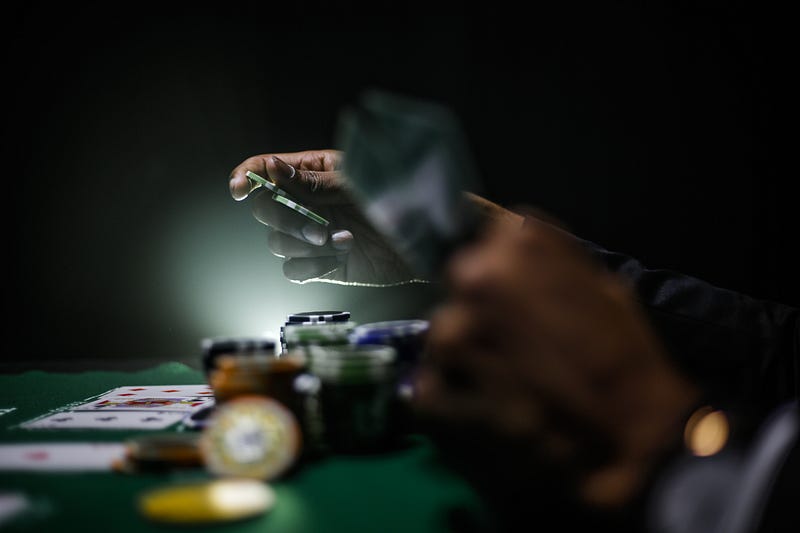
When I was in college, I played an obscene amount of poker. I often joked that I majored in Economics and minored in poker. I devoured countless books, articles, forum posts, and instructional videos to improve my skills.
At times, the obsession and fascination with poker may have resembled more of an addiction. I used to play from early evening until early morning when the sun came up. That was usually my cue to catch a few hours of sleep before I needed to get up for class.
However obsessive I might have been, I must confess that there are depths to addiction I will never be able to understand. Gambling is dangerous, and it isn’t for everyone.
My obsession with poker was driven more by enjoyment and the intellectual challenge of getting one up on someone else, rather than by the money side of things. Although, I would often use the money to keep score.
I became a profitable player through study, practice, and diligent review processes. But I didn’t play for big money, mostly because I didn’t have that much money as a college student in the first place.
What I loved about poker is that it bridged theory and practice in a way I couldn’t find elsewhere. I could read about a new concept and apply it to the virtual felt the very same day. And almost immediately, I could see how that affected my results in real-time.
Over the years I played the game, I learned many lessons that have really stuck with me. Poker has shaped how I view the world and how I go about making tough decisions.
Here are some valuable lessons I learned.
1. Relative Performance Matters More Than Absolute Performance
In The Theory of Poker, David Sklansky wrote what he called The Fundamental Theorem of Poker.
Every time you play a hand different from the way you would have played it if you could see all your opponents’ cards, they gain; and every time you play your hand the same way you would have played it if you could see all their cards, they lose.
Conversely, the opposite is also true.
In a game of imperfect information such as poker, you aim to make better decisions than your opponents. You get an edge by either minimizing your mistakes or maximizing the mistakes of others.
If you ever get to the point of showing your cards, you only need to have a better hand than your opponent to win. It’s important to note that you rarely ever need the best possible hand.
That realization extends to business and other aspects of life. You don’t have to have the best product to beat your competitors, you just need to have a better one.
Maybe you even have the same product, but better marketing or positioning can make the difference between winning and losing.
In many ways, your edge in life is your relative strength compared to others.
2. Probabilistic Thinking Is More Useful Than Results Orientated Thinking
When it comes to decision-making, it’s easy to convince yourself that you’ve made the right choice when the results go your way. But when they don’t, you can believe that you’ve made the wrong decision, or even gotten unlucky.
Often, short-term outcomes can be quite random and out of our control. What matters more is the decision-making process itself. That’s the part you can control. You want to make decisions that have a positive, expected outcome. Even if the result doesn’t go your way, you can take solace in that you chose the option with the highest expected value (EV).
Let’s say you know that a biased coin has a 60% chance of landing on heads and a 40% chance on tails. If someone offered to you a bet at evens (1 to 1), and you had to make a bet, your best decision would be to choose heads. Even if it lands on tails, you should still be convinced that you made the best choice based on the information you had at the time.
That example might seem a bit simplistic, but it’s a solid foundation for understanding the concept. If you want a real challenge, try convincing a lottery winner that they made a bad decision by gambling on the lottery.
Thinking in terms of expected value (EV) and learning to separate random results from your decision-making process is paramount in making the right decisions. Knowing that the result is just one outcome of many helps you maintain some level of objectivity.
If most of the decisions you make are positive in terms of expected value, and you manage your risks well, you will eventually come out ahead. And you will minimize the effect that luck plays in the long run.
3. Maximise Your Winners and Minimize Your Losers
In many respects, this is playing the hand you are dealt and trying to make the most of it. There are situations where you can push harder and play more aggressively. And others where you need to be more cautious and even give up, to take a guaranteed loss and prevent a potentially gargantuan loss.
You need to learn how to recognize those situations and play accordingly. You don’t have to play every hand you are dealt and you don’t have to play it the same way every time.
In situations where you are ahead, you’ll want to entice players to commit more money into the pot. And in situations where you are behind, you might try doing the opposite.
Being a profitable poker player means that you will need to find a balance where your winners outweigh your losers. It is as important to maximize your winners as much as it is to minimize your losses.
You should focus more on capitalizing your strengths where there is far more upside. But be mindful of your weaknesses and work to make sure that they are up to a standard that isn’t hindering your success.
4. Find Comfort in Uncertainty
In life, we don’t always have perfect information. Life is much more like poker than it is like chess. In chess, everything is out in the open, it’s clear where all the pieces are and what’s left in play.
In life, we don’t know everything. Often we are left in the dark and all we can depend on is our knowledge, experience, the hunches we have, and the small clues we find along the way. There are many things we will never know for sure.
Becoming proficient at poker helped me navigate decisions in uncertain and opaque environments. There is a necessary acceptance of uncertainty when you play games of chance. There is also an element of luck.
When you take any meaningful risks, there are no guaranteed outcomes. You don’t know for certain how it will play out.
There are things that we can control and things that we can’t. We can’t control which cards come out next. We can plan how we might act if certain cards come up but that’s about as much control as we have.
There will always be scenarios that come up where you aren’t fully prepared. Embracing uncertainty and doing the best that you can is all you can really ask of yourself. Even if things don’t go your way, you shouldn’t have many regrets.
5. Reading Thoughts and Emotions
I don’t want to overplay this and convince you that poker players have the ability to read every single one of your thoughts and emotions. But if they take the game seriously, they will develop the ability to guess how you think and feel in specific situations with reliable frequency.
Astute poker players have a framework for analysis that helps them detect when something “is off”. They form opinions of their opponents based on their behavior. They look for confirming and contrasting signals to modify these opinions. These signals are identified in person through body language or online through the timing of actions. These are called tells.
Put simply, proficient poker players observe their opponents intensely. They frequently put themselves in the other’s shoes. And they empathize.
Poker players look at what someone has done in the past, and they check to see if current actions are consistent with that. Where something doesn’t quite add up or is considered out of character behavior, a red flag is raised. Then there is the mission to decipher why that person has acted differently in this situation.
Is it an emotional response or something much more rational and calculated?
Having the ability to recognize when the people you know are acting strange means that you can identify when something is wrong. It could be a sign that you need to spend more quality time with them to figure what is bothering them.
When you pay attention to the actions, behavior, and feelings of others, you can gain more information than they would like to announce publicly. Words can only tell you so much.
Key Takeaways
- Relative performance often matters more than absolute performance.
- Separating random results from your decision-making process is essential to making good decisions.
- It’s important to be aware of your strengths and weaknesses. Maximize your strengths and bring your weaknesses up to a reasonable level where they don’t hinder you.
- Learning to accept uncertainty and doing the best you can with the limited information you have is all you can really ask of yourself. Even if things don’t go your way, you shouldn’t have many regrets.
- Be attentive and observant of the people around you. People are often communicating far more than you realize.
If you enjoyed this piece, you might also like:


