
Five Defensive Reactions to White Privilege — And Counterarguments
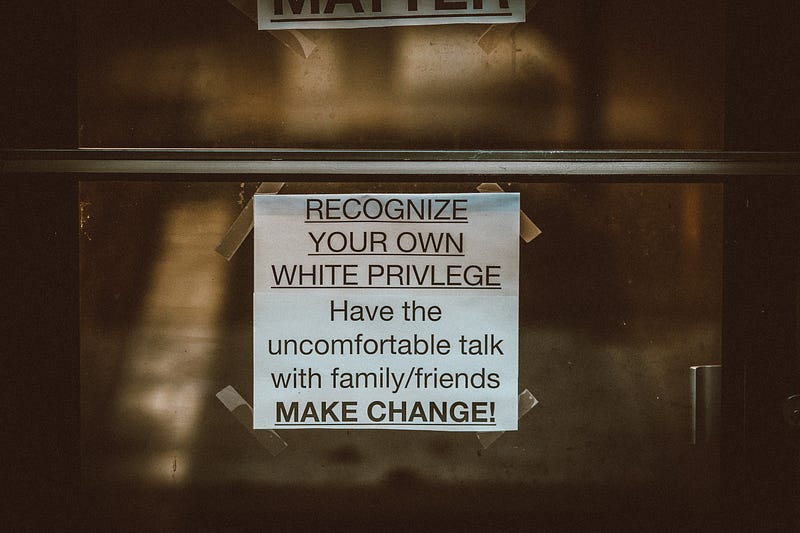
Recognizing white privilege is essential for combatting racism
1: “How could I be racist if I’m not a bad person?”
People often believe that ‘being a good person’ and ‘being part of the race problem’ are opposing groups, but they can and do overlap. People can be well-intentioned and still contribute to white supremacy.
White people exist within a deeply racialized society that, in many ways interpersonal to structural, benefits white people. From holding a property interest in whiteness to microaggressions, white people are constantly engaging in white supremacy.
The goal is to understand that being a good person doesn't mean being a non-racist. On the other side of the coin, being racist doesn’t make someone a bad person if the individual doesn’t intend for their actions to carry racial implications. You can engage in racism as a system and also be a well-intentioned person. This is why you may hear people say that the goal is to be anti-racist rather than non-racist, the latter of which most if not all anti-racists contend isn’t possible in a racist society.
2: “But I have a non-white friend/partner”
It’s not right to hide behind the people of color with whom you have a platonic or romantic relationship. The relationship doesn’t excuse your contributions to white supremacy. You can still engage in racism and be friends or partners with a person of color.
3: “I’ve struggled in life, so I don’t have privilege”
There are many forms of social privilege — white privilege is just one. You can have experienced struggles for being lower class, a woman, or being old, but that doesn’t negate the reality of racial privilege. Racial privilege, or white privilege, refers strictly to the advantages gained from a lack of experiencing the burdens of racial prejudice, racial discrimination, and systemic racial oppression.
White people, due to being positively racialized, do not experience interpersonal racism. The racism codified into our social institutions, from law and education to capitalism, produces and reinforces racial subordination at the expense of racial minorities, not white people. That is white privilege.
4: “I don’t see color”
Let’s face it: Everyone sees color. Everyone harbors some level of implicit bias. We internalize, via socialization, stereotypes, assumptions, and sentiments that serve a white supremacist ideology. We all engage in racism this way, we all see race, so arguing that one is color-blind to race is dishonest and technically inaccurate.
5: “You’re the real racist for bringing race up”
A common sentiment among conservatives and some liberals is the notion that race consciousness is synonymous with racism. The premise behind this sort of statement is that if we ignore racism altogether, it will disappear. Due to the pervasive nature of race in racialized societies, especially settler-colonial, racism is embedded into our social institutions and structures. Racism won’t disappear if we ignore it, it will simply continue operating in the face of our ignorance.
It’s critical for white people to recognize that because racism is an ordinary and pervasive element of society, race consciousness is necessary to effectively combat it. Therefore, it is not racist to bring race up. Ignoring it is by allowing it to operate unchecked.
In conclusion
Instead of getting defensive about white privilege, use your energy to unlearn your socialized prejudice, learn how to avoid committing microaggressions, and act to divest from whiteness. Recognizing white privilege is critical for combatting racism.