
Being Anti-Racist Means Letting Go Of The Good-Bad Dichotomy
The goal is to be anti-racist, not non-racist
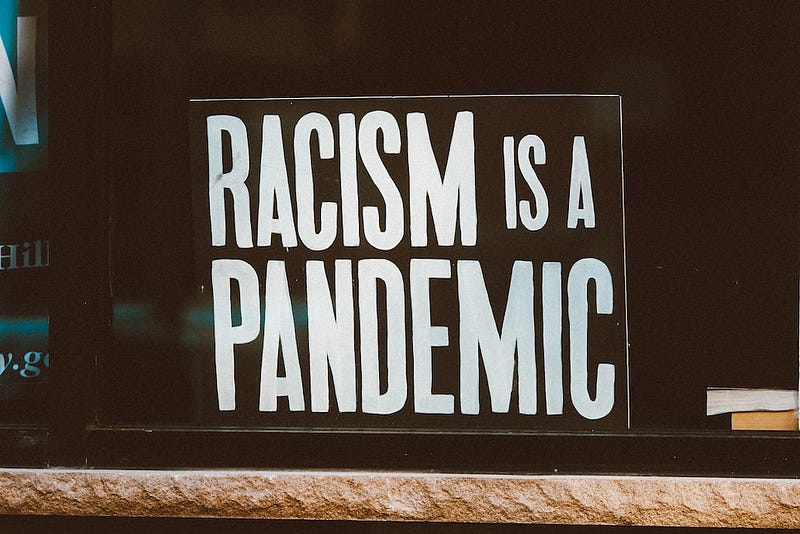
In America, we’re made to believe that racism is a specter of the past and that any racism today is the fault of a few bad apples within a greater non-racist system. We’re made to believe that as long as we aim to be ‘good people,’ we aren’t complicit in operations of racism.
We’re made to believe that ‘being a good person’ and ‘being a part of the race problem’ are opposites when in fact, both can and do overlap. We can simultaneously aim to be good people while also harboring socialized racism and, at times, bearers of interpersonal bias.
As long as socialized racial prejudice is a thing, it’s not sufficient to be non-racist; We must be anti-racist.
But what’s the difference?
Being non-racist means standing on the sidelines while racism plays out in society. It means being color-blind to the workings of race as a means of ignoring racism altogether. It means maintaining the status quo. It means avoiding those difficult conversations.
Being anti-racist means being committed to recognizing and challenging racism within ourselves and within our environment. It means viewing the world through a race-conscious lens. It means challenging the status quo. It means having those difficult conversations.
The good-bad dichotomy
The objective of anti-racism is not to be a good person, but to struggle for racial liberation. When we make it personal, we fall into the trap of using “anti-racist” as synonymous with “non-racist” — and that poses a serious problem for effective participation in the anti-racism movement. If we are too tied up with being a good non-racist person, we make it about ourselves and not about liberation and, for white folks, divesting from whiteness.
This is especially true for white people who may want to come off as being non-racist without understanding that anti-racism is about exposing and challenging racial subordination, not the reputation of the individual fighting it. Being non-racist does not imply the effort of unlearning and relearning that comes with being anti-racist. So, when one uses “anti-racist” as an identity when what they really mean is “non-racist,” they miss the entire point.
Additionally, many white people are hesitant to identify as anti-racist. They’d rather identify as someone who is one of the good (not racist) white people and let their work be done. So, why do white people feel the need to emphasize their status as non-racist when being anti-racist is more ideal for addressing the realities of racism in racialized society?
The simplicity of dichotomies
Dichotomies govern the way we organize our world; good and bad, black and white, and old and new. Similarly, in regard to racism, we tend to organize individuals into two groups:
- Racist (bad people)
- Non-racist (good people)
Dividing up society into two opposing groups is not only easy for categorizing society as a whole, but also for positioning oneself within a bipolar system. It’s easy to say “I’m not racist” and feel as though one has accomplished something, whereas saying “I’m anti-racist” implies an active and ongoing fight.
In racialized societies, especially settler-colonial, active fighting and divesting are going to be necessary to achieve any meaningful change. For this reason, it’s important to make sure that when you call yourself anti-racist, you recognize the call to action that comes with it rather than simply identifying as anti-racist to save face.
Post-racialism and colorblindness
The United States during the Obama administration was, by many, considered effectively post-racial. If the U.S. could elect a biracial Black man to the highest office in the land, would this not be evidence of a post-racial society?
With the claim of a post-racial society mainstream, white Americans began adopting colorblind rhetoric, claiming they “don’t see race” and are non-racist (good) white people as opposed to the racist (bad) people like white supremacists are. Yet, comparing oneself to a raging racist does not mean that one doesn’t harbor implicit bias or socialized prejudice. One can not actively hate members of other racial groups for their identities and still carry internalized stereotypes, sentiments, and assumptions.
The danger of colorblindness is that it allows us to ignore the racial construction of whiteness and with it the privilege and subordination it exists to consolidate. With that, the normative standard of whiteness is maintained and people of color are further marginalized.
Socialized racism exists within all of us
An additional flaw that the good-bad dichotomy of race has is its ignorance of the workings of socialization. Socialization is the internalization of the norms, values, beliefs, and standards of society. In settler colonial societies which are deeply racialized, all individuals are socialized with internalized racism. From there, people of color in particular hold internalized oppression while white people, the dominant group, hold internalized dominance. This bias may not come out explicitly interpersonally, but it still exists within.
This does not make one a bad person! Recognizing your internalized bias is the first step to addressing it. In other words, everyone is racist on some level, so being anti-racist is a must.
In conclusion
While ignoring race and claiming to be color-blind can be comfortable and easy, it’s not enough to genuinely address racial subordination. In order to adequately fight racism, while sometimes difficult and uncomfortable, we must be dedicated to anti-racist action and thinking.
For effective contributions to anti-racism to take place, we must let go of not only color-blind rhetoric but also the good-bad dichotomy. The dichotomy encourages us to see the world in two: (1) good non-racists and (2) bad racists. However, when we take into account the workings of socialization, we instead are able to recognize that we all are socialized with internalized racism, be it internalized dominance or internalized oppression.
In a deeply racialized society such as the United States, it is everyone's social responsibility to actively commit oneself to anti-racist action. We can begin by dismantling the way the good-bad dichotomy governs how we address our positionality within a broader racial apparatus.


