
First Impressions
In the late 19th-Century, French painter Claude Monet strove to portray the world as authentically as possible and left a lasting impression…
The painting that gave the Impressionists their name is a beautifully poetic evocation: you can almost feel the chill breeze coming off the water and hear the soft lapping as the boats move, feel the gentle warming of the sun as it burns off the morning mist, laced with the scent of smoggy smoke. French painter, Claude Monet created an impression of what it was like to be there at that time… When we look at this painting, we are standing ‘in the shoes’ of the artist, seeing through their eyes, perhaps sensing some of their feelings about that time and place. As it was in the port of Le Havre on that morning, back in 1873.
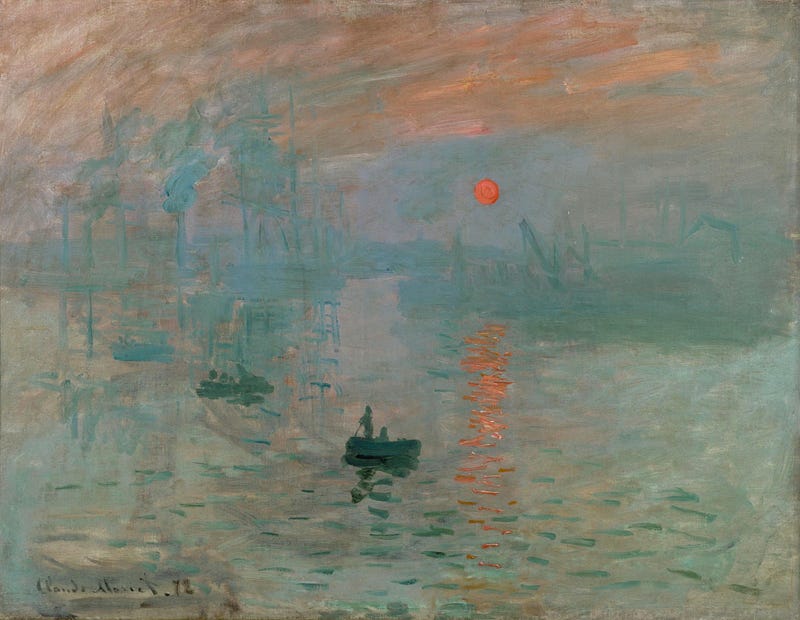
The widespread use of photography brought the validity of painting into question. How could painting survive as an art form, surely it was now outmoded? Well, the Impressionists were going to reassert its importance. Photography may show the world ‘accurately’, but capturing an instant of time from a fixed point of view didn’t reflect the human experience of the world.
Painting had far more potential to capture the ‘essence’ of a place and convey the experience of being there. In the moment. Impressionism was about experiencing with human eyes and conveying the emotional response along with an accurate pictorial record. It was an attempt to show the world more realistically than a photograph could whilst recognising the presence of the artist as a mediator.
Monet, like his fellow Impressionists, was fascinated to the point of obsession in how the effects of light created mood and how a painter could capture these luminous effects in pigment. He painted many series of the same or similar scenes at different times of year, in a variety of weather, and at different times of day.
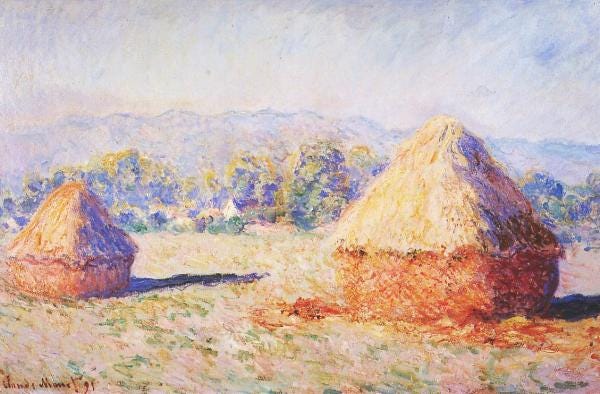
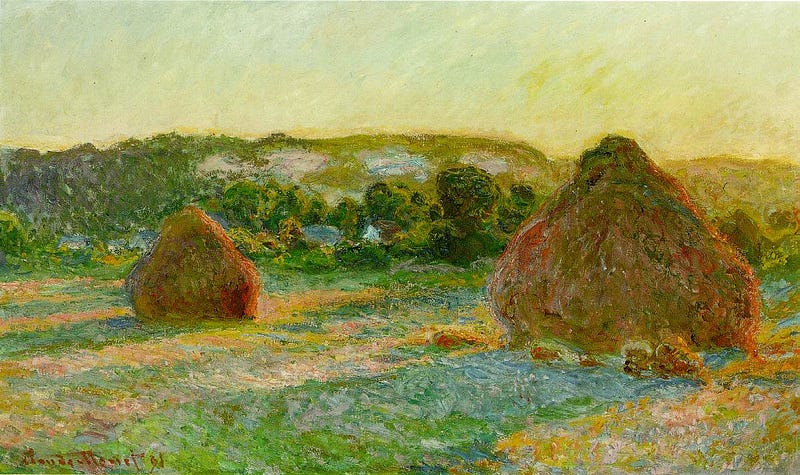
He was almost scientific in his methods of observation, making his notes with paint on canvas. He introduced the dark smock and parasol as essential equipment for the Impressionist painter. Because, he noted that colours that appear bright and vibrant in sunlight changed to dull and drab when viewed on the wall of a room. So, in order to translate the luminosity of the scenes he painted, he went to great lengths to shade his work from direct light and make sure that very little natural light was reflected onto the canvas from clothing.
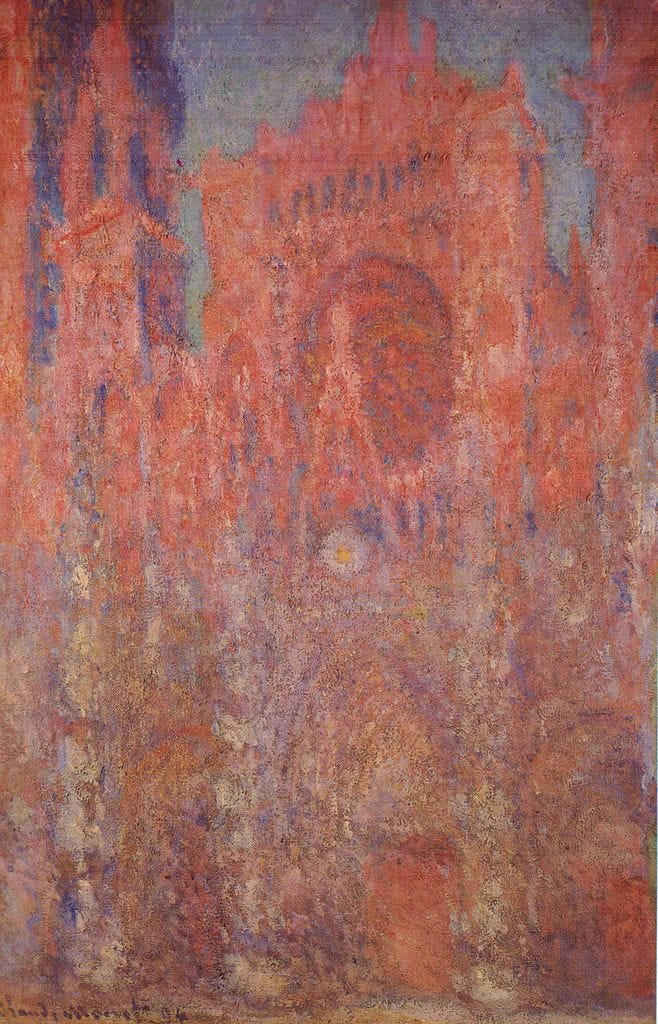
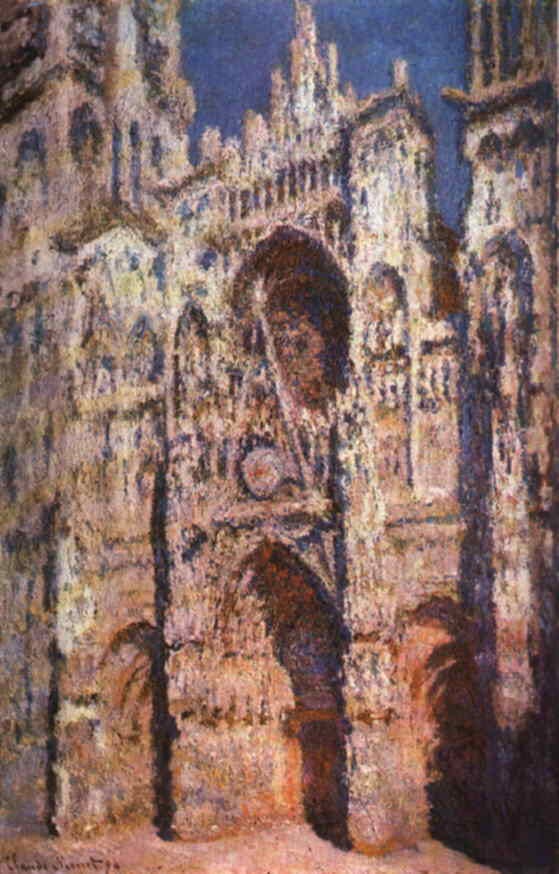
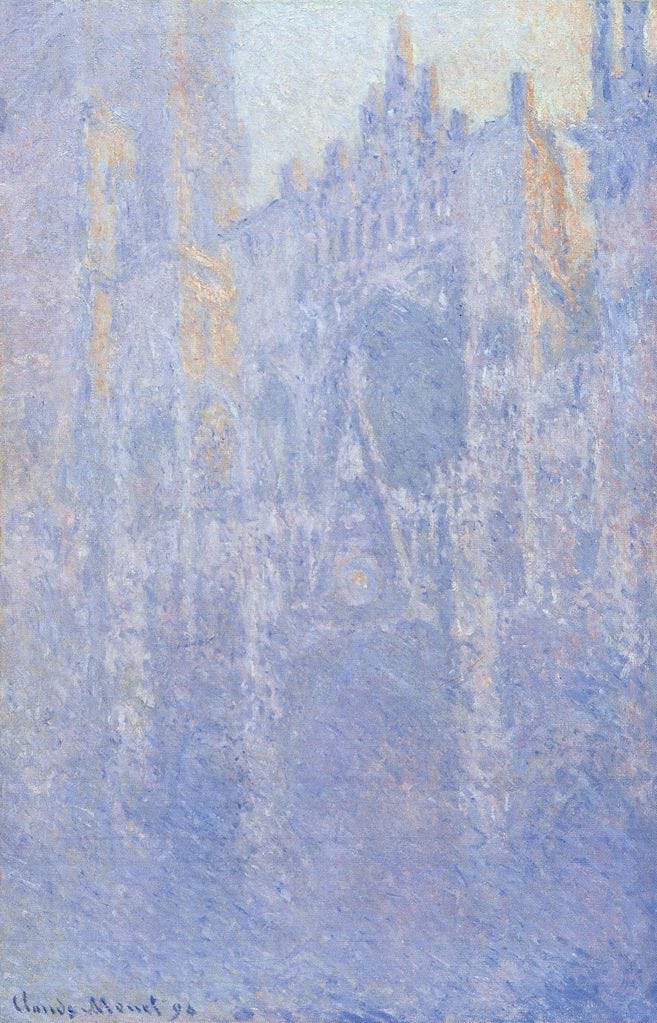
In the early 1890s, after painting his famous Haystacks, Monet moved on to paint a beautiful series of Rouen Cathedral which have a sense of light that is almost more ‘true to the eye’ than a photo could ever be. He managed to achieve an unusually luminous effect, seldom seen with oils. Indeed, the photographic technology of the time would not have been able to capture many of the effects rendered by Monet, even though they would have been apparent to the naked eye.
The details are all there, yet as the viewer approaches the canvas the image breaks up into daubs of colour. In close-up, sections of these paintings could be considered as exciting abstracts. When viewed from a distance, the colours and details mix in the eye and somehow mimic the experience of seeing the actual scene, giving an impression of being there.
The Impressionists are considered to be the first Modern movement in art. They acknowledged the element of interaction with the viewer. They also embraced new techniques and flouted academic traditions as well as experimenting with new technologies and media. One important innovation that affected how they painted was the introduction of the metal ferrule.
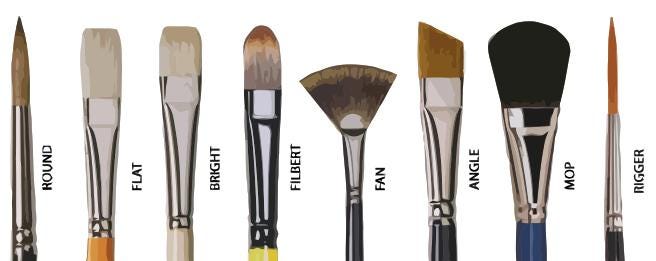
Traditionally, the bristles of a paint brush had been fixed onto the shank with a section cut from the quill of a feather, tightened with wire bindings. This usually meant that the bristles of the brush were, in effect, tied around the end of the handle in a circle. This created a reservoir for the paint or ink at the heart of the brush head, but also dictated a minimum length for the bristles, so they could meet at the tip.
With the introduction of the now ubiquitous metal ferrule, brushes could be manufactured quickly and cheaply and also the bristles could be squeezed tightly together by crimping the metal collar, eliminating that tiny void at the core. This presented new opportunities for modifying the tips that the Impressionists famously took full advantage of.
The ferrule could be squeezed flat to spread the bristles which could then be cut into a wider straight-edged tip, enabling a new distinctive broad and even stroke known as a ‘tache’. Impressionists also explored other brush modifications made possible by the new metal ferrules, such as bending into ‘C’ or ‘V’ shapes to create new stippled textures, or trimming the hairs to varied lengths to soften the brushwork.
The humble metal ferrule, introduced to make brush manufacture quicker and cheaper, was a technological innovation that kicked off the Modern era by driving aesthetic change in a style now known as Impressionism.
Claude Monet’s famous 1873 painting of a Poppy Field is also discussed, by Kim Vertue, in Signifier.


,_1890-91_(190_Kb);_Oil_on_canvas,_60_x_100_cm_(23_5-8_x_39_3-8_in),_The_Art_Institute_of_Chicago.jpg)


.JPG)
