avatarAugust Birch

Free AI web copilot to create summaries, insights and extended knowledge, download it at here

9287

Abstract

You can write on your phone, or use Aunt Millie’s Commodore 64 desktop computer while you’re stuck at her house over Thanksgiving.</p><p id="968f"><b>Think <i>cloud</i> and you’ll thank me later.</b></p><h2 id="66e8">Rule Number Five:</h2><p id="824b" type="7">Write as fast as you freaking can without self-editing as you go.</p><p id="8ae4">If this is your first go-around, the novel you create at the end of November will not be in any condition for publishing, but it’ll be a great foundation. And that’s OK.</p><p id="7a9a"><b>Your first novel is ALWAYS a piece of crap. It’s a <i>write</i> of passage.</b></p><div id="4795" class="link-block"> <a href="https://readmedium.com/why-you-should-never-show-anyone-your-first-novel-7017448d18eb"> <div> <div> <h2>Why You Should Never Show Anyone Your First Novel</h2> <div><h3>I tossed five novels in the trash before I wrote one worth sharing</h3></div> <div><p>medium.com</p></div> </div> <div> <div style="background-image: url(https://miro.readmedium.com/v2/resize:fit:320/1*438AQhqI5h98h8JFNSA8Bw.jpeg)"></div> </div> </div> </a> </div><p id="488c">That being said, this is a game more of effort and less of expertise. If this is your first novel, the actual craft of writing will be lower on the list than the rate your fingers fly.</p><p id="3574">You need to write as fast as you can. The editing will happen later.</p><p id="58d3">Writing is an emotional process. It helps to have a big support structure during this time. Writing isn’t something those around us can see until it’s all done. All you do it sit and type and look terrified.</p><p id="3c5e">When you build a house or a model airplane there’s progress to look at. With writing, there’s only <i>writer’s face</i>. Whether you’ve got an understand support team or not, you’ve got to write no matter what. NaNoWriMo is great practice for the cold, cruel world of authorship.</p><div id="0907" class="link-block"> <a href="https://readmedium.com/how-to-keep-writing-when-youre-worried-upset-angry-depressed-or-frustrated-3d7a512153f6"> <div> <div> <h2>How to Keep Writing When You’re Worried, Upset, Angry, Depressed, or Frustrated</h2> <div><h3>Life gets in the way, but the show must go on</h3></div> <div><p>medium.com</p></div> </div> <div> <div style="background-image: url(https://miro.readmedium.com/v2/resize:fit:320/1*qX5a07PC1vH8rfAliyX5mg.jpeg)"></div> </div> </div> </a> </div><h2 id="75b6">Pro tip:</h2><p id="9fd2">If this <i>isn’t</i> your first book, you may want to try the leapfrog method I use. Prior to writing anything new the next day, you re-read and edit what you wrote the day prior.</p><p id="ef3d"><b>By the time you get to the end of the month, you’ll have a finished manuscript.</b></p><p id="c2fa">Please don’t do this if it’s your first novel. You’ll edit yourself to death. You won’t hit your word count, and you’ll end up throwing your first novel in the trash anyway. Remember, it’s a rite of passage. Might as well write the beast during NaNoWriMo.</p><p id="5bf5">No matter what you do, you’ve got to hit your 1,667 words every day. You need to type fast — even dictate. You’ve got to use every available moment you can steal.</p><p id="2e31"><b>Here’s a story that will help with your word count:</b></p><div id="df40" class="link-block"> <a href="https://readmedium.com/writers-how-to-boost-your-daily-word-count-with-one-simple-tweak-7cfecfd9362"> <div> <div> <h2>Writers: How to Boost Your Daily Word Count with One Simple Tweak</h2> <div><h3>If you want to write more, but you’re pressed for time, keep reading</h3></div> <div><p>medium.com</p></div> </div> <div> <div style="background-image: url(https://miro.readmedium.com/v2/resize:fit:320/1*5688hdNIpVlbssL8r5VFtA.jpeg)"></div> </div> </div> </a> </div><h1 id="8cde">The Actual Story Prep</h1><p id="0a24">Here’s where the rubber meets the proverbial keyboard, dear writer. Nope, we’re not gonna cheat. Cheating doesn’t make you a winner it makes you an a-hole. We’re gonna play by the rules. You can’t write a single word before November 1st.</p><p id="1aa3"><b>But you sure as shootin’ can prepare a quasi-outline.</b></p><p id="d2cc">This next section is the longest part of this story. I’ll break down my 40 chapter process for writing, and we’ll include the main pieces you should include if you want to write a salvageable novel in a month.</p><p id="0b3a">Isn’t this formulaic? Hell yes! Because formulas work. The alternative is guessing what to write and writing yourself into a corner, later to delete half you manuscript.</p><p id="5b76">Formulas are frameworks — constraints. Constraints create better art. Show me a piece of creative work that was done with zero constraint and I’ll show you a disaster. Zero constraint is wide-eyed, freshman year of art school (<i>I’ll show them</i>, kind of thing). <b>Constraint/framework is all pro.</b></p><h2 id="5666">Rule Number Six:</h2><p id="d7f7" type="7">Follow the Hero’s Journey if you want to write a novel that people will want to read.</p><p id="ba7b">The Hero’s Journey is the story of every story. There’s a reason all Disney movies (and Star Wars and every blockbuster) follow this path. The Hero’s Journey isn’t about popcorn or reading time. The journey works, because it’s the story of the human condition.</p><p id="f9b1">This won’t be an exhaustive explanation of the HJ, but I hope it will do what you need for NaNoWriMo. If you want to go deep, read <i>A Hero with a Thousand Faces</i>, by Joseph Campbell (the creator of the HJ).</p><p id="37d4">It doesn’t matter if you write romance, sci-fi, thrillers, westerns, or horror, the Hero’s Journey works every time. The HJ is metaphorical just as much as it’s literal. You don’t have to write an epic adventure novel for your protagonist to follow the same 12 points.</p><p id="3ecb"><b>There are 12 points along the hero’s journey.</b></p><ol><li><b>The Ordinary World </b>— show the regular place where the story begins, before all hell breaks loose.</li><li><b>The Call to Adventure</b> — this is the inciting incident that drives your protagonist to action.</li><li><b>Refusal of the call </b>— this is the point where you protagonist has self-doubt, or second thoughts. The mission/adventure is too scary or daunting. Here, your protagonist says “hell no, I won’t go.”</li><li><b>Meeting the mentor </b>— if you write mysteries this is your Watson. There’s always a sidekick to help your protagonist along the way. Here’s where we meet her.</li><li><b>Crossing the threshold </b>— this is the point of no return. The mentor helps the protagonist get out of her own way and begin the adventure.</li><li><b>Tests, enemies, allies </b>— this is not one chapter, but a series of events. As your protagonist progresses through the adventure, she’ll go through a series of tests, build a team around her, and figure out who the bad guys are. The protagonist’s values are tested with tough decisions.</li><li><b>Approach the inmost cave</b> — this is where the protagonist faces future, terrible danger, or serious inner-conflict. The story starts to boil here. The anticipation rises. This is time for reflection and self-doubt. All those things we go through before we start a major competition (like NaNoWriMo).</li><li><b>The Ordeal </b>— this is the major battle, the showdown where the antagonist tries to defeat the protagonist. This the the peak moment of the story, where everything the protagonist loves and appreciates is challenged, maybe taken away. Part of the HJ is death of the original character. After the HJ the hero is never the same. During the ordeal, if the protagonist doesn’t make it through, she’ll die (physically or mentally), never to be as she was originally.</li><li><b>The Reward</b> — the protagonist makes it through the ordeal and gets a reward for her efforts. The reward (McGuffin)can be a physical thing, a secret, an idea — something special worth fighting-for.</li><li><b>The Road Back</b> — the protagonist has the reward and she heads back towards the ordinary world. The hero is vindicated. She’s no longer doubting herself. She’s got a strong team behind her and they’re marching arm-in-arm towards the proverbial home village.</li><li><b>The Resurrection</b> — this is the final, near-death battle. This is the place where the villain strikes back, seemingly out of nowhere, and does her best to kill the hero, once-and-for-all. Something about the hero dies during this battle. She will return to the Ordinary World changed forever. Whether you physically loses a leg, or the love of her life dies, this is the place where your novel is the most-intense.</li><li><b>Return with the Elixir (the McGuffin)</b> — the protagonist returns to the village carrying the reward, but also changed for

Options

ever. She sums-up what she’s learned, makes amends, shuts-down the haters, and high-fives the team that brought her back safely. Don’t forget, she must return to the beginning permanently changed in some way. If there’s no change in the original version of the protagonist you botched the story.</li></ol><h2 id="7d26">Rule Number Seven:</h2><p id="4c03" type="7">Divide your story into a three act structure.</p><p id="8e45">Every story has a beginning (act 1), a middle (act 2), and an end (act 3). Yes, there are people who argue this. Some folks like to divide act two into two parts, but they’re all arguing for the same thing in the end. Beginning, middle, end. Make it as complicated as you wish. I’ll wait…</p><p id="ffce"><b>We’ll take the 12 points from the Hero’s Journey in Rule Six, and divide them appropriately here:</b></p><p id="952c"><b>Act One:</b> HJ 1–5</p><p id="fe2a"><b>Act Two:</b> HJ 6–10</p><p id="5f33"><b>Act Three:</b> HJ 11–12</p><p id="5667">Think of your story as a circle. Act one is the ordinary world. In act two we leave the ordinary world and go to the unknown world. In act three we head back to the ordinary world, where we started — yet we return changed, permanently.</p><h2 id="ae75">Rule Number Eight:</h2><p id="c64f" type="7">What’s the story about?</p><p id="fb56">At the top of your framework write a two-sentence treatment of your entire novel. We call this the <b>logline</b> or the <b>premise. </b>The premise should include three things: the protagonist, the setting, and the big crisis.</p><p id="5109"><b>Simple premise builder:</b></p><p id="97d4">When (<b><i>the</i></b> <b><i>call to adventure</i></b><i>)</i> launches (<b><i>protagonist</i></b><i>)</i> on a (<b>insert quest here</b>)<i> </i>to avoid (<b><i>consequence from refusal of the call)</i></b>, she must overcome (<b><i>her big crisis</i></b><i>)</i> before she can (<b><i>defeat antagonist, save loved one, or retrieve the MacGuffin</i></b><i>)</i>.</p><h2 id="24e1">Rule Number Nine:</h2><p id="6047" type="7">Build your writing framework.</p><p id="7d96">I’d hate to call this an outline, because it’s not. It’s also not pantsing, because you know the general direction of the story before you start writing. This prevents you from wasting valuable writing time worrying about what to say next.</p><p id="394b"><b>I divide my novels into 40 chapters.</b></p><p id="42c9">Act one is the first 10 scenes, act two is the middle twenty, and act three is the last ten. How do you fill 40 chapters? You’ve got to meet the characters, form alliances, build the story, introduce a couple distractions and side plots — you’ll get there.</p><p id="37d0"><b>Write 1.5 scenes per day over the course of NaNoWriMo and you’ll finish with days to spare.</b></p><p id="6368">I create a document with lines, numbered 1–40. I fill out the major points of the Hero’s Journey and back-fill the rest with the juicy bits. You can spend a lifetime learning more about writing, but I don’t want to get too deep in the weeds here.</p><p id="1e62"><b>Make sure the middle (act two) doesn’t lag.</b></p><p id="53b1">The middle of your novel is not just the filler between the two good parts of the story. The middle is where the meat happens. Try to ratchet-up the tension as your story progresses.</p><p id="2fd1">I like to make little tic marks to indicate how tense a certain scene should be. The early scenes should be less-tense than the latter scenes, with the greatest intensity climaxing at the <b>Resurrection</b> scene.</p><h2 id="e834">Rule Number Ten:</h2><p id="5bc0" type="7">Know how your story ends before you begin.</p><p id="66e6">Huh?</p><p id="b75d">Yep. I learned this from the world-famous author John Irving. If he does it you should too. When you know where you’re going, you’ll get there every time.</p><p id="d6f4"><b>Here’s a piece I wrote about writing the end first.</b></p><div id="097b" class="link-block"> <a href="https://readmedium.com/why-i-write-the-end-of-my-novels-first-and-you-should-too-edef1db9db4f"> <div> <div> <h2>Why I Write the End of My Novels First and You Should Too</h2> <div><h3>If you don’t know where you’re going you’ll never get there</h3></div> <div><p>medium.com</p></div> </div> <div> <div style="background-image: url(https://miro.readmedium.com/v2/resize:fit:320/1*Y8ALgECpklc1xyzoyi0jbw.jpeg)"></div> </div> </div> </a> </div><p id="4d07">Now you can’t write the end before NaNoWriMo starts. That’s cheating, but you can write a one-sentence line on your framework. When you start writing November 1st I want you to write the end first.</p><h1 id="7946">Potpourri</h1><p id="914c">The most important part of NaNoWriMo is to write every day and have fun doing it. So what if your story doesn’t turn out as good as you hoped. Maybe you’ll surprise yourself.</p><p id="9396"><b>If you want to go a little deeper, here is a small collection of additional resources to help improve your work.</b></p><p id="23f5">Again, worry about your word count first. This fancy stuff can come later. If this is your first novel, work on nailing your Hero’s Journey, the premise, and the end. Once you get all that, come down here:</p><p id="18db"><b>The random bits:</b></p><div id="5ffc" class="link-block"> <a href="https://readmedium.com/how-to-write-an-unputdownable-page-turner-in-seven-steps-4fc43f003c71"> <div> <div> <h2>How to Write an Unputdownable Page-Turner in Seven Steps</h2> <div><h3>Writers: follow these steps and keep your reader awake all night</h3></div> <div><p>medium.com</p></div> </div> <div> <div style="background-image: url(https://miro.readmedium.com/v2/resize:fit:320/1*L07e1eHZJWoikPXd3EEMZw.jpeg)"></div> </div> </div> </a> </div><div id="8596" class="link-block"> <a href="https://readmedium.com/writers-how-to-accomplish-more-by-writing-less-30afdf86024a"> <div> <div> <h2>Writers: How to Accomplish More by Writing Less</h2> <div><h3>Don’t Climb Two Mountains: Write One Book at a Time</h3></div> <div><p>medium.com</p></div> </div> <div> <div style="background-image: url(https://miro.readmedium.com/v2/resize:fit:320/1*b_mjO-CefQg9a8Gzmmi7dw.jpeg)"></div> </div> </div> </a> </div><div id="b682" class="link-block"> <a href="https://readmedium.com/seven-unforgettable-ways-to-end-your-next-novel-93020fd24787"> <div> <div> <h2>Writers: Seven Unforgettable Ways to End Your Next Novel</h2> <div><h3>Leave your audience satisfied, yet wanting more — simultaneously</h3></div> <div><p>medium.com</p></div> </div> <div> <div style="background-image: url(https://miro.readmedium.com/v2/resize:fit:320/1*u0IysKUyPYeS8Lm56uTwFQ.jpeg)"></div> </div> </div> </a> </div><div id="331b" class="link-block"> <a href="https://readmedium.com/12-amateur-writing-phrases-you-should-avoid-today-84c833248d4c"> <div> <div> <h2>12 Amateur Writing Phrases You Should Avoid Today</h2> <div><h3>Skip these Words So You Don’t Come Across as a Newbie</h3></div> <div><p>medium.com</p></div> </div> <div> <div style="background-image: url(https://miro.readmedium.com/v2/resize:fit:320/1*s_UAKQGgcDH7AT9LmJPIOg.jpeg)"></div> </div> </div> </a> </div><div id="eef9" class="link-block"> <a href="https://readmedium.com/5-instant-fixes-for-your-fiction-dialogue-6c15bcc0c686"> <div> <div> <h2>5 Instant Fixes for Your Fiction Dialogue</h2> <div><h3>And How to Mine Reality for Fantastic One-Liners to Boost Your Novel</h3></div> <div><p>medium.com</p></div> </div> <div> <div style="background-image: url(https://miro.readmedium.com/v2/resize:fit:320/1*MBuoshZ4wGOPsaQgLeC_8A.jpeg)"></div> </div> </div> </a> </div><h1 id="bbff">It’s Time!</h1><p id="e9d3">I wish you the best along your writing journey. I’ll be right there with you. Remember, there are 400,000 other people all doing the same thing, all around the world!</p><p id="f106"><b>How cool is that?</b></p><p id="c241">Start your NaNoWriMo experience with the self-talk that you’ll finish the book. Not maybe, but definitely. Hit your word count every day. The word count is what matters.</p><p id="d4f9">Your muse will come in strange places and help lift your story.</p><p id="25dc">But you’ve got to put in the work, rain or shine. OK, it’s time to stop prepping. Let’s do this! <b>Welcome to another year of NaNoWriMo.</b></p></article></body>

Finish Your Novel in November: The Complete NaNoWriMo Writer’s Guide

10 rules to ensure you write all 50,000 words in November
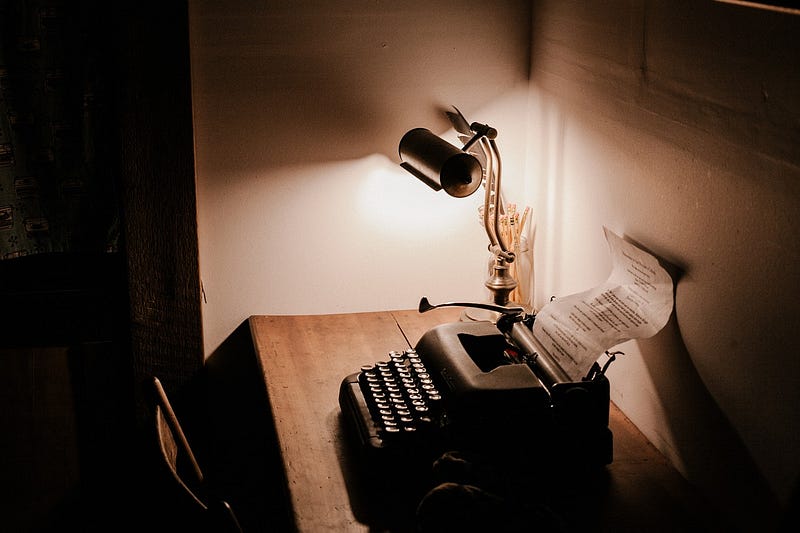
The Complete NaNoWriMo Writer’s Guide

Every year, starting at 12:01 am on November 1st and ending at 11:59pm on November 30th, the world of writers and hope-to-be-writers begins their annual trek to write a full (short-ish) novel in one month.

Before you read too far, make sure you bookmark this story for later reference. It’s a lot to read at once. It’ll be here for you when you get stuck.

It’s National Writing Month, people!

Started by a fine gentleman named Chris Baty (author of No Plot, No Problem) in 1999, 21 brave writers joined the first year. In 2017, over 400,000 people participated, not including Camp NaNoWriMo, and the Young Writers Program (for another 150,000 or so).

Bottom line, it’s a whole lotta typing in a whole few days.

To win, you’ve got to write a 50,000 word novel by yourself (no teams) in 30 days — that’s 1,667 words a day, Earnest! If you’ve ever wanted to get the book out of your brain, November is the perfect time for doing so. The good folks at NaNoWriMo provide all kinds of support, badges, swag, and tools to help you accomplish your goal.

To follow the rules, you can’t start writing until November 1st, but you can prepare for that day — and prepare you should.

If you’ve never written a novel before, starting your writing career on November 1st probably won’t end well for you. Writing an entire novel not only takes a deep level of discipline and perseverance, but it wouldn’t hurt if you wrote a story that works.

Is this really the only NaNoWriMo prep guide you’ll ever need? If you want to write the way I write, yes. You’ll also have your own style, but if you follow everything I tell you below, you’ll hit your goal with time to spare.

Side note: this story is in no way endorsed or sponsored by NaNoWriMo, so if I missed something here, it’s my fault. Don’t blame Chris.

Now, I’m not much of a plotter. I’m more of a ‘hybrid pantser.’ I basic framework or skeleton for my book, but I discover the story as I write. Throughout this story I’ll share a few other references I’ve written, which will not only help you write faster, but will help you find more TIME to write (time you never though you had.

Like this one:

Your Pre-prep Mindset Prep

Writing 1,667 words per day isn’t too hard if you stick with it. Where people fall off the wagon is when they take a day off… then two. If you miss two days, you’ve got write 5,000 words on the third day to catch up (and you thought 1,667 was bad).

1,667 words can be written in 2–4 hours per day. Some writers much faster and some much slower.

Rule Number One:

The number one rule you should never break during NaNoWriMo, is NEVER skip a day of writing.

One day becomes two. Two becomes five. Five becomes DONE. From the stats, less than ten-percent of those who start finish their novels. This is no joke! If I had to guess (and I am), I’d say more than 2/3 of those who didn’t finish thought it would be OK to skip a day… then three.

Yep, this contest comes to a close near the US Holiday of Thanksgiving — the time of stress and cheer. Just around the time you’re supposed to be at Aunt Millie’s you’ll only have eight writing days left.

I’ll repeat — the first rule of NaNoWriMo is don’t skip a single writing day (queue the Fight Club sing-song music in the background).

Rule Number Two:

Make sure you have the time to write before you get started.

If you’re serious about writing a novel in a month, take it seriously (duh, right?). Starting now, look at your available time. When will you chunk your 2–4 hours of writing time?

I’ve got a full-time job and I’m a full-time dad. There isn’t a lot of ‘spare’ writing time in my typical day. Yet, I use some tricks that get me a consistent 1,500–3,000 words per day without taking much time from my life.

I accomplish this by writing on my phone.

If thumb-typing feels gross and sacrilegious, make sure you’ve got a DEDICATED writing space set-up in advance. If you don’t have a spare room, where you can shut the door, many writers have taken all the clothes from closets, inserted a chair and a table, and created mini writing spaces.

You need a dedicated space where the writing always lives. Otherwise, you’ll waste a bunch of time getting ready to write. No one’s got time for that. Getting ready to write is what the other 92% of people who don’t finish their NaNoWriMo novels do.

We want you to be a finisher.

The Work Prep

Now that we’ve got the first two, mindset rules out of the way, it’s time for the serious legwork. I want you to have the biggest opportunity for success possible. Whether you read this a day before November 1st, or a year before, the rest of these rules are designed to make you part the small minority who actually FINISH their novel in a month.

Rule Number Three:

Sign-up for your NaNoWriMo account now.

Don’t wait until November 1st to fill out all the background and account info about your book. That’s just stupid. You need to write your literal pants off in November. Don’t waste an hour creating your account and worrying over adjectives in your author’s bio.

Side bar to rule three, decide what software you’ll use to create your book.

Rule Number Four:

Choose your writing tools wisely.

I write in Scrivenir (paid software, no affiliation). I have a version on my phone and on my Mac. The two versions are synced together, so I can write sitting at my desk, as well as in line at the grocery store. This is how I’m able to write every day.

You may want to write on paper. Don’t do that. Not for this contest.

If you want to hand-write your novels and be awesome, super-cool. No judgement here. But don’t do it during NaNoWriMo. Why? Logistics. First, hand-writing is super slow. Second, you’ve got to validate your manuscript in order to ‘win’ at the end. You submit your finished manuscript and their software does the official word count. Third, see first.

(Tip: make sure your word count is a little over 50,000, because not all software counts words the same. That would be a big downer if you were short a word or two).

Just don’t do it — really, it’s a bad idea.

If you want a free cloud option, write in Google Docs. You get all kinds of space and it saves your work automatically. You can write on your phone, or use Aunt Millie’s Commodore 64 desktop computer while you’re stuck at her house over Thanksgiving.

Think cloud and you’ll thank me later.

Rule Number Five:

Write as fast as you freaking can without self-editing as you go.

If this is your first go-around, the novel you create at the end of November will not be in any condition for publishing, but it’ll be a great foundation. And that’s OK.

Your first novel is ALWAYS a piece of crap. It’s a write of passage.

That being said, this is a game more of effort and less of expertise. If this is your first novel, the actual craft of writing will be lower on the list than the rate your fingers fly.

You need to write as fast as you can. The editing will happen later.

Writing is an emotional process. It helps to have a big support structure during this time. Writing isn’t something those around us can see until it’s all done. All you do it sit and type and look terrified.

When you build a house or a model airplane there’s progress to look at. With writing, there’s only writer’s face. Whether you’ve got an understand support team or not, you’ve got to write no matter what. NaNoWriMo is great practice for the cold, cruel world of authorship.

Pro tip:

If this isn’t your first book, you may want to try the leapfrog method I use. Prior to writing anything new the next day, you re-read and edit what you wrote the day prior.

By the time you get to the end of the month, you’ll have a finished manuscript.

Please don’t do this if it’s your first novel. You’ll edit yourself to death. You won’t hit your word count, and you’ll end up throwing your first novel in the trash anyway. Remember, it’s a rite of passage. Might as well write the beast during NaNoWriMo.

No matter what you do, you’ve got to hit your 1,667 words every day. You need to type fast — even dictate. You’ve got to use every available moment you can steal.

Here’s a story that will help with your word count:

The Actual Story Prep

Here’s where the rubber meets the proverbial keyboard, dear writer. Nope, we’re not gonna cheat. Cheating doesn’t make you a winner it makes you an a-hole. We’re gonna play by the rules. You can’t write a single word before November 1st.

But you sure as shootin’ can prepare a quasi-outline.

This next section is the longest part of this story. I’ll break down my 40 chapter process for writing, and we’ll include the main pieces you should include if you want to write a salvageable novel in a month.

Isn’t this formulaic? Hell yes! Because formulas work. The alternative is guessing what to write and writing yourself into a corner, later to delete half you manuscript.

Formulas are frameworks — constraints. Constraints create better art. Show me a piece of creative work that was done with zero constraint and I’ll show you a disaster. Zero constraint is wide-eyed, freshman year of art school (I’ll show them, kind of thing). Constraint/framework is all pro.

Rule Number Six:

Follow the Hero’s Journey if you want to write a novel that people will want to read.

The Hero’s Journey is the story of every story. There’s a reason all Disney movies (and Star Wars and every blockbuster) follow this path. The Hero’s Journey isn’t about popcorn or reading time. The journey works, because it’s the story of the human condition.

This won’t be an exhaustive explanation of the HJ, but I hope it will do what you need for NaNoWriMo. If you want to go deep, read A Hero with a Thousand Faces, by Joseph Campbell (the creator of the HJ).

It doesn’t matter if you write romance, sci-fi, thrillers, westerns, or horror, the Hero’s Journey works every time. The HJ is metaphorical just as much as it’s literal. You don’t have to write an epic adventure novel for your protagonist to follow the same 12 points.

There are 12 points along the hero’s journey.

  1. The Ordinary World — show the regular place where the story begins, before all hell breaks loose.
  2. The Call to Adventure — this is the inciting incident that drives your protagonist to action.
  3. Refusal of the call — this is the point where you protagonist has self-doubt, or second thoughts. The mission/adventure is too scary or daunting. Here, your protagonist says “hell no, I won’t go.”
  4. Meeting the mentor — if you write mysteries this is your Watson. There’s always a sidekick to help your protagonist along the way. Here’s where we meet her.
  5. Crossing the threshold — this is the point of no return. The mentor helps the protagonist get out of her own way and begin the adventure.
  6. Tests, enemies, allies — this is not one chapter, but a series of events. As your protagonist progresses through the adventure, she’ll go through a series of tests, build a team around her, and figure out who the bad guys are. The protagonist’s values are tested with tough decisions.
  7. Approach the inmost cave — this is where the protagonist faces future, terrible danger, or serious inner-conflict. The story starts to boil here. The anticipation rises. This is time for reflection and self-doubt. All those things we go through before we start a major competition (like NaNoWriMo).
  8. The Ordeal — this is the major battle, the showdown where the antagonist tries to defeat the protagonist. This the the peak moment of the story, where everything the protagonist loves and appreciates is challenged, maybe taken away. Part of the HJ is death of the original character. After the HJ the hero is never the same. During the ordeal, if the protagonist doesn’t make it through, she’ll die (physically or mentally), never to be as she was originally.
  9. The Reward — the protagonist makes it through the ordeal and gets a reward for her efforts. The reward (McGuffin)can be a physical thing, a secret, an idea — something special worth fighting-for.
  10. The Road Back — the protagonist has the reward and she heads back towards the ordinary world. The hero is vindicated. She’s no longer doubting herself. She’s got a strong team behind her and they’re marching arm-in-arm towards the proverbial home village.
  11. The Resurrection — this is the final, near-death battle. This is the place where the villain strikes back, seemingly out of nowhere, and does her best to kill the hero, once-and-for-all. Something about the hero dies during this battle. She will return to the Ordinary World changed forever. Whether you physically loses a leg, or the love of her life dies, this is the place where your novel is the most-intense.
  12. Return with the Elixir (the McGuffin) — the protagonist returns to the village carrying the reward, but also changed forever. She sums-up what she’s learned, makes amends, shuts-down the haters, and high-fives the team that brought her back safely. Don’t forget, she must return to the beginning permanently changed in some way. If there’s no change in the original version of the protagonist you botched the story.

Rule Number Seven:

Divide your story into a three act structure.

Every story has a beginning (act 1), a middle (act 2), and an end (act 3). Yes, there are people who argue this. Some folks like to divide act two into two parts, but they’re all arguing for the same thing in the end. Beginning, middle, end. Make it as complicated as you wish. I’ll wait…

We’ll take the 12 points from the Hero’s Journey in Rule Six, and divide them appropriately here:

Act One: HJ 1–5

Act Two: HJ 6–10

Act Three: HJ 11–12

Think of your story as a circle. Act one is the ordinary world. In act two we leave the ordinary world and go to the unknown world. In act three we head back to the ordinary world, where we started — yet we return changed, permanently.

Rule Number Eight:

What’s the story about?

At the top of your framework write a two-sentence treatment of your entire novel. We call this the logline or the premise. The premise should include three things: the protagonist, the setting, and the big crisis.

Simple premise builder:

When (the call to adventure) launches (protagonist) on a (insert quest here) to avoid (consequence from refusal of the call), she must overcome (her big crisis) before she can (defeat antagonist, save loved one, or retrieve the MacGuffin).

Rule Number Nine:

Build your writing framework.

I’d hate to call this an outline, because it’s not. It’s also not pantsing, because you know the general direction of the story before you start writing. This prevents you from wasting valuable writing time worrying about what to say next.

I divide my novels into 40 chapters.

Act one is the first 10 scenes, act two is the middle twenty, and act three is the last ten. How do you fill 40 chapters? You’ve got to meet the characters, form alliances, build the story, introduce a couple distractions and side plots — you’ll get there.

Write 1.5 scenes per day over the course of NaNoWriMo and you’ll finish with days to spare.

I create a document with lines, numbered 1–40. I fill out the major points of the Hero’s Journey and back-fill the rest with the juicy bits. You can spend a lifetime learning more about writing, but I don’t want to get too deep in the weeds here.

Make sure the middle (act two) doesn’t lag.

The middle of your novel is not just the filler between the two good parts of the story. The middle is where the meat happens. Try to ratchet-up the tension as your story progresses.

I like to make little tic marks to indicate how tense a certain scene should be. The early scenes should be less-tense than the latter scenes, with the greatest intensity climaxing at the Resurrection scene.

Rule Number Ten:

Know how your story ends before you begin.

Huh?

Yep. I learned this from the world-famous author John Irving. If he does it you should too. When you know where you’re going, you’ll get there every time.

Here’s a piece I wrote about writing the end first.

Now you can’t write the end before NaNoWriMo starts. That’s cheating, but you can write a one-sentence line on your framework. When you start writing November 1st I want you to write the end first.

Potpourri

The most important part of NaNoWriMo is to write every day and have fun doing it. So what if your story doesn’t turn out as good as you hoped. Maybe you’ll surprise yourself.

If you want to go a little deeper, here is a small collection of additional resources to help improve your work.

Again, worry about your word count first. This fancy stuff can come later. If this is your first novel, work on nailing your Hero’s Journey, the premise, and the end. Once you get all that, come down here:

The random bits:

It’s Time!

I wish you the best along your writing journey. I’ll be right there with you. Remember, there are 400,000 other people all doing the same thing, all around the world!

How cool is that?

Start your NaNoWriMo experience with the self-talk that you’ll finish the book. Not maybe, but definitely. Hit your word count every day. The word count is what matters.

Your muse will come in strange places and help lift your story.

But you’ve got to put in the work, rain or shine. OK, it’s time to stop prepping. Let’s do this! Welcome to another year of NaNoWriMo.

Writing
NaNoWriMo
Books
Creativity
Writing Tips
Recommended from ReadMedium