avatarDan Carlson

Free AI web copilot to create summaries, insights and extended knowledge, download it at here

2113

Abstract

factory buildings and leaving the bunkers to crumble in the forest.</p><figure id="6c17"><img src="https://cdn-images-1.readmedium.com/v2/resize:fit:800/1*[email protected]"><figcaption>Photo by author</figcaption></figure><p id="284e">I have walked through this eery place many times on my way to and from work. At first, I found it depressing. The crumbling grey concrete added to the overall gloom of the dark, foggy winter days. As I spent more time in the area, however, I observed how nature has gradually taken over. Reinforced concrete bunkers, built to contain accidental explosions, are clearly no match for nature’s persistent and unstoppable growth. The smallest crack is enough for a root to exploit.</p><figure id="6c8d"><img src="https://cdn-images-1.readmedium.com/v2/resize:fit:800/1*[email protected]"><figcaption>Photo by author</figcaption></figure><p id="f5a1">In December 2023, an early season snowstorm transformed the typically bleak landscape. A thin layer of snow reflected the weak winter sun, casting a different, almost ethereal atmosphere over the eerie forest. Seizing the uncharacteristically sunny day that followed the cold weather, I set out to photograph the snow-covered Nazi bunkers.</p><figure id="d00c"><img src="https://cdn-images-1.readmedium.com/v2/resize:fit:800/1*[email protected]"><figcaption>Photo by author</figcaption></figure><p id="dab1">The semi-subterranean bunkers pose safety risks. Many are easily visible, but some are completely hidden by trees and shrubs. Some bunkers are quite deep and the fall to the concrete floor is enough to break a leg. Not many people visit the area and mobile phone service is spotty. As a result, chain-link fences enclose the area, allowing only authorized personnel inside. An unexpected side effect of this isolation is the proliferation of wildlife. The animals that have colonized the forest remain largely undisturbed.</p><p id="d313">During my walk, I encountered deer and birds, though most spotted me long before I noticed them. I managed to capture only one decent picture of

Options

a European Robin, who graciously posed in a sunbeam as I fumbled with my camera. Wildlife photography, it seems, is a skill I need to work on in 2024.</p><figure id="0120"><img src="https://cdn-images-1.readmedium.com/v2/resize:fit:800/1*gk8Lyq-OQlvH0F4OffY0Kw.jpeg"><figcaption>Photo by author</figcaption></figure><p id="1b50">Like a pendulum, my impressions of the scenery swung from utter dismay to hope. Contemplating the forced laborers and their hardships brought a sense of sorrow, but simultaneously, I found hope in the forest’s resurgence. Most of the people responsible for the heinous acts of the Nazi party are dead and gone, but the forest endures.</p><figure id="34c8"><img src="https://cdn-images-1.readmedium.com/v2/resize:fit:800/1*[email protected]"><figcaption>Photo by author</figcaption></figure><p id="bf6d">The forest’s resilience provides a much-needed reminder of the fleeting nature of human lives. Saplings taking root on the roof of a Nazi bunker demonstrate nature’s ability to heal humanity’s ugly wounds. Reflecting on the differences in timescales, I considered how our self-centered enterprises and lives are short compared to the lifespan of an oak tree.</p><figure id="722b"><img src="https://cdn-images-1.readmedium.com/v2/resize:fit:800/1*[email protected]"><figcaption>Photo by author</figcaption></figure><p id="f1c9">Who would have thought that taking the time to photograph relics of the Nazi era could reshape my perception of this place? What was once a bleak reminder of Germany’s dark history now represents the transformative power of nature. Bunkers that once housed deadly ammunition now store hope, if only for a moment.</p><figure id="29a5"><img src="https://cdn-images-1.readmedium.com/v2/resize:fit:800/1*[email protected]"><figcaption>Photo by author</figcaption></figure><p id="6b86">That’s how a bit of <a href="https://readmedium.com/bright-lights-or-snowy-white-a-december-challenge-on-in-living-color-0e3ffae8b063">snowy white</a> can change the mood, even in a place with such a dark history.</p></article></body>

Finding Hope in Crumbling Nazi-Era Bunkers

Photographing nature’s transformation of man’s dark history
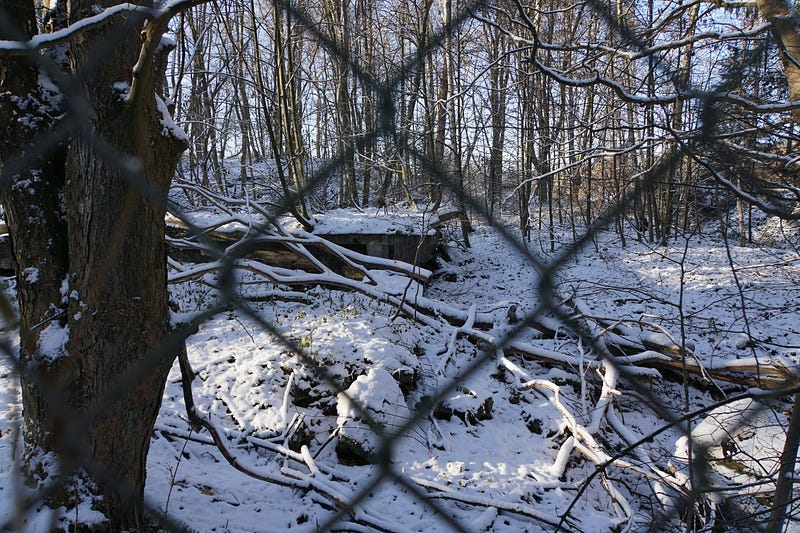
Photo by author

I hadn’t heard of Geesthacht before landing a job in the area, and it seems many Germans haven’t either. It’s a quiet town, lacking the draw of tourist attractions found in nearby Hamburg. Yet, hidden in the forest just outside this town lies an unexpected curiosity — a collection of Nazi-era bunkers.

Personally, I approach the weighty subject of recent German history with caution. As I mentioned in a previous post about the former border between East and West, I take recent German history in small doses to avoid triggering a sense of depression. That’s exactly why I was surprised to find myself in a hopeful mood after an afternoon of photographing crumbling Nazi bunkers.
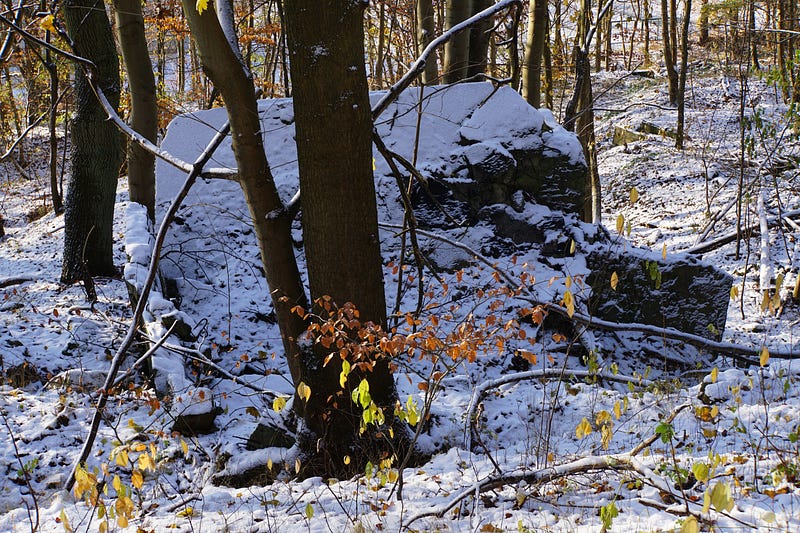
Photo by author

I noticed the bunkers on my first day at work and they were one of the first subjects of conversation with my colleagues. My new officemates shared the explosive history of the forest, which began with Alfred Nobel establishing his first dynamite factory near Geesthacht in the early 20th century. The factory, one of Europe’s largest explosives facilities, reached its peak during WWII, staffed by thousands of forced laborers. As the war neared its end, the British liberated the camps, destroying the main factory buildings and leaving the bunkers to crumble in the forest.
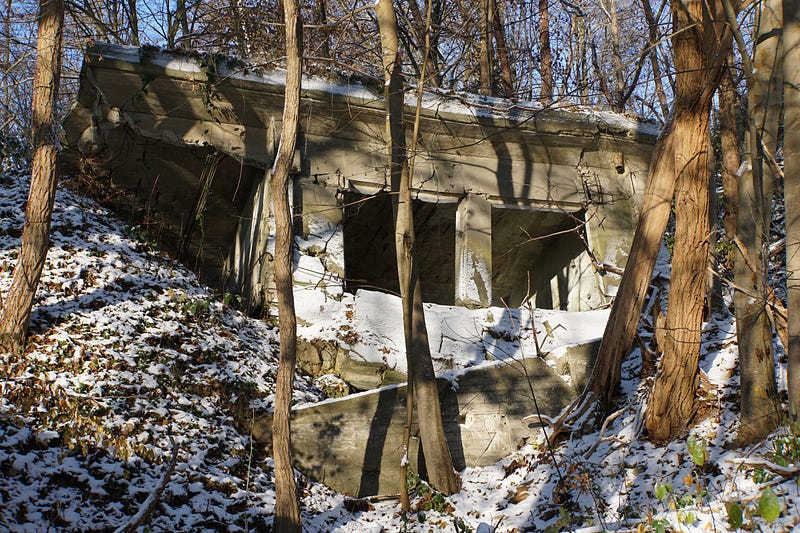
Photo by author

I have walked through this eery place many times on my way to and from work. At first, I found it depressing. The crumbling grey concrete added to the overall gloom of the dark, foggy winter days. As I spent more time in the area, however, I observed how nature has gradually taken over. Reinforced concrete bunkers, built to contain accidental explosions, are clearly no match for nature’s persistent and unstoppable growth. The smallest crack is enough for a root to exploit.
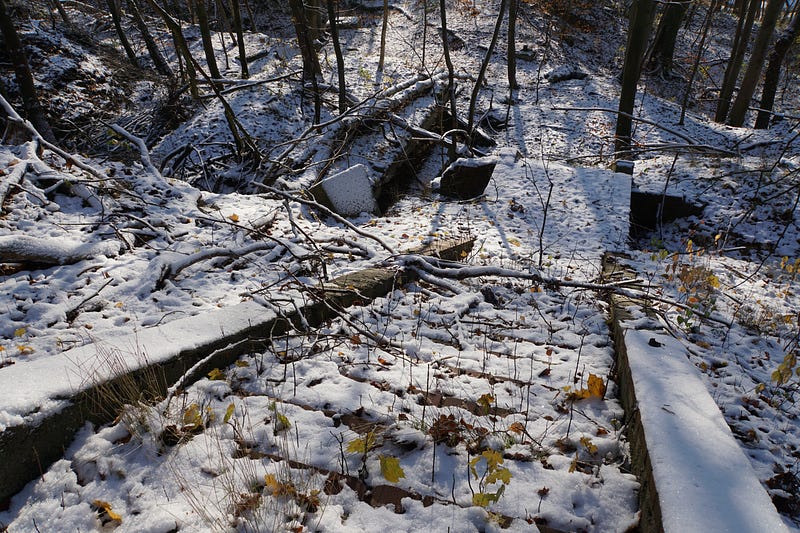
Photo by author

In December 2023, an early season snowstorm transformed the typically bleak landscape. A thin layer of snow reflected the weak winter sun, casting a different, almost ethereal atmosphere over the eerie forest. Seizing the uncharacteristically sunny day that followed the cold weather, I set out to photograph the snow-covered Nazi bunkers.
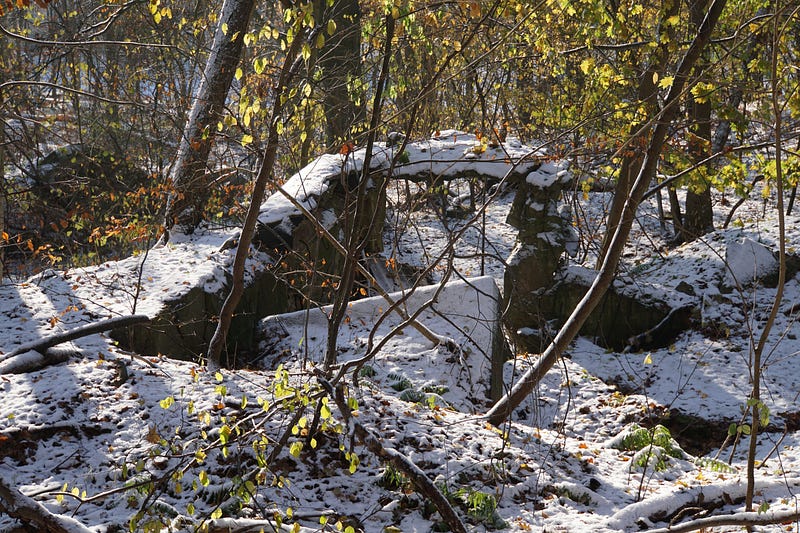
Photo by author

The semi-subterranean bunkers pose safety risks. Many are easily visible, but some are completely hidden by trees and shrubs. Some bunkers are quite deep and the fall to the concrete floor is enough to break a leg. Not many people visit the area and mobile phone service is spotty. As a result, chain-link fences enclose the area, allowing only authorized personnel inside. An unexpected side effect of this isolation is the proliferation of wildlife. The animals that have colonized the forest remain largely undisturbed.

During my walk, I encountered deer and birds, though most spotted me long before I noticed them. I managed to capture only one decent picture of a European Robin, who graciously posed in a sunbeam as I fumbled with my camera. Wildlife photography, it seems, is a skill I need to work on in 2024.
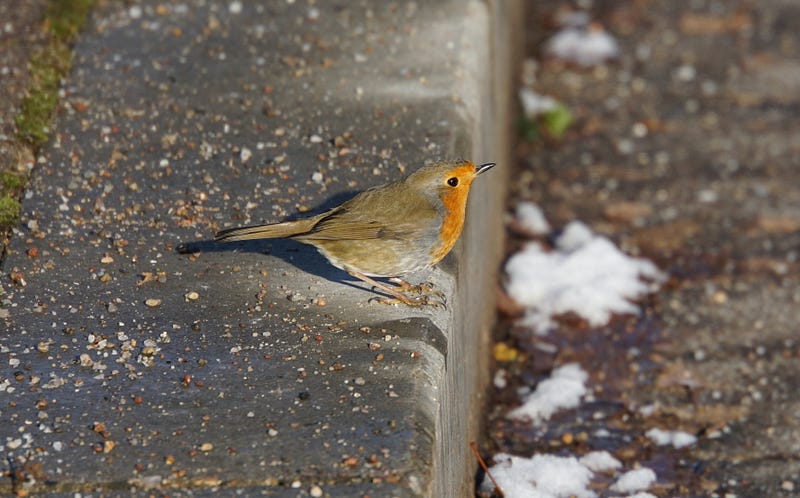
Photo by author

Like a pendulum, my impressions of the scenery swung from utter dismay to hope. Contemplating the forced laborers and their hardships brought a sense of sorrow, but simultaneously, I found hope in the forest’s resurgence. Most of the people responsible for the heinous acts of the Nazi party are dead and gone, but the forest endures.
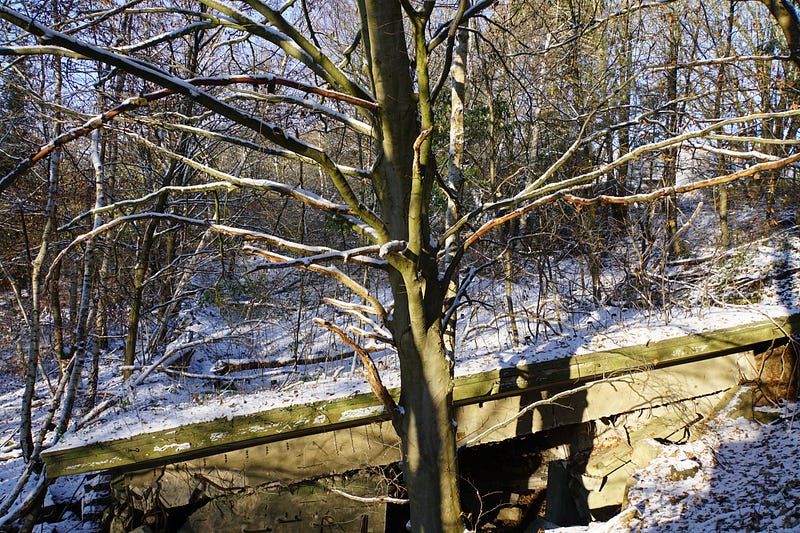
Photo by author

The forest’s resilience provides a much-needed reminder of the fleeting nature of human lives. Saplings taking root on the roof of a Nazi bunker demonstrate nature’s ability to heal humanity’s ugly wounds. Reflecting on the differences in timescales, I considered how our self-centered enterprises and lives are short compared to the lifespan of an oak tree.
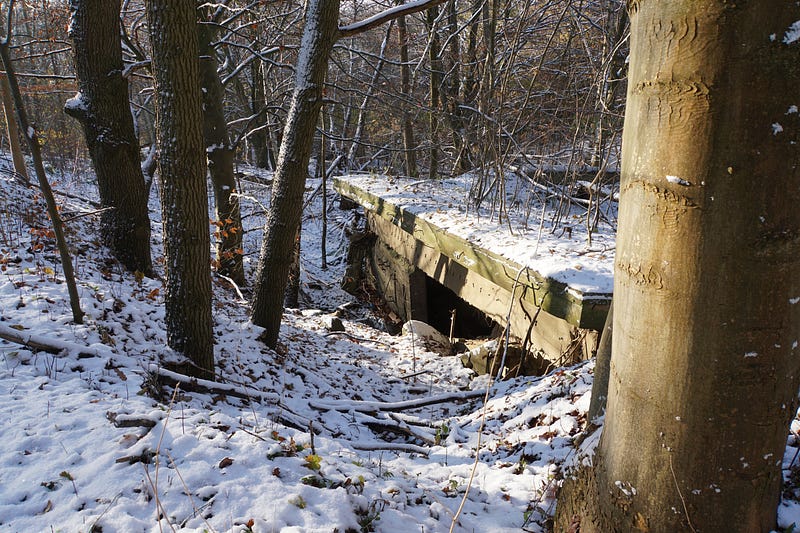
Photo by author

Who would have thought that taking the time to photograph relics of the Nazi era could reshape my perception of this place? What was once a bleak reminder of Germany’s dark history now represents the transformative power of nature. Bunkers that once housed deadly ammunition now store hope, if only for a moment.
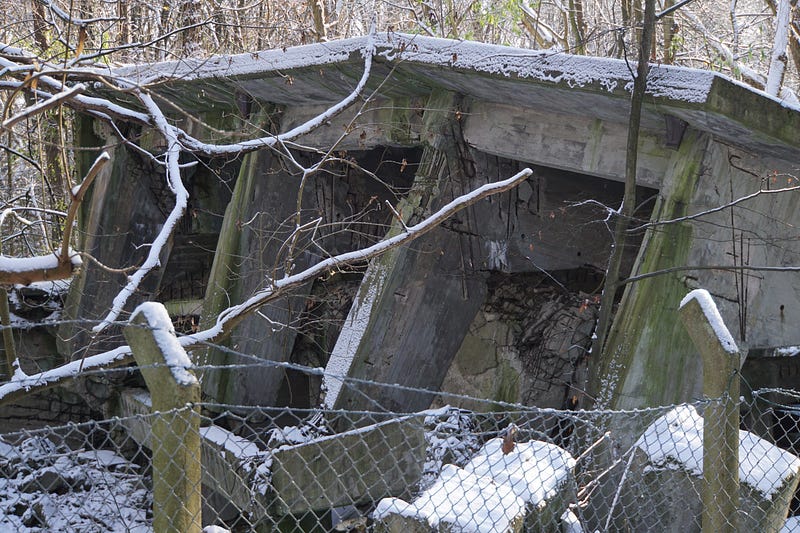
Photo by author

That’s how a bit of snowy white can change the mood, even in a place with such a dark history.

Monthly Challenge
History
Photography
Germany
Snow
Recommended from ReadMedium