
Finally, The Google Layoff Has Happened
I am thinking about the LeetCode Algo-junkies
As I am writing this, the news of Google layoffs has begun circling the leading news websites.
Following up on its November 2022 forecast of laying off some 10000 people, Google has decided to fire 12000 employees — the details of it will be revealed during the forthcoming week. This is 6% of its workforce. While the details are yet to emerge, the ones about to be let go will be from the software development workforce.
The announcement was made by a memo sent by Sunder Pichai today morning.
Here is the summary of the memo.
- The layoff has happened keeping Google's AI drive in mind.
- The time past the pandemic hasn't been good for the company

For the terminated employees, the package would hold:

- Full notice period (minimum 60 days).
- Severance package will be 16 weeks + 2 weeks/additional year worked
- Acceleration of at least 16 weeks of GSU vesting. (stock option selling)
- 2022 bonuses and remaining vacation time.
- 6 months of healthcare, job placement services, and immigration support for those affected.
- Outside the US, employees will be supported in line with local practices.
This isn’t everything — more may be coming:
Sadly, that’s the truth.
In November, Google said it will fire employees based on poor performance. This was in line with its Post-COVID not-so-profitable stock performance.
In December, however, the release of Chat GPT turned the tables. The signal remained 🛑 for employees anyway. However, this time, it was also Code-red for management. The AI-driven chatbot challenged Google’s core business: Search.
In a way, this is good. The fired programmers won’t be blamed for their poor performance. They are simply non-aligned with Google’s AI goals. But that doesn’t mean performance-based layoffs aren’t coming any time soon. Most of the FAAMG + Big tech (Facebook, Amazon, Microsoft) has fired its staff in 5-figures. 12000 is a chump change. There is no reason Google won’t be pressured by its investors to fire more people.
I was expecting this to happen. In fact, I had predicted this as early as June ’22, when I said that Google’s ad-driven revenue model is past its prime, and it must reinvent its cash cow.
However, I was of thought it will wait until February when Q4 ’22 revenue results will be due. Is this a precedent for that? I have no idea.
But today, soon after the news got out, Google’s stock was up 3%.
From the sources that are available to me, this is probably the 1st time company has had a mass layoff drive.
But it surely won’t be the last.
What happens next:
Everything about big tech is shiny. In the last decade, the shiny had gone mainstream.
Big tech made the tech world a luxurious place. Work from home, parental leaves, generous healthcare, onsite gyms, gourmet cafes, massage/spa, frequent parties, conference air travels, shopping/taxi/theatre coupons — their programmers had everything.
Senior programmers? 5x that. Managers? 10x that. Maybe more.
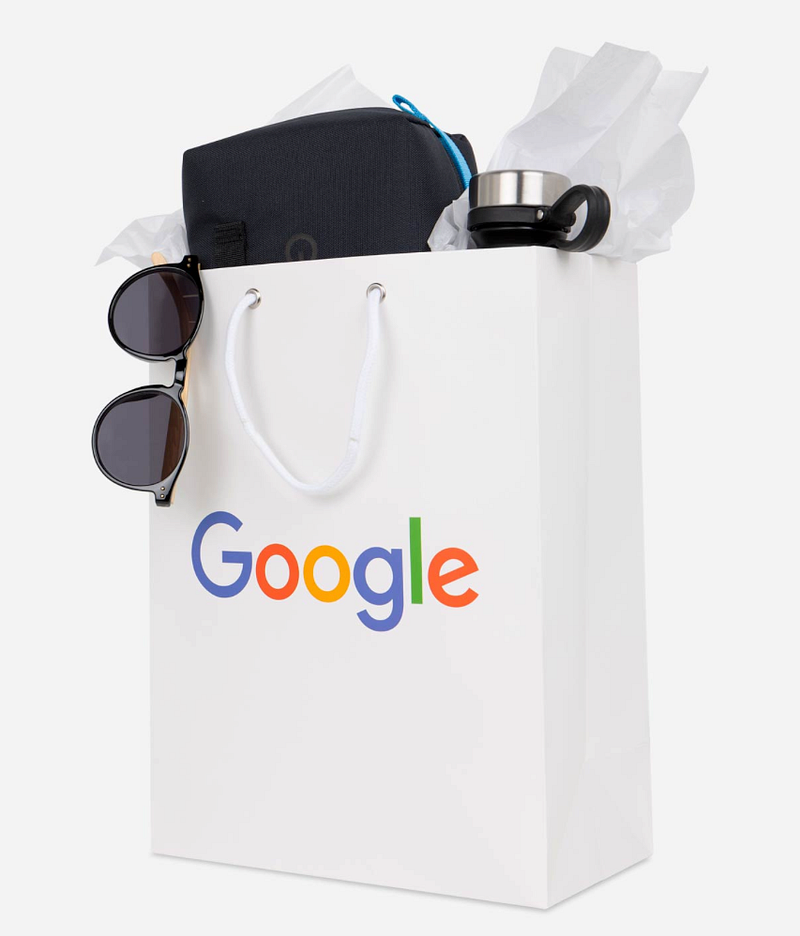
Google was the founder of this exact thing called the new-age tech work culture. It was every Google recruiter’s goal to make sure incoming Googlers got a lifetime of bragging rights. Notice the goodie bag at the top? Youtube has hundreds of videos displaying Nooglers showing off their first Google possessions.
For some of the fired Googlers, the next few weeks will be filled with their Noogler memories.
LinkedIn will be flooded with pleas for an opportunity.
On Twitter, ex-Googlers will begin pitching their upcoming startup idea.
We are in the middle of an unprecedented tech recession.
We have seen the 2000 dot-com bust. But that was nothing compared to today. There weren’t enough biggies in the market, to begin with.
We have seen the 2008 market crash. Due to their strong affinity to the finance world (banks, stock markets), tech people were part of it, but not the core.
This time, it’s different. According to Fortune, only January 2023 tech layoffs are already 1/3rd of 2022. Microsoft, the firm sitting on at least a hundred extra billion in revenue (thanks to Chat GPT) has already fired some 10000 people this year.
The macro reason for this is evident to everybody.
Before the beginning of the layoffs, the firing firms got too big. The 2nd rung software companies (Airbnb, Uber, et al) had gone through the same phase, but it wasn’t that serious, because of their scale.
When companies grow out of shape, they act like obese human bodies.
- Parts that are completely redundant (useless from the beginning) are oversized. (Stomach and managers — respectively)
- Parts that have some use turn non-functional. (Legs and programmers respectively)
It would have been different if they weren’t that big in the first place. The moving parts would be moving more, to keep the rest of the body in shape.
Instead, they kept waiting for orders from the non-moving parts. In other cases, they misunderstood themselves as non-movers and generated a lot of fluff waiting for their minions to execute. The work kept getting passed down the rank until it couldn’t. Nothing got done.
What did I just say, in the last paragraph?
Google‘s problem isn’t just the size. It‘s (in)competency, too:
Last August, when Google employees were labeled as unproductive, I defended them with a complex productivity equation.
When I defended Elon Musk’s Twitter firing salvo, I got mocked for the Twitter circus that unfolded soon after. I questioned the entire big tech’s headcount.
Tell me about a revolutionary product rolled out by Google in the last 10 years. Revolutionary = Disruptive.
I get that utility counts. Google is irreplaceable when it comes to search. It has maps, too. And then, it has YouTube. But how many programmers are justified to keep up an already running software? A million servers don’t require programmers in O(n) proportion — that was the idea from the beginning.
Every tech company’s profitability vs headcount boils down to one thing: How much of Google’s average programmer’s expertise adds to its primary revenue source — advertising?
- Firstly, advertising revenue figures are dwindling worldwide since Facebook’s Cambridge Analytica scandal. Facebook has been bleeding since Apple’s privacy crackdown. It’s not doing great but has at least moved on.
- Google is milking YouTube like hell. But it isn’t revolutionary from tech-viewpoint, by any measure. It has competitors: There is TikTok, which makes better recommendations. Streaming companies steal viewing time from YouTube. So does gaming.
- That reminds me of Google’s quite futuristic acquisition, DeepMind. Google acquired it in 2014. DeepMind is an AI firm — perhaps Google’s trump card against Chat GPT. So far, it was most famous for its game-playing neural networks. This is the same company whose product AlphaGo beat the Go world champion Lee Sedol. To me, this looks like Google’s Gen-Z bucket, just like Facebook turning into Meta. This could engage a certain niche in Google’s future products. Disruptive? Sure. Promising? Sure. Revenue-generating? Maybe. But how many Googlers does it account for?
- DeepMind’s Alphafold has predicted some 200 million protein structures from the known protein designs. DeepMind Health has more scope in the public services space, not the consumer space. Impressive, but not disruptive.
With its biggest bets on DeepMind, Google can beat rivals any day. That’s my most optimistic assumption.
That still renders Google’s average programmer useless — the gluttonous fat on the stomach of the obese man — who probably doesn’t have his/her task cut out:
The LeetCode algo-junkie.
The soon-to-be obsolete creature:
I have found LeetCode Algo-junkies quite funny.
Most of them are like me. They join LeetCode or its equivalent. They practice problems. Soon tired of making their own programs, they loiter in forums. They copy codes and submit them to challenges, only to up their reps.
Every time I did that, I felt my dopamine rose. It didn’t.
Out of 10 problems, 8 are solved like this. I know, because I did that, too. And I know many in my league. I like their enthusiasm because they beat me at that.
Veblen goods: Something you don’t use and can’t afford, but buy to flaunt to your peers.
I quickly realized the vanity of the whole exercise. The stuff they (and I) did wasn’t a testimony to our algorithmic prowess. It became reproducible mindless toiling. Even for the sake of interviews, it was a colossal loss of efficiency.
The creator of homebrew (rejected by Google in the algorithm interview) summed it up quite well:
Brian Acton of WhatsApp was rejected by Facebook and ended up selling his product to Facebook for $19 Billion.
In both scenarios, there were hordes of coders who defended Google and Facebook, with a boilerplate corporate-speak. They sounded like those I heard from when I wrote against the FAAMG interview process. When I recently advised Google to roll out a standardized SAT, someone called me desperate.
In general, their tone goes something like this:
These big companies have structured hiring. Everything you say has to map to something their books have (and by the way, there is this Book X that shows what that is).
If you don’t have a point, you are out. You aren’t up for the game.
Stop whining about your rejection and work where you deserve.
I do not hate algo-junkies. They are enthusiastic about their career prospects. They are trying organic means to achieve them. And they make it happen, too. Even if you aren’t creating a groundbreaking product, no one can blame you for earning a good dime, and keeping your family happier+healthier.
However, I hate those so-called rational devotees. I can’t call them sycophants, because mostly, they don’t stand to gain anything. Big tech doesn’t pay them for their devotion.
Devotees support biggies just because they are biggies, irrespective of how many times they are wrong.
Biggies should be praised for making awesome products, up until the time they remain awesome. Just because they put up X challenges that are unsolvable by humans within a day does not make them great.
The devotees of tech biggies are the main marketers of the intensely stress-ridden interview culture (5–6 rounds, 3–4 months, unbearable anxiety), which is nothing but akin to Veblen goods: Something you don’t use and can’t afford, but buy to flaunt to your peers.
Irrespective of how advanced software becomes, those devotees will remain in the dark, and keep fueling the luxury IT jobs interview machine.
Conclusion:
There is one thing I respect Google for.
They have popularized knowledge and learning in the new generation through tech, better than any other company. Be it via Google Labs (currently Google Creative Labs), Google summer of code, Google Opensource (the biggest contender), or YouTube (yes, the most popular free academy in the world).
Its current challenge stems from a combination of investor greed (it exists everywhere), a lot of leeway in hiring, and a lack of innovation in culture building.
It will earn some credit if it bucks the algo-challenge hiring trend. If it didn’t start it, at least it’s the one who popularized it the most.
In the next 5 years, the brothers and sisters of Chat GPT are going to obliterate hundreds of thousands of Leetcode algo-junkies. I am happy for them.
They will begin some much-needed soul-searching to complement their coding skills with usability, human-centered software, and design thinking.
Some of them could create products that distribute profits from IT biggies, without becoming one of them. Maybe distribute some ad revenue to social commenters who work for free? Maybe optimize machines, not just for running costs, but for the planet? The list is endless. I am simply brainstorming.
Those are the likes of things great minds envisioned as innovation when they launched and fueled the open source. Corporates stole the tools and kept the big signboards flashing the causes on their doors.
The “Don’t be evil” is past its expiry date. Revival of “Do good” is the priority.
Want to write for Medium, and read every story on it?
Become a member using this link. A part of your membership fee will support Pen Magnet’s writings.
Want to get an email every time Pen Magnet publishes? Click here to join his subscriber list.
Pen Magnet is the author of the popular senior developer interview eBook:
Comprehensive Approach to Senior Developer Interview (40+ example questions)
Level Up Coding
Thanks for being a part of our community! Before you go:
- 👏 Clap for the story and follow the author 👉
- 📰 View more content in the Level Up Coding publication
- 🔔 Follow us: Twitter | LinkedIn | Newsletter
🚀👉 Join the Level Up talent collective and find an amazing job


