
Fear: Forever Our Formidable Foe
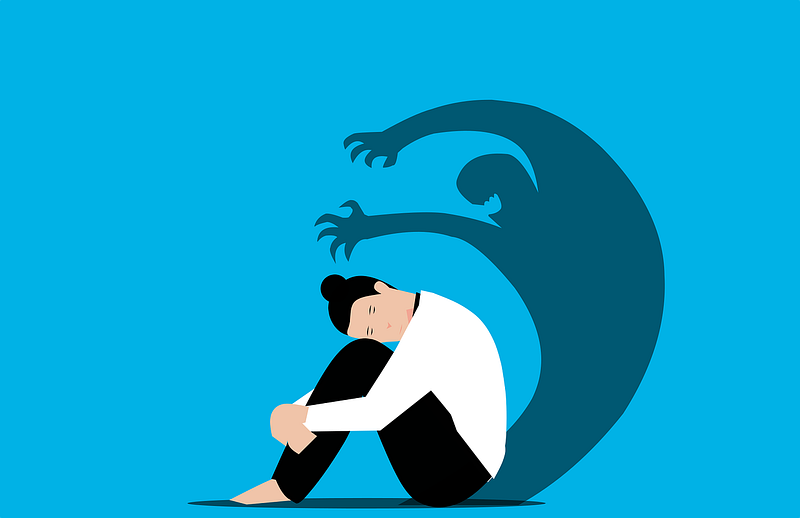
Chances are, if you’re reading this, you know the feeling of fear all too well.
It’s an emotion that drives researchers and laypeople alike into the abyss after feverishly trying to dismantle its DNA to solve the riddle of fear.
In its simplest form, fear is an emotion or sensation we get when we believe we are in danger. Some fears are healthy such as the terrifying feeling brought on from seeing a grizzly bear eating out of your garbage can. This is a rational fear. Other fears, not so much.
Anxiety is a word that healthcare professionals frequently use to describe a state of constant fear. However, fear and anxiety are used interchangeably because the underlying feeling is the same. In other words, the way you feel when you’re scared and anxious is highly similar.
Take a look at this comparison chart for a quick overview of fear and anxiety.
According to Psychology Today, fear is at the centre of most, if not all, anxiety problems. For anxiety to occur, there has to be a stimulation of the nervous system. No stimulus = no fear. But that’s hardly possible to do. Moreover, Dr. Shpancer explains there’s a need to embrace fear first before we can overcome it.
Fear is one of our innate protective mechanisms. I describe fear as one of seven necessary evils of life (stay tuned for my series on this). It has always been part of our existence, and we face anxiety regularly whether we want to or not.
Fear has this innate capability to distinguish us as well as extinguish us. We marvel at its sheer force when we conquer our goals, such as moving away from home, landing our dream job, or having a baby. However, it can be crippling when we move away from something that no longer serves us — leaving an abusive long-term relationship, moving away from a war-torn country or quitting your 9–5 job to follow your dreams.
Fears bombard us everywhere we go, at all times of the day, AND in various forms. For instance, there are countless memes on FOMO, the fear of missing out. And yet, some of us are scared of being drawn in, so we adamantly avoid people, places, or things.
Then, there’s the fear of being considered meaningless or the dread of not being considered at all. For those of us with a spiritual disposition, fear of the unknown and the omniscient or omnipotent may dominate our lives just like many phobias do. (e.g. arachnophobia (fear of spiders), acrophobia (fear of heights), and agoraphobia (fear of being trapped without being able to escape). Additionally, fear of failure is also quite widespread, as well as being frightened of public speaking.
And let’s not forget our most tumultuous concerns, the fear of living and the fear of dying.
Fear strikes at the heart of us all in one way or another. Yet, we hardly, if ever, celebrate it unless we’re successful in our endeavours.
Right now, many of us champion the ability to rid ourselves of fear. Consequently, we seek to hunt it down like prey and abolish its presence in our life as though we were David and it, Goliath.
But, if we chose not to cast these anxieties out of our lives, what then?
Imagine being run over by a stampede of people who deem you weak and unfit to be a part of society because of your fears. Unfortunately, that’s often the case with many personal development gurus who push the idea that you can’t be someone of value unless you rid yourself of your worries.
In my opinion, it’s one of those societal illusions inflated for the sake of maintaining control and keeping the peace. Treating fear like a plague keeps you attached to seeking an answer for how to conquer it, beat it, or cure it like a disease. As a result, we spend so much time trying to stomp it out of our lives that we forget that being afraid is necessary to live.
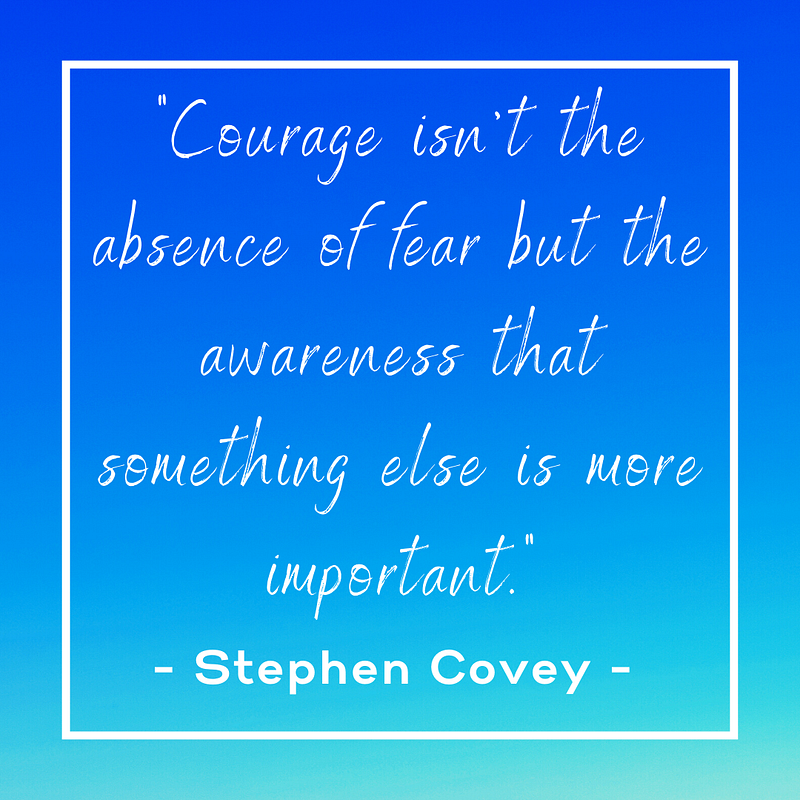
Furthermore, the concept of being fearless is a romantic notion that has no bearing in the real world.
There are several definitions for fearless: without fear, not afraid or scared, free of fear, or brave.
However, the spirit behind these descriptors may lead to a false belief that we can live without it.
I don’t believe there are moments when we genuinely don’t feel scared. On the contrary, being absent of fear is like being void of the truth that you are mortal, fallible, and all the better, ALIVE.
It is a feeling that can drive you forward, pushing you to achieve great heights and yet, simultaneously, remind you that you’ve gone too far. But, sadly, it entices too many of us to use it as a weapon against ourselves and others. Hence, another reason making fear both alluring and dreadful.
So, if you feel, as per society, that you have some unjustifiable worries, please don’t feel bad about your fearful self. There’s no shame in having fears. Whether it’s subtle or obvious, we ALL experience anxiety. No one is immune to this formidable foe called fear. Some of us are just better at hiding it than others.
Yet, would you want it any other way? For me, the answer is a resounding no.
Watch out for Part 2 on November 16th, Tame Your Fear and Live Your Best Life: How to Overcome Fear in 4-Steps.
Check out this article by Sujona Chatterjee. It’s a great read on facing the challenge of change with patience.
Before you go, if you appreciated this piece, please support me by clapping for this article and joining my mailing list to stay updated on my work.
If you do not have a Medium account, you can follow this link to subscribe for one. Your subscription through this link will help support us and gain you unlimited access to all the articles on Medium.
You can also find out more about me here or follow me on Medium, Twitter, Pinterest, LinkedIn, and BuyMeKofi.


