
Favorite Bird Photos of the Year — Part VI
This story finally concludes a six-part series that highlights the wonders of birds
“I would like to paint the way a bird sings.” — Claude Monet
In recent years, birds have become my primary photographic subject. Initially, I thought it was because birds were more common than attractive landscapes in my part of the world. In truth, Minnesota features multitudes of fascinating subjects. But these qualities of birds make them worthwhile subjects:
- They are alive, dynamic, and on the move
- They are seen in various habitats
- They are beautiful and vary in color, shapes, and sizes
- Behaviors differ significantly among species
- Some birds are common, while others are scarce
- Some species come and go in various seasons
- They challenge the photographer when small or on the move
This article is the last in a six-part series on birds photographed in 2021. The first five covered birds photographed from January through August. This piece features birds photographed in the year’s last four months.
If you’re reading this story on a desktop or laptop computer, click on each photograph to view a larger image.
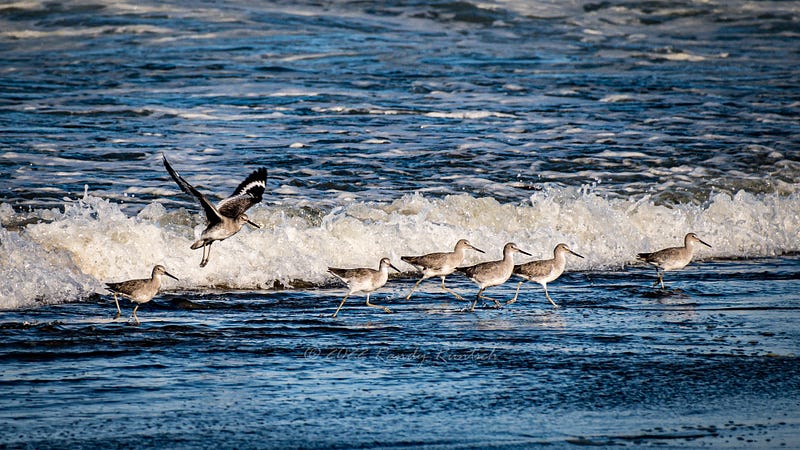
Willet
Nature watchers and birders flock, along with surfers, to California’s Moss Landing. Birds frequent its beach and the adjacent Elkhorn Slough along the shore of Monterey Bay. To date, birders have recorded sightings of 298 species in eBird at Moonglow Dairy in the slough. Also, they have recorded 252 species seen on the beach.
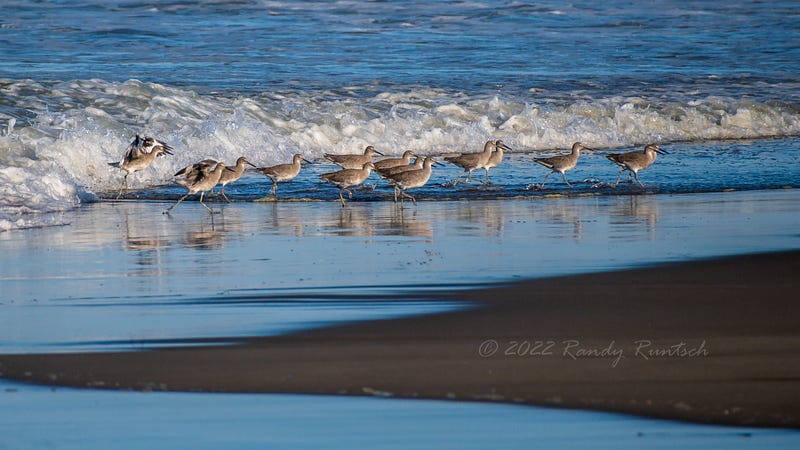
The birds pleased me on a visit to Moss Landing in October 2021. Willets, gulls, Long-billed Curlews, and Sanderlings wandered the beach, searching for food. Meanwhile, Brown Pelicans soared over the waves. Various sandpipers walked on verdant vegetation in the nearby slough, while egrets waded as they watched for fish.
The Willet (Tringa semipalmata) forages on beaches along with other sandpipers. They probe with their bills as they search feed on aquatic insects, crustaceans, and fish.
Willets live along the Pacific, Atlantic, and Gulf Coasts in North America. They breed in various areas in western Canada and the United States.
Lincoln’s Sparrow
Lincoln’s Sparrows (Melospiza lincolnii) occupy most of North America. They winter in the south and breed in the north. Although I live within their migration range, I enjoyed watching them for more than a month in Essex Park. The species has earned its place as one of the “Birds of the Brushpile” in the park near home.
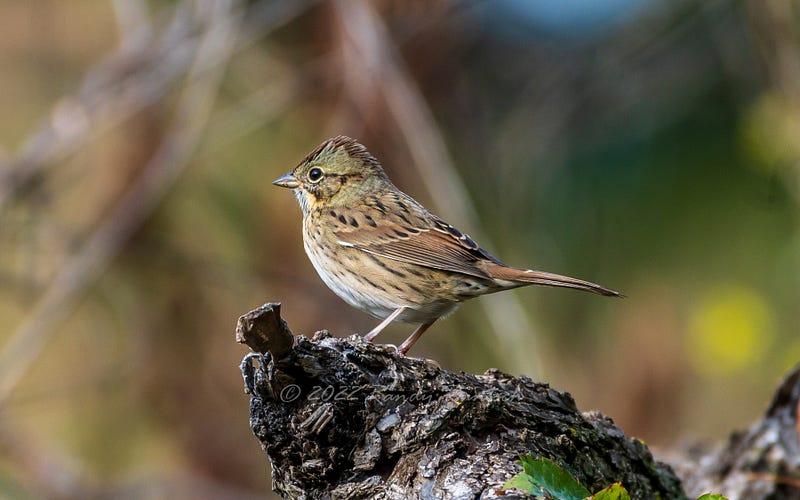
Lincoln’s Sparrows can be challenging to spot since they like to perch in or near dense shrubs. While rarely heard, they sing pretty songs, like those you can listen to on xeno-canto.
Sanderling
In contrast with the 23"-long Long-billed Curlew and the 15" Willet, the Sanderling (Calidris alba) sandpiper measures 8". Like Willets, they live along the coasts of North America. But they breed in the high arctic.
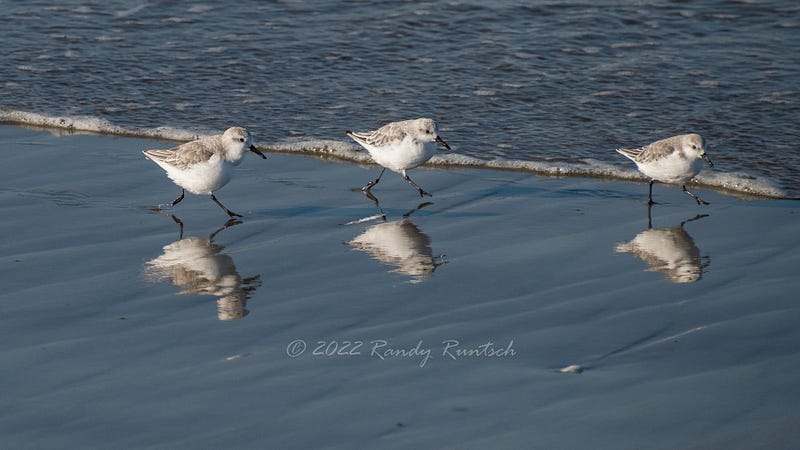
Sanderling flocks foraged for sand crabs and other creatures on Moss Landing’s beach. In unison, they ran toward receding waves until new waves chased them back up the beach.
Yellow-shafted Northern Flicker
The Northern Flicker (Colaptes auratus) is a medium-sized woodpecker. It measures up to 14" long with a 22" wingspan. The flicker lives throughout North America and the Caribbean and breeds in the Great Lakes region, Canada, and Alaska.
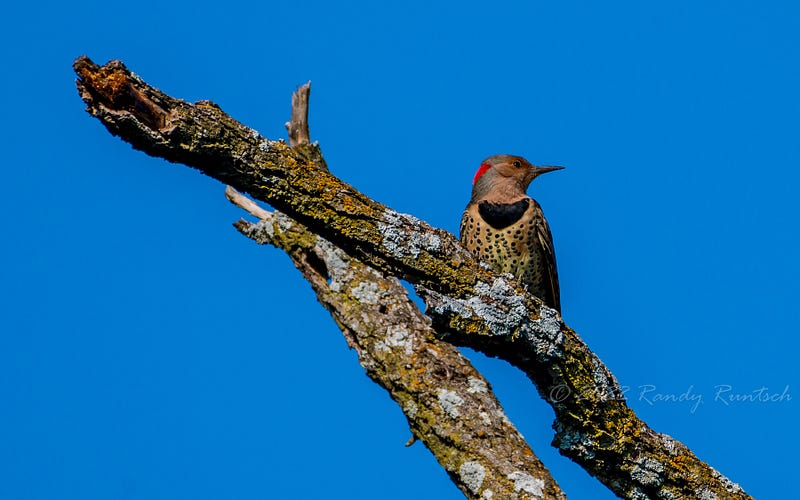
Yellow-shafted Northern Flickers differ from their Red-shafted relatives. The Yellow-shafted variety features a yellow wing lining and yellow undertail. It lives in the east and north.
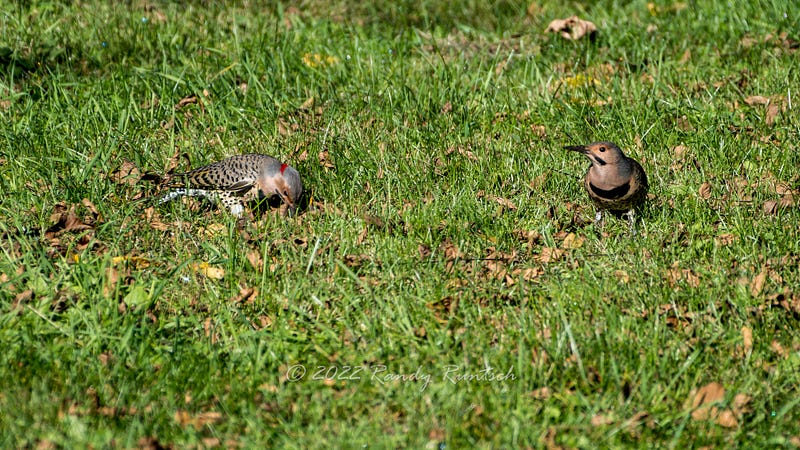
Unlike other woodpeckers, flickers sometimes feed on the ground. In trees, they probe bark with their bills. They eat various foods, including insects, snails, berries, and seeds.
White-throated Sparrow
Some nature photographers post their sparrow photos to bird groups on Facebook with disclaimers. In their text, which might read something like, “Yet another brown bird,” they seem embarrassed to share an image of what they consider to be a drab bird. But pictures of sparrows, or the fact that they photograph the birds, should not embarrass them. They delight me and are key members of the natural world.
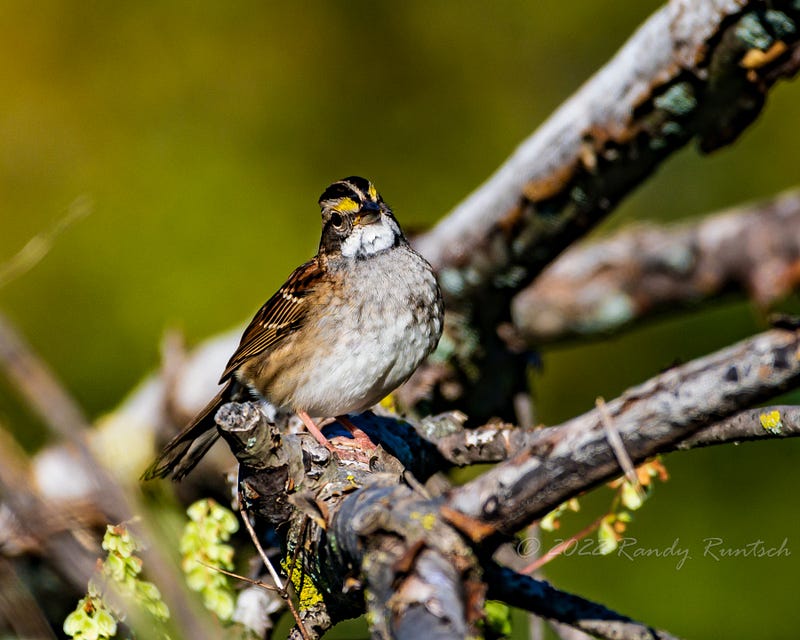
Take the White-throated Sparrow (Zonotrichia albicollis), for example. The New World Sparrow features a white throat, dark crown stripes, and yellow eyebrows.
White-throated Sparrows live throughout the eastern two-thirds of the United States and Canada. They prefer woodland undergrowth, brush, and gardens. Also, they frequent the brush pile at Essex Park.
Long-billed Curlew
The Long-billed Curlew (Numenius americanus) is a large North American sandpiper. I still remember when I first saw two curlews foraging for food in Antelope Island State Park in Utah’s Great Salt Lake. They appear striking with their downturned bill that measures up to 8–5/8" long. The bird measures up to 26" long and has a wingspan of up to 35–1/2".
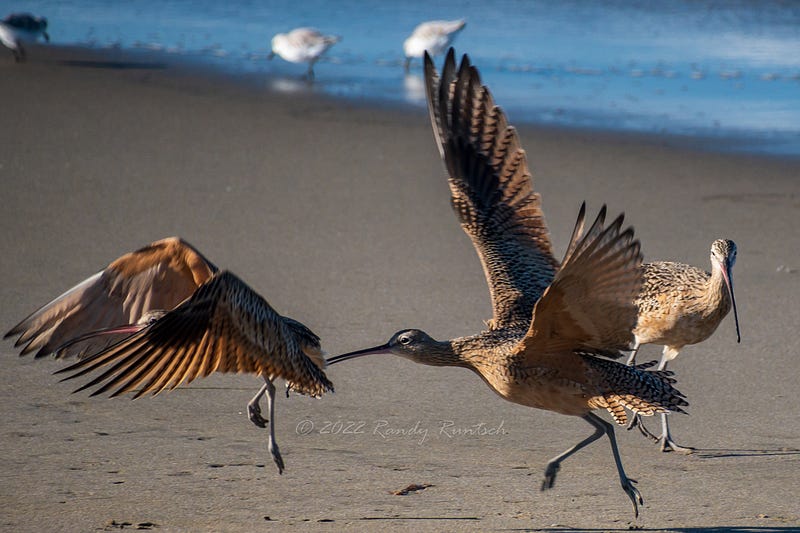
Long-billed Curlews winter in Mexico and along the Atlantic, Gulf, and Pacific Coasts of North America. But they breed in grasslands in the American West. These sandpipers probe in mud and other surfaces for crabs, insects, and other creatures.
Pileated Woodpecker
The Pileated Woodpecker (Dryocopus pileatus) is North America’s largest woodpecker. It measures up to 19" long, with a wingspan up to 30". It lives in the eastern quarter of the U.S., across southern Canada, and near the Pacific Coast.
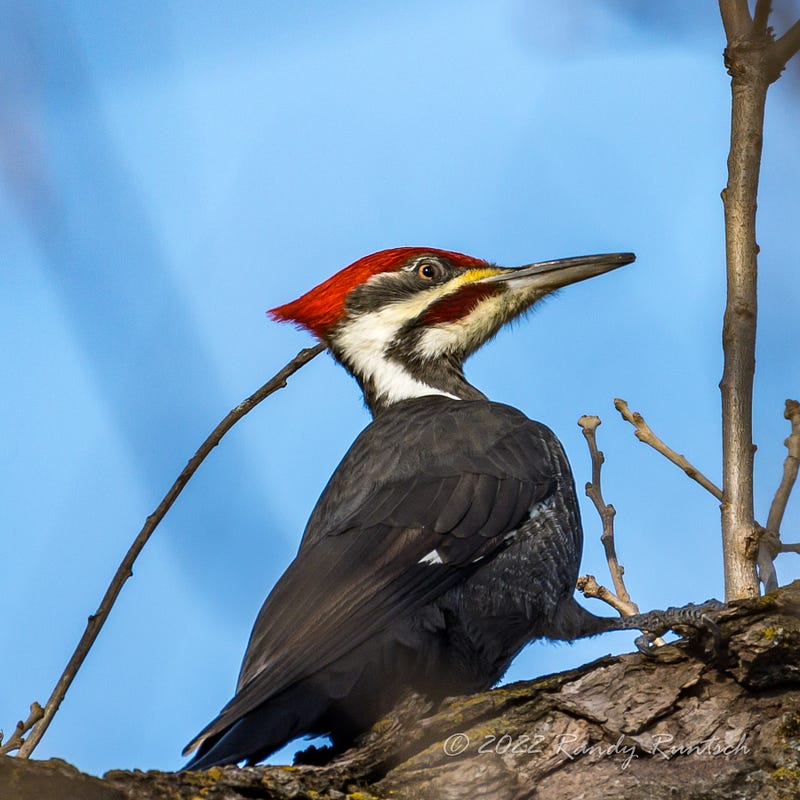
Pileated Woodpeckers use their sturdy bills to chop chunks of wood out of tree trunks. They do this to find their favored food, ants and beetles. They consume various fruits, berries, and nuts, too.
Eastern Bluebird
The Eastern Bluebird (Sialia sialis) is a small thrush that favors open woodlands, farmlands, and orchards. Adults measure up to 8.3" long and 12.6" across the wings.
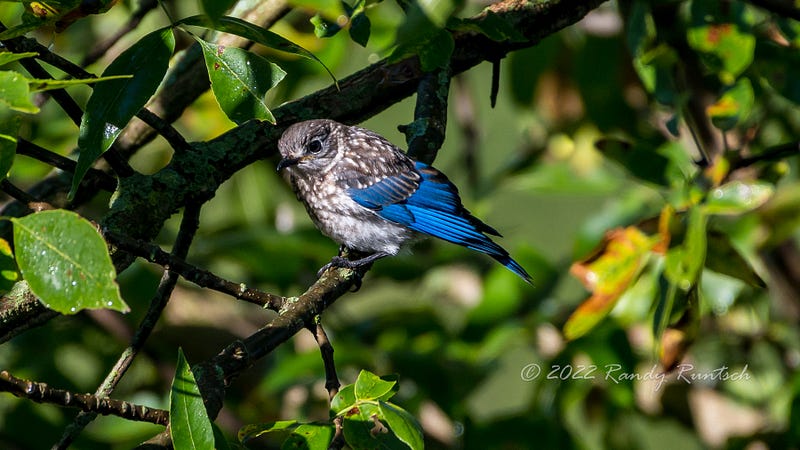
Favorites of birders, Eastern Bluebirds live throughout Mexico, the eastern United States, and southern Canada. They are often seen perched on a fence or nesting box.
About two-thirds of a bluebird’s diet consists of insects and other invertebrates. Fruits and berries make up the balance.
Brown Pelican
Brown Pelicans (Pelecanus occidentalis) are a favorite sight over coastal waters. One or more birds glide parallel to the shore as they almost touch the crests of waves.
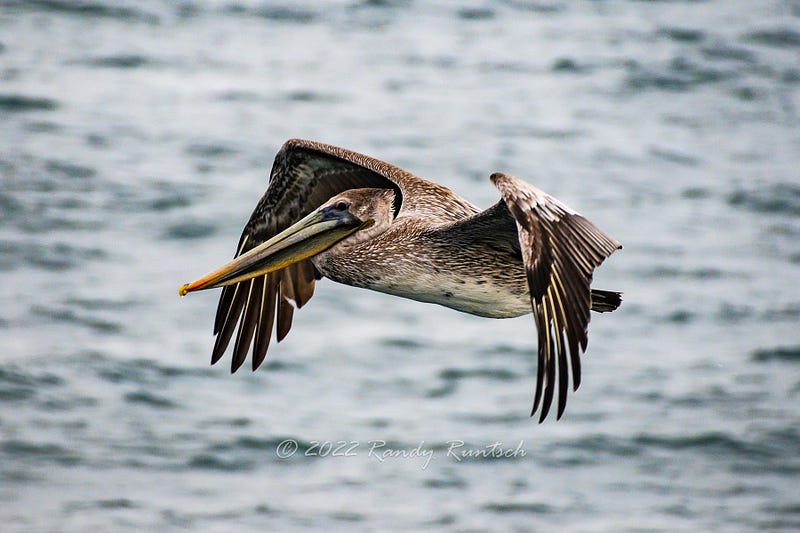
Brown Pelicans live along the Gulf and Atlantic Coasts of the U.S., in the Caribbean, in Mexico, and along the Pacific Coast from British Columbia in Canada down to Chile.
These pelicans measure up to 5 feet long. Their wingspans can reach 7.5 feet.
Brown Pelicans are fish-eaters. When foraging, they dive straight down into the water to catch fish in their bills. Returning to the surface, they drain water from their throat pouch and swallow the fish.
Northern Cardinal
For good measure, here is the Northern Cardinal (Cardinalis cardinalis). These birds live throughout southeast Canada, the eastern United States, and Mexico.
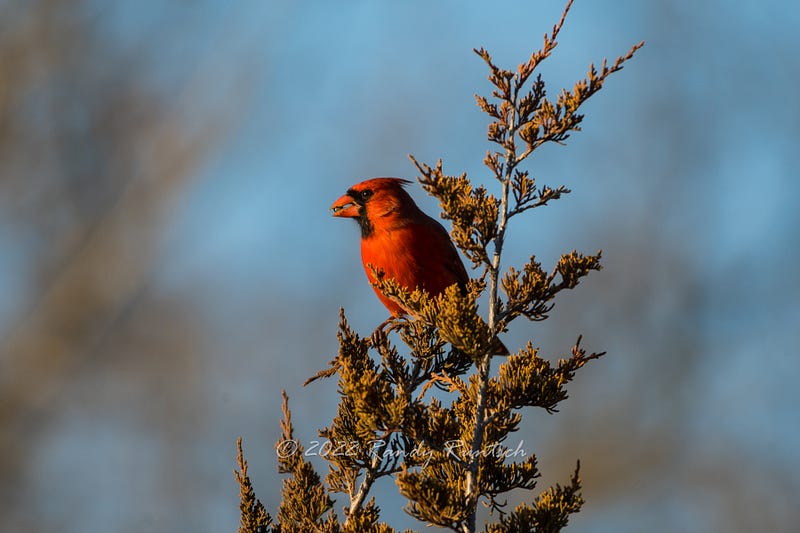
According to the All About Birds website, by the Cornell Lab of Ornithology, “The male Northern Cardinal is perhaps responsible for getting more people to open up a field guide than any other bird.”
Male cardinals show ferocity when defending their territory. I had heard stories about them attacking their “adversary” in a mirror. Finally, I saw the act myself when a bird pecked at my car’s rear-view mirror.
Of the birds shown here, only the Northern Flicker, Pileated Woodpecker, and Northern Cardinal winter in Minnesota. But springtime is not far off. Until then, I’ll enjoy those who remain.
For more favorite bird photographs, see this list of stories:
“Until one has loved an animal, a part of one’s soul remains unawakened.” — Anatole France
References: Wikipedia, All About Birds, and The National Geographic Field Guide to the Birds of North America


