
Fat People are Dying Because Doctors Won’t Listen
Framing weight loss as an easily attainable, end-all-be-all goal is bad medicine, misguided, and irresponsible.
When you’re fat, it’s not a matter of if people will decide you’re lazy, it’s a matter of when and how often. For years, I’ve dealt with people, including doctors, acting like if I just worked harder to lose weight, I could get it off and keep it off. Surely if I just had a little bit more resolve in my resolution, a little more oomph and commitment, it would solve all my problems!
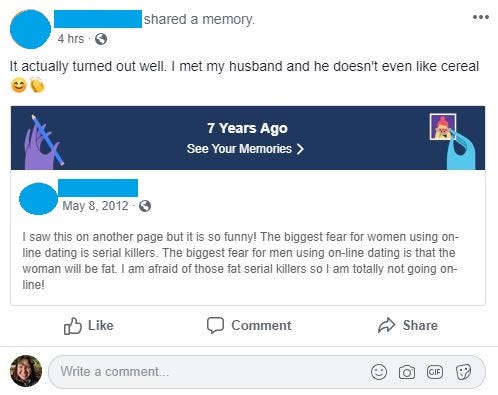
As a person in a fat body, I experience micro-aggressions telling me that my existence is morally unacceptable every single day. Some days, it’s a friend’s Facebook post, a supposedly cute anecdote about worst fears.
Some days it’s a scene on one of my current-favorite TV shows that reminds me that even if I were to lose weight, my inner-fat-person would still exist as a punchline.
Some days, it’s threads like this one that appeared in my Facebook feed recently, a maddening commentary on the rampant fat-phobia in our culture, especially in the medical profession. Every time I see something like this, it reminds me that people like me are judged every day for living in the bodies we possess.
Some days, it’s knowing that airplanes don’t make seatbelts large enough for people my size, even though car, bus, amusement park ride, and train manufacturers have figured it out. Some days it’s knowing I won’t fit into the booth at McDonald’s of all places.
Some days, it’s being asked to lose weight by a medical professional who refuses to look beyond your fat to evaluate your health, putting your well being in danger.
I’ve become accustomed to being told by random strangers that I should just be less lazy. When you talk or write about being fat, people feel that somehow it’s their prerogative to make sure you know they look down on you. It’s like they think they’re revealing a truth: fat people are just idiots who aren’t trying. As if losing weight is the simplest thing they could possibly imagine. It’s tiresome, but despite my preference they learn the facts, my expectations are fairly low.
When I go to the doctor, though? I’m hiring a medical professional to manage my care. I am paying money to a person for their expertise and experience, expecting them to know what they’re talking about. This means not only relying on facts and evidence, but keeping up-to-date on the latest information about the conditions their patients may experience.
Given that 40% of their potential patients are considered “obsese,” I expect that they would have spent some time considering how to treat fat patients. These are people who have been through years and years of medical school, presumably with the goal of providing modern, evidence-based care to their patients. It’s not asking too much to be seen as a whole person, with many different parts, and not just a lump of fat.
In the thread I mentioned earlier, at least half of the examples given were about doctors and medical professionals. Almost every doctor I’ve seen in my life has endorsed focusing on intentional weight loss. If all of these supposed experts are recommending it, it must be an attainable goal, right?
Not so much. In fact, 95% of people who try to lose weight intentionally are unsuccessful. Once you’ve picked your jaw up off the floor, consider the following questions posed by my fat-advocate friend Jillian.
Is it possible to lose weight intentionally, through behavioral changes? You can do the research yourself; I’m limited by a lack of scientific background and a lack of access to some of these papers. But the reviews seem to indicate success rates around 5%.
And how do they define “success” in these studies, anyway? Sometimes it’s a pretty low bar. It varies from study to study, but it might be something like losing 10% of your body weight and keeping it off for a year.
So if a person who weighs 300 lbs gets down to 270 and stays there for a year, that’s success. But where are they in two years? Five years? Forty years? The studies don’t usually watch past a year or two.
(Ten years down the line, that unusually “successful” 270 lb person walks into a new doctor’s office. Is that person treated like an “after” picture, a success story? Or is that person badgered about their weight just as much as they were at 300 lbs?) It’s not impossible to lose weight intentionally. It’s very unlikely, but it’s not impossible. (Source.)
There are SO many factors at play in people’s weights. Environment, genetics, nature, nurture, psychology, food intake, exercise, hormones, medical conditions, and who knows what else. Maybe some people are just naturally fat. After all, we commonly accept that there are people who are ‘naturally thin.’ Is it so hard to imagine that bodies might actually come in different shapes and sizes?
I have expended an immeasurable amount of time, effort, money, and heartache trying to lose weight when my likelihood of success was less than 5%. One simple truth, and it makes me feel like crying. Or screaming. It’s excruciating, frustrating, and maddening. How many hours have I wasted feeling terrible about myself and my inability to be a smaller human?
I have felt shame and despair, and experienced bigotry and mistreatment, all for something I had such a low chance at ever changing. I’ve blamed myself for not being serious enough, not caring enough, not having enough resolve, when none of those things really mattered. I am heartbroken for all the people who hate themselves the way that they are. It makes me immeasurably angry for all the girls (and boys) who will grow up into this, and never even realize that it isn’t them, that the culture and the expectation is one of the biggest lies they’ll ever be told.
Of the small number of people who manage to lose weight intentionally and keep it off, half gain it back. Weight cycling, or gaining and losing weight repeatedly, has its own negative health effects. I’ve lost and gained 25–50 pounds several times and now, here I sit. At the same weight for years. I think maybe this is just how I am. My body seems to naturally sit at this weight. What negative effects on my body could have been prevented if I hadn’t yo-yo’d? There’s no way to know.
It’s not just medical doctors who will tell you to lose weight. The ridiculous focus on fat also extends to other types of healthcare providers. I recently had an appointment with my eye doctor. I wasn’t looking forward to it, because it’s tiresome, going in and getting checked for a condition that’s completely in remission and being told to lose weight every single time.
But I had already postponed it once, so I made myself keep the appointment. Sure enough, he checked my eyes, which looked great, nothing to see here, folks. Then, like clockwork:
“How are you doing with fitness and losing weight?”
Even though I knew it was coming, there was still a feeling of shock and dismay, like my brain can’t believe this continues to happen. It is not helpful in any way to be asked how it’s going to change the way my body seems naturally inclined to work. For the first time in my life, I answered this question completely truthfully to a medical professional.
“You know, it’s not really a priority for me. I lost weight when I was severely symptomatic and it didn’t affect the condition.”
It wasn’t easy. I hesitated. My skin felt flushed, and I didn’t look him in the eyes when I said it. I explained that it wasn’t a priority and gave an evidence-based reason that I wasn’t going to make it a priority. I was proud of myself for not just nodding along like I usually do.
His response? To talk some more about how even a 5% weight loss can really “help people.” It was as if even though I’d surprised him with a different answer than he expected, he couldn’t stop himself from making sure that I had heard him the other 20 times he told me that weight loss is the primary treatment for my asymptomatic condition.
The condition is called idiopathic intracranial hypertension for a reason. Idiopathic means they have no idea why it happens or how to stop it. There’s no cure. They think the condition might be hormone related, but my hormones are whack, and have been for a long time. That’s likely the reason that I’m fat in the first place.
Why exactly is weight loss the primary treatment? Because in some percentage of people, a 5% weight loss helps alleviate symptoms. Basically, it’s the only thing they can grasp at other than diuretics and shunts and other Band-Aid treatments that have marginal success rates. I’m still unclear on what weight loss would be “helping” for me when I have no symptoms or progression, and have effectively been in remission for several years.
All of this raises the question: why are doctors still rotely telling us to lose weight? I’m lucky enough to have found a general practitioner who doesn’t bring up my weight unless it’s actually relevant to an issue I’m having. She respects me enough to know that I’m not stupid, that I recognize the options and the potential risks that may come with my size and shape. Most people are not this lucky.
Fat people die because doctors don’t listen to them. People whose livers are shutting down when they’re discounted by a doctor who says they must just have indigestion from eating too many burgers. People who are told they can’t breathe because they are too fat, so their doctor doesn’t bother to look further and find the lung tumor that will kill them.
Framing weight loss as an easily attainable, end-all-be-all goal is not only misguided but dangerous. It’s not asking too much to expect evidence-based care that treats us as a whole rather than as a walking lump of fat. It’s time for medical professionals to recognize that recommending weight loss is not a plan, being fat is not a diagnosis. Every single doctor should be trained to look beyond weight and consider the multitude of other factors contributing to their patients’ health.
Don’t miss a thing! Sign up for my weekly newsletter here.
You might also enjoy…