avatarDark Energy Articles

Free AI web copilot to create summaries, insights and extended knowledge, download it at here

3930

Abstract

mmons.org/licenses/by-sa/4.0">CC BY-SA 4.0</a>, via <a href="https://commons.wikimedia.org/wiki/File:Venus_of_Berekhat_Ram_imj.jpg">Wikimedia Commons</a>]</figcaption></figure><p id="24cd">Researchers believe that the indentations were meant to symbolize the figure’s neck and shoulders, and the marks clearly prove that they were man-made. Scientists say it was created at least 230,000 BC. Experts point out that, assuming the statue depicts a female figure, it would be the oldest sculpture in history. It was probably made by a representative of Homo erectus.</p><h1 id="a0f5">Venus of Willendorf is the most famous prehistoric sculpture</h1><p id="02c7">Measuring just over 11 centimeters, this statue is also the best example of a Paleolithic sculpture that depicts a female figure. It was found in 1908 near the village of Willendorf in Austria. The discoverer was Johann Veran, who was a worker during roadworks at the time. It was later identified and described by Joseph Szombathy.</p><figure id="2587"><img src="https://cdn-images-1.readmedium.com/v2/resize:fit:800/1*YQRafnpXuLUWPzC12Oha7g.jpeg"><figcaption>Venus of Willendorf — All sides — [Photo: Bjørn Christian Tørrissen, <a href="https://creativecommons.org/licenses/by-sa/4.0">CC BY-SA 4.0</a>, via <a href="https://commons.wikimedia.org/wiki/File:Venus_of_Willendorf_-_All_sides.jpg">Wikimedia Commons</a>]</figcaption></figure><p id="9430">The scholar concluded that the statue dates from the Orynian period and was carved from chalk stone. Venus was painted with red ochre. She was probably created around 28–30 thousand years BC. It is clear that the depicted figure has curly hair, sizeable breasts, belly and thighs. Experts agree that she represented<b> the canon of beauty of the societies of that time.</b> The rounded figure was supposed to indicate high social status, wealth, as well as fertility.</p><h1 id="0e99">The most famous sculptures of the ancient period</h1><p id="fd00">Sculpture became one of the most important arts in the ancient period. Artists created statues and figures that depicted gods, rulers, philosophers, as well as narrative scenes and religious symbols. Sculptures served decorative, representative, aesthetic, as well as propaganda and didactic functions. The most important cultural center where the art of sculpture developed was Greece.</p><figure id="baf5"><img src="https://cdn-images-1.readmedium.com/v2/resize:fit:800/1*FzcXVdtJxBFI5RNgm0pIBw.jpeg"><figcaption>Venus de Milo — [Photo: Sharon Mollerus, <a href="https://creativecommons.org/licenses/by/2.0">CC BY 2.0</a>, via <a href="https://commons.wikimedia.org/wiki/File:Venus_de_Milo,_25_May_2009_002.jpg">Wikimedia Commons</a>]</figcaption></figure><p id="79a4">It was here that <b>the Venus de Milo</b> — was created. The statue was found by Greek farmer Jorgos in 1820 near the theater on the acropolis in Adamas, the main port of the island of Milos. It is 2.02 meters high. It depicts the half-naked goddess Venus, who was identified with Aphrodite in Roman mythology. <b>She represented love, spring and vegetation.</b></p><p id="3550">The exact author of the sculpture is unknown. It was probably created around 130–100 BC. The statue is missing its left hand and a significant part of its right hand. Art historians believe that in the past she held an apple in her left hand, and the limb was supported by a column that supported her weight. It has been in the Louvre in Paris since 1821.</p><h1 id="fadc">Nike of Samothrace and Venus of Milo are the most famous sculptures depicting goddesses</h1><p id="af0e">Another famous ancient sculpture is <b>the Nike of Samothrace</b>. It is one of the world’s most famous statues from the Hellenistic period. Made of marble, the sculpture was created around 190 BC. It depicts the goddess Nike, who according to Greek mythology was the personification of victory.</p><figure id="a9b3"><img src="https://cdn-im

Options

ages-1.readmedium.com/v2/resize:fit:800/1*UJk_DlV9HV97pW7PU6TbIA.jpeg"><figcaption>Sharon Mollerus, <a href="https://creativecommons.org/licenses/by/2.0">CC BY 2.0</a>, via <a href="https://commons.wikimedia.org/wiki/File:Nike_of_Samothrace_(3564810723).jpg">Wikimedia Commons</a></figcaption></figure><p id="a835">Researchers have determined that the statue was originally part of a much larger monument. Unfortunately, under unexplained circumstances it was destroyed or did not stand the test of time. Most likely, it was one of the fragments of a temple in honor of the Greek gods. The building was meant to commemorate the victory of the Rhodians over the Seleucids in 190 BC. The sculpture has been in the Louvre in Paris since 1884.</p><div id="f4db" class="link-block"> <a href="https://readmedium.com/nike-of-samothrace-is-missing-some-body-parts-but-still-symbolizes-victory-1e8fcc26735c"> <div> <div> <h2>Nike of Samothrace is missing some body parts, but still symbolizes victory</h2> <div><h3>Nike of Samothrace is, along with the Venus de Milo, one of the most famous Greek sculptures. Who in particular…</h3></div> <div><p>medium.com</p></div> </div> <div> <div style="background-image: url(https://miro.readmedium.com/v2/resize:fit:320/1*9BLKx0I8evWx51aVLZ9VjQ.jpeg)"></div> </div> </div> </a> </div><h1 id="8632">The most famous sculptures of modernity and the 19th century</h1><p id="dde8">Speaking of the world’s most famous sculptures, it is impossible not to mention <b>David</b>. This sculpture by Michelangelo depicts the biblical David moments before his battle with Goliath. Along with the <b>Pieta</b>, it is one of the largest and most recognizable works that this Renaissance artist made. The statue is more than 5 meters high and was made of marble. Critics have emphasized the extreme care taken in depicting the human body.</p><figure id="0c06"><img src="https://cdn-images-1.readmedium.com/v2/resize:fit:800/1*gT0gnjZg98Wf-6CgCjQThQ.jpeg"><figcaption>David — [Photo: Jörg Bittner Unna, <a href="https://creativecommons.org/licenses/by/3.0">CC BY 3.0</a>, via <a href="https://commons.wikimedia.org/wiki/File:%27David%27_by_Michelangelo_JBU06.JPG">Wikimedia Commons</a>]</figcaption></figure><p id="c08f">Auguste Rodin’s The Thinker is undoubtedly one of the most famous works of the 19th century. The sculpture, made in 1880 of bronze and marble, depicts a thoughtful man struggling with a difficult issue. The image became so recognizable that it lived to see many references in later culture. Rodin based the subject of his work on Dante’s “Divine Comedy.”</p><p id="3f27">The 19th century also belonged to Rafaello Monti. The Italian sculptor released to the world a monumental work entitled “Woman in a Veil.” The statue was created in 1860.</p><div id="2642" class="link-block"> <a href="https://readmedium.com/ancient-art-found-in-kitchen-reno-a-national-treasure-c82b40ecb8d7"> <div> <div> <h2>Ancient Art Found in Kitchen Reno: A National Treasure!</h2> <div><h3>During the renovation of the kitchen, in an English dwelling in York County, a frieze was found with paintings that…</h3></div> <div><p>medium.com</p></div> </div> <div> <div style="background-image: url(https://miro.readmedium.com/v2/resize:fit:320/1*9IeoDjUbmXlEyyHVU2qgbA.jpeg)"></div> </div> </div> </a> </div><p id="74bb"><b>Cool that you made it to the end of this article. I will be very pleased if you appreciate the effort of creating it and leave some claps here, or maybe even start following me. It would be nice if you also left a tip! Thank you!</b></p></article></body>

Famous sculptures of the world. The oldest statue was created up to 300,000 years ago

In ancient times, sculpture was one of the most important artistic disciplines. During this period, many figures and statues were created, which exemplify monumental works of art. Today, famous sculptures adorn the interiors of temples and buildings, and can be found in the world’s most important museums.
[Photo: Bradley Weber, CC BY 2.0, via Wikimedia Commons]

It is not known exactly how the human need for art and aesthetics evolved. Some theories claim that Homo sapiens’ basic aesthetic preferences emerged for survival purposes and to increase reproductive success. Evidence may be found in the fact that the oldest sculptures in the world depict women with prominently outlined shapes, and some figurines vary in proportion.

Sculpture is the oldest of the arts

This is because man has strived to show the beauty in his being. With the development of our species, this aesthetic property of being has constantly evolved. Aristotle proclaimed that beauty is based on size, order and proportion, it is perfection. Beauty, too, is “all that, being good, is pleasant, and that which is pleasing to sight and hearing.”

St. Thomas Aquinas believed that “beautiful are those things which when viewed please.” French sociologist Pierre Bourdieu, on the other hand, aptly stated that beauty, understood as that which pleases us, is merely a social illusion or a product of socialization and “sophisticated taste politics.”

However, this does not change the fact that the need for art has been reflected in human creations. It is believed that carving is the oldest of the fine arts. Its history dates back to Paleolithic times. Scientists believe that a human-shaped figure — the Venus of Tan-Tan, which was found in 1999 in Morocco — is one of the world’s first man-made sculptures.
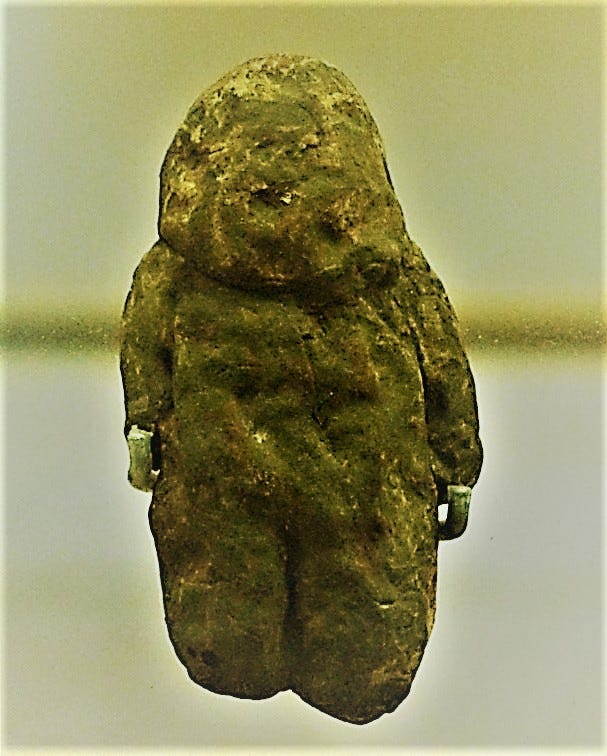
Venus of Tan-Tan — [Photo: Museum of Human Evolution, CC BY-SA 4.0, via Wikimedia Commons]

World’s oldest sculptures

The figurine was found on the northern bank of the Draa River near the town of Tan-Tan. It was found by German archaeologist Lutz Fiedler. It is only 6 centimeters long. it was made of quartzite and painted with red ochre. The researchers concluded that it was created about 300–500 thousand years ago.

The statue has no head. It is also difficult to determine its exact gender. Many scientists believe it is the earliest-ever representation of the human shape. Although some researchers suspect that the sculpture may be a natural creation that was created by erosion of the stone.

Another example of a Paleolithic Venus is the Venus of Berechat Ram. It’s a small figurine, about 35 mm long, which was found in 1981 in the Golan Heights, located on the border between Israel, Syria and Lebanon. It was made of volcanic tuff. At least three grooves can be seen on its surface, which were made with a sharp stone.
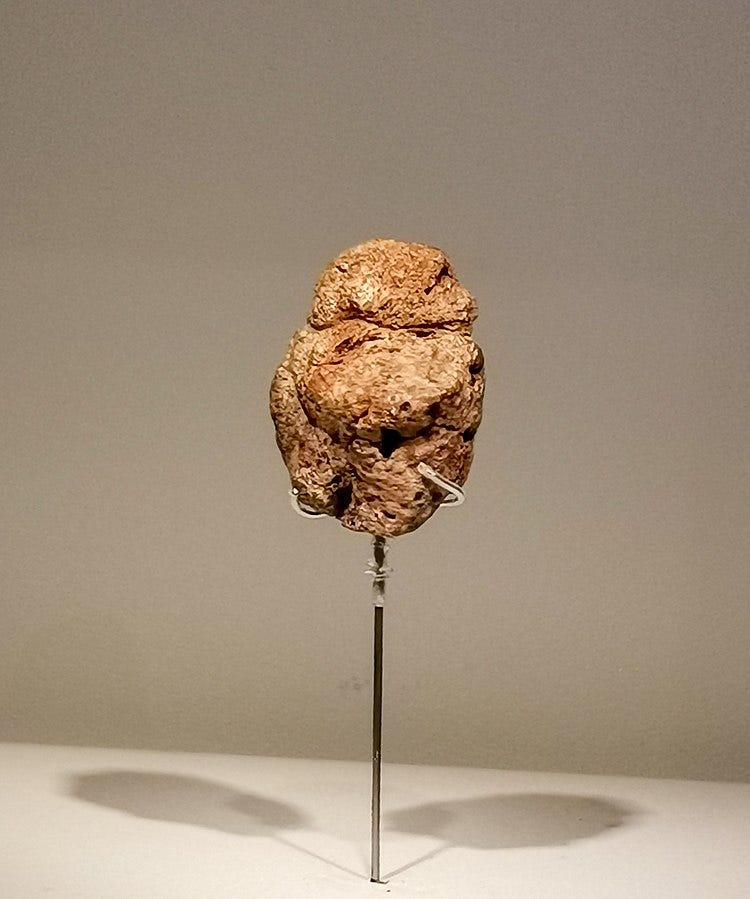
Venus of Berekhat Ram — [Photo: Thomas cahana, CC BY-SA 4.0, via Wikimedia Commons]

Researchers believe that the indentations were meant to symbolize the figure’s neck and shoulders, and the marks clearly prove that they were man-made. Scientists say it was created at least 230,000 BC. Experts point out that, assuming the statue depicts a female figure, it would be the oldest sculpture in history. It was probably made by a representative of Homo erectus.

Venus of Willendorf is the most famous prehistoric sculpture

Measuring just over 11 centimeters, this statue is also the best example of a Paleolithic sculpture that depicts a female figure. It was found in 1908 near the village of Willendorf in Austria. The discoverer was Johann Veran, who was a worker during roadworks at the time. It was later identified and described by Joseph Szombathy.
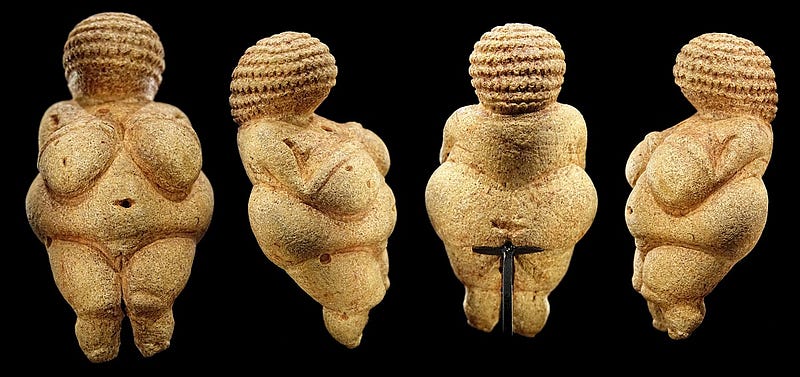
Venus of Willendorf — All sides — [Photo: Bjørn Christian Tørrissen, CC BY-SA 4.0, via Wikimedia Commons]

The scholar concluded that the statue dates from the Orynian period and was carved from chalk stone. Venus was painted with red ochre. She was probably created around 28–30 thousand years BC. It is clear that the depicted figure has curly hair, sizeable breasts, belly and thighs. Experts agree that she represented the canon of beauty of the societies of that time. The rounded figure was supposed to indicate high social status, wealth, as well as fertility.

The most famous sculptures of the ancient period

Sculpture became one of the most important arts in the ancient period. Artists created statues and figures that depicted gods, rulers, philosophers, as well as narrative scenes and religious symbols. Sculptures served decorative, representative, aesthetic, as well as propaganda and didactic functions. The most important cultural center where the art of sculpture developed was Greece.
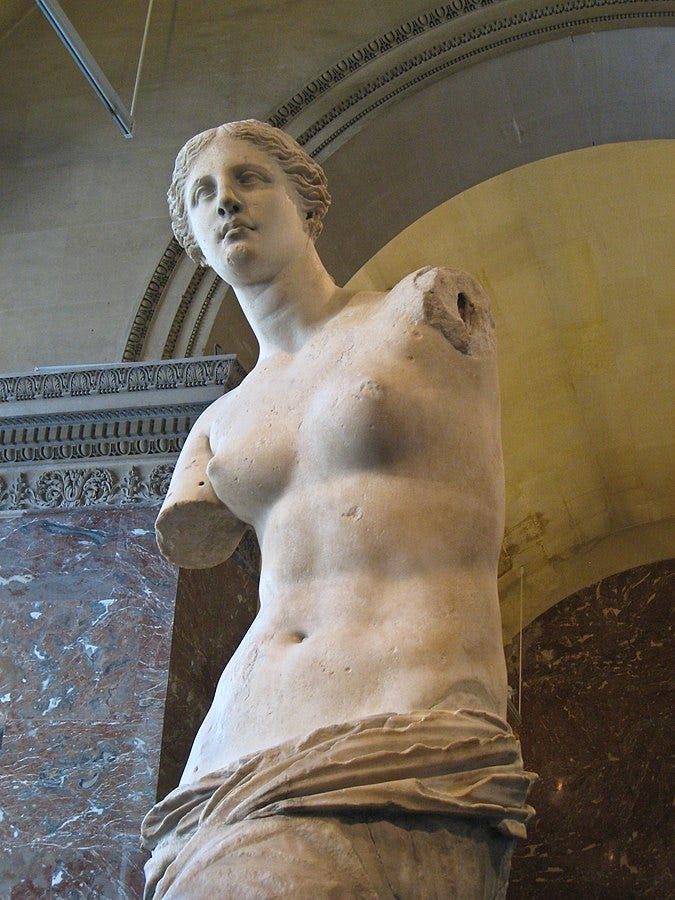
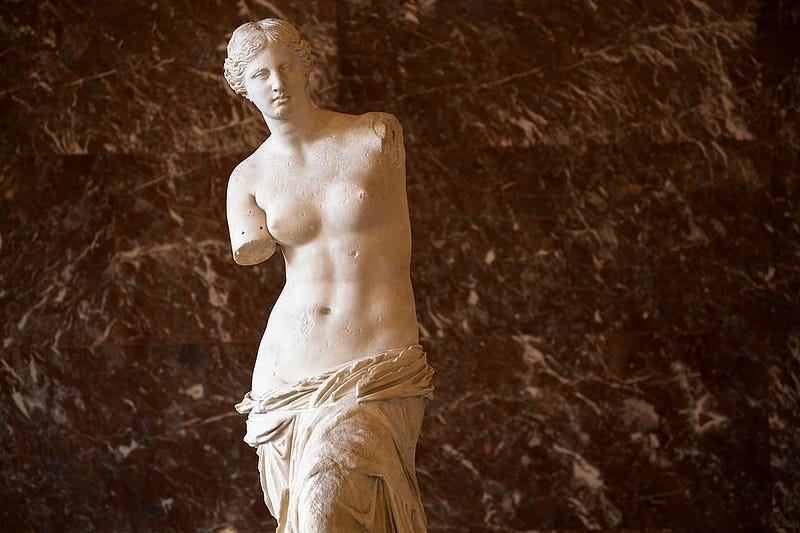
Venus de Milo — [Photo: Sharon Mollerus, CC BY 2.0, via Wikimedia Commons]

It was here that the Venus de Milo — was created. The statue was found by Greek farmer Jorgos in 1820 near the theater on the acropolis in Adamas, the main port of the island of Milos. It is 2.02 meters high. It depicts the half-naked goddess Venus, who was identified with Aphrodite in Roman mythology. She represented love, spring and vegetation.

The exact author of the sculpture is unknown. It was probably created around 130–100 BC. The statue is missing its left hand and a significant part of its right hand. Art historians believe that in the past she held an apple in her left hand, and the limb was supported by a column that supported her weight. It has been in the Louvre in Paris since 1821.

Nike of Samothrace and Venus of Milo are the most famous sculptures depicting goddesses

Another famous ancient sculpture is the Nike of Samothrace. It is one of the world’s most famous statues from the Hellenistic period. Made of marble, the sculpture was created around 190 BC. It depicts the goddess Nike, who according to Greek mythology was the personification of victory.
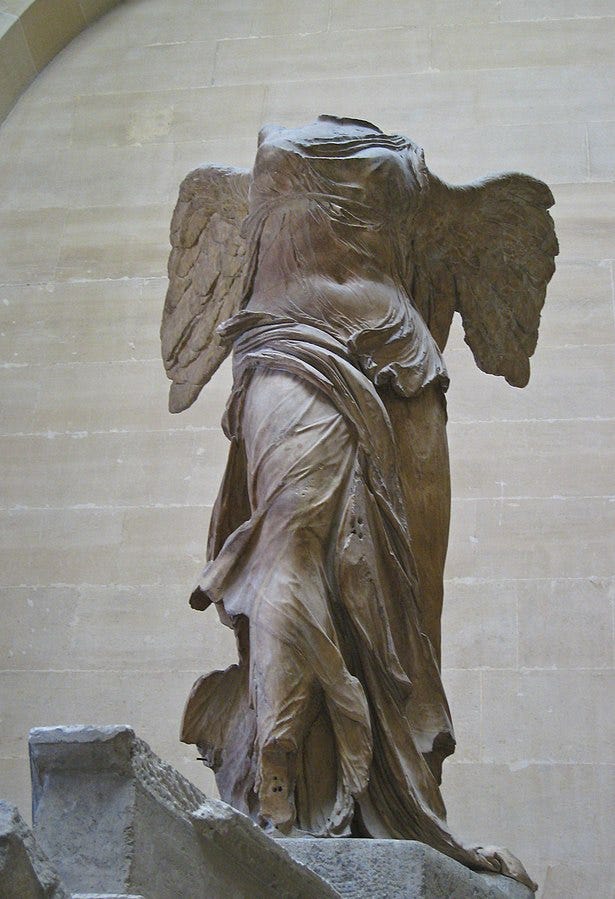
Sharon Mollerus, CC BY 2.0, via Wikimedia Commons

Researchers have determined that the statue was originally part of a much larger monument. Unfortunately, under unexplained circumstances it was destroyed or did not stand the test of time. Most likely, it was one of the fragments of a temple in honor of the Greek gods. The building was meant to commemorate the victory of the Rhodians over the Seleucids in 190 BC. The sculpture has been in the Louvre in Paris since 1884.

The most famous sculptures of modernity and the 19th century

Speaking of the world’s most famous sculptures, it is impossible not to mention David. This sculpture by Michelangelo depicts the biblical David moments before his battle with Goliath. Along with the Pieta, it is one of the largest and most recognizable works that this Renaissance artist made. The statue is more than 5 meters high and was made of marble. Critics have emphasized the extreme care taken in depicting the human body.
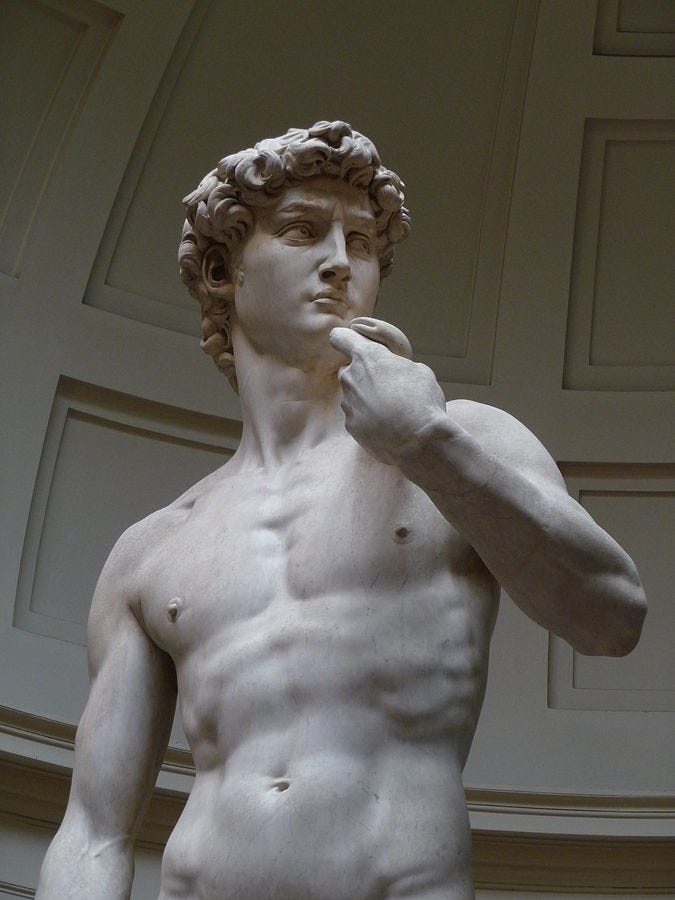
David — [Photo: Jörg Bittner Unna, CC BY 3.0, via Wikimedia Commons]

Auguste Rodin’s The Thinker is undoubtedly one of the most famous works of the 19th century. The sculpture, made in 1880 of bronze and marble, depicts a thoughtful man struggling with a difficult issue. The image became so recognizable that it lived to see many references in later culture. Rodin based the subject of his work on Dante’s “Divine Comedy.”

The 19th century also belonged to Rafaello Monti. The Italian sculptor released to the world a monumental work entitled “Woman in a Veil.” The statue was created in 1860.

Cool that you made it to the end of this article. I will be very pleased if you appreciate the effort of creating it and leave some claps here, or maybe even start following me. It would be nice if you also left a tip! Thank you!

Art
History
Culture
Science
Li̇fe
Recommended from ReadMedium