
Nike of Samothrace is missing some body parts, but still symbolizes victory
Nike of Samothrace is, along with the Venus de Milo, one of the most famous Greek sculptures. Who in particular worshipped the goddess?
.jpg)
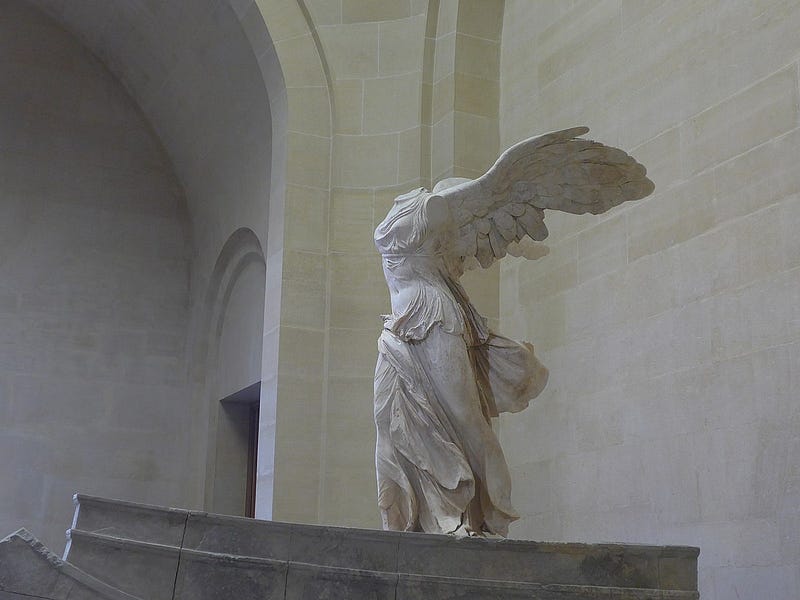
The Nike of Samothrace is one of the world’s most famous relics from the Hellenistic period. Made of marble, the sculpture was created around 190 BC. It depicts the goddess Nike, considered the personification of victory in Greek mythology.
Sculpture of Nike of Samothrace: history of discovery
The famous sculpture of Nike of Samothrace was discovered by French Vice Admiral Charles Champoiseau during a diplomatic mission to the Ottoman Empire in 1863. The amateur archaeologist was visiting the small island of Samothrace in the Aegean Sea when he noticed a broken marble arm sticking out of the ground. After digging it up, he discovered the impressive statue.
Today it is known not only to art historians. The motif of Nike, both that of Samothrace and other images, often appears in culture and architecture. The likeness of the goddess of victory can be seen in London, among other places.
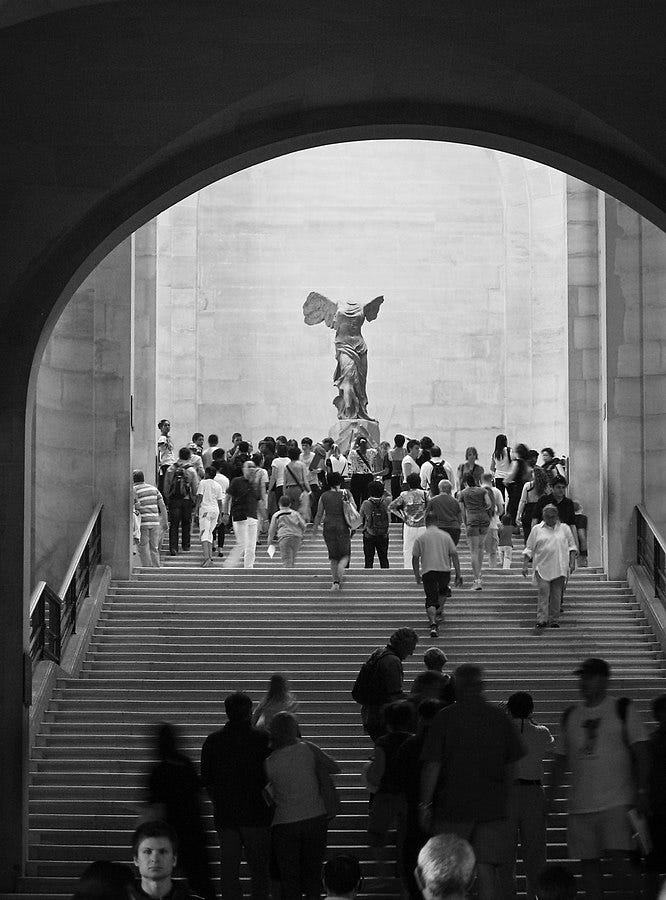
Researchers have determined that the Nike of Samothrace was originally part of a much larger monument. Most likely, it was a temple in honor of the Greek gods. The structure was meant to commemorate the victory of the Rhodians over the Seleucids in 190 BC. The sculpture of Nike has been in the Louvre in Paris since 1884, where it is still on display today.

Description of the sculpture of Nike of Samothrace
Nike of Samothrace is still considered a symbol of victory. It is also one of the most famous sculptures of the ancient world.
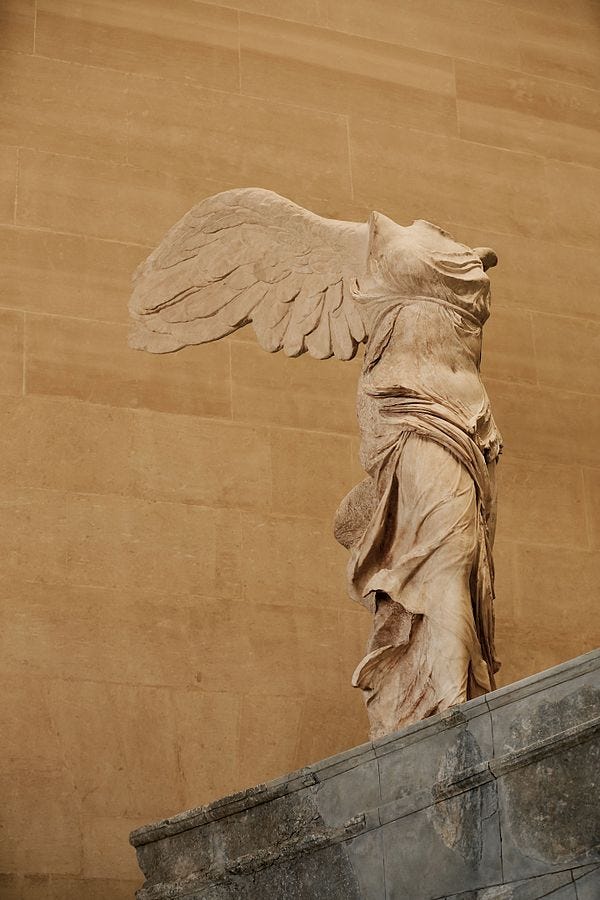
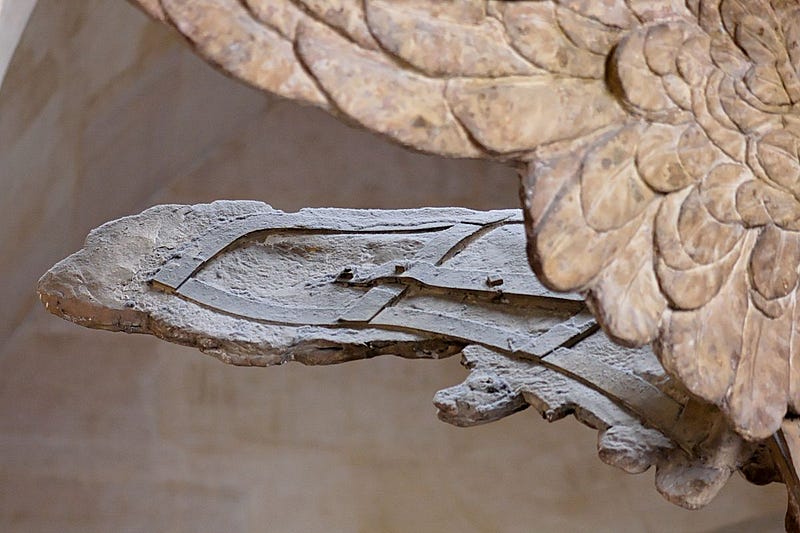
An unknown artist has depicted a winged Nike standing at the bow of a ship. Her wings are spread out behind her in a V shape, as if she were about to take to the air. The effect is enhanced by her right leg extended forward. The sculpture has no inscriptions or identifying marks, so its origin and purpose remain a mystery. The sculpture is about 2.4 meters high.
Although Nike was the goddess of victory, her sculpture is not without imperfections. Her head and arms are missing. It is believed that they were never completed or were intentionally removed for a more dramatic effect.
.jpg)
What is worth knowing about the goddess Nike?
Nike, the goddess of victory, is a figure from Greek mythology. She was most often depicted as a beautiful young woman with wings and a golden crown, holding a laurel branch in one hand and a palm branch in the other. As she was the epitome of bravery and strength, she is believed to have cheered Greek soldiers into battle. She was also thought to have inspired Hercules and Achilles.
The goddess Nike was a popular figure in classical art and literature, especially in the works of Homer and Virgil. She was sometimes depicted as a powerful warrior goddess, leading her own army and taking part in battles. In some cases she is depicted as a messenger of Zeus, delivering messages to the gods and bringing them news of victory or defeat.
The temple of Athena Nike on the Acropolis is a reminder of her worship. It is estimated to have been built in the fifth century BC. Nike also appeared on coins. Her statue found at Samothrace is not the only such figure in history. The goddess was extremely popular. And no wonder. Thousands of years ago, as well as today, victory and triumph are desired by people.

Interesting facts about Nike of Samothrace
- The Nike of Samothrace has appeared on postage stamps many times, including on a 1936 Greek stamp and a 1964 French stamp.
- In 2018, the Nike of Samothrace was the subject of a large-scale restoration project funded by the Louvre and the French government.
- Some historians believe that the Nike of Samothrace was most likely created by a disciple of the famous Greek sculptor Praxiteles.
- The goddess of victory is also represented by other sculptures. The most famous are Nike of Olympia and Nike of Delos.
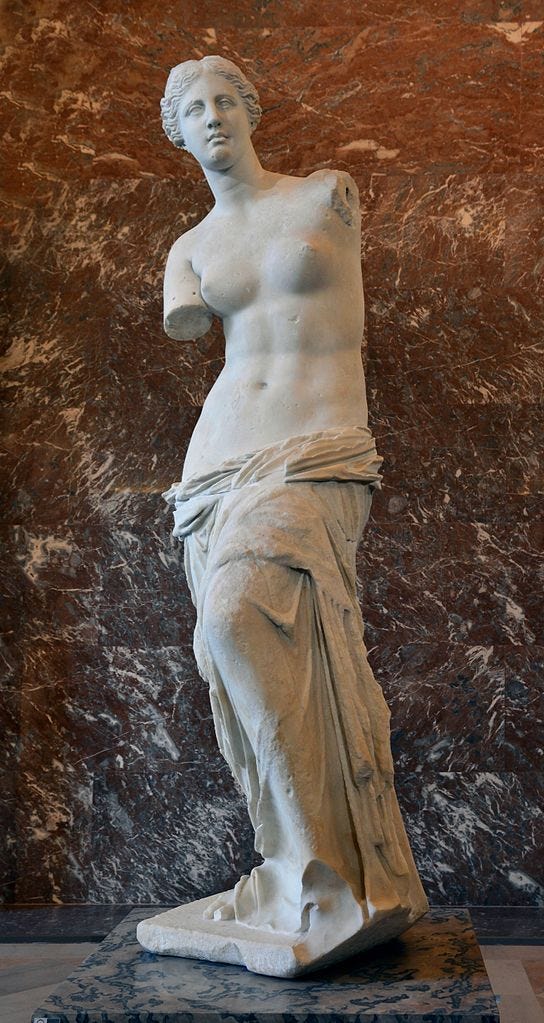

Famous Greek sculptures
Another very famous Greek sculpture is the Venus of Milo. More than 2,000 years old, the Parian marble statue is famous for its graceful beauty. She has inspired many works of art and literature over the centuries. The motif has also appeared in many films, including 2003’s “Dreamers.” Her gracefulness was not even harmed by her lack of arms. Interestingly, Venus of Milo is also known as Aphrodite of Melos.
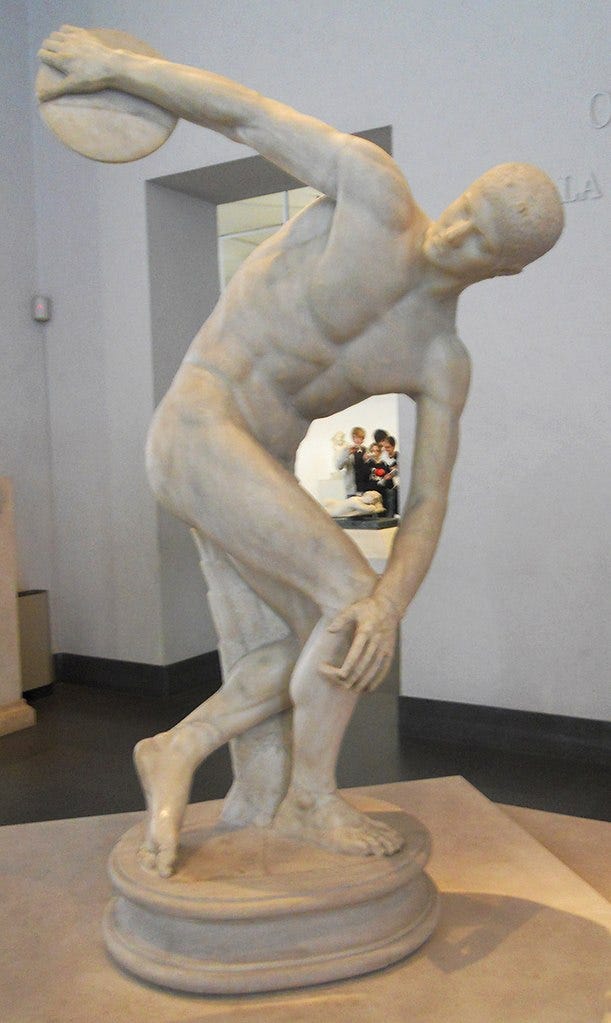
.jpg)
The Discobol is no less popular. The sculpture from the 5th century BC depicts a young athlete throwing a discus. Experts consider it an exemplary masterpiece of classical art. Made of bronze, the sculpture conveys an impression of movement rarely seen in ancient sculptures. The figures depicted were usually in static positions.
Cool that you made it to the end of this article. I will be very pleased if you appreciate the effort of creating it and leave some claps here, or maybe even start following me. It would be nice if you also left a tip! Thank you!