
FAITH
Faith is Not What You Think it Is
Letting go of the need for certainty

His definition of faith is what he thinks about. That was the answer someone gave me when I asked, “Where does that leave faith in his life?” in regard to this person’s struggle with a current family crisis and the ongoing need to control others’ behavior.
I understand his confusion and dismay. I get the struggle, and yes, it is real. You see, evangelical Christianity has confused faith with right thinking.
And it’s time we untangle the two. For the sake of our peace and our relationships.
It’s time we ditch the Christianese and the legalism and get real about faith.
Ditching the Christianese and Getting Real About Faith
What does it mean to ‘have faith’?
medium.com
“As soon as we abandon ourselves to God and do the task He has placed closest to us, He begins to fill our lives with surprises. When we become simply a promoter or a defender of a particular belief, something within us dies. That is not believing God — it is only believing our belief about Him.” — Oswald Chambers
Faith is often represented in Christian circles by a set of values or what one thinks about Christ and even where one’s loyalty lies. And sometimes it can be confused with “knowing the Bible.”
Don’t get me wrong, all these things are part of life and must be thought about. Jesus asked his disciples,
“But what about you?” he asked. “Who do you say I am?” (Matthew 16:15, NIV)
And He asks the same of us.
But what we think we know about God doesn’t solidify our faith. Even knowing what the scriptures say about faith isn’t faith. If that were the case, the Pharisees would have attracted Jesus’ favor more than they attracted his ire.
Faith is active. It’s messy and sometimes weak or confused, and it doesn’t have to be more than a mere seed to get us into a relationship with God. Faith is how we live and it’s ever-evolving.
But, Christians struggle with that word…evolve. It evokes a lack of faith and denying God as Creator and Supreme Being.
But it shouldn’t.
Without an evolutionary world view, Christianity does not really understand, much less foster, growth or change. Nor does it know how to respect and support where history is heading. — Richard Rohr
So spacious is he, so roomy, that everything of God finds its proper place in him without crowding. Not only that, but all the broken and dislocated pieces of the universe — people and things, animals and atoms — get properly fixed and fit together in vibrant harmonies, all because of his death, his blood that poured down from the cross. (Colossians 1:19–20, MSG)
Faith is always challenged, one way or another
Nothing rocks one’s world more than children growing up and taking on their own identity, values, and ideas about the world and God. I get it. We invest a lot into our children, doing all the right things so their faith will be strong.
But maybe what we mean is so they will think the way we want them to.
And there is a reason for this. It’s fear.
We’ve been inundated with the message that it’s our responsibility to produce and raise children who think the right way — in other words — are raised in the faith and never depart.
But what is “the faith”? Is faith a thing, an institution, a belief system that must be rigidly adhered to? Is it a set of rules, thinking, and behaviors that when closely examined gets the stamp of approval. Yes, you think this way, behave this way, do this and refrain from that…you are a Christian.
Oh, that it was so simple. And don’t think I didn’t try. I wanted my children to be secure in their faith, unlike I was as a child. I wanted them to have a sure foundation, that even if they drifted they would know where to return.
I invested in their lives with Bible Man videos, children’s Bibles, evening prayer, set the example with my personal life and regular church attendance and service, mission trips, Christian schooling and Bible college…you name it and I do believe I did it “right.”
And then they grew up and started to think about things for themselves — another gift I freely gave them.
Questions arose and philosophical papers were written that challenged my faith and caused me to question all I had been exposed to in 30+ years of evangelical church attendance.
I began to listen, exchange ideas, and pray a lot, but one thing I refused to do was worry about my children’s evolving faith.
The Sin of Certainty by Peter Enns
I think we do a disservice to each other and our children when we refuse to tolerate out of the box thinking or discussions.

Maybe you’ve heard the story about the Sunday School teacher who asked her students, “What’s brown, has a fuzzy tail, and hides nuts?”
One child raised her hand and answered, “I think it’s a squirrel but I’m going to say, Jesus.”
Humorous, yes, but everything that is funny has an element of truth to it.
This is a point illustrated succinctly in the book, The Sin of Certainty, by Peter Enns.
I would suggest this is a book all evangelical believers should read. It will challenge you to think, rethink, and re-evaluate what faith is. And why it cannot simply be what we think about God or a set of moral standards.
I won’t lie, it felt disturbing in some places and I wanted to close it and walk away. But I couldn’t. And the reason I couldn’t was that so much of what he wrote was echoing and resonating in my own heart and mind. He simply gave words to things that had been swirling inside me for a long time.
He drives doubt into the sunlight and forces us to reconcile with it. His writing exposed religious thinking in areas of my life I hadn’t seen. And he opened the door for me to let go of the need for certainty.
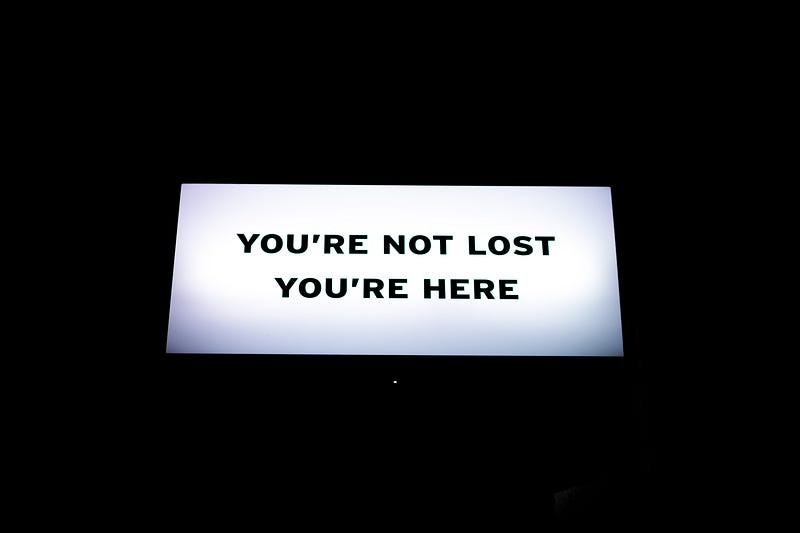
Did God make the world in a literal six days or did He speak energy into existence and provoke the universe to create life? It doesn’t really matter to me anymore. In fact, I’m more excited about the latter than the former! His creation is not static; it expands and continues on in an infinite explosion of His power and grace.
And for the record, I don’t think that you are wrong if you believe the former, and I don’t think it endangers your salvation or mine. A God who insists on proper thinking is a God that is too small for me.
Is the Kings James translation the right one or is the NIV what I’m supposed to read? I’ve been reading The Message and I can tell you that it’s given me a perspective on God I’ve never had before.
And is that okay? To think about God differently than I used to? To expand my understanding of His ways? To understand that He’s not the God of my culture or my nation or even my time, that He’s a God who transcends language and color and race and even religion?
I’ve even been studying some Hebrew prayers and they’ve added a richness to my understanding of things like Sabbath and worship.
I’ll be honest, I don’t want a God that I can understand or tame. Do you?
“Safe? Who said anything about safe? ‘Course he isn’t safe. But he’s good. He’s the King.” — C.S. Lewis (The Lion, The Witch, and The Wardrobe)
Letting go of the sin of certainty does two things
- It removes the boundaries around God that religion and right-thinking create. God is now free to show up in my life in whatever way He wants. I no longer constrain Him to do things the “right way.” Sorry — but yes, He might heal me and He might speak to me and He might even use someone who doesn’t proclaim to be a Christian to teach me something.
- It allows me to rest in His freedom. God’s not obsessed about my behavior because, as Graham Cooke says, He is not an evangelical. I am a new woman and I can live like one — not obsessed with behaving just so. He’ll change me by the power of His Spirit.
Colossians is replete with what living in the freedom of Christ looks like. (Galatians is the text for understanding how this freedom was obtained.)
Entering into this fullness is not something you figure out or achieve. It’s not a matter of being circumcised or keeping a long list of laws. No, you’re already in — insiders — not through some secretive initiation rite but rather through what Christ has already gone through for you, destroying the power of sin. (Colossians 2:11, MSG)
So don’t put up with anyone pressuring you in details of diet, worship services, or holy days. All those things are mere shadows cast before what was to come; the substance is Christ. (Colossians 2: 16–17, MSG)
Don’t tolerate people who try to run your life, ordering you to bow and scrape, insisting that you join their obsession with angels and that you seek out visions. They’re a lot of hot air, that’s all they are. They’re completely out of touch with the source of life, Christ, who puts us together in one piece, whose very breath and blood flow through us. (Colossians 2:18–19, MSG)
So, then, if with Christ you’ve put all that pretentious and infantile religion behind you, why do you let yourselves be bullied by it? “Don’t touch this! Don’t taste that! Don’t go near this!” Do you think things that are here today and gone tomorrow are worth that kind of attention? Such things sound impressive if said in a deep enough voice. They even give the illusion of being pious and humble and ascetic. But they’re just another way of showing off, making yourselves look important. (Colossians 2:20–23, MSG)
Faith is more than what we think we know about God. It’s much too important to allow our finite minds to define it. It undergirds our existence. It makes life worth living. It’s the basis of what we can’t see or measure or define or memorize.
The fundamental fact of existence is that this trust in God, this faith, is the firm foundation under everything that makes life worth living. It’s our handle on what we can’t see. The act of faith is what distinguished our ancestors, set them above the crowd. (Hebrews 11:1, MSG)
This story is published in Koinonia — stories by Christians to encourage, entertain, and empower you in your faith, food, fitness, family, and fun.
We are a Smedian Publication. Find out about us and how to write for us.