
Ditching the Christianese and Getting Real About Faith
What does it mean to ‘have faith’?

Religion is easy
Religion is stale. It is static and likes the status quo. And religion can lure us into a false sense of spirituality if we don’t take inventory of our spiritual lives now and again.
I have to confess that I used to think I had all the answers, that I pretty much knew everything I needed to know about God and the Bible. I could do well and hang in any Bible trivia contest. I had scripture memorized and I knew how to pray using scripture. I understood all the basic tenets of the Apostles' Creed and I could defend my faith if needed.
I understood how to illustrate the bridge to heaven and could lead someone to salvation using the ABC method. I have testimonies of God’s intervention in my life — stories of healing, miracles, and provision. I’ve seen God come through for my family against seemingly impossible odds and circumstances.
I really connect with His Spirit in worship and prayer and I know His will is often revealed to me through communion with His Spirit. God is real and personal to me and yet, I have to admit, at some point, I fell into a religious rut of checking boxes and going through the motions.
Having faith, being in the faith, walking in faith, saving faith…etc.
Christians throw around a lot of phrases and common terms, and I used them all — even at the risk of sounding like I was speaking Christianese. I tried to ‘walk in faith’ and I knew I ‘had faith’ but what does it mean to ‘have faith’? Is it a possession, a status, an achievement, or a destination? Even now as I ask this question and write these words it sounds impossible to define.
I could say this, “Faith is the substance of things hoped for, the evidence of things not yet seen.” (Hebrews 11:1, NKJV) But that would only be quoting scripture and not answering the question of what it means to ‘have faith’ and what faith means to me, personally.
You've got to own it
As a reading teacher, I know that when children are learning new vocabulary words they have not really learned the word until it becomes part of their personal vocabulary and until they ‘own’ or use that word confidently in their speaking and writing.
I think it’s the same with faith. If all I’m doing is repeating a memorized definition of faith that I've been taught, is it real to me? Have I internalized faith? Is that just religion talking?
It’s like asking a child what ______ is and they recite word for word a learned definition. That’s why we ask children to describe ‘in their own words’ or to explain their work. This is how educators determine if a student has learned the concept.
Putting faith into our own words
Until we learn to explain, apply, and discriminate a new skill or concept, we’ve only memorized it or are merely repeating what others have said. It’s like the Sunday school lesson where the teacher asks her first-graders, “What’s brown and furry and buries acorns?” One brave student raises his hand and says, “I think it’s a squirrel but I’m going to say Jesus.”
It’s got to be real to us or all we’re doing is regurgitating someone else’s definition of faith or trying to fit into a religious construct.
One morning, I began to ponder faith and my mind tried to grasp for my own understanding of faith. Is faith a feeling, a belief in a certain defined thing, or is it a definition? Does one ‘have faith’ if _____(fill in the blank)? Is faith a mindset, a determination, a motivation, a willingness to trust, believe, or hope?
Is it a collection of truths one gathers like a bouquet? Here’s my faith — what does yours look like?
Is it action — because the Bible says without works faith is dead — so I’m sure action has something to do with faith. But, how do you define works and are they personal or is there a list of works one must adhere to in order to create faith? (see James chapter 2)
Can faith be mustered? In the presence of fear, what does faith look like? Does faith waiver, wane, grow, increase, or is it a constant understanding or force always surging through us? What if we ‘have faith’ but don’t attach that faith to a higher spiritual being — is it still faith?
Is having faith that things will work out just optimism or positive thinking? Can one truly have faith and be negative or pessimistic about outcomes and one’s future? Is faith impacted by our fears, action/inaction, sin, or thoughts?
Can one have faith but still doubt? What did Jesus mean when he healed someone and then said, “YOUR faith has made you whole?”
How do you distinguish between faith and hope or trust? How do they differ? What does a woman of faith do, act, say, that positions her as such?
If we use the Bible as our reference, faith clearly has to do with trust, hope, assurance, and confidence in something we cannot see.
“Now faith is confidence in what we hope for and assurance about what we do not see. (Hebrews 11:1, NIV)
The fundamental fact of existence is that this trust in God, this faith, is the firm foundation under everything that makes life worth living. It’s our handle on what we can’t see.” (Hebrews 11:1, MSG)
And these verses indicate that faith is intertwined in a belief in God and His goodness toward His created beings.
“And without faith, it is impossible to please God because anyone who comes to Him must believe that he exists and that He rewards those who earnestly seek Him.” (Hebrews 11:6, NIV)
“It’s impossible to please God apart from faith. And why? Because anyone who wants to approach God must believe both that He exists and that He cares enough to respond to those who seek Him.” (Hebrews 11:6, MSG)
Let’s ask the people
All of these verses help us move toward faith, but I was curious what others thought about faith, so I asked my Facebook friends and followers what faith meant to them. It soon became clear from the myriad of responses that it was a topic they were passionate about, but also that faith meant something a little bit different for each of them.
A higher power
For some, faith represents a belief in a higher power, or God, who cares about them and affords them peace. This peace comes from ‘knowing’ their ultimate well-being is in the hands of something or Someone more powerful and reliable than themselves. I suppose that ‘knowing’ is faith or a component of faith.
Hope for better things
Others express the idea that faith is a belief that things would work out — no matter what — and that they could overcome obstacles and setbacks in life. They don’t need to know all the answers, they just need to trust that Someone does.
Confidence
Most acknowledged that faith was confidence in something, or in God that, although unseen, was real and worth trusting. Some expressed confidence in themselves that they can overcome or find their way even if life gets hard.
Words like hope and trust were intertwined in their definitions too.
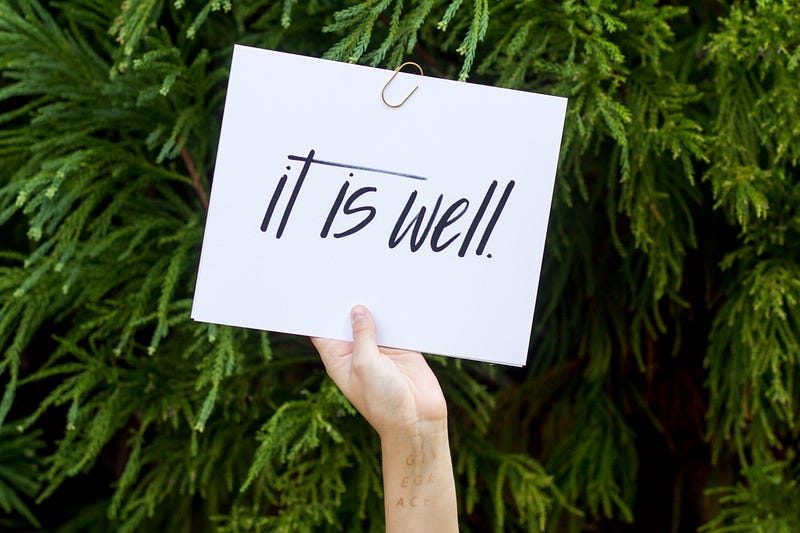
For me, faith is intertwined with trust and hope but each has a unique purpose
Thinking about all the ways others defined faith and writing out my questions helped me clarify faith for myself. I see faith as a conduit, a rope by which I find hope and through an act of trust extend that rope to find God.
For me, faith says, I know you’re out there and I want to see you, know you, find you, connect to you. By extending my rope of faith I launch hope in my life and build trust in His goodness and love (see Heb 11:6 from above). Trust is the catalyst for my faith and hope is the result or fruit of faith.
My thinking about what faith is goes something like this
I trust that there’s someone out there who cares for me and I want to seek Him and know Him. I’ll extend this rope and see what happens. Trust makes me do it, faith is how I seek God, and hope is the result of the connection and interaction I get back from God.
Faith is me extending my hand, my arm, my thoughts, my heart, in God’s direction (you only need a mustard seed to get started). When God sends back a response — peace, comfort, miracles, understanding — my faith is strengthened. I believe that I am heard and known and that this God I seek cares for me, so I continue to seek and move toward Him on a constant basis.
The reward for faith is hope. I’ve now had confirmation that I can trust God — this greater power — and hope is the result of seeking Him in faith.
Ultimately, hope is what sustains me when my faith feels weak and trust is what prompts me to keep coming back to faith as I navigate life.
So to ‘have faith’ isn’t a state of security or a label for me. It’s not dependent on the religious things I do or don’t do. I’m reaching toward God with every fiber of my being as I observe Him around me, seek His wisdom in decision making, and breathe silent prayers of gratitude when blessings roll over me.
For now, I think I’m happy with my answers, I’m grateful for those who shared their thoughts on Facebook, and I’m curious, how do you define faith? What does faith mean to you?
P.S. I seem to have a better handle on defining grace! See for yourself and let me know what you think!

This story is published in Koinonia — stories by Christians to encourage, entertain, and empower you in your faith, food, fitness, family and fun.
We are a Smedian Publication. Find out about us and how to write for us.