avatarChristianlauer

Free AI web copilot to create summaries, insights and extended knowledge, download it at here

1472

Abstract

is one of the easiest to learn programming language and has many useful libraries. Also, Scala is often used. Scala is an extension of the Java language. [1]</p><figure id="a99d"><img src="https://cdn-images-1.readmedium.com/v2/resize:fit:800/0*JG9L-w8VMn1dubq_.png"><figcaption>Example of a Data Engineering Tech Stack — Source: <a href="https://databand.ai/blog/modern-data-stack-data-engineering/">Databand</a> [2]</figcaption></figure><p id="874f">Take the example from above, here a Data Engineer would at least need to know SQL for the toolset consisting of Google BigQuery and or Amazon Redshift. Python for example is also used here for data processing between the systems. This example illustrates quite well that even if drag and drop tools are used for special requirements, programming languages knowledge is still necessary. After all, some statistical analysis or machine learning programs could also be integrated into an IT landscape. Here, usually R or Python will be helpful. There are interesting libaries for Python that you can use in the area of Data Engineering and Big Data. In this case, you might find this article interesting:</p><div id="33fc" class="link-block"> <a href="https://readmedium.com/my-top-big-data-python-libraries-baba75af9305"> <div> <div> <h2>My Top Big Data Python Libraries</h2> <div><h3>Which Libraries can help to process Big Data?</h3></div>

Options

<div><p>medium.com</p></div>
          </div>
          <div>
            <div style="background-image: url(https://miro.readmedium.com/v2/resize:fit:320/1*7lgWlkbMN1pZdQOq5SDuKg.jpeg)"></div>
          </div>
        </div>
      </a>
    </div><p id="9275">Interestingly, there is also a trend that combines Data Engineering and Data Science. With Alteryx and Talend , for example, Data Scientists can realize their own data processes, while Data Engineers can also act in the field of Data Science and, for example, realize Machine Learning models via SQL. <a href="https://readmedium.com/why-data-engineering-still-matters-f65e8c63c52c">Read more about this trend here.</a></p><p id="b3a9">So even as more and more SaaS and drag and drop solutions exit, Data Engineers will continue to need partly programming skills, because there is a trend for Data Engineers to take over in Machine Learning and Data Science. Especially, the programming languages Python and SQL are often prerequisites here. If you are interested in what a Data Engineers can earn, <a href="https://readmedium.com/d7a793b27b51">click here.</a></p><h2 id="43e4">Sources and Furhter Readings</h2><p id="4d33">[1] <a href="https://www.scala-lang.org/">The Scala Programming Language</a> (2022)</p><p id="11fb">[2] Databa, <a href="https://databand.ai/blog/modern-data-stack-data-engineering/">Is the modern data stack leaving you behind?</a> (2021)</p></article></body>

PART 2— Programming Language Knowledge

What Skills does a Data Engineer need?

How to increase your Market Value and Salary
Photo by Markus Spiske on Unsplash

In order to be successful as a Data Engineer and thus increase your market value and salary, you need certain skills. I have thought about illuminating these in more detail in various articles — last time I wrote about how Data Engineers need database knowledge. This time I will focus on programming language knowledge.

As a Data Engineer you will propably need programming languages to process data and automate processing. Maybe you or your company need drag and drop data processing tools like Talend, Alteryx or Google Data Prep. However, a certain basic knowledge of typical Data Engineering and Data Science languages like R, Python or SQL will be helpful. SQL is the relational database standard, while Python is one of the easiest to learn programming language and has many useful libraries. Also, Scala is often used. Scala is an extension of the Java language. [1]
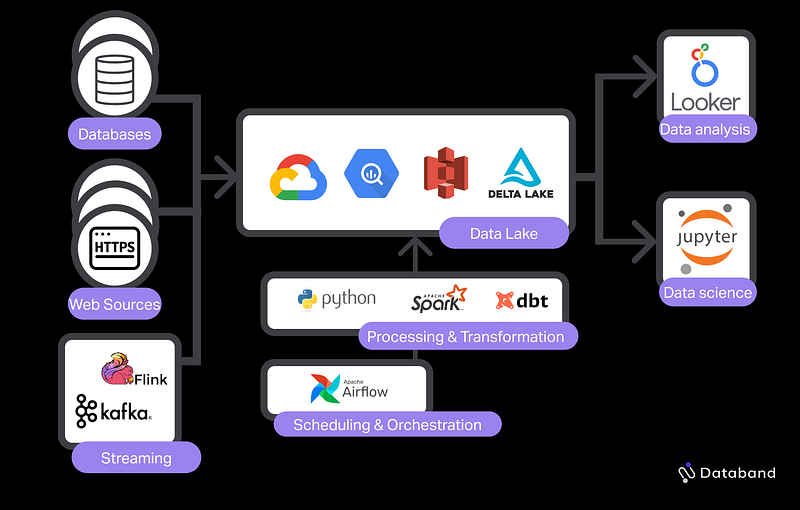
Example of a Data Engineering Tech Stack — Source: Databand [2]

Take the example from above, here a Data Engineer would at least need to know SQL for the toolset consisting of Google BigQuery and or Amazon Redshift. Python for example is also used here for data processing between the systems. This example illustrates quite well that even if drag and drop tools are used for special requirements, programming languages knowledge is still necessary. After all, some statistical analysis or machine learning programs could also be integrated into an IT landscape. Here, usually R or Python will be helpful. There are interesting libaries for Python that you can use in the area of Data Engineering and Big Data. In this case, you might find this article interesting:

Interestingly, there is also a trend that combines Data Engineering and Data Science. With Alteryx and Talend , for example, Data Scientists can realize their own data processes, while Data Engineers can also act in the field of Data Science and, for example, realize Machine Learning models via SQL. Read more about this trend here.

So even as more and more SaaS and drag and drop solutions exit, Data Engineers will continue to need partly programming skills, because there is a trend for Data Engineers to take over in Machine Learning and Data Science. Especially, the programming languages Python and SQL are often prerequisites here. If you are interested in what a Data Engineers can earn, click here.

Sources and Furhter Readings

[1] The Scala Programming Language (2022)

[2] Databa, Is the modern data stack leaving you behind? (2021)

Data Engineering
Data Science
Programming
Jobs
Technology
Recommended from ReadMedium