
Extreme Survival
A squirrelly SciKu*
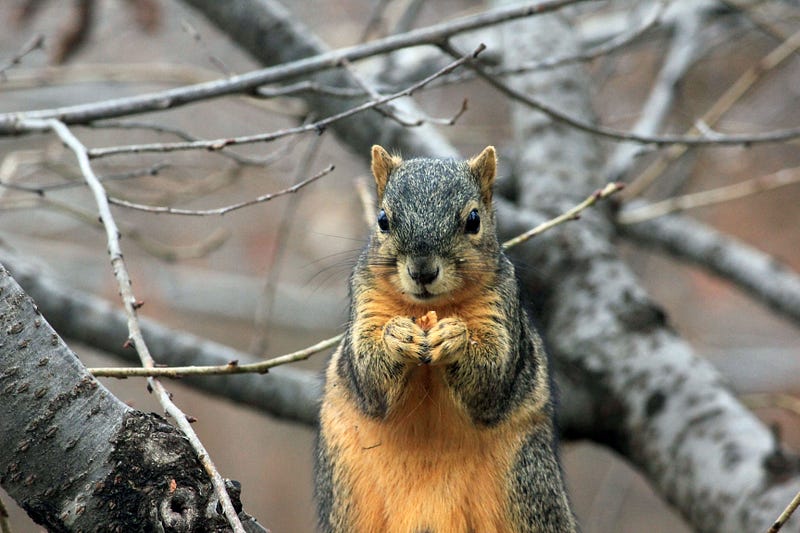
arctic harsh winter a variant of a protein ATP5G1 squirrel survives
Dear readers of this esteemed publication, I have been reading with interest the stories featuring squirrels in this journal, and I thought I would attempt to write one myself. So, here, I present for your consideration a squirrel Sciku.*
From butterflies to bats — to survive cold, many animals have developed a way to hibernate — that is — they turn down their metabolisms to save energy.
Arctic ground squirrel is one such extreme hibernator, known in the squirrel world for its superpowers of being able to drop its body temperatures to below 0°C —In fact, during hibernation, its brain temperature is known to drop to just above freezing, and its core body temperature reaches temperatures down to −2.9 °C (26.8 °F) while its heart rate drops to about one beat per minute — an ability that allows its cells to survive severe shortages of blood and oxygen. Still, it likely also causes metabolic stress in their cells.
Scientists have long been interested in studying how their cells are able to endure this metabolic stress. A recent study examining the genetic code revealed that Arctic ground squirrels have a variant form of a protein called ATP5G1. A protein that is found in mitochondria, which is responsible for supplying energy to the rest of the cell and therefore plays an important role in metabolic processes.
These findings provide one of the first pieces of evidence of a protein variant that is likely responsible for protecting cells during the metabolic stress conditions caused by hibernation.
Such findings from the cells of a humble, almost harmless squirrel could potentially help develop new treatments for diseases caused by a limited blood supply to human organs, such as a stroke or heart attack.
Thank you for reading!
** What’s a Sciku, you ask — According to The Sciku Project, it attempts to describe scientific discoveries in haiku-inspired form. For more on Scikus — please check out — The S&S Sciku collection
Also, Thank you to ScienceDuuude for providing a home for our squirrelly stories. Check out some of his recent squirrel insights:


