
TRAVEL WRITING PROMPT
Exploring Cultures Through Different Dishes From Around the World
The good, the bad, and the ugly — when your taste buds scream
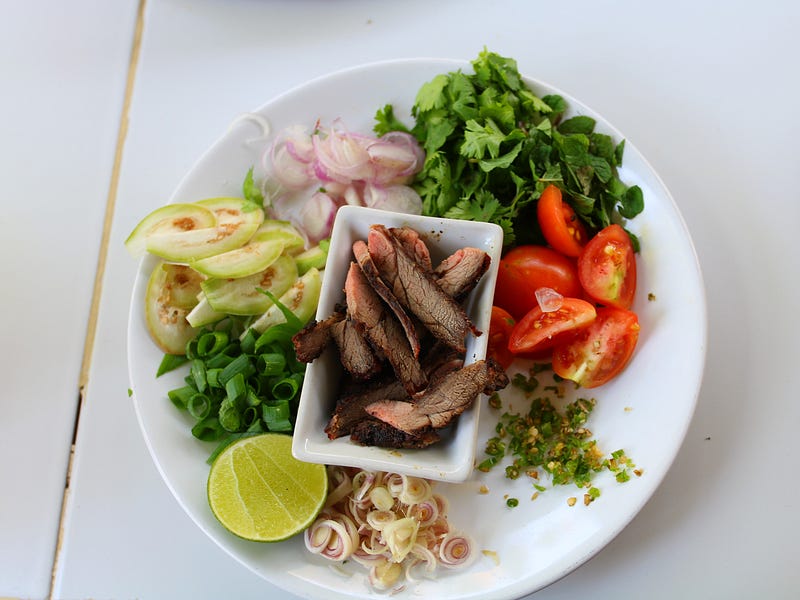
There is something about these exotic markets, the smell of rotten fish, and a coconut fresh from a palm tree. It doesn’t just immediately bring us back those holiday feelings where we don’t worry about anything in life and live in the moment. But it also brings back those explosions of flavor that happened in our mouth when trying again a new dish from a food stall.
It’s all about the food you might think sometimes. And I’m sure you’re right. But we need food to survive. Humans need food to live. And we need nutrients, vitamins, and cards to have the inspiration for mental work, be motivated, and have the energy to be physically active.
But food is more than just an essential piece of item. It is culture. It is traditions. And it is love. Many people forget the most important ingredient when cooking. They don’t pour love in their dishes and wonder why they taste so bland.

Different cultures
Over the years I’ve traveled across three different continents and explored countless countries. And while being on the road I was always on the lookout for food.
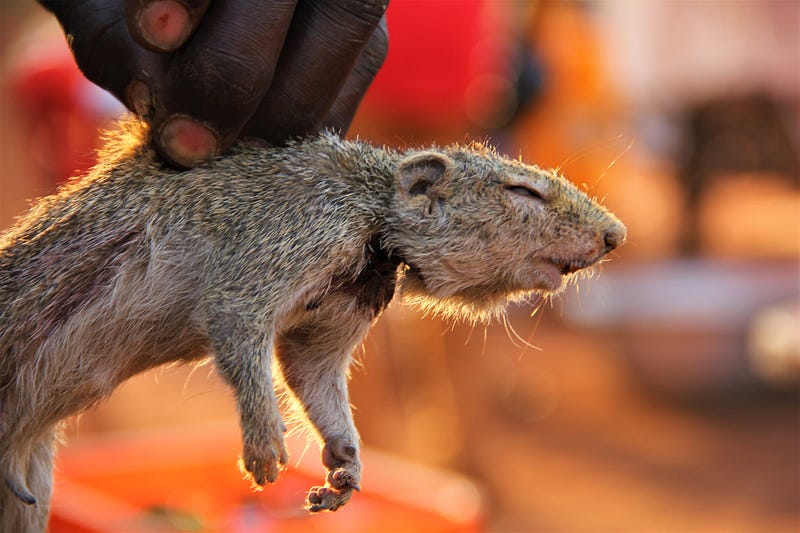
Sometimes the food that appeared in front of my eyes was so mouth-watering I couldn’t resist but to buy despite not being hungry. Other times I rather shook my head when a local wanted to hand me a dead squirrel on the street. No thanks, I‘m just not hungry now.
Cultures evolve around and with food. Different cultures cook with different ingredients, herbs, and spices. Growing up in Germany I wasn’t used to spicy food but when I came to Ghana there was no dish prepared without adding at least a bit of spice to it.
Out of pure necessity. To kill bacteria and avoid food posing due to the lack of hygiene they added spice. And they added a lot of it. It took me a while to get used to it but I learned to eat it. If the dish was too spicy I simply only ate half a plate of food instead.
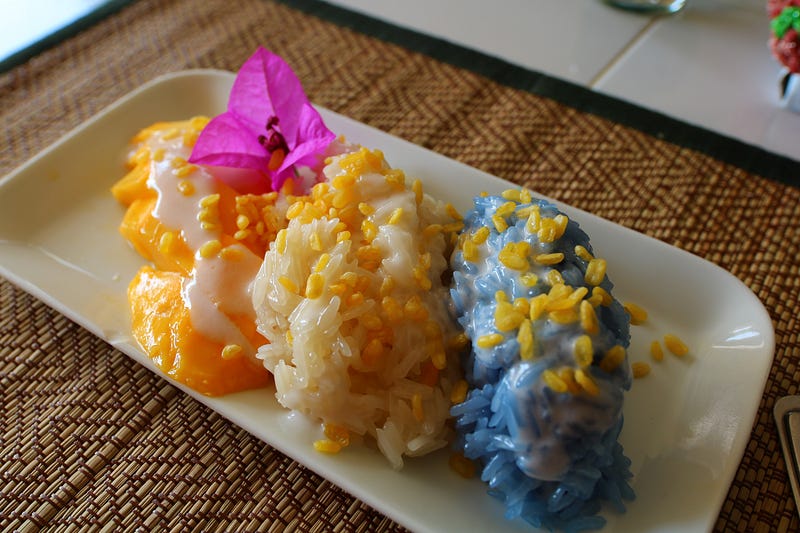
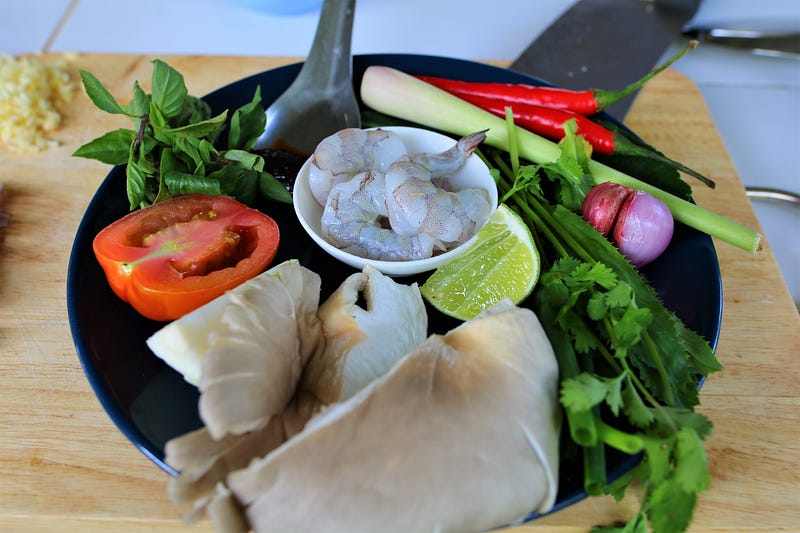
In Thailand, I got back onto the streets and devoured in their incredible variety of local dishes. I took part in a cooking class because I was fascinated by their simple way of cooking which created the most tasteful and delicious meals.
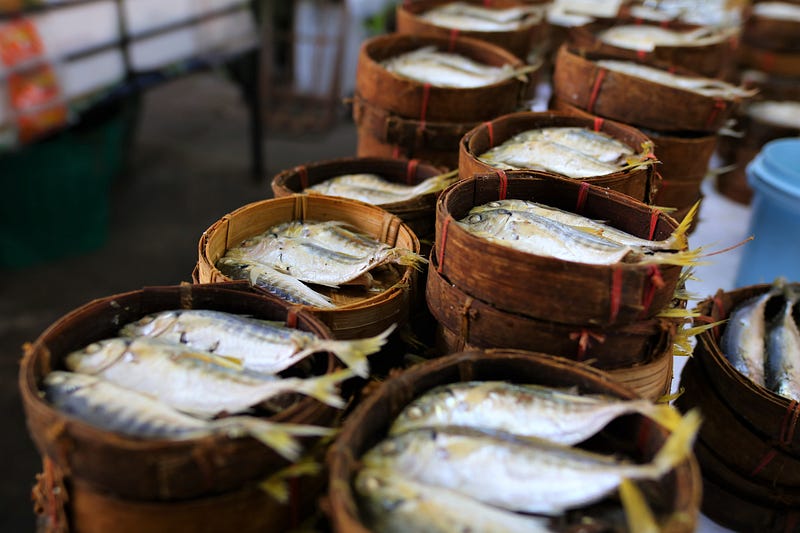
My weirdest foods
Traveling a lot to different countries and continents lets you explore different foods which aren’t always going to turn out as your new favorite dish. Sometimes those foods are weird or unknown to you. Sometimes they do not look appealing but are incredibly tasteful.
And other times they are simply weird. Because of the ingredient, the smell, or the texture of it.
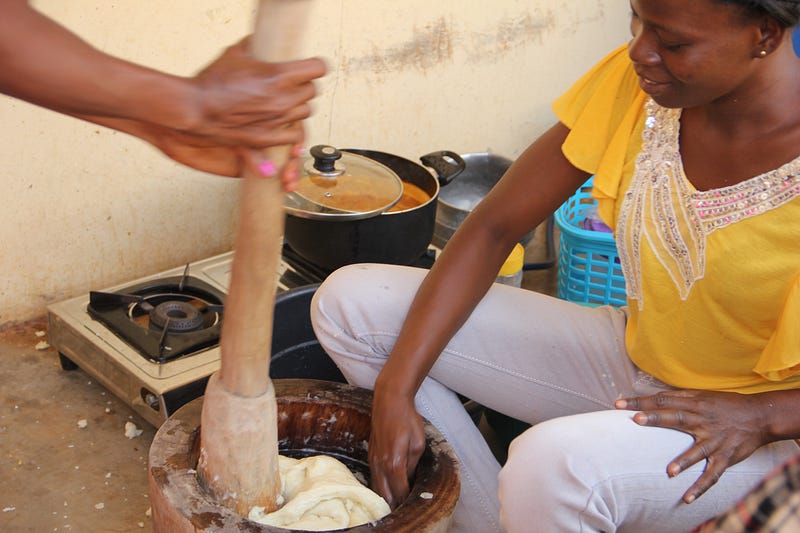
Foufou — the national dish of Ghana
When I said I would go live in Ghana for a few months my friends and family said I was going to starve since I wouldn’t find meat over there. I was and still am a meat-loving person. I enjoy a good steak but also a delicious Italian-style spaghetti carbonara.
Now that I wouldn’t get that in Ghana was rather obvious. But I was open to trying new things as well. I wouldn’t go straight to the most unknown one on the menu. But I would try now and then new dishes in Germany too.
In Ghana everything was different. Not a single dish on the menu was known to me. And while living in a host family I ate what I got served.
The one dish that is known throughout the country is Foufou. It’s a mushy meal prepared out of yam. In the north of the country, they often add cassava to it. In the south, they mix it with plantain. Sometimes the dish is only made of yam. It depends on the availability of the ingredients. While plantains don’t grow in the north they are therefore expensive to get.
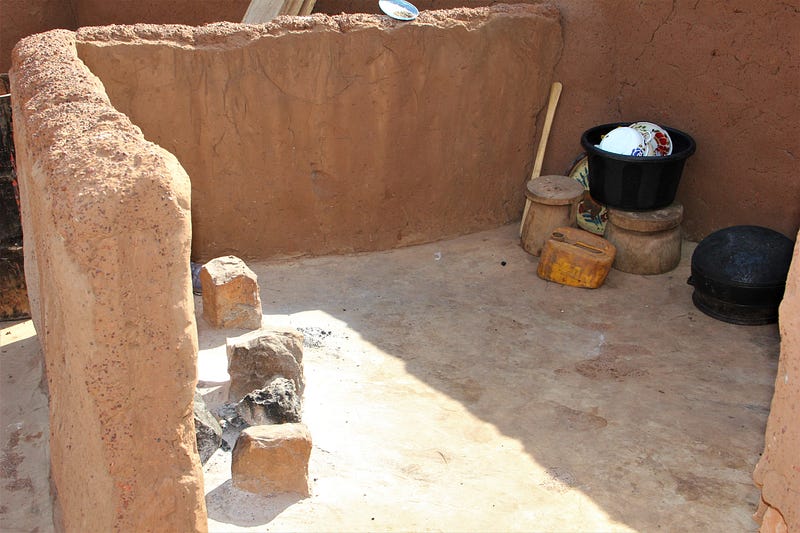
These ingredients get cut into a big ceramic pot on the ground and the women or men then have to use their force with the help of a huge stick to mush the ingredients into a fine porridge. One of the people is always sitting next to the pot stirring the ingredients with their hands while the other person smashes with force that wooden tool down. I was always worried about them hitting the hand.
In case you were wondering, they never did.
The longer you stamp the ingredients, the finer the Foufou would come out. The mush-like dough would get served with a soup. Mostly a fish or peanut soup. I wasn’t a big fan of the fish one since it was prepared with pieces of dried fish or fish powder. But I loved Foufou with peanut soup.
In restaurants, you could order this dish with meat as well. Mostly it was served with goat meat if I remember correctly. But sometimes with chicken as well which was delicious of course.
Oh in case you are wondering how they eat the food — they do not use cutlery in Ghana. You eat with your hands. Actually, only your right hand to be correct. You form a ball out of the porridge and then dip or soak in the soup.
It requires a bit of technique but due to the lack of cutlery in most restaurants too I quickly got the hang of it.
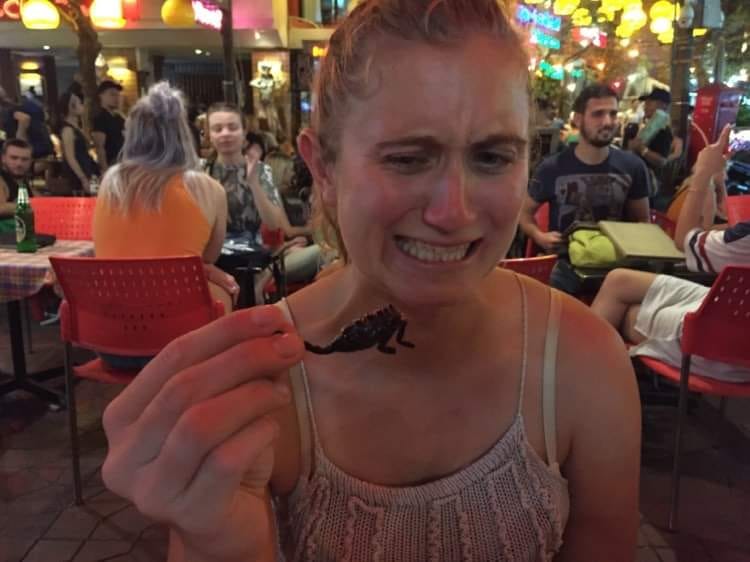
Eating scorpion in Thailand
Switching countries, continents, and time I was now in Thailand when confronted with grilled spiders, bugs, and scorpions. All across the streets of Bangkok, local women and men would offer these insects and small creatures on the streets.
We were in Asia for the first time in our lives and everything was new, fascinating and the hustle and bustle of Bangkok simply overwhelming.
We stayed two nights at the beginning of the trip in the city when we found ourselves on the second night sitting in a local restaurant drinking Chang beer and watching people walking by when the lady came to offer us a grilled scorpion.
We laughed and waved her off. No thanks. But she wasn’t the only one coming past our table. Countless street vendors walked between the tables offering the weirdest foods but also souvenirs.
As the evening got longer and the drinks got emptier but refilled again and we got more relaxed and enjoyed the atmosphere when eventually we told the next lady coming by we’d take one.
Yes, I’m talking about the scorpion. My, then-boyfriend (now husband), and I decided to share one and chose a medium-sized animal. We ordered a shot of vodka at the same time from the waiter.
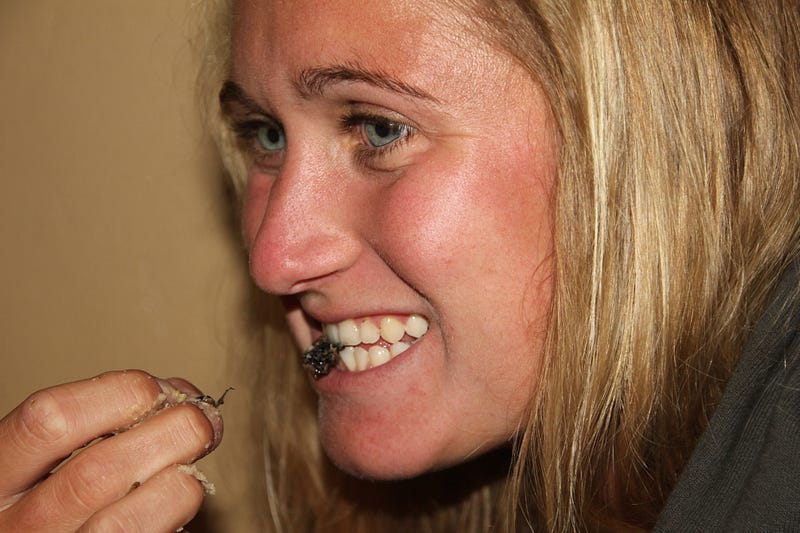
The life band stopped playing. All conversations on the tables around us stopped. We were laughing. Making grimaces. When eventually my partner took the first bite. His part of the scorpion was the head. Then it was my time. It got quiet.
I pulled such a grimace when I put the body of that scorpion in my mouth. The crunchiness of the bite was to be heard up into the next street. I chewed on it. It somehow reminded me of a crunchy bite of chicken. I told myself.
I downed the vodka.
And ordered another one while the whole bar started applauding. The live band resumed their music. And other tourists around us decided to order a scorpion too. From the same street vendor.
The lady came back to us and wanted to give us a present for making such an advertisement out of it. She picked the largest scorpion that had the size of a rat.
We laughed and shook our heads. No, thanks. One was enough. It wasn’t as bad as expected but I don’t need another one. The flavor of it is not the problem. Looking at the scorpion before putting it in the mouth and then having to deal with the weird texture was more of a challenge.
Eating fried Mopane worms
In my new home of Namibia, I had no issues adapting to the food culture since their local delicacies evolve around the various antelopes and their meat. Game steaks are juicy and taste so different than a piece of meat from the discounter around the corner.
Living as an expect surrounded by western restaurants throughout town I didn’t have to try many unknown foods apart from sushi which I got forced to eat. I never ate sushi before, but it changed my life. I absolutely adore it these days.
But I also went once to the townships together with my mom when she was visiting. And they served us a dish in a local restaurant when I saw the plate of worms being placed in front of me.
Once again, the look of the worms was more the problem than the actual flavor of it. Served together with a porridge (made from corn) that reminds me of our local dish from home called “polenta” (my other home — Romania) it wasn’t actually that bad.
Of course I had to pull a grimace especially while my mom was capturing the moment but I must admit I ate more than one of them. Can’t remember if we finished the plate of worms but we definitely ate the mealie-pap (mealie is the local word for corn or maize).
The most disgusting experiences
While these dishes were weird and unfamiliar to me they weren’t upsetting my taste buds (that much). There were other dishes which I could only eat once or/and not stand their smell at all.
My mom taught me never to use the word “disgusting” in the same sentence with food. I apologize, sorry mom, since I do know you will be reading this article like all the other ones too. But for these two dishes, I need that word to express my feelings.
Beans in oil soup
Reading the title you might think what is so disgusting about beans? It’s not about the beans. And it is not about the soup. It’s about the oil. Those beans aren’t served in a soup. They are served in a bowl or pure oil.
And that oil is not just there to fry or cook the beans. They serve the beans in the oil for you to eat it. In Ghana, they cooked with a lot of oil and eat way more oil than our western stomachs are used to.
I struggled more often with too oily food than with the spicy one. I would also refuse to dip any porridge into that oil. I would pick the beans out and only eat them once most of the oil dripped off.
I don’t know what it is with all the oil. I think they need it because they are missing the nutrients or whatever else oil does give you. But I don’t. I ended up avoiding that dish as much as possible. My host mom eventually understood it wasn’t for me and I apologized for it.
The Asian hate-or-love food — Durian
While the above was more about an ingredient I actually do use myself but simply can't handle it in that quantity is this dish about a fruit where I can’t stand the smell, the taste, or even a picture of it.
Durian is spread across most countries in Southeast Asia and is a favorite fruit among locals. Signs in taxis, trains, busses, and certain buildings warn you about the rule you’re not allowed to carry the fruit into these places.
Don’t worry. I wasn’t going to do that. I wasn’t going to put a durian fruit into my pocket and sit in a tiny, confined taxi for hours. Definitely not.
Durian is a fruit that splits the people in half. You either love it. Or hate it. There is no in-between. There is no “I-ate-it-and-it-wasn’t-that-bad” option. One of the two. Love or hate.
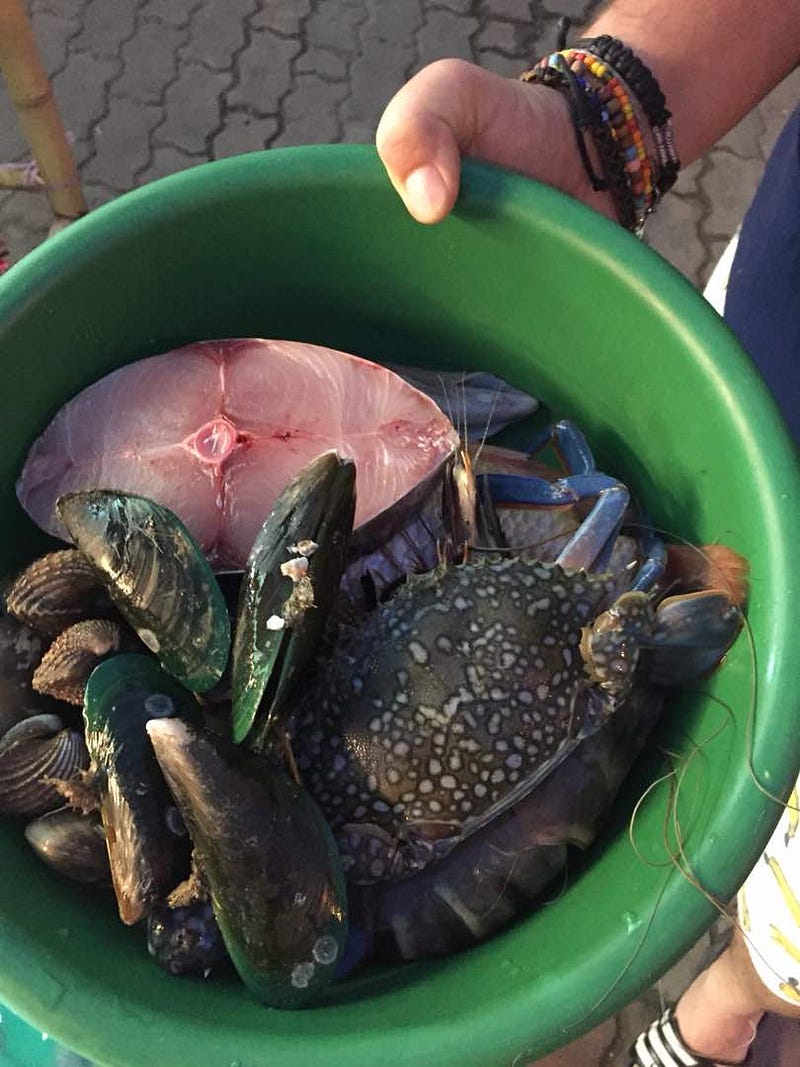
And go figure out yourself. I hate it. Durian is sold across the streets and also in supermarkets. You’ll find freshly cut durian, packaged in plastic in the attempt of trying to contain the disgusting smell but you also find dried durian, ice cream made out of durian, and durian flavored drinks.
When I first got in contact with the smell I was wondering what on earth could smell so bad until I learned it is a fruit that people eat. And apparently, the Thais eat a lot of it.
On our first excursion to Thailand as tourists, we did try it as well since it was apparently such a huge part of the culture. While I first had to close my nose before touching the fruit alone I couldn’t get rid of the taste afterward. It stayed in my mouth forever.
Vodka helped though in case you are wondering.
Since I am a friendly traveler I will be leaving this delicacy to the locals and voluntarily pass on ever eating one again. Thank you for that experience. Much appreciated.
My favorite dishes
And while I started with the weird and bad experiences I had on the way, there are many more positive ones. Those where your eyes pop open and you can’t believe the flavor appearing in your mouth. It is so delicious you can’t stop eating and would preferably eat the dish for breakfast, lunch, and dinner.
Which I might have done sometimes. I admit.
Street food sushi in Thailand
I mentioned before that I never had sushi growing up in Germany and lived most of my life without eating raw fish. Until I came to Namibia. Until I was sitting with friends in a local seafood restaurant getting served sushi for starters and got forced to try one. With a decent amount of wasabi.
Then it was all over. I lost. I lost against this new favorite dish of mine I can’t resist when seeing, hearing, or reading it on a menu. I simply love sushi. All types of it. Vegetarian, fried, or with raw fish. I love it.
And when we moved to Thailand in 2019 there was no other dish I ate more than sushi. All-you-can-eat sushi restaurants might have gone bankrupt after we left. Because I ate it all. As much as my stomach could take and more.
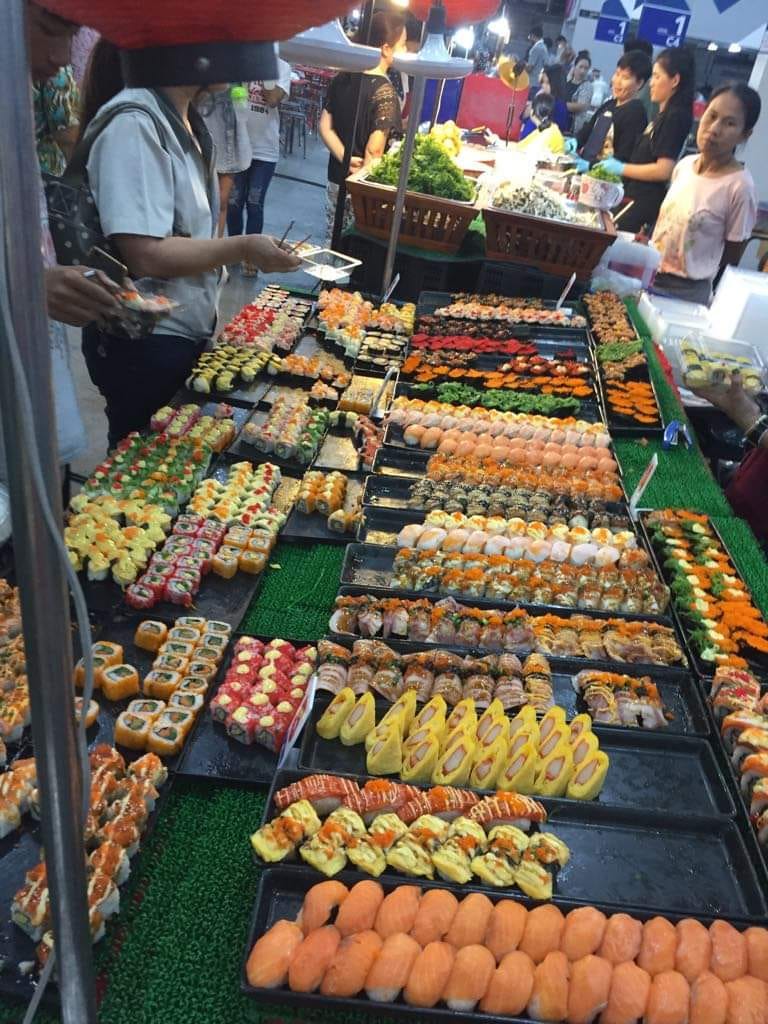
But my favorite sushi was the one sold on the streets. You might stop for a moment thinking about eating raw fish from a simple food stall on the street might not be the best died unless you want a ticket with food poisoning straight to the hospital.
No, my friends. That is not true. You don’t buy sushi on a food stall when there are two pieces left on the tray. It means this street vendor is trying to close up and wants to sell his last pieces.
You also don't buy sushi where lots of it is displayed but nobody is buying it. You go to the sushi stand which you can’t see because it’s crowded with locals. First of all, locals know what is good. If it’s not good what they eat they won’t come back. And where a lot of them stand the food speaks for itself.
Second of all, if a lot of people are standing in line to get food (this counts for any street food you’re buying) it means what you get will be fresh. There is a high turnaround time on the served food and the vendor has to continuously prepare new dishes.
Which is what you want when eating raw fish. You want it fresh.
Another bonus of these sushi stalls on the local markets was, they served small bites of sushi. The sushi was much smaller than the one served in restaurants. Mainly because they would use less rice in total but also less rice in relation to the other ingredients. And small pieces of sushi meant I could buy more different ones and try a bigger variety.
When we would walk past a sushi stand on a market my partner would only say “oh no”. He loves sushi too. But not the way I adore it. And he knew we couldn’t walk past it without me buying some.
But where else in the world will I be able to get such fresh sushi AND be able to afford it? Because after all, a piece of sushi in Thailand cost me a few cents on the street. While in restaurants in Europe you’ll have to bring with your entire paycheck to pay for the meal.
The one and only — black pepper crab
And then there was a crab. The one and only. The one I didn't know before I tasted it and the one I couldn’t stop thinking of once I devoured it.
We were for a few days in Kuala Lumpur, the capital of Malaysia when we found ourselves strolling across a night market in the search for food. My husband kept on saying we must try this crab since he watched YouTube videos about it being such a local delicacy.
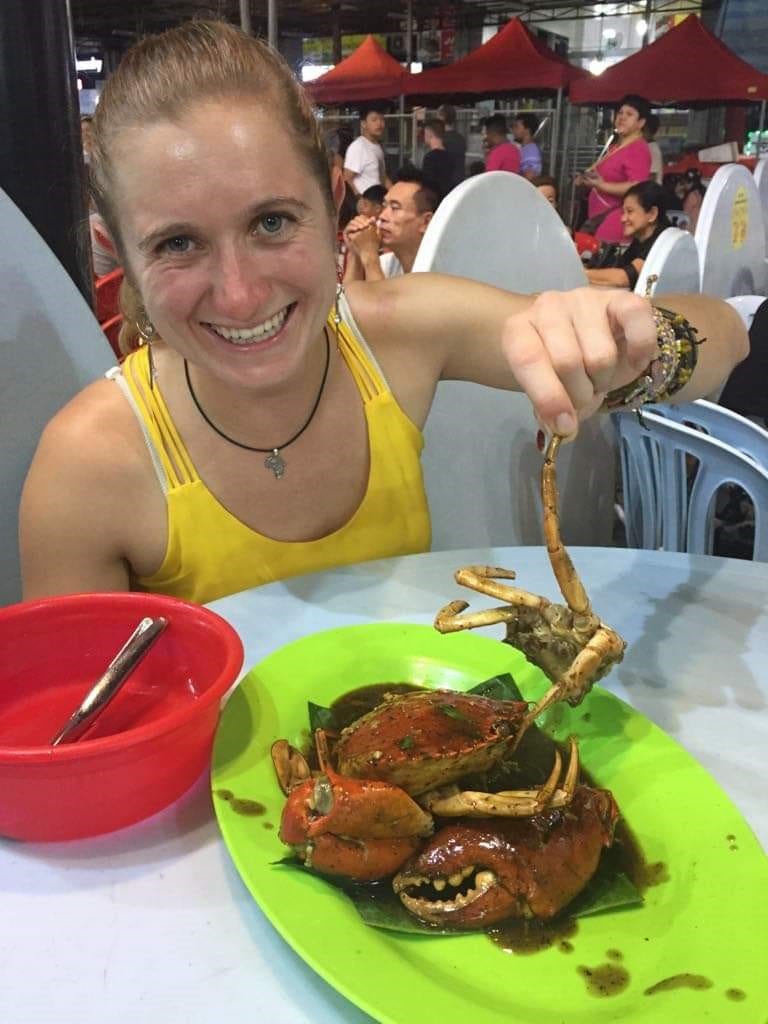
Well, every single restaurant was serving the black pepper crab so we chose the one with the friendliest waitress. She didn’t just convince us to eat at her table but came out with two different-sized and very much alive crabs for us to pick one.
Talking about fresh food.
And you might think this dish could fit in the category of “weird foods” and I might have done the same. Before this day.
When the waitress brought our food she delivered it with some tools and a bowl of water. Yes, I said tools. Tools with which we could break open the hard shell of the crab.
From this point on there were no more pictures taken. We dived into this experience of eating the black pepper crab with both hands. This is clearly finger food but we made a real mess out of it.
We devoured that delicacy and couldn’t believe what we just ate. The sauce was absolutely delicious. The meat of the crab so soft and juicy at the same time. I have no words to describe but to say we are still talking about this meal up to this day.
I was covered in crab shells, sauce, and water from head to toe. More or less. The bowl of water the lady brought to clean our hands was nearly not enough. I would have needed a bucket to take a shower. I think that speaks for itself.
Grilled crayfish
I did not really know I was an enthusiastic fish-eater before I came to Namibia. I did not only fall in love with sushi but even more with freshly-caught and self-prepared crayfish.
It is THE local delicacy on the Namibian coast. And my friends and I would catch it ourselves in the ocean. I’m lying, I never caught one. I just pretend as if I am diving for them and get the bag filled by others. Because there are restrictions on catching this lobster type of animal. Only seven per person. And we are only allowed to catch them from November until April.
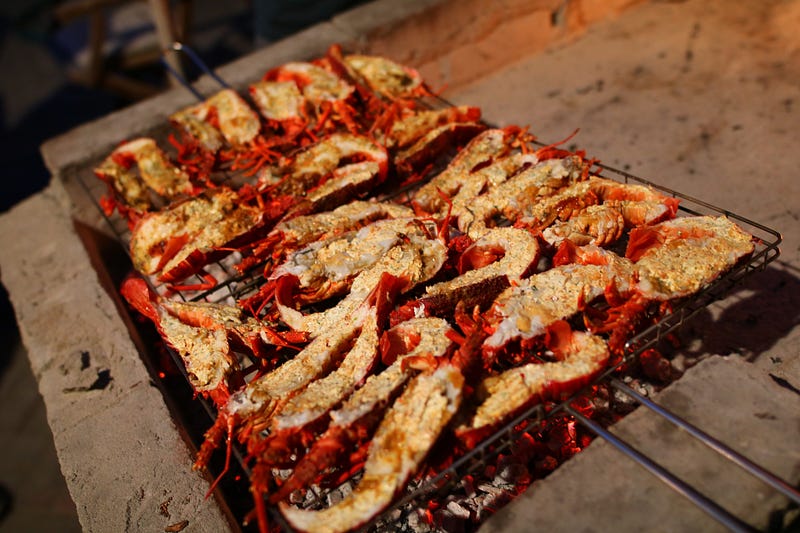
And yes, once the crayfish are caught, we throw them into drinking water which will kill them. Then we prepare them ourselves. On the beach. Sometimes also in the desert. We put them on the grid and grill them over the fire. With just a bit of garlic butter and lemon juice on top of it.
My absolute favorite seafood. They say you can get sick from eating too much of it due to the iodine in it. Well, I can eat 20 of them and still feel perfectly fine. Yep, that is 20 rock lobsters. Something I could never afford to eat at any restaurant. And we were getting it for free.
(Big thank you to my husband for all the diving and kilos of crayfish he had to carry out of the water in order to feed me only the best of the best dishes.)
So if you ever find yourself wandering along the coast and see some local divers in the water — they are in for the good crayfish!
“You have to taste a culture to understand it.” — Deborah Cater
Final words
I can’t believe it but this post got a little bit out of hand. I thought I might have a topic or two to submit to this writing prompt. But then I started writing and couldn’t stop.
I hope you enjoyed my read on different dishes from around the world and would love to read about your experiences too. Here is the link to the writing prompt in case you missed it. Thanks, Georgie for the inspiration!
#localdelicacies
“People will travel anywhere for good food — it’s crazy.” — Rene Redzepi
Sign up for my email list if you would like to read more about my travel adventures and nature writing.

Sign up for our newsletter to stay informed with up-to-date curations from our editors:👇
We now offer exclusive writing services for our members. Discover how you can take advantage of our editing services and more.


