
Part 2
Explaining American Foreign Policy
On the future
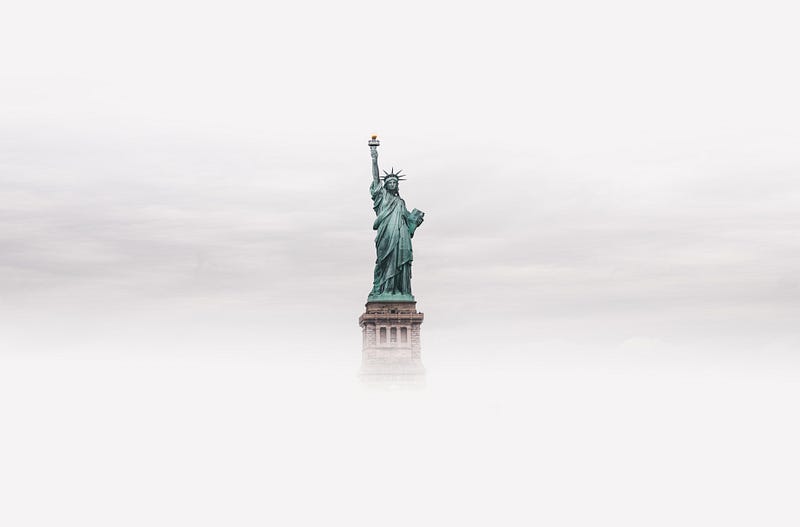
Throughout American history, there have been two general foreign policy eras: From the founding of the country until WWI the US primarily pursued isolationism and unilateralism, then there was a transition period until WWII, and since then the US has tended more towards globalism and multilateralism. This categorization is certainly overgeneralized as different presidential administrations, congresses, and situations have called for different policies that do not perfectly fit into these two categories, but I believe it is still a useful perspective with which to understand and plan for the foreign policy of the twenty-first century.
Since the end of the Cold War, through the presidencies of George H. W. Bush to Donald Trump, The US has seemed to be in another transition period; chaotic, reactionary policies that switch between the themes of the two prior eras have predominated and there is a distinct lack of an overarching trend. In this essay I will use historical evidence to show how the current transition period has failed to either replicate the successes of the prior foreign policy era or to define its own era, resulting in ineffective policy, and I will then argue in favor of establishing a balanced and proactive grand strategy for American foreign policy going forward that will be able to address the most important foreign policy issues of this century: A doctrine that emphasizes liberal internationalism to solve global problems but recognizes nationalism as the framework with which to view countries and their interactions with each other.
The Successes of the Second Era
America first transitioned its foreign policy from withdrawn to engaged between the two world wars in recognition of the modernized and interconnected international landscape that brought with it multi-national and unavoidable conflicts. As professor Joyce Kaufman writes of this period, “Under a succession of presidents, the highest priority of the United States was to remain removed from the conflicts escalating in the Pacific and Europe. Yet, as Roosevelt saw, that would be impossible” (73).
After World War II the Cold War was the next major conflict that the US could not avoid and the Truman Doctrine was the main methodology of dealing with that conflict. The Truman Doctrine was a combination of what Professor Walter Mead calls sharp power: military might, and sticky power: economic influence, both used in the promotion of soft power: ideals and values (Mead, America’s Sticky Power). Importantly, these different types of power were also used to develop international cooperation through institutions such as the UN and NATO which in turn enhanced the power of the allied nations, leading to a successful foreign policy.
In the case of the Korean War, America’s use of sharp power through the UN succeeded in keeping half the country out of communist influence (Kaufman 96); with the Marshall Plan, Western Europe was economically revitalized which proved to be a bulwark against communism in that region (Kaufman 90). However, after the Cold War ended, the lack of an all-encompassing conflict led to the deterioration of this grand strategy that then resulted in reactionary and often ineffective foreign policy.
The Failures of the Transition Period
Professor Linda Miller writes of this period: “With the Soviet threat gone… a sense of both anti-climax and free-floating anxiety prevails… no single vision animates the selection of goals and means” (622). This chaotic state is clear in the foreign policy of each president of this period as they base their decisions around their past failures or the failures of their predecessors, which has compounded the failures overall.
George H. W. Bush started this period with a successful military venture in Iraq, forming an unlikely alliance with the Soviet Union to drive Saddam Hussein out of Kuwait (Kaufman 124), but he also left conflict in the Balkans and Somalia unresolved (127–129). Bill Clinton inherited the Somalian situation but the death of eighteen US soldiers caused him to withdraw with the conflict unresolved (130). About Clinton’s later failure to intervene in the Rwandan Genocide, former ambassador Samantha Powers writes that “Somalia and another recent embarrassment in Haiti indicated that multilateral initiatives for humanitarian purposes would likely bring the United States all loss and no gain.”
George W. Bush, due to Clinton’s failures with interventionism, campaigned with the “intention to pull U.S. troops out of places like the Balkans” (Kaufman 142). However, after 9/11, Bush changed his stance to “inaction is not an option” (148) and launched wars with Afganistan and Iraq, neither of which he was able to finish. Obama then inherited those wars but was “bent on getting out of Iraq and Afghanistan” (Goldberg); he wanted to reestablish multilateral cooperation but also encourage other nations to act on their own without requiring US aid (Goldberg). Since then Trump has partially continued Obama’s “anti-free rider campaign” (Goldberg) but has also taken American unilateralism and isolationism closer to the first foreign policy era than its been in a long time, arguing that “Putting our interests first will make us all safer and more prosperous” (Anton).
I detail all these events and policy decisions to show how unlike and often contradictory they are and how that chaos has resulted in ineffective actions. I believe there is a balance to be struck between the themes of isolationism, unilateralism, globalism, and multilateralism that have been in conflict during this period, but this period has not had such a balanced foreign policy doctrine because these presidents have been reacting to failures from the near past and events in the near future rather than looking further back to the “goals and means” and successes of the past era or further forward to the issues that are growing in scale and will eventually become large problems. A broader perspective is necessary to design the new foreign policy era; a perspective that takes what worked from the last era, combines it with a more organized recognition of immediate problems from this transition period, and designs a coherent plan to address problems that have yet to fully manifest themselves.
A Grand Strategy for the Third Era
These are the main issues that the grand strategy needs to take into account: Large scale threats such as climate change and an aggressive China, smaller threats such as terrorist organizations and nations that support or act like them, and more national concerns such as trade agreements, alliances, treaties, immigration, etc.
Large Scale Threats
The ideal foreign policy doctrine for the twenty-first century would look to the second era of American foreign policy and recognize that the large-scale threats of today are at least as dangerous and long-lasting as the Cold War and therefore must be treated with a proactive strategy similar to the Truman Doctrine. International institutions must be utilized, as before, to develop sharp and sticky power and to strengthen particular plans of action such as global commitments to reduce greenhouse gas emissions and global condemnation of China’s Uighur concentration camps (Sudworth) and China’s expansion into the South China Sea (Global Conflict Tracker).
Furthermore, promoting soft power will be essential to curbing not just China’s expansion, but the expansion of illiberal governments around the world, just as containment policy did during the Cold War. America needs to lead the world on issues of such global proportions as these to once again be the “city upon a hill” that it once was to many nations. Kaufman writes that one indicator of the US winning the Cold War was “Democratic revolutions…sweeping Eastern Europe. One after another the communist governments fell and were replaced by democratically elected leaders who believed in capitalist market economies” (118). For this aim, the US needs to participate in and lead liberal internationalism once again.
Smaller Threats
Much of the foreign policy focus during this current transition period has struggled to deal with terrorist organizations and belligerent illiberal nations that host them. Part of the struggle that wasn’t due to poor strategy is simply due to the nature of these conflicts; they’re very hard to judge in difficulty and scope and in terms of what success would look like. Because of that, America needs to be very clear about its justifications and intentions when it seeks to engage in these conflicts. I propose working multilaterally as much as possible, such as during the Gulf War; asking allied and even non-allied nations for support, agreeing to intervene together, getting congressional approval, and always outlining what will be considered a success and what the terms of disengagement would be.
Acting unilaterally in these sorts of situations isn’t necessarily wrong either so long as the goal is clear and the debate has been had, both at home and abroad. America doesn’t need the consent or approval of other nations, but as Obama explained, “One of the reasons I am so focused on taking action multilaterally where our direct interests are not at stake is that multilateralism regulates hubris” (Goldberg). Asking the opinions of our allies before taking unilateral actions does not harm our position as we can always choose not to heed them, but it does prove we still value the alliance and, if our actions are just, we may be able to inspire our allies to help.
National Concerns
That being said, there are situations where the US should indeed act more isolationist and unilateralist; this is where the third era of foreign policy should try to balance the first and second. First off, Obama and Trump are right about “free-riding” nations; no one benefits from NATO members not paying “their fair share” (Council on Foreign Relations), it just makes the world less safe and more reliant on the US. While the US should be a “city upon a hill” for the rest of the world, we should lead by example and not through dependence; nations should aspire to be more like us so that they need us less. As former national security advisor Michael Anton writes, liberal internationalism doesn’t “offer the solution to every contemporary problem,” and problems such as trade deals and treaties that don’t benefit national interests as much as they could should be solved through other means.
As evidence of the necessity of acting nationalistically, the US was only in the position to assume world superpower status after the world wars because before them the US pursued policies that were only concerned with self-interest. Sovereignty and self-determination are good for all countries and suppressing a nation’s self-interest for the supposed benefit of others is not only authoritarian but it doesn’t tend to lead to the benefit of others anyway. Anton writes, “nationalism and national sovereignty are intrinsic to human nature. So it should come as no surprise that the EU’s attempt to tamp it down provoked a populist revolt, embodied by the rise of the yellow vest movement in France, Italian Interior Minister Matteo Salvini, Poland’s Law and Justice Party, the Brexit process, and Hungarian Prime Minister Viktor Orban.” So while international cooperation is necessary to deal with global issues, the nature of that cooperation can and should be negotiated and renegotiated by each nation freely.
In summary, the foreign policy doctrine for the twenty-first century should look at nations as sovereign entities with a natural responsibility to act in their self-interest. America’s national interest should be leading the world by example in terms of demonstrating the benefits of a nationalistic worldview, of cooperating on international problems through international institutions that have been fixed to respect nationalism, and of having a hardline policy with which to address major global problems. Failing to lay out clear foreign policy goals and strategies as was more so done during the two prior foreign policy eras has led to the chaotic transition period America is now in. To escape this period America must once again make a clear decision and carry it out to fruition.
Diplomat George Kennen wrote in his article “Sources of Soviet Conduct,” “It is…a question of the degree to which the United States can create among the peoples of the world generally the impression of a country which knows what it wants, which is coping successfully with the problems of its internal life and with the responsibilities of a world power, and which has a spiritual vitality capable of holding its own among the major ideological currents of the time.” With a commitment to the grand strategy laid out here, I believe that the US could once again meet Kennan’s expectations.
(Written in the Summer of 2020)
Works Cited
- Anton, Michael. “The Trump Doctrine.” Foreign Policy, Foreign Policy, 20 Apr. 2019, foreignpolicy.com/2019/04/20/the-trump-doctrine-big-think-america-first-nationalism/.
- Goldberg, Jeffrey. “The Obama Doctrine.” The Atlantic, Apr. 2016, www.theatlantic.com/magazine/archive/2016/04/the-obama-doctrine/471525/.
- Kaufman, Joyce P. A Concise History of U.S. Foreign Policy. 4th ed., Rowman & Littlefield, 2017.
- Kennan, George. “The Sources of Soviet Conduct.” Digital History, www.digitalhistory.uh.edu/disp_textbook.cfm?smtID=3&psid=3629.
- Russell Mead, Walter. “America’s Sticky Power.” Foreign Policy, 29 Oct. 2009, foreignpolicy.com/2009/10/29/americas-sticky-power/.
- Miller, Linda B. The Clinton Years: Reinventing US Foreign Policy? International Affairs (Royal Institute of International Affairs 1944-), vol. 70, no. 4, 1994, pp. 621–634. JSTOR, www.jstor.org/stable/2624550.
- Power, Samantha. “Bystanders to Genocide.” The Atlantic, Atlantic Media Company, 8 Sept. 2019, www.theatlantic.com/magazine/archive/2001/09/bystanders-to-genocide/304571/.
- Sudworth, John. “China’s Hidden Camps.” BBC News, BBC, www.bbc.co.uk/news/resources/idt-sh/China_hidden_camps.
- “Territorial Disputes in the South China Sea | Global Conflict Tracker.” Council on Foreign Relations, Council on Foreign Relations, www.cfr.org/global-conflict-tracker/conflict/territorial-disputes-south-china-sea.
- “Trump’s Foreign Policy Moments.” Council on Foreign Relations, Council on Foreign Relations, www.cfr.org/timeline/trumps-foreign-policy-moments.


