
Everything We Know Is Wrong — And That’s a Good Place to Come From
Continuing the story of my personal decolonization journey
The process and journey of decolonization is definitely not a straight and narrow path. It often takes me inside of myself to places, events and relationships I never would have expected!
I have always been interested in other religions and spiritual paths. One that I ran across during my earlier years was founded by an Eastern Sufi mystic, G. I. Gurdjieff.
His path was often called the 4th way and he had several well-known followers who wrote about his teachings including a man named P. D. Ouspensky and a woman named Margaret Anderson.
I still have a couple of Gurdjieff’s books in my library, volumes 1 and 2 of Beelzebub’s Tales to His Grandson. And to be honest, I don’t remember them at all!
But if I remember correctly, the essence of Gurdjieff’s teaching was the title of this article:
Everything you know is wrong.
It’s quite a simple concept but when you try to apply it to your life, it can really shake things up. Because really, is everything I know wrong?
Gurdjieff was not talking about physical things like I have this body (or maybe he was, I don’t really know!), my name is Rich, your name is Alice or Bill, I’m a white Caucasian male etc. And I’m not sure even now what he meant exactly but when I apply it to my personal journey of decolonization and reconciliation, it fits like a custom-tailored glove.
For sure, everything I was ever taught about Indigenous Peoples and First Nations (I only knew them as Indians when I was growing up) was wrong. And it all boils down to a simple fact that First Nations have emphasized and reminded us of over and over again — North American history is written by those who are in power and they always put themselves in the best possible light.
So let’s go back to my really long-ago and far-away beginnings and see how I got it all wrong to begin with.
Long ago and far away
I’m not an archeologist so much of what I say here might be pure gibberish but I think I’m not too far off.
But….. everything I know is wrong.
At some point thousands of years ago in our hazy distant past, humans became territorial. For this discussion, it doesn’t really matter when that happened. It’s likely that it came before the emergence of modern Homo sapiens but that’s really irrelevant.
It goes something like this: my people live here, have always come to this river to catch fish and this forest to hunt and trap animals for our food so keep out.
No trespassing.
Unless you ask us nicely and we say ok.
Or you beat us up and take it away from us.
I’m talking about times before there were any cities as we know them today. As far as I know, the majority of our ancient human ancestors were nomadic and travelled in small clan groups. They followed certain migration routes just like many of today’s birds, returning year after year to the same places at different seasons to survive and thrive.
At some point, some groups decided to stay pretty much in one area and make do with what that environment provided all year round or for a good portion of it. There was enough to sustain life, the climate wasn’t too forbidding so why pack up and move?
After many many thousands of years cities arose, empires rose and fell and leaders created cult followings, some large and some small.
From what I can tell, in all humanity’s cults there was always a “creator” concept for how life came to be on Earth: in some cult(ure)s a pantheon of many gods and goddesses was deemed responsible, and in others, a single entity was given all the credit.
For the purpose of this article, and my own path, the two cultures that underlaid all of my upbringing were Judaism and Christianity, which arose out of Judaism. These both credit a single divine entity, God, as the creator of every living thing on Earth.
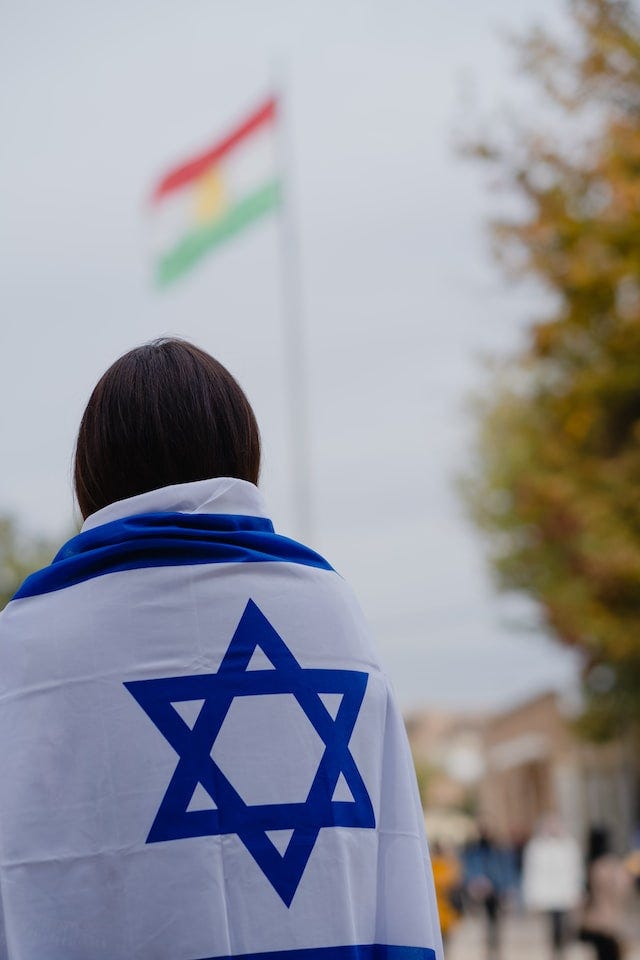
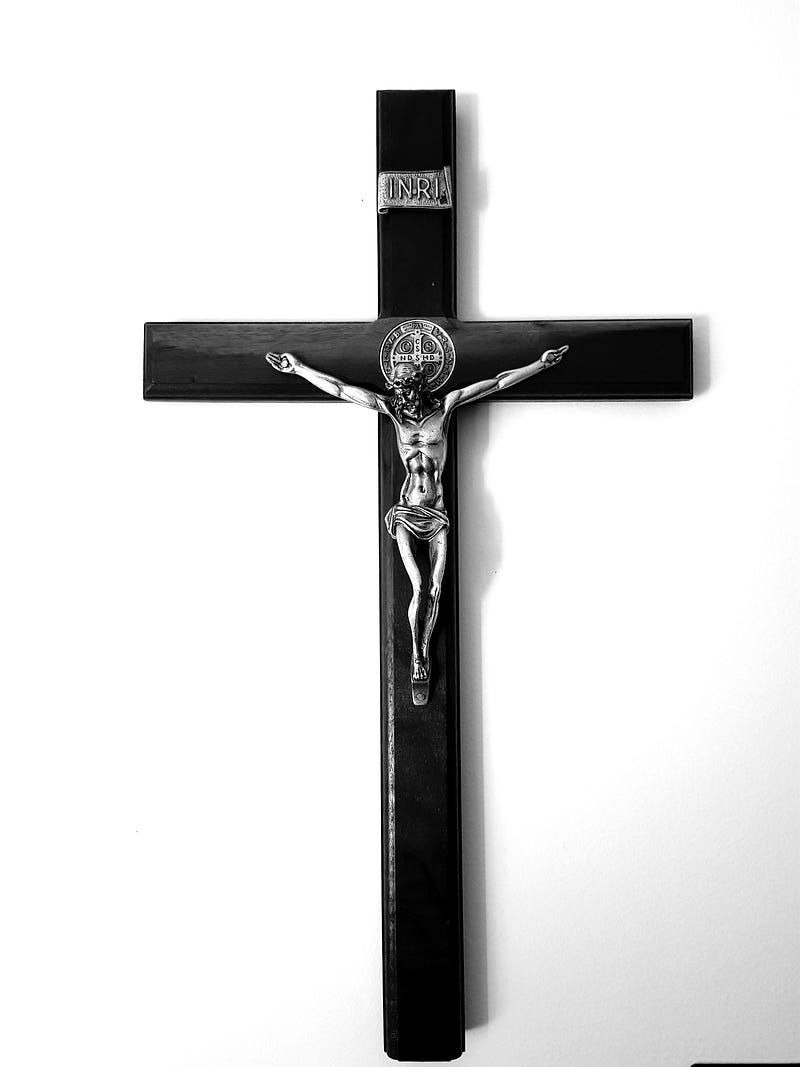
Yes, there are many others; pagan, Islam, Buddhism, Taoism, Hinduism, etc. But their direct impact on my formative years was minimal.
In the town I grew up in, I was the only Jewish boy in the whole school system until we moved when I was partway through high school and relocated into a community with schools that had a good mix of Jews and Christians.
But even in that community, I still remember asking a girl to my Senior’s prom who said yes but then came in the next day and said her parents wouldn’t let her go to the prom with me because I was Jewish.
So it wasn’t perfect.
And as far as I knew, there wasn’t a single Indigenous person in that new high school. If there was, I sure didn’t know about them and/or no one pointed them out to me!
High School’s done, time to go to college.
College
After attempts at 2 different colleges, I eventually wound up in Syracuse, NY attending SUNY ESF at Syracuse University. This is where I graduated from college.
And just a bit South of the city was the Onondaga Nation’s Reserve. You knew you were there because they had big signs on the road advertising really bargain prices for cigarettes and they sold fireworks, which were illegal to get anywhere else in the state.
I ended up staying in Syracuse for about 25 years! And during that time I was part of a folk music band called The Cranberry Lake Jug Band. (My music history is a whole nother ball of wax!)
The reason I mention that is that we gained a bit of local renown and at one point, we were asked by the Onondaga Nation to perform at one of their celebrations. I’m pretty sure it was a PowWow.
This really surprised me because I thought they basically ignored non-Native people. So when we got to the “rez”, I asked them why they asked us to play for them as we were all white people? Their simple reply was something to the effect of “We like your music. It’s fun!”
Yet another example of “Everything I know is wrong!”
OK! I could get on board with that! We had a good time playing that gig and joining in on their celebration.
As far as I know, that was my first ever person-to-person contact with Indigenous People.
Art connections
I also had a fondness for and collected folk art from all around the world. I still have many pieces; bark art from Mexico, fabric art of the Hmong Asian people, and others.
I also liked works by local Indigenous artists. Some of the art was literally heartbreaking, showing the terrible conditions that the people lived in, depicting squalor, drug addiction and other traumatic conditions.
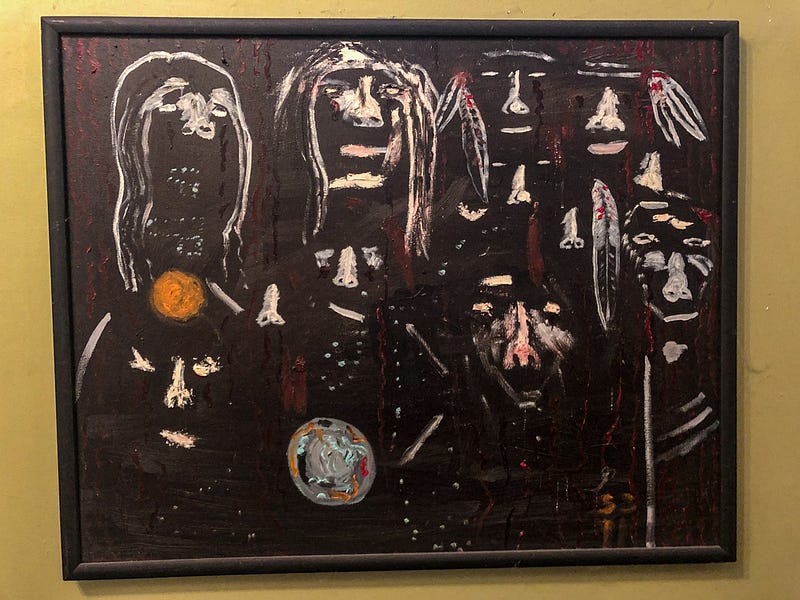
One Native Onondaga artist had a display in a local coffee shop I frequented. I really liked several of his paintings so I told the owners I’d like to meet with him to purchase one from him. They set up a date for us, I met him and bought the painting pictured below. He called it “My Ancestors”. It still hangs in my hallway. It triggers a kind of mystic feeling in me. And it’s not happy.
And that’s where my relationship with Indigenous people paused…..
Years went by….
I became a Zen Buddhist and once again,
Everything I knew was wrong
Through the organic food movement, I hooked up with a person who was trying to introduce the Onondaga women to macrobiotic cooking. I acted as his “sous chef” and once a month, we would travel to the rez with a bunch of natural foods and cook a big dinner for anyone that wanted to eat it. I remember one of the Native women calling some other women over to watch how I cut a pepper. She thought it was pretty cool.
The dinners never started on time. The women who watched us told me to not worry, we were on “Indian time”. And sure enough, people would eventually wander in and grab a meal. There was rarely any food left over!
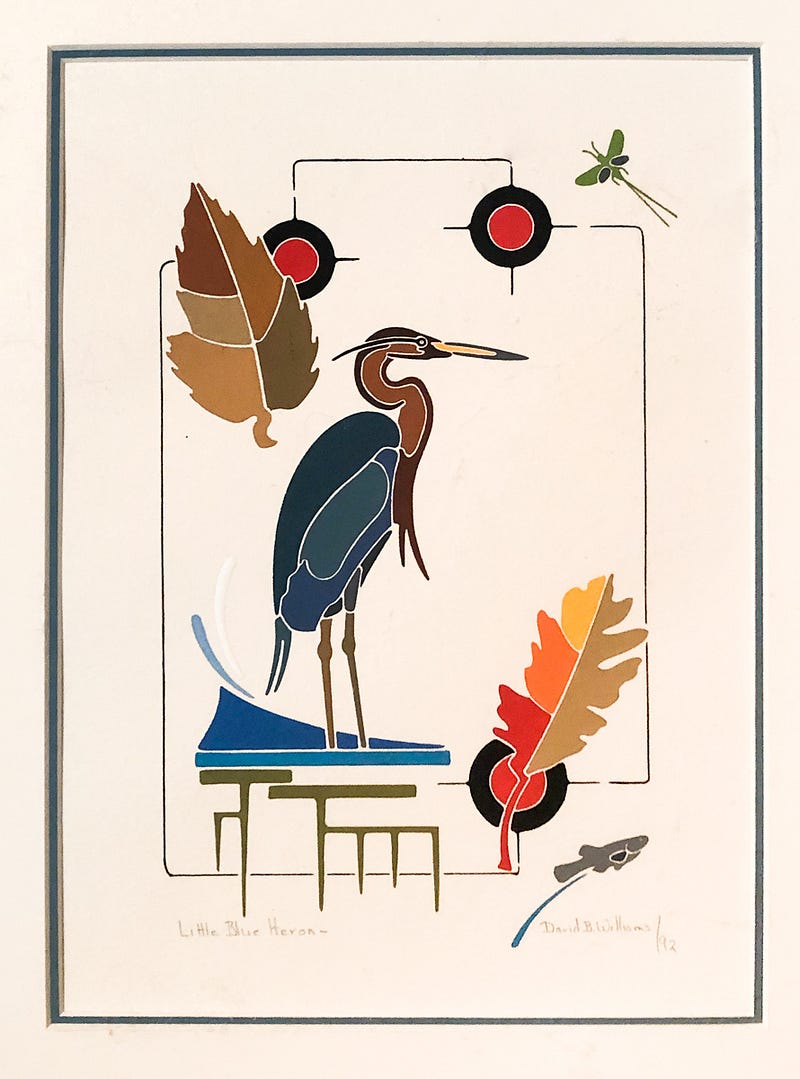
I also discovered another Indigenous artist I quite liked, David B. Williams. I’m not sure how or where I saw his work — I remember going someplace to a gallery or show that featured Native American art — but it resonated very strongly for me. So I purchased one of his paintings called “Little Blue Heron”. I still have this hanging in my bedroom and it is one of my favourite pieces.
So all my contact with the Indians (I still thought of them as Onondaga Indians) was pretty positive except for one thing.
Back then I liked to do long rides in the country on my bicycle and one of my friends lived about 30 miles South of Syracuse in the city of Cortland. It was a nice 2-and-a-half-hour ride. Except there was a part that went through the rez. Because they didn’t have fences around their yards or leash their dogs, it seemed like every house I passed had big dogs come out and bark and chase me. I had to pedal like mad to get away from them! 😮
At that time, I was a bit afraid of dogs, especially when they charged me while I was riding my bike!
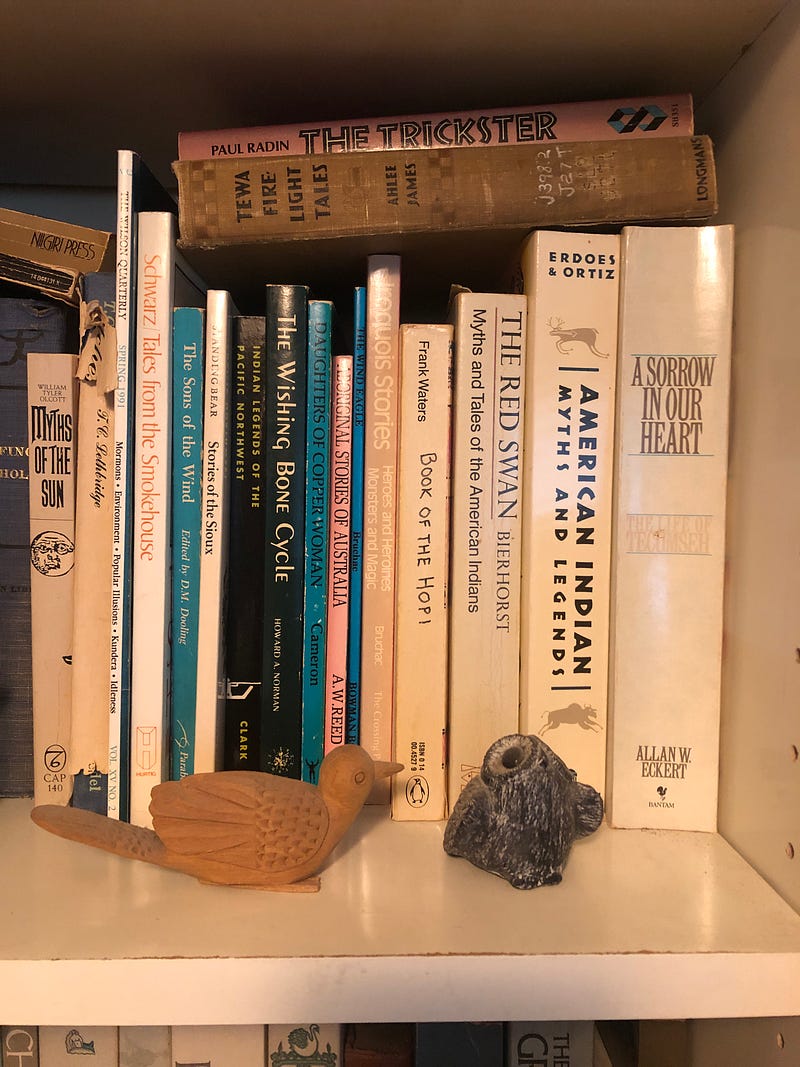
Oh, and I’d like to mention that I’ve always loved fairy tales and mythology and I had begun to collect all kinds of creation stories from various Indigenous and non-Indigenous cultures around the world, and some from the Iroquois Nation, of which the Onondaga People were a part.
Here’s a pic of some of the titles in my library.
One book which really had an impact on me was “Seven Arrows” by Hyemeyohsts Storm. At the time, I did not know about the controversy surrounding his claim of Cheyenne ancestry. It was my first introduction to the “Trail of Tears” journey the Cheyenne Nation took when they were kicked off their land and had to move to the American West. I was very moved by the “Jumping Mouse” story in the book. It has stayed with me and I often tell other people about it. So even if he was not Native American, and was only in it for the money, I was strongly affected by this work as it brought a story on American Indigenous People into my consciousness and I truly empathized with the harm done to those people.
And that’s pretty much where things stood with my “Indigenous relationships” until I finished my doctoral thesis and in the mid-1990s moved to British Columbia to continue my postdoctoral studies.
So, on to British Columbia
British Columbia
I am a big outdoors fan. I’ve hiked all over the USA. My Dad was a high school teacher and had the summers off so we bought a big tent for the family and started spending a lot of the summer vacations camping in National and State Parks.
And that’s when I fell in love with mountains and why I came to British Columbia to do my postdoc.
So many beautiful mountains!
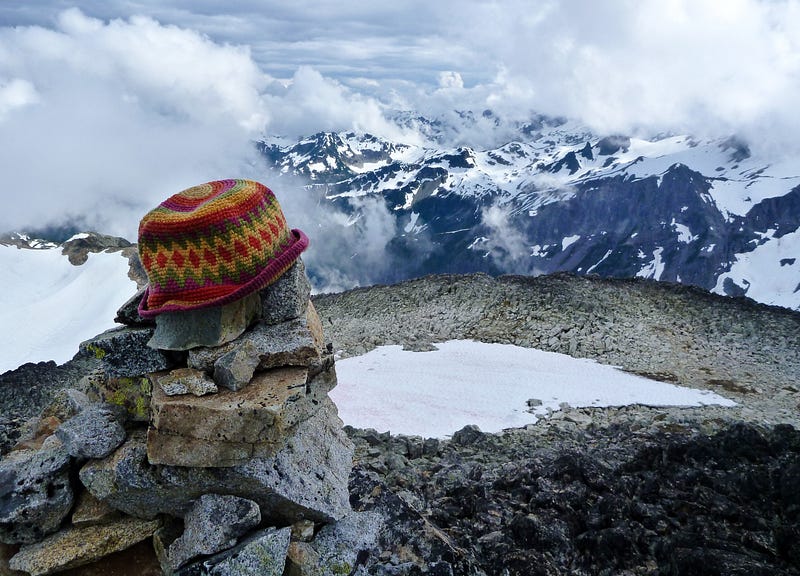
I love being near the ocean and the mountains. In Syracuse, I could always drive a few hours to hike in the Appalachian mountains in New York. But in Vancouver, BC, I had both right out my doorstep. And I took full advantage of the opportunities.
Which led to another interesting encounter with a First Nations person.
My wife, my daughter and I had hiked up to the summit of one of the local mountains. It was a beautiful day and one of the things I most liked to do when hiking was eating lunch at a summit. This one had a wonderful 360-degree view of mountains and the ocean. There was no one else on the summit that I could see, it was a Sunday and I remember saying to them “Welcome to my church”. And I pointed out Mt. Baker to them, which is actually located in Washington state, across the border.
And from behind a rock, a person I couldn’t see spoke up and said, “My people call it Kulshan”. He turned and smiled at me and I thanked him for that and told him that from then on I would call it Kulshan. And I have shared that with lots of other people. I figured his people were here first and if they already had a name for it, that’s the one we should be using.
Here’s more information about Kulshan, what the name means and names other Indigenous peoples have called it.
And this brings me back to the age-old question-
Why would we rename something that already had a name?
Another instance of;
Everything you know is wrong
Ok.
I think this is a good place for us to pause on my decolonization and reconciliation story and rest a bit before starting up again.
I think it’s pretty obvious I still have a looonnng way to go and a bunch more years to take you through but I think this has been a good, looking-inward session for me. I hope it will stimulate some thought in you, too.
I’d love to hear about the decolonization/reconciliation journeys and experiences you have had or embarked on.
That’s what the comments section is for!
Until next time,
Rich
And if you enjoyed this article you might want to read the first two that I also published on Medium: