
Everything I Learned about Weathering Coronavirus I Learned from Disaster Relief
First: Hunker down. The families we meet on deployment for ShelterBox are in deep need: Many of their homes have blown away; their villages are in disarray, and the supply chains for necessities like food and water are still down. But they are still alive after hurricanes because they sheltered in place or because they heeded community leaders’ advice and went to shelter at a communal location, like a school or a church. They stayed put. Just like we’re doing now. (Not like the group of seniors I just saw a couple days ago, all clustered together at the trailhead, waiting for their normal morning walk together.)
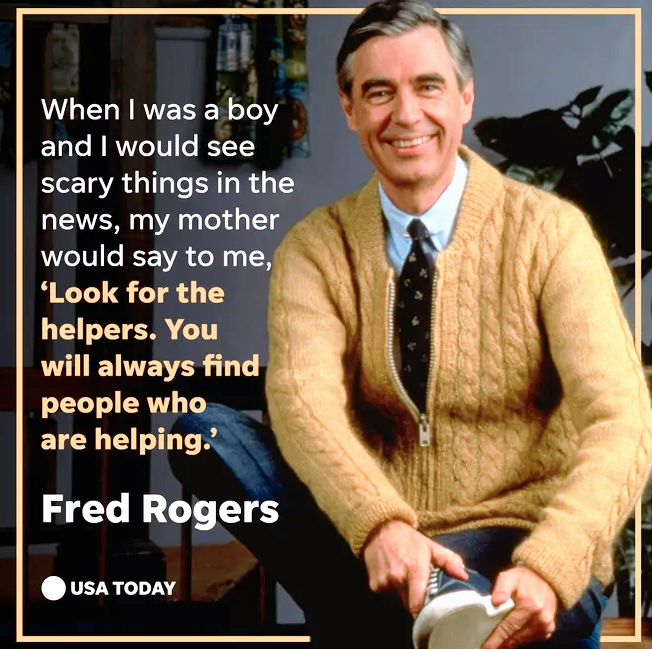
Second: Look after your community. Everyone’s heard that Mister Rogers quote about looking for the helpers. Well, after a major disaster has happened, Mister Rogers might be really pleased to see that the helpers are everywhere.
I don’t mean in the form of foreign aid agencies who have come in to help. I mean people within their own communities, who go from homesite to homesite checking to see if their neighbors are okay; who help rebuild, who offer to look after each others’ children while the adults are out trying to right the massive wrongs done by earthquake, flood, mudslide.
I’m seeing a lot of this now. My friend Dave reports from Seattle that people are putting up signs in their windows that say either “okay” or “need help,” so it’s easier to see which households need assistance during this time. And Carrot Quinn, a writer I met on book tour in 2016, has put together a Mutual Aid endeavor for her Tucson community. Carrot and her team will stockpile and deliver supplies to people who need it. (Read more about it here.)
In my own experience as an aid volunteer, I’ve met folks who set aside their own needs to help their neighbors first; who put their own affairs in minimal order and then immediately got down to things like feeding their communities.
In coronavirus times, I think that means taking stock of your own resources, and then seeing what you can do to help. If you’re still healthy and not of senior age, make a list of the seniors you know in your neighborhood and just call to check in. We’re doing weekly or bi-weekly grocery runs so far. (But not to Macy’s to return something, Ma.)
Third. Share your knowledge base. When we deploy to areas of great need, we’re often working with other agencies who are also operating in the area. Whether it’s the Red Cross/Red Crescent, Habitat for Humanity, the International Organization for Migration, or highly local agencies, we all have to work together to make sure everyone’s caught up.
Disaster relief works best when everyone is working from the same information. And it’s not much different from what we’re experiencing now. If one community believes one set of information and another believes something totally opposite, any efforts we make toward progress may run counter to each other.
A friend who owns a bookstore in Indiana said she eventually had to close because seniors kept on coming in and saying they were sure it wasn’t as bad as “they” were saying. And my parents-in-law were very excited at the empty state of the airports. “Is it a good time for us to come visit you?”
No. No, it’s not. My husband’s started sending his parents the information that we’ve been getting. We don’t know if it’s registering or not, but we must work to ensure they have the same access to this information. Check your sources, obviously. Back them up. And then share with your own personal community, in responsible fashion.
This works for good news, too. I know a few people whose books are being published at this time. It means no book tours, no classroom visits, and no book launch party. Please don’t fall into a hole of depression. Tell us your good news so we can celebrate with you. (This link will take you to a list of books that I know are being released this spring or summer. I’ll be continuously adding to it, so please check back. It links to my affiliate page at Bookshop.org, but please buy these books however you want.)

There’s one other kind of information I’d personally would like to see shared. If you hear of things that might lift others, share those broadly. My friend TC Tolbert has put together this amazing page — “links to clarity, wonder, and joy while in quarantine” — and you should have a look.
And finally. Celebrate the connections you already have. The summer before last, I was in Dominica checking on some families and communities we had helped after Hurricane Maria. We talked to some women who said that one ritual they regularly participated in before Maria was to get together a couple times a week, do each others’ hair, and play dominoes or cards.
When Maria wiped out the island’s electricity, they couldn’t do that as easily. But when our agency brought in solar lights for them, the women were able to maintain and continue their community, in the same way they did it before.
In disaster-relief terms, that’s a sign of recovery.
Last night I hosted a little cooking event on behalf of ShelterBox over Facebook Live. I’m not sure who I expected to show up. I think part of me thought it’d be mostly people who were two or more degrees removed from me — friends of the agency I hadn’t met yet, or friends of my co-host.
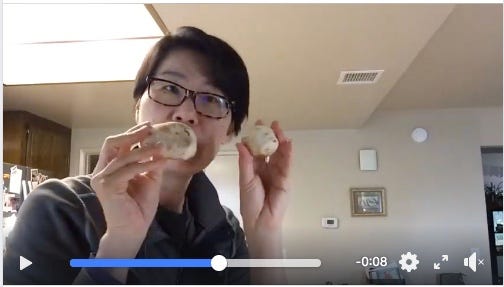
But I was doubly surprised: First, that the vast majority of people who came were my friends. And then second, by how incredibly happy I was to see those faces and names come up, and their friendly, familiar conversation with me over the stream.
I know! I am sillypants. Why wouldn’t I expect my friends to support whatever I was doing?
I think what happened was this: because our overall situation is different, I kind of thought everything would or should be different.
Surprise: it’s not. Your friends are still your friends. Your community is still your community. Knowing that can make you stronger in times when you feel weak.
Because a card game at twilight is still a card game at twilight, no matter how ravaged the landscape. And a friend making a mess of her kitchen and engaging in some patter is still the same friend, no matter what the transom.
Right? Right.
For Part 2 of this series, How I’m using lessons from ShelterBox to help me with self-care during self-isolation, click here.