
Evaluating Others
Imposter Syndrome strikes again
I have just finished writing a peer review for a scientific journal, and I can almost hear the Imposter Police on their way to arrest me for impersonating a scientist who knows what they’re doing!
Mr. Imposter Syndrome is currently laughing his ass off.
If you’re unfamiliar with the term “peer review”, it’s the process that ensures that the scientific research published in accredited journals is good enough to be published. The role of the peer reviewer is to read a submitted manuscript and propose changes, add comments, and decide whether the manuscript needs revisions or is unsuitable for publication. The feedback from the peer reviewer is then sent to the journal’s editor, who makes the final decision.
The authors of the research then have to make the suggested changes and re-submit their manuscript (in the case it wasn’t completely rejected). Usually, two peer reviewers evaluate the manuscript. No one knows who the other one is, and the authors never learn who reviewed their manuscript. Also, the reviewers don’t know the names of the authors, to avoid bias.
Having said that, tonight I completed my second peer review. When I was invited to review a manuscript last year, I was certain that I got the invitation by mistake. I checked multiple times but everything seemed correct.
I created an account on the journal’s website because I planned to submit my own original research there for publication. After creating a full profile, I also clicked on the option that said that I’m available for peer review. I didn’t actually believe that any editor would ever assign me to review a manuscript. Usually, those who are invited are at least in the process of completing a Doctorate. I only have an MSc for the time being. It’s possible that the information I added to my profile was enough for them to assign me to something. Or not. Maybe all other reviewers were unavailable. I don’t know.
I got so anxious about my first peer review because I wanted to be nice to the authors who would be reading my comments. As a result, I provided some pretty basic feedback, and only added one suggestion for change. When the other reviewer submitted their comments too, and the editor allowed us to see each other’s feedback (after the authors saw the feedback and agreed to make the changes), I wanted to hide under a pile of blankets and never emerge from there.
The other reviewer, who was clearly experienced, had brought up many important points of things that needed to be changed. I wondered how on earth could I have missed those points. After that, I was certain that the editor would somehow blacklist me.
A few months later, I got another invitation. It sat in my inbox for 7 days, until I got another automated message: they assigned the peer review to someone else. Of course, those things take time and I hadn’t even replied to let them know that I needed some time to decide or to decline the invitation. I wasn’t expecting to be invited to peer review anything after that.
Until, 4 days ago, I got one more invitation. I looked at the topic and I replied immediately to let them know that I was available. I still couldn’t believe it!
This time, I was still preoccupied with “being nice”, but I made sure to bring up all the points that I could identify that needed modification or further elaboration.
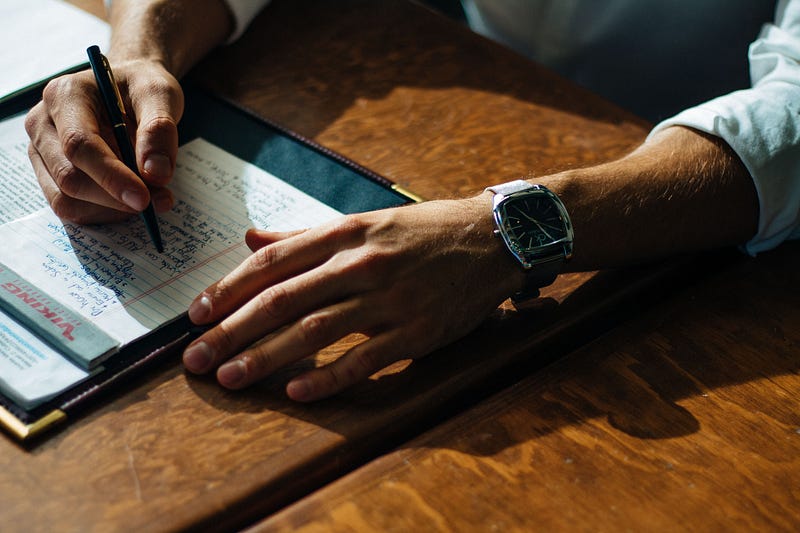
If you’re wondering why I chose that picture above, it’s because that’s how I wish I looked like: put together, with a nice fancy watch, and overall look like a person who knows what they’re doing.
Instead, while writing my review I was wearing an oversized hoodie, sitting on my chair like a sloth, and eating chocolate cookies. Since there are no rules though about how a reviewer is supposed to look like, I can safely say that my attire, posture, and late-night eating habits don’t matter in the review process!
Now, I feel more confident in my abilities to evaluate another person’s work. I still don’t feel qualified enough though, and I definitely don’t feel comfortable enough to share negative feedback. However, I am grateful that I replied immediately without letting my anxiety hold me back once more.
If you have ever been in a situation where you lost an opportunity because it took you too long to decide, I would like to let you know that it’s never too late to turn things around.
Another opportunity will come again, but this time you have to make the best of it!


