I Got Ratioed For Saying Eminem’s Work Has Not Aged Well
Hip-hop does not belong to the world. Black people have the final say on which rappers deserve to be the GOAT.
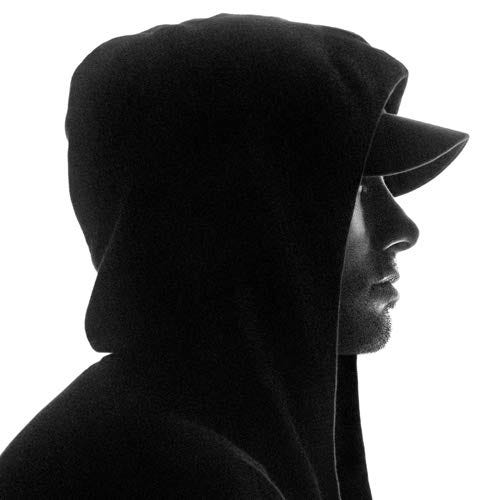

I found myself slightly ratioed by bots and white people this weekend on Twitter due to me agreeing that Eminem’s music has not aged well.
A bot is a Twitter account that has been recently made or has been co-opted if it is older. Like digital yellowjackets, they coalesce around specific topics and harass folks through their sheer numbers of comments and ratios retweets designed to push you into their mechanical ecosystem. MAGA Political operatives often use bots and ratios to drown out opposing voices, leading Twitter to create tools for their blue check members to repel the pests. I’m not that famous (yet) and thus had to deal with the stings all weekend.
One bot focused on the number of streams that Eminem still gets yearly compared to his peers at the time, as if artistry is solely a popularity contest. This machine claimed that Em’s catalog gets five million more streams than Big, Nas, and Pac, thus proving his superiority over those legends.
Streams and popularity are kin to market share, the ubiquity a rapper attains in the pop zeitgeist. It is also how white people insert themselves into the perennial GOAT rapper discussions. I wrote recently about Kanye West’s disrespect of Andre 3000 how using popularity to measure an artist’s impact is a metric rooted in white supremacy:
Such streaming and financial success, despite Kanye donating tickets to area HBCUs for his Atlanta listening party, cannot solely be attributed to Black support. There aren’t enough of us. Rather, his pop-star success can only be attributed to support from white fans, which explains why he can still have a thriving career despite his support for the racist, orange conman from New York.
Luckily, streams are a metric Eminem does not himself subscribe to when determining his place in hip-hop’s pantheon. He’s always been aware that he is an artist in a Black genre. He has stayed humble throughout his entire career — confident in his skills and aware that he should not listen to other white people regarding his placement on the GOAT list. On the track EMPD 2 off Nas’ “King’s Disease II,” Marshall Mathers spits in a technically dazzling verse:
I just pray for the day when I’m able to say that I’m placed/ With the greats and my name’s with the Kane’s and the Wayne’s and the Jay’s/ And the Dre’s and the Ye’s and the Drake’s and the J Dilla’s, Jada’s, Cool J’s/ And the Ra’s and amazin’ as Nas is, and praise to the Gods of this/ Shout to the golden age of hip-hop/
In his mind, he’s still paying his dues. But the verse reveals that Em knows Black people will determine his greatness. He can easily drown out the noise of his rabid white fans and the machines they have created to defend him on the Internet.
White supremacy, whether in politics or music, has used bots to enforce their views on an increasingly networked world. In the runup to the 2020 presidential election, Donald Trump’s name became Voldemort for the Twitter users that lacked the blue check that enabled access to the platform’s crowd control tools. You could not say his name without attracting the opprobrium of the algorithm. In my small way this weekend, I learned the same lesson about a rapper white people would hold above Black practitioners of the art.
As a former teacher and school administrator who has worked exclusively in poor, Black rural and urban communities, I’ve never taught a student who wanted to be a blues singer or a jazz musician. Some sang due to their upbringing in the church. But most of them, mainly the boys, wanted to be rappers. Rap isn’t an art form we are willing to cede to the world yet. It still belongs to the block and the barbershop. And thus, we debate who our legends are outside the view of bots and whatever other machinations white supremacy cooks up to extend its reach across the world.
Black personhood embraces the power of such debate. Hip-hop has made people millionaires many times over. Some of them have been financially savvy rappers; many others, white record label owners, tech executives who control the circuits of the streaming business, and the stadium and club owners where rappers recite their poetry. Technology allows the blocks from Bankhead to Compton, from Black Bottom to Harlem, to partake in arguments of rap supremacy free from the gaze of white people. These debate grounds are the only legitimate place where Eminem can forge his legacy.
You can see our arguing happening in real-time, with Black celebrities as diverse as Mike Tyson and Gucci Mane having radically differing opinions on Eminem:
My view? When Black people — and I will qualify the masculinity of this debate, as it is always held with Black men at our manly castles of barbershops, cigar lounges, kickbacks, bar crawls, and sports games — debate GOAT status, it comes down to four criteria:
Classic albums that Black personhood still bump in their cars to this day; this can either be regional or, in the case of folks like JAY-Z and Drake, national. Note that I did not say individual songs. These are full albums that if you played them, other Black people would nod at you or shout, “turn that up!”
Beefs. Rap is a gladiatorial genre. We rank rappers who have won or survived beefs higher than ones who are not lyrically battled-tested. This rule needs to be rewritten since patriarchy structurally excludes women from having rap beefs with men, thus excluding them unfairly from GOAT consideration, as I wrote about concerning Megan Thee Stallion.
Lyricism. This is the most nebulous category and the one deeply dependent on preference. Some will lean toward technical proficiency, while others will forgo dazzling, intricate rhyme schemes for the emotional truths and wisdom embedded in the poetry. The only objective criteria here is that the lyrics must forge an emotional connection that makes Black men nod their heads in unison as wind over a field of flowers.
Legacy. Other rappers must want to sound like the rapper in question. This criterion is deeply rooted in the Black belief of ancestorhood.
Of those four criteria, Em only dominates one — lyrical ability. Eminem has an array of solid albums and singles that are objectively good; he, however, possesses no classics. These albums also have not aged well, with the Slim Shady and Marshall Mathers LPs filled with homophobic phrases and an obsession with his mother. It’s not something Black folk bump as they leave their jobs Friday evening, anticipating a solid pre-game and party session. Eminem had a recent beef with Machine Gun Kelly no one paid attention to and won his beef with Ja Rule and Murder Inc. due to Ja evoking the automatic surrender condition of going after a child. Eminem is, without doubt, the most gifted technical lyricist of his age, one of the children of Rakim. He, however, has no sons or daughters in the game. Most of the rappers from today’s generation who are in contention for GOAT consideration — Lil’ Wayne, J.Cole, Drake, and Kendrick Lamar — took primary inspiration from Nas or Hova.
Let me know if you think differently in the comments. But you have to use my criteria!